

KOSPI Plunge Triggers Critical Sell-Side Curbs as Market Volatility Intensifies
BitcoinWorld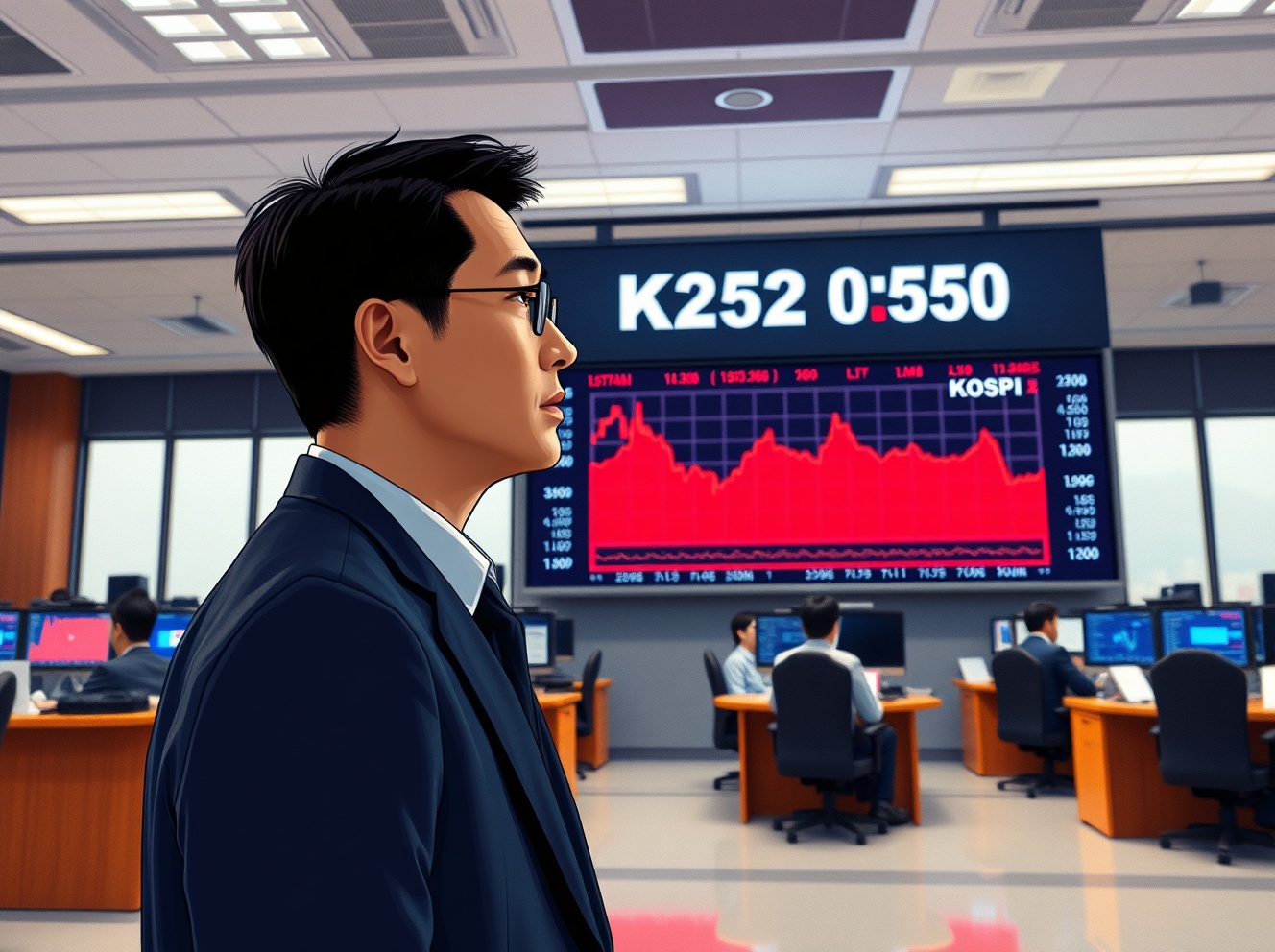
KOSPI Plunge Triggers Critical Sell-Side Curbs as Market Volatility Intensifies
South Korea’s benchmark KOSPI index triggered automatic sell-side trading curbs on Tuesday, March 18, 2025, following a dramatic intraday decline that sent shockwaves through Asian financial markets. The KOSPI plunge represents one of the most significant market events of the year, activating Korea Exchange’s sophisticated circuit breaker system designed to prevent panic selling and maintain market stability during extreme volatility periods.
Understanding the KOSPI Sell-Side Curbs Mechanism
The Korea Exchange implements a multi-tiered market stabilization system that automatically activates when specific thresholds are breached. This system includes:
- Side Car Rules: Temporary trading halts on individual securities experiencing rapid price movements
- Market-Wide Circuit Breakers: Trading suspensions affecting the entire KOSPI market
- Dynamic Price Bands: Restrictions on order prices to prevent extreme volatility
Tuesday’s market conditions triggered the second-level circuit breaker, which occurs when the KOSPI index falls by more than 8% from the previous day’s closing price. Consequently, this activation imposes a 20-minute trading halt across all KOSPI-listed securities. Market participants must then wait for the cooling-off period to conclude before regular trading can resume.
Historical Context of Korean Market Interventions
South Korea’s financial regulators have progressively refined their market stabilization mechanisms since the 1997 Asian Financial Crisis. The current system represents the fourth major revision, implemented in 2021 following lessons learned from the 2020 COVID-19 market crash. Historical data reveals that KOSPI circuit breakers have activated only seven times since their introduction, making Tuesday’s event particularly noteworthy for market observers.
Comparative Analysis of Global Circuit Breaker Systems
| Market | Trigger Threshold | Trading Halt Duration | Activation Frequency (2020-2024) |
|---|---|---|---|
| KOSPI (South Korea) | 8% decline | 20 minutes | 3 times |
| S&P 500 (USA) | 7%, 13%, 20% declines | 15 minutes | 4 times |
r>
| Nikkei 225 (Japan) | 10%, 15%, 20% declines | 15-30 minutes | 2 times |
| SSE Composite (China) | 5%, 7% declines | 15-30 minutes | 6 times |
This comparative framework demonstrates that South Korea employs a relatively conservative approach compared to other major Asian markets. The single 8% threshold contrasts with China’s multi-tiered system and Japan’s more gradual intervention levels.
Immediate Market Impacts and Investor Reactions
The trading curbs immediately affected several market segments. Institutional investors faced restricted selling capabilities, while retail investors experienced order execution delays. Market analysts observed significant volume spikes in KOSPI futures and options markets as traders sought alternative exposure during the main market suspension. Foreign investors, who typically account for approximately 30% of KOSPI trading volume, reportedly reduced their selling pressure following the circuit breaker activation.
Financial authorities at Korea’s Financial Services Commission and Financial Supervisory Service held emergency meetings to assess market conditions. They subsequently issued statements emphasizing the system’s proper functioning and reaffirming their commitment to market stability. The Bank of Korea also monitored the situation closely, though officials indicated no immediate plans for monetary policy interventions.
Technical Analysis of the Precipitating Decline
Market technicians identified several contributing factors to the sharp KOSPI decline. The index had been trading near resistance levels established in early February 2025. Additionally, weakening semiconductor sector performance, combined with concerns about regional export demand, created negative momentum. Trading volume analysis reveals that selling pressure accelerated rapidly during the morning session, with program trading algorithms potentially exacerbating the downward movement once key technical levels were breached.
Regulatory Framework and Future Considerations
South Korea’s financial regulatory framework continues evolving in response to market developments. The current system underwent significant testing during the 2022 bond market turbulence and 2023 technology sector correction. Regulatory authorities now face questions about whether threshold adjustments might be necessary given changing market dynamics, including increased algorithmic trading and growing retail investor participation.
Market structure experts emphasize that circuit breakers serve as temporary stabilization measures rather than fundamental solutions. They note that while these mechanisms prevent disorderly markets, they cannot address underlying economic concerns or sector-specific challenges. Consequently, investors should view trading curbs as risk management tools within broader market infrastructure rather than predictive indicators of future performance.
Conclusion
The activation of KOSPI sell-side curbs following Tuesday’s sharp market decline highlights the continued importance of robust market stabilization mechanisms in modern financial systems. This event demonstrates how automated circuit breakers function during extreme volatility periods, providing crucial cooling-off intervals that prevent panic-driven market dislocations. As global markets navigate increasing interconnectedness and technological complexity, South Korea’s experience with these KOSPI trading curbs offers valuable insights for regulators and market participants worldwide seeking to balance market efficiency with necessary stability safeguards.
FAQs
Q1: What exactly triggers sell-side curbs on the KOSPI?
The Korea Exchange activates sell-side curbs when the KOSPI index declines by more than 8% from the previous trading day’s closing price. This threshold represents the second level of their three-tier circuit breaker system.
Q2: How long do trading halts typically last when curbs are triggered?
When the 8% decline threshold is breached, trading halts for exactly 20 minutes across all KOSPI-listed securities. After this cooling-off period, regular trading resumes with any remaining orders processed according to time priority.
Q3: Can investors still place orders during the trading halt?
Yes, investors can continue submitting, modifying, and canceling orders during the trading halt. However, order matching and execution only resume once regular trading recommences following the 20-minute suspension period.
Q4: How often have KOSPI circuit breakers been triggered historically?
Since the current system’s implementation in 2021, KOSPI circuit breakers have activated three times prior to Tuesday’s event. Historical data shows these events typically cluster during periods of significant global financial stress or regional economic uncertainty.
Q5: Do trading curbs affect derivatives markets like KOSPI futures?
While the primary trading halt applies to cash market securities, Korea Exchange typically implements coordinated measures in derivatives markets. However, specific procedures may vary depending on the nature and severity of the market disruption triggering the circuit breakers.
This post KOSPI Plunge Triggers Critical Sell-Side Curbs as Market Volatility Intensifies first appeared on BitcoinWorld.
You May Also Like

Academic Publishing and Fairness: A Game-Theoretic Model of Peer-Review Bias
Fed Finally Cuts Interest Rates – Crypto Boom is About to Begin

