Author: haotian Regarding $PING and $PAYAI, the most frequently asked question these past two days is: what are these two doing if they're not pumping the price? One, MEME, is making a big fuss about launching a launchpad, while the other, a utility token, is planning a migration and pool change, as if they're abandoning the market. There's definitely a lot of uncertainty surrounding them. To be honest, given the current environment, I have absolutely no idea what to expect. Let me share some observations that I can understand: 1) It's perfectly normal for both of them to do this, and in a better market environment, it would definitely be a positive development. The biggest problem with MEME is that it lacks continuous empowerment and relies entirely on consensus and sentiment. Facilitator, on the other hand, is a technically practical project with a low ceiling and low technical threshold. This results in neither project having "confidence" to support them at this stage. The recent moves by Ping and Payai are actually aimed at addressing their respective weaknesses: PING attempts to leverage Launchpad to strip away its pure MEME attributes while simultaneously adding a positive flywheel, while PAYAI expands from its original tool-like nature to an infrastructure protocol layer through token migration. Both are upgrades that open up new possibilities. 2) Since the expected pie has not been fully delivered yet, we can only talk about logic. PING's move to launchpad isn't surprising, because in a bear market, the lack of sentiment and consensus to sustain prices means the narrative it ignited for the x402 sector is likely to be extinguished due to its overly meme-like nature. Conversely, the characteristics of a launchpad platform coin are quite different. It can leverage projects launched by the platform—one, two, three—through continuous trial and error, until it encounters a good liquidity node, achieving a rags-to-riches story and transformation. From this perspective, this strategic upgrade is incredibly wise. PAYAI's token migration is more likely to arouse suspicion and misunderstanding. I've heard many claims that the project team lacks tokens and is using the migration to control the situation. But if it's just a conspiracy, wouldn't a FUD (Fact-Understanding, Uncertainty, and Debt) approach be more effective? Therefore, I'm actually inclined to believe that the project team is indeed considering the limitations of the Facilitator tool and is trying to upgrade it to a protocol layer to continuously empower the token, including staking mechanisms, reward systems, ecosystem incentives, CEX locking, etc. So, from a long-term perspective, this decision isn't bad. 3) As for why the market doesn't understand, it's the same old story: most people are entering the x402 sector with the mindset of speculating on MEME, and they all have the mentality of making a quick buck and leaving with MEME. However, the growth and transformation logic of the x402 sector is completely beyond the capacity of MEME, and it is impossible to see immediate results in the short term. PING's launchpad is just the beginning of the x402 track's asset issuance narrative. It may be very successful, or it may be terrible, but more launchpads are still in the works. Look at the signals revealed by the ideas in the c402 Market; the new round of launchpads is not as simple as issuing useless tokens. Practical business scenarios such as GameFi and SocialFi can be applied to issue tokens, which is a huge improvement over pure chat. Payai's upgrade of the protocol service layer is even more subtle. I've heard that this team has a very technical and engineering-oriented mindset, but I think it's a good thing that such a team is appearing in a bear market. It gives them enough time to prove themselves, and Facilitator happens to be a niche market with both significant potential for value capture and commercial expansion. The new positioning is precisely the team's way of continuously empowering Facilitator, ultimately changing Facilitator's niche and value capture capabilities relative to x402.Author: haotian Regarding $PING and $PAYAI, the most frequently asked question these past two days is: what are these two doing if they're not pumping the price? One, MEME, is making a big fuss about launching a launchpad, while the other, a utility token, is planning a migration and pool change, as if they're abandoning the market. There's definitely a lot of uncertainty surrounding them. To be honest, given the current environment, I have absolutely no idea what to expect. Let me share some observations that I can understand: 1) It's perfectly normal for both of them to do this, and in a better market environment, it would definitely be a positive development. The biggest problem with MEME is that it lacks continuous empowerment and relies entirely on consensus and sentiment. Facilitator, on the other hand, is a technically practical project with a low ceiling and low technical threshold. This results in neither project having "confidence" to support them at this stage. The recent moves by Ping and Payai are actually aimed at addressing their respective weaknesses: PING attempts to leverage Launchpad to strip away its pure MEME attributes while simultaneously adding a positive flywheel, while PAYAI expands from its original tool-like nature to an infrastructure protocol layer through token migration. Both are upgrades that open up new possibilities. 2) Since the expected pie has not been fully delivered yet, we can only talk about logic. PING's move to launchpad isn't surprising, because in a bear market, the lack of sentiment and consensus to sustain prices means the narrative it ignited for the x402 sector is likely to be extinguished due to its overly meme-like nature. Conversely, the characteristics of a launchpad platform coin are quite different. It can leverage projects launched by the platform—one, two, three—through continuous trial and error, until it encounters a good liquidity node, achieving a rags-to-riches story and transformation. From this perspective, this strategic upgrade is incredibly wise. PAYAI's token migration is more likely to arouse suspicion and misunderstanding. I've heard many claims that the project team lacks tokens and is using the migration to control the situation. But if it's just a conspiracy, wouldn't a FUD (Fact-Understanding, Uncertainty, and Debt) approach be more effective? Therefore, I'm actually inclined to believe that the project team is indeed considering the limitations of the Facilitator tool and is trying to upgrade it to a protocol layer to continuously empower the token, including staking mechanisms, reward systems, ecosystem incentives, CEX locking, etc. So, from a long-term perspective, this decision isn't bad. 3) As for why the market doesn't understand, it's the same old story: most people are entering the x402 sector with the mindset of speculating on MEME, and they all have the mentality of making a quick buck and leaving with MEME. However, the growth and transformation logic of the x402 sector is completely beyond the capacity of MEME, and it is impossible to see immediate results in the short term. PING's launchpad is just the beginning of the x402 track's asset issuance narrative. It may be very successful, or it may be terrible, but more launchpads are still in the works. Look at the signals revealed by the ideas in the c402 Market; the new round of launchpads is not as simple as issuing useless tokens. Practical business scenarios such as GameFi and SocialFi can be applied to issue tokens, which is a huge improvement over pure chat. Payai's upgrade of the protocol service layer is even more subtle. I've heard that this team has a very technical and engineering-oriented mindset, but I think it's a good thing that such a team is appearing in a bear market. It gives them enough time to prove themselves, and Facilitator happens to be a niche market with both significant potential for value capture and commercial expansion. The new positioning is precisely the team's way of continuously empowering Facilitator, ultimately changing Facilitator's niche and value capture capabilities relative to x402.

How should we view the strategic transformation of Ping and Payai?

2025/11/06 10:00

Author: haotian

Regarding $PING and $PAYAI, the most frequently asked question these past two days is: what are these two doing if they're not pumping the price? One, MEME, is making a big fuss about launching a launchpad, while the other, a utility token, is planning a migration and pool change, as if they're abandoning the market. There's definitely a lot of uncertainty surrounding them.

To be honest, given the current environment, I have absolutely no idea what to expect. Let me share some observations that I can understand:

1) It's perfectly normal for both of them to do this, and in a better market environment, it would definitely be a positive development. The biggest problem with MEME is that it lacks continuous empowerment and relies entirely on consensus and sentiment. Facilitator, on the other hand, is a technically practical project with a low ceiling and low technical threshold. This results in neither project having "confidence" to support them at this stage.

The recent moves by Ping and Payai are actually aimed at addressing their respective weaknesses:

PING attempts to leverage Launchpad to strip away its pure MEME attributes while simultaneously adding a positive flywheel, while PAYAI expands from its original tool-like nature to an infrastructure protocol layer through token migration. Both are upgrades that open up new possibilities.

2) Since the expected pie has not been fully delivered yet, we can only talk about logic.

PING's move to launchpad isn't surprising, because in a bear market, the lack of sentiment and consensus to sustain prices means the narrative it ignited for the x402 sector is likely to be extinguished due to its overly meme-like nature. Conversely, the characteristics of a launchpad platform coin are quite different. It can leverage projects launched by the platform—one, two, three—through continuous trial and error, until it encounters a good liquidity node, achieving a rags-to-riches story and transformation. From this perspective, this strategic upgrade is incredibly wise.

PAYAI's token migration is more likely to arouse suspicion and misunderstanding. I've heard many claims that the project team lacks tokens and is using the migration to control the situation. But if it's just a conspiracy, wouldn't a FUD (Fact-Understanding, Uncertainty, and Debt) approach be more effective? Therefore, I'm actually inclined to believe that the project team is indeed considering the limitations of the Facilitator tool and is trying to upgrade it to a protocol layer to continuously empower the token, including staking mechanisms, reward systems, ecosystem incentives, CEX locking, etc. So, from a long-term perspective, this decision isn't bad.

3) As for why the market doesn't understand, it's the same old story: most people are entering the x402 sector with the mindset of speculating on MEME, and they all have the mentality of making a quick buck and leaving with MEME. However, the growth and transformation logic of the x402 sector is completely beyond the capacity of MEME, and it is impossible to see immediate results in the short term.

PING's launchpad is just the beginning of the x402 track's asset issuance narrative. It may be very successful, or it may be terrible, but more launchpads are still in the works. Look at the signals revealed by the ideas in the c402 Market; the new round of launchpads is not as simple as issuing useless tokens. Practical business scenarios such as GameFi and SocialFi can be applied to issue tokens, which is a huge improvement over pure chat.

Payai's upgrade of the protocol service layer is even more subtle. I've heard that this team has a very technical and engineering-oriented mindset, but I think it's a good thing that such a team is appearing in a bear market. It gives them enough time to prove themselves, and Facilitator happens to be a niche market with both significant potential for value capture and commercial expansion. The new positioning is precisely the team's way of continuously empowering Facilitator, ultimately changing Facilitator's niche and value capture capabilities relative to x402.

Market Opportunity
Ping Logo
Ping Price(PING)
$0.005356
$0.005356$0.005356
+0.73%
USD
Ping (PING) Live Price Chart
Disclaimer: The articles reposted on this site are sourced from public platforms and are provided for informational purposes only. They do not necessarily reflect the views of MEXC. All rights remain with the original authors. If you believe any content infringes on third-party rights, please contact service@support.mexc.com for removal. MEXC makes no guarantees regarding the accuracy, completeness, or timeliness of the content and is not responsible for any actions taken based on the information provided. The content does not constitute financial, legal, or other professional advice, nor should it be considered a recommendation or endorsement by MEXC.

You May Also Like

China Launches Cross-Border QR Code Payment Trial
China Launches Cross-Border QR Code Payment Trial

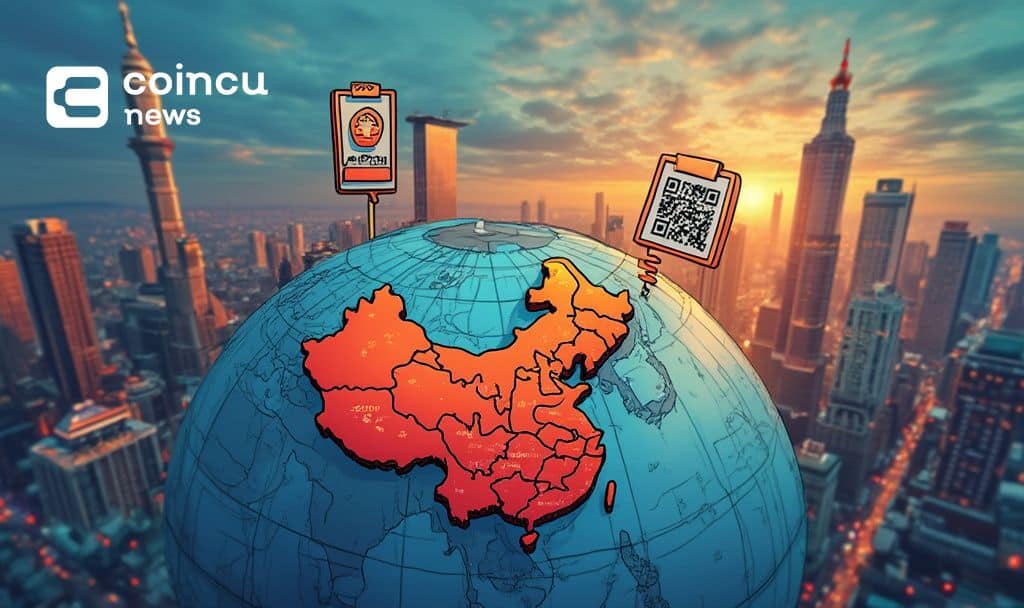
The post China Launches Cross-Border QR Code Payment Trial appeared on BitcoinEthereumNews.com. Key Points: Main event involves China initiating a cross-border QR code payment trial. Alipay and Ant International are key participants. Impact on financial security and regulatory focus on illicit finance. China’s central bank, led by Deputy Governor Lu Lei, initiated a trial of a unified cross-border QR code payment gateway with Alipay and Ant International as participants. This pilot addresses cross-border fund risks, aiming to enhance financial security amid rising money laundering through digital channels, despite muted crypto market reactions. China’s Cross-Border Payment Gateway Trial with Alipay The trial operation of a unified cross-border QR code payment gateway marks a milestone in China’s financial landscape. Prominent entities such as Alipay and Ant International are at the forefront, participating as the initial institutions in this venture. Lu Lei, Deputy Governor of the People’s Bank of China, highlighted the systemic risks posed by increased cross-border fund flows. Changes are expected in the dynamics of digital transactions, potentially enhancing transaction efficiency while tightening regulations around illicit finance. The initiative underscores China’s commitment to bolstering financial security amidst growing global fund movements. “The scale of cross-border fund flows is expanding, and the frequency is accelerating, providing opportunities for risks such as cross-border money laundering and terrorist financing. Some overseas illegal platforms transfer funds through channels such as virtual currencies and underground banks, creating a ‘resonance’ of risks at home and abroad, posing a challenge to China’s foreign exchange management and financial security.” — Lu Lei, Deputy Governor, People’s Bank of China Bitcoin and Impact of China’s Financial Initiatives Did you know? China’s latest initiative echoes the Payment Connect project of June 2025, furthering real-time cross-boundary remittances and expanding its influence on global financial systems. As of September 17, 2025, Bitcoin (BTC) stands at $115,748.72 with a market cap of $2.31 trillion, showing a 0.97%…
Share
BitcoinEthereumNews2025/09/18 05:28
Sberbank issues Russia’s first crypto-secured loan

Sberbank issues Russia’s first crypto-secured loan

The post Sberbank issues Russia’s first crypto-secured loan appeared on BitcoinEthereumNews.com. The largest Russian financial institution by assets, Sberbank,
Share
BitcoinEthereumNews2025/12/26 23:29
Academic Publishing and Fairness: A Game-Theoretic Model of Peer-Review Bias

Academic Publishing and Fairness: A Game-Theoretic Model of Peer-Review Bias

Exploring how biases in the peer-review system impact researchers' choices, showing how principles of fairness relate to the production of scientific knowledge based on topic importance and hardness.
Share
Hackernoon2025/09/17 23:15