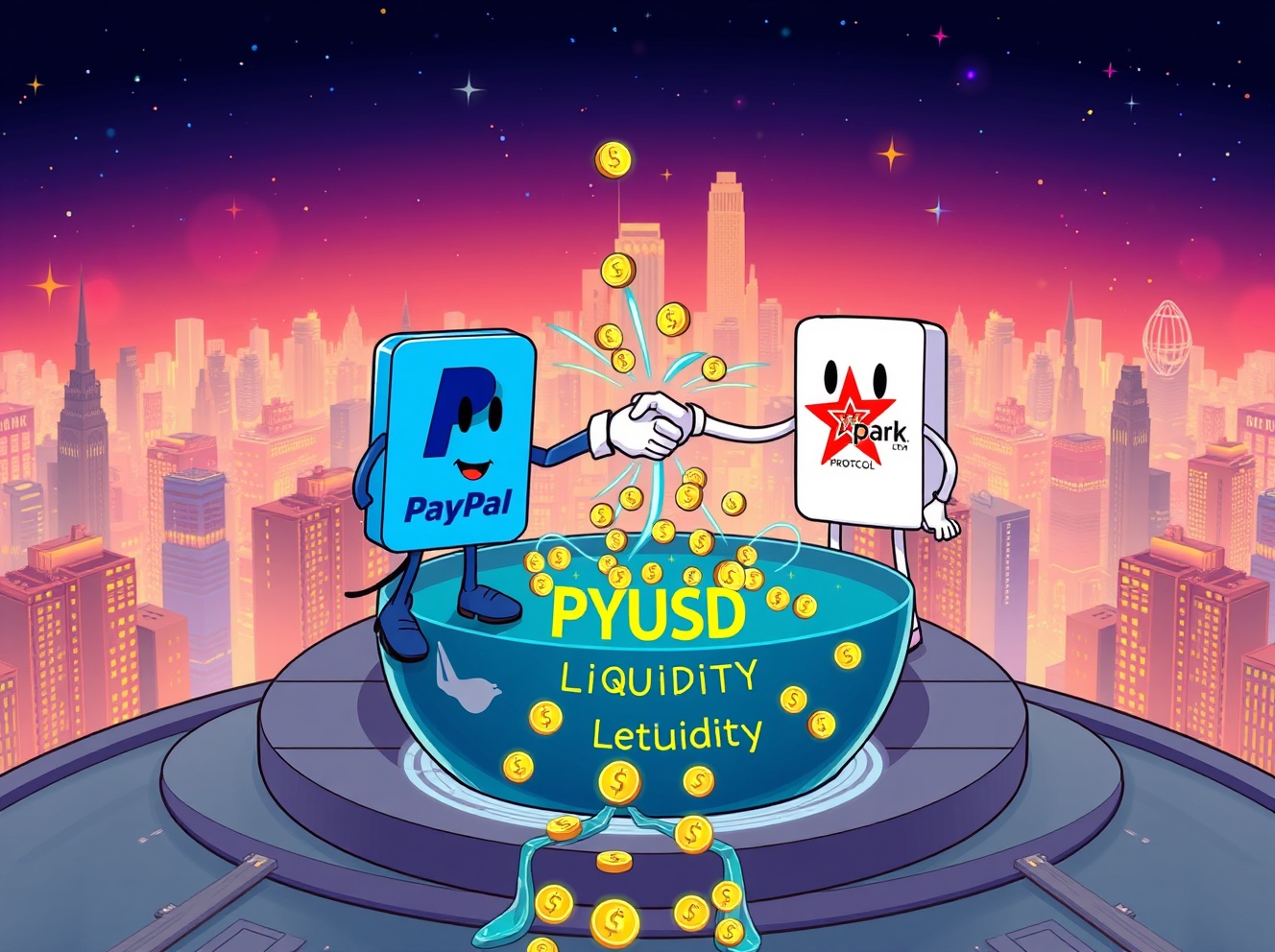
BitcoinWorld PYUSD Liquidity: Unlocking Massive Growth Through PayPal’s Spark Partnership The world of stablecoins is constantly evolving, and a recent development is set to make significant waves. PayPal, a household name in digital payments, has teamed up with the decentralized finance (DeFi) protocol Spark. This strategic collaboration aims to significantly boost PYUSD liquidity, marking a crucial step for PayPal’s stablecoin in the DeFi landscape. Understanding the Boost to PYUSD Liquidity This partnership is a game-changer for PayPal’s stablecoin, PYUSD. As Cointelegraph reported, SparkLend has become a key platform for PYUSD. Since its integration in August, PYUSD has attracted over $135 million in deposits on SparkLend. This impressive figure highlights the growing interest and trust in PayPal’s stablecoin within the DeFi community. What does this mean for users? Increased Accessibility: More platforms mean easier access to PYUSD. Better Trading Conditions: Higher liquidity often leads to tighter spreads and less price slippage. Enhanced Utility: PYUSD can be used more effectively across various DeFi applications. The goal is clear: to make PYUSD a more robust and widely adopted asset within the decentralized financial ecosystem by improving its PYUSD liquidity. Why is PYUSD Liquidity So Important for Stablecoins? Liquidity is the lifeblood of any financial asset, and stablecoins are no exception. For PYUSD, strong liquidity ensures its stability and usability. Imagine trying to buy or sell a large amount of PYUSD without enough liquidity — it would be difficult and potentially costly. This is where the Spark partnership comes into play, directly addressing this need. Key benefits of enhanced PYUSD liquidity include: Price Stability: Greater liquidity helps maintain the stable peg of PYUSD to the US dollar. Reduced Volatility: It minimizes large price swings during significant buy or sell orders. Improved Confidence: Users feel more secure knowing they can easily convert PYUSD when needed. Wider Adoption: As liquidity grows, more exchanges and protocols are likely to list and integrate PYUSD. PayPal’s move to enhance PYUSD liquidity through Spark is a strategic decision that signals its long-term commitment to the stablecoin market and its integration with DeFi. How Does This Partnership Impact the Broader DeFi Ecosystem? The collaboration between a traditional finance giant like PayPal and a DeFi protocol like Spark bridges two worlds. It not only benefits PYUSD but also brings mainstream attention and trust to the broader DeFi ecosystem. This move could inspire other traditional financial institutions to explore similar partnerships, fostering innovation and growth in decentralized finance. The deposits on SparkLend demonstrate a tangible impact. Users are actively engaging with PYUSD, utilizing it for lending and borrowing within the protocol. This organic growth in usage is a strong indicator of the stablecoin’s potential to become a significant player in the DeFi space, driven by robust PYUSD liquidity. What Challenges and Opportunities Lie Ahead for PYUSD? While the partnership with Spark offers significant opportunities, challenges remain. Regulatory scrutiny around stablecoins continues to evolve, and competition from established stablecoins is fierce. However, PayPal’s brand recognition and vast user base provide a unique advantage. The increased PYUSD liquidity positions it well to capture a substantial share of the market. The opportunity lies in leveraging PayPal’s global reach and integrating PYUSD into its existing payment infrastructure. Imagine seamless PYUSD transactions across millions of merchants worldwide. This potential utility, combined with strong DeFi integration, could make PYUSD a dominant force. A Glimpse into the Future of Stablecoins PayPal’s partnership with Spark to boost PYUSD liquidity is more than just a collaboration; it’s a testament to the evolving financial landscape. It highlights the growing convergence of traditional finance and decentralized innovation. As PYUSD continues to gain traction, it will be exciting to watch how this stablecoin shapes the future of digital payments and the broader DeFi ecosystem. This strategic alliance ensures that PYUSD is not just another stablecoin but a well-supported asset with a clear path to widespread adoption and utility. Frequently Asked Questions (FAQs) What is PYUSD? PYUSD is PayPal’s US dollar-pegged stablecoin, designed to facilitate digital payments and enable seamless transfers within and outside the PayPal ecosystem. What is Spark Protocol? Spark Protocol is a decentralized finance (DeFi) lending and borrowing platform, similar to Aave, that allows users to deposit assets to earn interest or borrow against their collateral. How does this partnership increase PYUSD liquidity? By integrating PYUSD into SparkLend, users can deposit PYUSD to earn yields or use it as collateral for loans, thereby increasing the available supply and demand for the stablecoin within the DeFi ecosystem. Why is liquidity crucial for a stablecoin like PYUSD? High liquidity ensures that PYUSD can be easily bought and sold without significant price fluctuations, maintaining its peg to the US dollar and making it a reliable medium for transactions and value storage. What are the potential benefits for PayPal users? PayPal users could benefit from enhanced utility for PYUSD, including opportunities for earning yields in DeFi, easier access to decentralized financial services, and potentially lower transaction costs for cross-border payments. If you found this article insightful, consider sharing it with your network! Stay informed on the latest developments in stablecoins and decentralized finance by following our updates. To learn more about the latest crypto market trends, explore our article on key developments shaping stablecoins institutional adoption. This post PYUSD Liquidity: Unlocking Massive Growth Through PayPal’s Spark Partnership first appeared on BitcoinWorld.BitcoinWorld PYUSD Liquidity: Unlocking Massive Growth Through PayPal’s Spark Partnership The world of stablecoins is constantly evolving, and a recent development is set to make significant waves. PayPal, a household name in digital payments, has teamed up with the decentralized finance (DeFi) protocol Spark. This strategic collaboration aims to significantly boost PYUSD liquidity, marking a crucial step for PayPal’s stablecoin in the DeFi landscape. Understanding the Boost to PYUSD Liquidity This partnership is a game-changer for PayPal’s stablecoin, PYUSD. As Cointelegraph reported, SparkLend has become a key platform for PYUSD. Since its integration in August, PYUSD has attracted over $135 million in deposits on SparkLend. This impressive figure highlights the growing interest and trust in PayPal’s stablecoin within the DeFi community. What does this mean for users? Increased Accessibility: More platforms mean easier access to PYUSD. Better Trading Conditions: Higher liquidity often leads to tighter spreads and less price slippage. Enhanced Utility: PYUSD can be used more effectively across various DeFi applications. The goal is clear: to make PYUSD a more robust and widely adopted asset within the decentralized financial ecosystem by improving its PYUSD liquidity. Why is PYUSD Liquidity So Important for Stablecoins? Liquidity is the lifeblood of any financial asset, and stablecoins are no exception. For PYUSD, strong liquidity ensures its stability and usability. Imagine trying to buy or sell a large amount of PYUSD without enough liquidity — it would be difficult and potentially costly. This is where the Spark partnership comes into play, directly addressing this need. Key benefits of enhanced PYUSD liquidity include: Price Stability: Greater liquidity helps maintain the stable peg of PYUSD to the US dollar. Reduced Volatility: It minimizes large price swings during significant buy or sell orders. Improved Confidence: Users feel more secure knowing they can easily convert PYUSD when needed. Wider Adoption: As liquidity grows, more exchanges and protocols are likely to list and integrate PYUSD. PayPal’s move to enhance PYUSD liquidity through Spark is a strategic decision that signals its long-term commitment to the stablecoin market and its integration with DeFi. How Does This Partnership Impact the Broader DeFi Ecosystem? The collaboration between a traditional finance giant like PayPal and a DeFi protocol like Spark bridges two worlds. It not only benefits PYUSD but also brings mainstream attention and trust to the broader DeFi ecosystem. This move could inspire other traditional financial institutions to explore similar partnerships, fostering innovation and growth in decentralized finance. The deposits on SparkLend demonstrate a tangible impact. Users are actively engaging with PYUSD, utilizing it for lending and borrowing within the protocol. This organic growth in usage is a strong indicator of the stablecoin’s potential to become a significant player in the DeFi space, driven by robust PYUSD liquidity. What Challenges and Opportunities Lie Ahead for PYUSD? While the partnership with Spark offers significant opportunities, challenges remain. Regulatory scrutiny around stablecoins continues to evolve, and competition from established stablecoins is fierce. However, PayPal’s brand recognition and vast user base provide a unique advantage. The increased PYUSD liquidity positions it well to capture a substantial share of the market. The opportunity lies in leveraging PayPal’s global reach and integrating PYUSD into its existing payment infrastructure. Imagine seamless PYUSD transactions across millions of merchants worldwide. This potential utility, combined with strong DeFi integration, could make PYUSD a dominant force. A Glimpse into the Future of Stablecoins PayPal’s partnership with Spark to boost PYUSD liquidity is more than just a collaboration; it’s a testament to the evolving financial landscape. It highlights the growing convergence of traditional finance and decentralized innovation. As PYUSD continues to gain traction, it will be exciting to watch how this stablecoin shapes the future of digital payments and the broader DeFi ecosystem. This strategic alliance ensures that PYUSD is not just another stablecoin but a well-supported asset with a clear path to widespread adoption and utility. Frequently Asked Questions (FAQs) What is PYUSD? PYUSD is PayPal’s US dollar-pegged stablecoin, designed to facilitate digital payments and enable seamless transfers within and outside the PayPal ecosystem. What is Spark Protocol? Spark Protocol is a decentralized finance (DeFi) lending and borrowing platform, similar to Aave, that allows users to deposit assets to earn interest or borrow against their collateral. How does this partnership increase PYUSD liquidity? By integrating PYUSD into SparkLend, users can deposit PYUSD to earn yields or use it as collateral for loans, thereby increasing the available supply and demand for the stablecoin within the DeFi ecosystem. Why is liquidity crucial for a stablecoin like PYUSD? High liquidity ensures that PYUSD can be easily bought and sold without significant price fluctuations, maintaining its peg to the US dollar and making it a reliable medium for transactions and value storage. What are the potential benefits for PayPal users? PayPal users could benefit from enhanced utility for PYUSD, including opportunities for earning yields in DeFi, easier access to decentralized financial services, and potentially lower transaction costs for cross-border payments. If you found this article insightful, consider sharing it with your network! Stay informed on the latest developments in stablecoins and decentralized finance by following our updates. To learn more about the latest crypto market trends, explore our article on key developments shaping stablecoins institutional adoption. This post PYUSD Liquidity: Unlocking Massive Growth Through PayPal’s Spark Partnership first appeared on BitcoinWorld.

PYUSD Liquidity: Unlocking Massive Growth Through PayPal’s Spark Partnership

2025/09/26 00:40
5 min read

BitcoinWorld

PYUSD Liquidity: Unlocking Massive Growth Through PayPal’s Spark Partnership

The world of stablecoins is constantly evolving, and a recent development is set to make significant waves. PayPal, a household name in digital payments, has teamed up with the decentralized finance (DeFi) protocol Spark. This strategic collaboration aims to significantly boost PYUSD liquidity, marking a crucial step for PayPal’s stablecoin in the DeFi landscape.

Understanding the Boost to PYUSD Liquidity

This partnership is a game-changer for PayPal’s stablecoin, PYUSD. As Cointelegraph reported, SparkLend has become a key platform for PYUSD. Since its integration in August, PYUSD has attracted over $135 million in deposits on SparkLend. This impressive figure highlights the growing interest and trust in PayPal’s stablecoin within the DeFi community.

What does this mean for users?

  • Increased Accessibility: More platforms mean easier access to PYUSD.
  • Better Trading Conditions: Higher liquidity often leads to tighter spreads and less price slippage.
  • Enhanced Utility: PYUSD can be used more effectively across various DeFi applications.

The goal is clear: to make PYUSD a more robust and widely adopted asset within the decentralized financial ecosystem by improving its PYUSD liquidity.

Why is PYUSD Liquidity So Important for Stablecoins?

Liquidity is the lifeblood of any financial asset, and stablecoins are no exception. For PYUSD, strong liquidity ensures its stability and usability. Imagine trying to buy or sell a large amount of PYUSD without enough liquidity — it would be difficult and potentially costly. This is where the Spark partnership comes into play, directly addressing this need.

Key benefits of enhanced PYUSD liquidity include:

  • Price Stability: Greater liquidity helps maintain the stable peg of PYUSD to the US dollar.
  • Reduced Volatility: It minimizes large price swings during significant buy or sell orders.
  • Improved Confidence: Users feel more secure knowing they can easily convert PYUSD when needed.
  • Wider Adoption: As liquidity grows, more exchanges and protocols are likely to list and integrate PYUSD.

PayPal’s move to enhance PYUSD liquidity through Spark is a strategic decision that signals its long-term commitment to the stablecoin market and its integration with DeFi.

How Does This Partnership Impact the Broader DeFi Ecosystem?

The collaboration between a traditional finance giant like PayPal and a DeFi protocol like Spark bridges two worlds. It not only benefits PYUSD but also brings mainstream attention and trust to the broader DeFi ecosystem. This move could inspire other traditional financial institutions to explore similar partnerships, fostering innovation and growth in decentralized finance.

The deposits on SparkLend demonstrate a tangible impact. Users are actively engaging with PYUSD, utilizing it for lending and borrowing within the protocol. This organic growth in usage is a strong indicator of the stablecoin’s potential to become a significant player in the DeFi space, driven by robust PYUSD liquidity.

What Challenges and Opportunities Lie Ahead for PYUSD?

While the partnership with Spark offers significant opportunities, challenges remain. Regulatory scrutiny around stablecoins continues to evolve, and competition from established stablecoins is fierce. However, PayPal’s brand recognition and vast user base provide a unique advantage. The increased PYUSD liquidity positions it well to capture a substantial share of the market.

The opportunity lies in leveraging PayPal’s global reach and integrating PYUSD into its existing payment infrastructure. Imagine seamless PYUSD transactions across millions of merchants worldwide. This potential utility, combined with strong DeFi integration, could make PYUSD a dominant force.

A Glimpse into the Future of Stablecoins

PayPal’s partnership with Spark to boost PYUSD liquidity is more than just a collaboration; it’s a testament to the evolving financial landscape. It highlights the growing convergence of traditional finance and decentralized innovation. As PYUSD continues to gain traction, it will be exciting to watch how this stablecoin shapes the future of digital payments and the broader DeFi ecosystem.

This strategic alliance ensures that PYUSD is not just another stablecoin but a well-supported asset with a clear path to widespread adoption and utility.

Frequently Asked Questions (FAQs)

What is PYUSD?

PYUSD is PayPal’s US dollar-pegged stablecoin, designed to facilitate digital payments and enable seamless transfers within and outside the PayPal ecosystem.

What is Spark Protocol?

Spark Protocol is a decentralized finance (DeFi) lending and borrowing platform, similar to Aave, that allows users to deposit assets to earn interest or borrow against their collateral.

How does this partnership increase PYUSD liquidity?

By integrating PYUSD into SparkLend, users can deposit PYUSD to earn yields or use it as collateral for loans, thereby increasing the available supply and demand for the stablecoin within the DeFi ecosystem.

Why is liquidity crucial for a stablecoin like PYUSD?

High liquidity ensures that PYUSD can be easily bought and sold without significant price fluctuations, maintaining its peg to the US dollar and making it a reliable medium for transactions and value storage.

What are the potential benefits for PayPal users?

PayPal users could benefit from enhanced utility for PYUSD, including opportunities for earning yields in DeFi, easier access to decentralized financial services, and potentially lower transaction costs for cross-border payments.

If you found this article insightful, consider sharing it with your network! Stay informed on the latest developments in stablecoins and decentralized finance by following our updates.

To learn more about the latest crypto market trends, explore our article on key developments shaping stablecoins institutional adoption.

This post PYUSD Liquidity: Unlocking Massive Growth Through PayPal’s Spark Partnership first appeared on BitcoinWorld.

Market Opportunity
Illusion of Life Logo
Illusion of Life Price(SPARK)
$0.001063
$0.001063$0.001063
-12.36%
USD
Illusion of Life (SPARK) Live Price Chart
Disclaimer: The articles reposted on this site are sourced from public platforms and are provided for informational purposes only. They do not necessarily reflect the views of MEXC. All rights remain with the original authors. If you believe any content infringes on third-party rights, please contact service@support.mexc.com for removal. MEXC makes no guarantees regarding the accuracy, completeness, or timeliness of the content and is not responsible for any actions taken based on the information provided. The content does not constitute financial, legal, or other professional advice, nor should it be considered a recommendation or endorsement by MEXC.

You May Also Like

Huawei goes public with chip ambitions, boosting China’s tech autonomy post-Nvidia
Huawei goes public with chip ambitions, boosting China’s tech autonomy post-Nvidia

The post Huawei goes public with chip ambitions, boosting China’s tech autonomy post-Nvidia appeared on BitcoinEthereumNews.com. Huawei publicly revealed its full chip roadmap on Thursday during its annual Connect conference in Shanghai, confirming it would begin releasing some of the world’s most powerful computing systems in a push to reduce China’s reliance on Nvidia and other foreign chipmakers, according to Reuters. Eric Xu, Huawei’s rotating chairman, disclosed that the company had developed its own high-bandwidth memory, a technology previously led by Samsung and SK Hynix. Xu said, “We will follow a 1-year release cycle and double compute with each release,” making it clear Huawei now intends to release next-gen chips and hardware annually with increased processing capabilities. The announcement came just days before U.S. President Donald Trump and Chinese President Xi Jinping are expected to meet on Friday, following trade talks between both countries earlier in the week. The move is widely seen as an attempt by Beijing to project confidence in its tech ecosystem as U.S.-China tensions continue to grow. Huawei releases full schedule for Ascend, Kunpeng chips, and computing clusters Huawei detailed the timeline for its AI chip series Ascend, starting with the 910C, which was released earlier this year. The Ascend 950 will launch in 2026 with two variants. The 960 will follow in 2027, and the 970 is scheduled for 2028. Huawei also confirmed its Kunpeng server chips will receive updates in 2026 and 2028. China’s chip war with the U.S. escalated this week as Nvidia was accused of violating China’s anti-monopoly law, and several large Chinese tech firms were ordered to cancel Nvidia AI chip orders. Financial Times reported that government regulators had also instructed distributors to stop placing new Nvidia orders. One executive in China’s chip distribution industry said his company was told verbally to stop buying Nvidia chips and was only allowed to sell current inventory. That executive declined…
Share
BitcoinEthereumNews2025/09/18 21:20
Tron Makes Bold Moves in TRX Tokens Acquisition

Tron Makes Bold Moves in TRX Tokens Acquisition

Tron's Justin Sun supports TRX's strategic treasury initiative. TRX prices rise, signaling short-term recovery, yet long-term climate is uncertain. Continue Reading
Share
Coinstats2026/02/09 15:28
White House Reopens Stablecoin Talks With Banks and Crypto

White House Reopens Stablecoin Talks With Banks and Crypto

The White House will host another important meeting on Tuesday, February 10, 2026, bringing together major banks and crypto companies. The goal is simple, as officials
Share
Coinfomania2026/02/09 14:53