Bank of England Governor Andrew Bailey has outlined plans to grant widely used stablecoins access to central bank accounts while warning the tokens could reshape Britain’s financial system. According to a report from the Financial Times, Bailey described stablecoins as a technology that could separate money holding from credit provision, potentially reducing the role of commercial banks in the economy. The governor believes that this shift would require careful management to preserve the link between money and credit creation that underpins economic activity. His intervention coincides with the Bank of England’s preparation to publish a consultation paper on its systemic stablecoin regime, which will set standards for tokens used at scale for everyday payments or for settling tokenized financial markets.Andrew Bailey, Governor of the Bank of England (Source: Semafor) BoE Proposes Access to Central Bank Accounts Amid Deposit Drain Concerns Bailey explained that Britain’s financial system currently combines money holding with credit provision through fractional reserve banking, where commercial bank deposits directly support lending to households and companies. He noted that stablecoins could allow a different arrangement where money and credit provision are partially separated, with banks and stablecoins coexisting while non-banks carry out more lending activity. The central bank has also proposed ownership limits of £10,000 to £20,000 for people and £10 million for businesses on systemic stablecoins. Sasha Mills, the Bank’s executive director for financial market infrastructure, said the limits would “mitigate financial stability risks stemming from large and rapid outflows of deposits from the banking sector”. Bailey particularly stressed that backing assets for stablecoins must be free of credit, interest, and exchange rate risk to ensure value stability, and must be accompanied by insurance schemes and statutory resolution arrangements similar to bank deposits. He added that exchange terms must be known, consistent, and directly convertible into other forms of money rather than dependent on crypto exchanges and their business terms. The governor acknowledged that the technology behind stablecoins is new but poses an old central banking question about ensuring the link between money and credit creation. Crypto Industry Pushes Back Against the Proposed Stablecoin Cap Tom Duff Gordon, vice-president of international policy at Coinbase, told the Financial Times that “imposing caps on stablecoins is bad for UK savers, bad for the City and bad for sterling” and that no other major jurisdiction has deemed caps necessary. Similarly, Simon Jennings, executive director of the UK Cryptoasset Business Council, argued that “limits simply don’t work in practice” because stablecoin issuers cannot monitor token holders in real time. He warned that enforcing caps would require costly new systems such as digital IDs or constant coordination between wallets. Riccardo Tordera-Ricchi, director of policy at The Payments Association, also said, “just as there are no limits on cash, bank accounts, or e-money, there is no reason beyond scepticism to impose limits on stablecoin ownership”. The criticism threatens to deepen tensions between the Bank of England and the Treasury after Chancellor Rachel Reeves committed in her Mansion House speech to “drive forward developments in blockchain technology, including tokenised securities and stablecoins.” Given the ongoing criticism, the Bank of England has clarified that its proposed limits could be “transitional” as the financial system adjusts to the growth of digital money. The global stablecoin market has grown to $298 billion and received a major boost after Congress passed the GENIUS Act in July, introducing a regulatory framework expected to embed stablecoins as a key part of the U.S. financial system. Meanwhile, Coinbase has forecast that the stablecoin market could reach $1.2 trillion by 2028 and has recently published research titled “Beyond the Deposit Debate,” challenging the banking industry’s claims that stablecoins threaten traditional financial stability. The exchange called the “deposit erosion” narrative a myth designed to protect banks’ $187 billion annual payment processing monopoly. Coinbase argues that banks currently park $3.3 trillion in Federal Reserve reserves, earning $176 billion risk-free annually, rather than extending additional loans. Bank of England Governor Andrew Bailey has outlined plans to grant widely used stablecoins access to central bank accounts while warning the tokens could reshape Britain’s financial system. According to a report from the Financial Times, Bailey described stablecoins as a technology that could separate money holding from credit provision, potentially reducing the role of commercial banks in the economy. The governor believes that this shift would require careful management to preserve the link between money and credit creation that underpins economic activity. His intervention coincides with the Bank of England’s preparation to publish a consultation paper on its systemic stablecoin regime, which will set standards for tokens used at scale for everyday payments or for settling tokenized financial markets.Andrew Bailey, Governor of the Bank of England (Source: Semafor) BoE Proposes Access to Central Bank Accounts Amid Deposit Drain Concerns Bailey explained that Britain’s financial system currently combines money holding with credit provision through fractional reserve banking, where commercial bank deposits directly support lending to households and companies. He noted that stablecoins could allow a different arrangement where money and credit provision are partially separated, with banks and stablecoins coexisting while non-banks carry out more lending activity. The central bank has also proposed ownership limits of £10,000 to £20,000 for people and £10 million for businesses on systemic stablecoins. Sasha Mills, the Bank’s executive director for financial market infrastructure, said the limits would “mitigate financial stability risks stemming from large and rapid outflows of deposits from the banking sector”. Bailey particularly stressed that backing assets for stablecoins must be free of credit, interest, and exchange rate risk to ensure value stability, and must be accompanied by insurance schemes and statutory resolution arrangements similar to bank deposits. He added that exchange terms must be known, consistent, and directly convertible into other forms of money rather than dependent on crypto exchanges and their business terms. The governor acknowledged that the technology behind stablecoins is new but poses an old central banking question about ensuring the link between money and credit creation. Crypto Industry Pushes Back Against the Proposed Stablecoin Cap Tom Duff Gordon, vice-president of international policy at Coinbase, told the Financial Times that “imposing caps on stablecoins is bad for UK savers, bad for the City and bad for sterling” and that no other major jurisdiction has deemed caps necessary. Similarly, Simon Jennings, executive director of the UK Cryptoasset Business Council, argued that “limits simply don’t work in practice” because stablecoin issuers cannot monitor token holders in real time. He warned that enforcing caps would require costly new systems such as digital IDs or constant coordination between wallets. Riccardo Tordera-Ricchi, director of policy at The Payments Association, also said, “just as there are no limits on cash, bank accounts, or e-money, there is no reason beyond scepticism to impose limits on stablecoin ownership”. The criticism threatens to deepen tensions between the Bank of England and the Treasury after Chancellor Rachel Reeves committed in her Mansion House speech to “drive forward developments in blockchain technology, including tokenised securities and stablecoins.” Given the ongoing criticism, the Bank of England has clarified that its proposed limits could be “transitional” as the financial system adjusts to the growth of digital money. The global stablecoin market has grown to $298 billion and received a major boost after Congress passed the GENIUS Act in July, introducing a regulatory framework expected to embed stablecoins as a key part of the U.S. financial system. Meanwhile, Coinbase has forecast that the stablecoin market could reach $1.2 trillion by 2028 and has recently published research titled “Beyond the Deposit Debate,” challenging the banking industry’s claims that stablecoins threaten traditional financial stability. The exchange called the “deposit erosion” narrative a myth designed to protect banks’ $187 billion annual payment processing monopoly. Coinbase argues that banks currently park $3.3 trillion in Federal Reserve reserves, earning $176 billion risk-free annually, rather than extending additional loans.

Bank of England Governor Says Stablecoins Could Reduce UK Reliance on Commercial Banks – Could It?

2025/10/02 03:05
4 min read

Bank of England Governor Andrew Bailey has outlined plans to grant widely used stablecoins access to central bank accounts while warning the tokens could reshape Britain’s financial system.

According to a report from the Financial Times, Bailey described stablecoins as a technology that could separate money holding from credit provision, potentially reducing the role of commercial banks in the economy.

The governor believes that this shift would require careful management to preserve the link between money and credit creation that underpins economic activity.

His intervention coincides with the Bank of England’s preparation to publish a consultation paper on its systemic stablecoin regime, which will set standards for tokens used at scale for everyday payments or for settling tokenized financial markets.
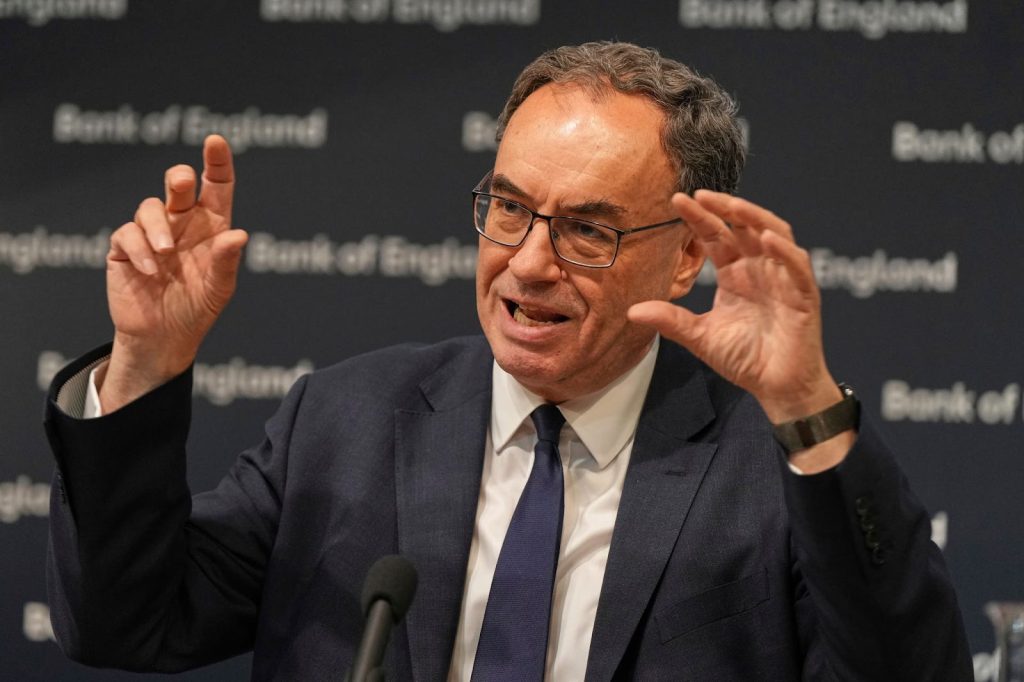
Bank of England Governor Says Stablecoins Could Reduce UK Reliance on Commercial Banks - Could It?Andrew Bailey, Governor of the Bank of England (Source: Semafor)

BoE Proposes Access to Central Bank Accounts Amid Deposit Drain Concerns

Bailey explained that Britain’s financial system currently combines money holding with credit provision through fractional reserve banking, where commercial bank deposits directly support lending to households and companies.

He noted that stablecoins could allow a different arrangement where money and credit provision are partially separated, with banks and stablecoins coexisting while non-banks carry out more lending activity.

The central bank has also proposed ownership limits of £10,000 to £20,000 for people and £10 million for businesses on systemic stablecoins.

Sasha Mills, the Bank’s executive director for financial market infrastructure, said the limits would “mitigate financial stability risks stemming from large and rapid outflows of deposits from the banking sector”.

Bailey particularly stressed that backing assets for stablecoins must be free of credit, interest, and exchange rate risk to ensure value stability, and must be accompanied by insurance schemes and statutory resolution arrangements similar to bank deposits.

He added that exchange terms must be known, consistent, and directly convertible into other forms of money rather than dependent on crypto exchanges and their business terms.

The governor acknowledged that the technology behind stablecoins is new but poses an old central banking question about ensuring the link between money and credit creation.

Crypto Industry Pushes Back Against the Proposed Stablecoin Cap

Tom Duff Gordon, vice-president of international policy at Coinbase, told the Financial Times that “imposing caps on stablecoins is bad for UK savers, bad for the City and bad for sterling” and that no other major jurisdiction has deemed caps necessary.

Similarly, Simon Jennings, executive director of the UK Cryptoasset Business Council, argued that “limits simply don’t work in practice” because stablecoin issuers cannot monitor token holders in real time.

He warned that enforcing caps would require costly new systems such as digital IDs or constant coordination between wallets.

Riccardo Tordera-Ricchi, director of policy at The Payments Association, also said, “just as there are no limits on cash, bank accounts, or e-money, there is no reason beyond scepticism to impose limits on stablecoin ownership”.

The criticism threatens to deepen tensions between the Bank of England and the Treasury after Chancellor Rachel Reeves committed in her Mansion House speech to “drive forward developments in blockchain technology, including tokenised securities and stablecoins.”

Given the ongoing criticism, the Bank of England has clarified that its proposed limits could be “transitional” as the financial system adjusts to the growth of digital money.

The global stablecoin market has grown to $298 billion and received a major boost after Congress passed the GENIUS Act in July, introducing a regulatory framework expected to embed stablecoins as a key part of the U.S. financial system.

Meanwhile, Coinbase has forecast that the stablecoin market could reach $1.2 trillion by 2028 and has recently published research titled “Beyond the Deposit Debate,” challenging the banking industry’s claims that stablecoins threaten traditional financial stability.

The exchange called the “deposit erosion” narrative a myth designed to protect banks’ $187 billion annual payment processing monopoly.

Coinbase argues that banks currently park $3.3 trillion in Federal Reserve reserves, earning $176 billion risk-free annually, rather than extending additional loans.

Market Opportunity
Lorenzo Protocol Logo
Lorenzo Protocol Price(BANK)
$0,03017
$0,03017$0,03017
+4,46%
USD
Lorenzo Protocol (BANK) Live Price Chart
Disclaimer: The articles reposted on this site are sourced from public platforms and are provided for informational purposes only. They do not necessarily reflect the views of MEXC. All rights remain with the original authors. If you believe any content infringes on third-party rights, please contact service@support.mexc.com for removal. MEXC makes no guarantees regarding the accuracy, completeness, or timeliness of the content and is not responsible for any actions taken based on the information provided. The content does not constitute financial, legal, or other professional advice, nor should it be considered a recommendation or endorsement by MEXC.

You May Also Like

Wormhole launches reserve tying protocol revenue to token

Wormhole launches reserve tying protocol revenue to token

The post Wormhole launches reserve tying protocol revenue to token appeared on BitcoinEthereumNews.com. Wormhole is changing how its W token works by creating a new reserve designed to hold value for the long term. Announced on Wednesday, the Wormhole Reserve will collect onchain and offchain revenues and other value generated across the protocol and its applications (including Portal) and accumulate them into W, locking the tokens within the reserve. The reserve is part of a broader update called W 2.0. Other changes include a 4% targeted base yield for tokenholders who stake and take part in governance. While staking rewards will vary, Wormhole said active users of ecosystem apps can earn boosted yields through features like Portal Earn. The team stressed that no new tokens are being minted; rewards come from existing supply and protocol revenues, keeping the cap fixed at 10 billion. Wormhole is also overhauling its token release schedule. Instead of releasing large amounts of W at once under the old “cliff” model, the network will shift to steady, bi-weekly unlocks starting October 3, 2025. The aim is to avoid sharp periods of selling pressure and create a more predictable environment for investors. Lockups for some groups, including validators and investors, will extend an additional six months, until October 2028. Core contributor tokens remain under longer contractual time locks. Wormhole launched in 2020 as a cross-chain bridge and now connects more than 40 blockchains. The W token powers governance and staking, with a capped supply of 10 billion. By redirecting fees and revenues into the new reserve, Wormhole is betting that its token can maintain value as demand for moving assets and data between chains grows. This is a developing story. This article was generated with the assistance of AI and reviewed by editor Jeffrey Albus before publication. Get the news in your inbox. Explore Blockworks newsletters: Source: https://blockworks.co/news/wormhole-launches-reserve
Share
BitcoinEthereumNews2025/09/18 01:55
Trump's Epstein confession revealed in newly surfaced FBI files: 'Everyone knows'

Trump's Epstein confession revealed in newly surfaced FBI files: 'Everyone knows'

An explosive new report has yet again undercut President Donald Trump's repeated denials that he knew of the late sex offender Jeffrey Epstein's crimes against
Share
Rawstory2026/02/10 08:09
Trump sets a 15% growth target; Warsh's potential appointment as Fed head may increase pressure.

Trump sets a 15% growth target; Warsh's potential appointment as Fed head may increase pressure.

PANews reported on February 10th that, according to Jinshi, Trump stated that his nominee for Federal Reserve Chair could stimulate economic growth at a rate of
Share
PANews2026/02/10 08:28