The Ethereum ETF landscape just shifted in a way few saw coming. Grayscale Investments has officially introduced staking to its Ethereum Exchange-Traded Funds, a first in the U.S. market. This move, announced on October 6, signals a new era where traditional investors can finally earn staking rewards directly through regulated ETF structures. In simple terms, Grayscale is blending Wall Street’s favorite vehicle, ETFs, with one of blockchain’s core reward mechanisms. That combination could redefine how institutional capital interacts with Ethereum. Ethereum ETFs Just Got an Upgrade Grayscale confirmed that both its Ethereum Mini Trust (ETH) and Ethereum Trust (ETHE) now include staking features. Investors can either have rewards automatically reinvested to compound gains or receive them as cash payouts. The firm also extended staking to its Solana Trust (GSOL), pending regulatory clearance to list it as a spot product. Once approved, it will be among the first Solana-based ETFs in the United States to support staking. According to Grayscale, this dual-option model was crafted to give investors flexibility, from those seeking long-term growth to others prioritizing short-term liquidity. The move comes as Ethereum’s staking yield averages around 3.2%, giving ETF issuers an avenue to offset management fees and pass on savings to investors. Regulatory Shift Opens the Door For years, U.S. regulators treated staking as a gray zone. Under the previous SEC chair, some staking programs were classified as unregistered securities. That stance led to enforcement actions and forced several exchanges to shut down or restructure their staking services. But tides are changing. Over the past year, regulators have softened their tone. Liquid staking, when properly structured, is no longer automatically considered a securities offering. The shift, coupled with friendlier crypto rhetoric under the Trump administration, gave firms like Grayscale the green light to innovate. Ethereum’s proof-of-stake design rewards validators who help secure the network. By integrating that directly into ETFs, Grayscale is essentially bridging DeFi yields with the comfort of traditional finance. Institutional Stakes Rise Market analysts believe this could reshape competition in the Ethereum ETF sector. Lower fees, coupled with yield potential, make ETH-based funds more attractive than ever. As of early October, about 36 million ETH, roughly 30% of the total supply, is staked, with liquid staking protocols like Lido leading the pack. Institutional involvement through ETFs could push that number even higher. “Ethereum staking through ETFs introduces a new standard for yield exposure in regulated markets,” wrote market analyst Ryan Selkis on X, calling it “a long-awaited bridge between crypto utility and traditional asset management.” If major players like BlackRock or Fidelity follow Grayscale’s lead, the competition could compress fees industry-wide, a win for investors and a potential catalyst for fresh inflows into ETH. Risks and Realities Despite optimism, experts warn that staking isn’t risk-free. Validator concentration could create centralization risks, and yield fluctuations may impact fund performance. Redemption management is another challenge; ETFs must maintain enough liquid ETH to process withdrawals while staking a meaningful portion to earn rewards. Still, Grayscale’s institutional staking setup, using vetted validator networks and custodians, is designed to balance compliance with yield generation. It marks a careful but confident step into a more mature era of crypto finance. Conclusion Grayscale’s integration of staking into Ethereum ETFs is more than a corporate tweak; it’s a statement. It suggests that crypto yield products can exist inside the rules, not around them. For Ethereum, it could mean new layers of liquidity, demand, and long-term network stability. For investors, it’s a taste of passive income without leaving the comfort zone of regulated markets. As the race for ETF innovation heats up, Grayscale may have just given Ethereum a new growth narrative, one where staking isn’t just for crypto natives anymore. Frequently Asked Questions 1. What does staking in an ETF mean?It allows investors to earn yield from blockchain validation directly within an ETF structure, without managing tokens themselves. 2. Is staking in ETFs safe?While it adds yield potential, risks like validator performance, network slashing, and liquidity constraints remain. 3. How does this affect Ethereum’s price?More staking can reduce circulating supply, which may support long-term price stability if demand grows. 4. Will other asset managers follow?Yes, many analysts expect competitors like BlackRock or Fidelity to explore similar staking integrations. Glossary of Key Terms ETF (Exchange-Traded Fund):A pooled investment vehicle traded on stock exchanges, offering exposure to assets like crypto. Staking:The process of locking up crypto to validate transactions on proof-of-stake networks and earn rewards. ETH:The native cryptocurrency of the Ethereum network, used for transactions and staking. Validator:A network participant who helps confirm transactions and maintain blockchain security in exchange for rewards. Read More: Why Grayscale’s Ethereum ETF Staking Could Spark the Next Institutional Wave">Why Grayscale’s Ethereum ETF Staking Could Spark the Next Institutional WaveThe Ethereum ETF landscape just shifted in a way few saw coming. Grayscale Investments has officially introduced staking to its Ethereum Exchange-Traded Funds, a first in the U.S. market. This move, announced on October 6, signals a new era where traditional investors can finally earn staking rewards directly through regulated ETF structures. In simple terms, Grayscale is blending Wall Street’s favorite vehicle, ETFs, with one of blockchain’s core reward mechanisms. That combination could redefine how institutional capital interacts with Ethereum. Ethereum ETFs Just Got an Upgrade Grayscale confirmed that both its Ethereum Mini Trust (ETH) and Ethereum Trust (ETHE) now include staking features. Investors can either have rewards automatically reinvested to compound gains or receive them as cash payouts. The firm also extended staking to its Solana Trust (GSOL), pending regulatory clearance to list it as a spot product. Once approved, it will be among the first Solana-based ETFs in the United States to support staking. According to Grayscale, this dual-option model was crafted to give investors flexibility, from those seeking long-term growth to others prioritizing short-term liquidity. The move comes as Ethereum’s staking yield averages around 3.2%, giving ETF issuers an avenue to offset management fees and pass on savings to investors. Regulatory Shift Opens the Door For years, U.S. regulators treated staking as a gray zone. Under the previous SEC chair, some staking programs were classified as unregistered securities. That stance led to enforcement actions and forced several exchanges to shut down or restructure their staking services. But tides are changing. Over the past year, regulators have softened their tone. Liquid staking, when properly structured, is no longer automatically considered a securities offering. The shift, coupled with friendlier crypto rhetoric under the Trump administration, gave firms like Grayscale the green light to innovate. Ethereum’s proof-of-stake design rewards validators who help secure the network. By integrating that directly into ETFs, Grayscale is essentially bridging DeFi yields with the comfort of traditional finance. Institutional Stakes Rise Market analysts believe this could reshape competition in the Ethereum ETF sector. Lower fees, coupled with yield potential, make ETH-based funds more attractive than ever. As of early October, about 36 million ETH, roughly 30% of the total supply, is staked, with liquid staking protocols like Lido leading the pack. Institutional involvement through ETFs could push that number even higher. “Ethereum staking through ETFs introduces a new standard for yield exposure in regulated markets,” wrote market analyst Ryan Selkis on X, calling it “a long-awaited bridge between crypto utility and traditional asset management.” If major players like BlackRock or Fidelity follow Grayscale’s lead, the competition could compress fees industry-wide, a win for investors and a potential catalyst for fresh inflows into ETH. Risks and Realities Despite optimism, experts warn that staking isn’t risk-free. Validator concentration could create centralization risks, and yield fluctuations may impact fund performance. Redemption management is another challenge; ETFs must maintain enough liquid ETH to process withdrawals while staking a meaningful portion to earn rewards. Still, Grayscale’s institutional staking setup, using vetted validator networks and custodians, is designed to balance compliance with yield generation. It marks a careful but confident step into a more mature era of crypto finance. Conclusion Grayscale’s integration of staking into Ethereum ETFs is more than a corporate tweak; it’s a statement. It suggests that crypto yield products can exist inside the rules, not around them. For Ethereum, it could mean new layers of liquidity, demand, and long-term network stability. For investors, it’s a taste of passive income without leaving the comfort zone of regulated markets. As the race for ETF innovation heats up, Grayscale may have just given Ethereum a new growth narrative, one where staking isn’t just for crypto natives anymore. Frequently Asked Questions 1. What does staking in an ETF mean?It allows investors to earn yield from blockchain validation directly within an ETF structure, without managing tokens themselves. 2. Is staking in ETFs safe?While it adds yield potential, risks like validator performance, network slashing, and liquidity constraints remain. 3. How does this affect Ethereum’s price?More staking can reduce circulating supply, which may support long-term price stability if demand grows. 4. Will other asset managers follow?Yes, many analysts expect competitors like BlackRock or Fidelity to explore similar staking integrations. Glossary of Key Terms ETF (Exchange-Traded Fund):A pooled investment vehicle traded on stock exchanges, offering exposure to assets like crypto. Staking:The process of locking up crypto to validate transactions on proof-of-stake networks and earn rewards. ETH:The native cryptocurrency of the Ethereum network, used for transactions and staking. Validator:A network participant who helps confirm transactions and maintain blockchain security in exchange for rewards. Read More: Why Grayscale’s Ethereum ETF Staking Could Spark the Next Institutional Wave">Why Grayscale’s Ethereum ETF Staking Could Spark the Next Institutional Wave

Why Grayscale’s Ethereum ETF Staking Could Spark the Next Institutional Wave

2025/10/07 21:00
4 min read

The Ethereum ETF landscape just shifted in a way few saw coming. Grayscale Investments has officially introduced staking to its Ethereum Exchange-Traded Funds, a first in the U.S. market. This move, announced on October 6, signals a new era where traditional investors can finally earn staking rewards directly through regulated ETF structures.

In simple terms, Grayscale is blending Wall Street’s favorite vehicle, ETFs, with one of blockchain’s core reward mechanisms. That combination could redefine how institutional capital interacts with Ethereum.

Ethereum ETFs Just Got an Upgrade

Grayscale confirmed that both its Ethereum Mini Trust (ETH) and Ethereum Trust (ETHE) now include staking features. Investors can either have rewards automatically reinvested to compound gains or receive them as cash payouts.

The firm also extended staking to its Solana Trust (GSOL), pending regulatory clearance to list it as a spot product. Once approved, it will be among the first Solana-based ETFs in the United States to support staking.

According to Grayscale, this dual-option model was crafted to give investors flexibility, from those seeking long-term growth to others prioritizing short-term liquidity. The move comes as Ethereum’s staking yield averages around 3.2%, giving ETF issuers an avenue to offset management fees and pass on savings to investors.
Grayscale Ethereum ETF

Regulatory Shift Opens the Door

For years, U.S. regulators treated staking as a gray zone. Under the previous SEC chair, some staking programs were classified as unregistered securities. That stance led to enforcement actions and forced several exchanges to shut down or restructure their staking services.

But tides are changing. Over the past year, regulators have softened their tone. Liquid staking, when properly structured, is no longer automatically considered a securities offering. The shift, coupled with friendlier crypto rhetoric under the Trump administration, gave firms like Grayscale the green light to innovate.

Ethereum’s proof-of-stake design rewards validators who help secure the network. By integrating that directly into ETFs, Grayscale is essentially bridging DeFi yields with the comfort of traditional finance.

Institutional Stakes Rise

Market analysts believe this could reshape competition in the Ethereum ETF sector. Lower fees, coupled with yield potential, make ETH-based funds more attractive than ever.

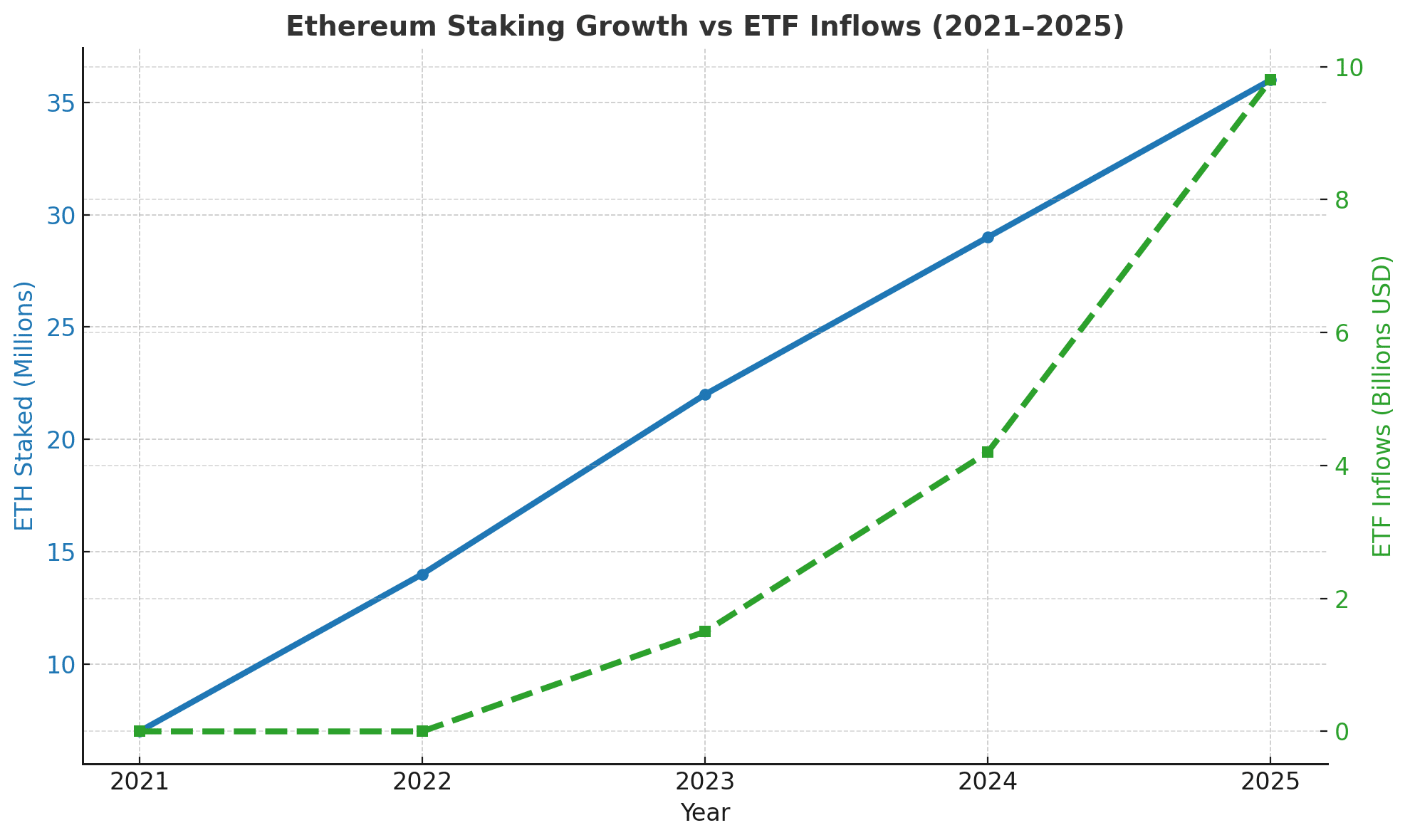
As of early October, about 36 million ETH, roughly 30% of the total supply, is staked, with liquid staking protocols like Lido leading the pack. Institutional involvement through ETFs could push that number even higher.

“Ethereum staking through ETFs introduces a new standard for yield exposure in regulated markets,” wrote market analyst Ryan Selkis on X, calling it “a long-awaited bridge between crypto utility and traditional asset management.”

If major players like BlackRock or Fidelity follow Grayscale’s lead, the competition could compress fees industry-wide, a win for investors and a potential catalyst for fresh inflows into ETH.

Risks and Realities

Despite optimism, experts warn that staking isn’t risk-free. Validator concentration could create centralization risks, and yield fluctuations may impact fund performance. Redemption management is another challenge; ETFs must maintain enough liquid ETH to process withdrawals while staking a meaningful portion to earn rewards.

Still, Grayscale’s institutional staking setup, using vetted validator networks and custodians, is designed to balance compliance with yield generation. It marks a careful but confident step into a more mature era of crypto finance.

Conclusion

Grayscale’s integration of staking into Ethereum ETFs is more than a corporate tweak; it’s a statement. It suggests that crypto yield products can exist inside the rules, not around them. For Ethereum, it could mean new layers of liquidity, demand, and long-term network stability. For investors, it’s a taste of passive income without leaving the comfort zone of regulated markets.

As the race for ETF innovation heats up, Grayscale may have just given Ethereum a new growth narrative, one where staking isn’t just for crypto natives anymore.

Frequently Asked Questions

1. What does staking in an ETF mean?
It allows investors to earn yield from blockchain validation directly within an ETF structure, without managing tokens themselves.

2. Is staking in ETFs safe?
While it adds yield potential, risks like validator performance, network slashing, and liquidity constraints remain.

3. How does this affect Ethereum’s price?
More staking can reduce circulating supply, which may support long-term price stability if demand grows.

4. Will other asset managers follow?
Yes, many analysts expect competitors like BlackRock or Fidelity to explore similar staking integrations.

Glossary of Key Terms

ETF (Exchange-Traded Fund):
A pooled investment vehicle traded on stock exchanges, offering exposure to assets like crypto.

Staking:
The process of locking up crypto to validate transactions on proof-of-stake networks and earn rewards.

ETH:
The native cryptocurrency of the Ethereum network, used for transactions and staking.

Validator:
A network participant who helps confirm transactions and maintain blockchain security in exchange for rewards.

Read More: Why Grayscale’s Ethereum ETF Staking Could Spark the Next Institutional Wave">Why Grayscale’s Ethereum ETF Staking Could Spark the Next Institutional Wave

Market Opportunity
Union Logo
Union Price(U)
$0.001462
$0.001462$0.001462
+0.34%
USD
Union (U) Live Price Chart
Disclaimer: The articles reposted on this site are sourced from public platforms and are provided for informational purposes only. They do not necessarily reflect the views of MEXC. All rights remain with the original authors. If you believe any content infringes on third-party rights, please contact service@support.mexc.com for removal. MEXC makes no guarantees regarding the accuracy, completeness, or timeliness of the content and is not responsible for any actions taken based on the information provided. The content does not constitute financial, legal, or other professional advice, nor should it be considered a recommendation or endorsement by MEXC.

You May Also Like

Crypto execs met with US lawmakers to discuss Bitcoin reserve, market structure bills

Crypto execs met with US lawmakers to discuss Bitcoin reserve, market structure bills

                                                                               Lawmakers in the US House of Representatives and Senate met with cryptocurrency industry leaders in three separate roundtable events this week.                     Members of the US Congress met with key figures in the cryptocurrency industry to discuss issues and potential laws related to the establishment of a strategic Bitcoin reserve and a market structure.On Tuesday, a group of lawmakers that included Alaska Representative Nick Begich and Ohio Senator Bernie Moreno met with Strategy co-founder Michael Saylor and others in a roundtable event regarding the BITCOIN Act, a bill to establish a strategic Bitcoin (BTC) reserve. The discussion was hosted by the advocacy organization Digital Chamber and its affiliates, the Digital Power Network and Bitcoin Treasury Council.“Legislators and the executives at yesterday’s roundtable agree, there is a need [for] a Strategic Bitcoin Reserve law to ensure its longevity for America’s financial future,” Hailey Miller, director of government affairs and public policy at Digital Power Network, told Cointelegraph. “Most attendees are looking for next steps, which may mean including the SBR within the broader policy frameworks already advancing.“Read more
Share
Coinstats2025/09/18 03:30
Ethereum Price Prediction: ETH Targets $10,000 In 2026 But Layer Brett Could Reach $1 From $0.0058

Ethereum Price Prediction: ETH Targets $10,000 In 2026 But Layer Brett Could Reach $1 From $0.0058

Ethereum price predictions are turning heads, with analysts suggesting ETH could climb to $10,000 by 2026 as institutional demand and network upgrades drive growth. While Ethereum remains a blue-chip asset, investors looking for sharper multiples are eyeing Layer Brett (LBRETT). Currently in presale at just $0.0058, the Ethereum Layer 2 meme coin is drawing huge [...] The post Ethereum Price Prediction: ETH Targets $10,000 In 2026 But Layer Brett Could Reach $1 From $0.0058 appeared first on Blockonomi.
Share
Blockonomi2025/09/17 23:45
Texas Monet Bank Plans Crypto Services as Bitcoin Hits $126K High

Texas Monet Bank Plans Crypto Services as Bitcoin Hits $126K High

The post Texas Monet Bank Plans Crypto Services as Bitcoin Hits $126K High appeared on BitcoinEthereumNews.com. Monet Bank, a Texas-based institution owned by billionaire Andy Beal, has rebranded to prioritize cryptocurrency services, offering secure digital asset banking solutions amid regulatory shifts. This move positions it as a premier provider for crypto custody, lending, and blockchain-integrated transactions, capitalizing on Bitcoin’s 2025 all-time high of $126,000. Rebranding Focus: Monet Bank’s transition from Beal Savings Bank to XD Bank and now Monet Bank emphasizes digital asset innovation for the modern economy. Regulatory Changes: Recent federal adjustments under the Trump administration have eased restrictions, enabling banks like Monet to engage with cryptocurrencies without prior cautions. Growth in Sector: With Bitcoin hitting $126,000 in 2025, institutions such as Monet are expanding services, including blockchain for faster payments, supported by FDIC regulation and over $1 billion in capital. Discover how Monet Bank’s pivot to cryptocurrency services is reshaping banking. Explore secure digital asset solutions and regulatory insights for crypto investors today. (148 characters) What is Monet Bank’s Strategy for Cryptocurrency Services? Monet Bank’s cryptocurrency services represent a strategic pivot to integrate digital assets into traditional banking, providing clients with custody, lending, and blockchain-based transactions. Founded in 1988 as Beal Savings Bank, the Texas institution has undergone two rebrands in 2025—first to XD Bank and now to Monet Bank—to align with the digital economy. This evolution allows FDIC-insured operations while offering innovative tools for cryptocurrency users, backed by less than $6 billion in assets and strong capital reserves. How Does Monet Bank’s Rebranding Impact Crypto Banking? Monet Bank’s rebranding to focus on cryptocurrency services stems from a clear vision to become a leading digital asset financial institution. According to the bank’s official statement, it aims to deliver “innovative and forward-facing solutions for the digital economy,” operating through six Texas offices under strict FDIC oversight. This small community bank, with assets under $6 billion…
Share
BitcoinEthereumNews2025/12/07 09:52