The post Could Staking on Tundra Be the Game Changer Bitcoin Traders Have Ignored? appeared on BitcoinEthereumNews.com. XRP enters the final stretch of 2025 with a very different profile from the rest of the market. Historically, Q4 has been the token’s strongest season, delivering an average 134% return across the past 12 years. Current conditions are far more restrained, but the trend still matters: XRP has repeatedly shown resilience during year-end periods associated with liquidity recovery and structural rotation. Today, the asset trades at $2.17, down 10.97% over the past month yet still one of only three top-10 cryptocurrencies maintaining positive year-to-date performance. The broader market, meanwhile, has struggled — Bitcoin, Ethereum, and Cardano have all posted significant losses over the same period. That divergence comes at a moment when XRP predictions for 2025 are being re-evaluated. Just a year ago, analysts were forecasting $5 targets by December 2025. With six weeks left in the year and with markets still digesting structural selling pressure, those projections have been pushed into 2026. Even so, XRP continues to hold long-term interest: year-to-date performance remains positive at 4.6%, and its annual return sits at 92% when measured across the full calendar window. As the market restructures, many traders — especially those coming from increasingly volatile Bitcoin positions — are looking for alternative ways to gain exposure to XRP without relying solely on directional trading. This is where staking platforms like XRP Tundra have gained attention. XRP Expectations Tilt Toward 2026 as Market Structure Evolves Several fundamental factors continue to support XRP’s long-term outlook even as near-term momentum cools. The end of the SEC v. Ripple lawsuit removed a multi-year regulatory barrier and opened the path for institutional growth. XRP briefly surged to $3.65 after the ruling before retracing during broader market turbulence, yet the legal resolution has broadened the token’s adoption pipeline. ETF participation is expanding within this environment. Canary… The post Could Staking on Tundra Be the Game Changer Bitcoin Traders Have Ignored? appeared on BitcoinEthereumNews.com. XRP enters the final stretch of 2025 with a very different profile from the rest of the market. Historically, Q4 has been the token’s strongest season, delivering an average 134% return across the past 12 years. Current conditions are far more restrained, but the trend still matters: XRP has repeatedly shown resilience during year-end periods associated with liquidity recovery and structural rotation. Today, the asset trades at $2.17, down 10.97% over the past month yet still one of only three top-10 cryptocurrencies maintaining positive year-to-date performance. The broader market, meanwhile, has struggled — Bitcoin, Ethereum, and Cardano have all posted significant losses over the same period. That divergence comes at a moment when XRP predictions for 2025 are being re-evaluated. Just a year ago, analysts were forecasting $5 targets by December 2025. With six weeks left in the year and with markets still digesting structural selling pressure, those projections have been pushed into 2026. Even so, XRP continues to hold long-term interest: year-to-date performance remains positive at 4.6%, and its annual return sits at 92% when measured across the full calendar window. As the market restructures, many traders — especially those coming from increasingly volatile Bitcoin positions — are looking for alternative ways to gain exposure to XRP without relying solely on directional trading. This is where staking platforms like XRP Tundra have gained attention. XRP Expectations Tilt Toward 2026 as Market Structure Evolves Several fundamental factors continue to support XRP’s long-term outlook even as near-term momentum cools. The end of the SEC v. Ripple lawsuit removed a multi-year regulatory barrier and opened the path for institutional growth. XRP briefly surged to $3.65 after the ruling before retracing during broader market turbulence, yet the legal resolution has broadened the token’s adoption pipeline. ETF participation is expanding within this environment. Canary…

Could Staking on Tundra Be the Game Changer Bitcoin Traders Have Ignored?

XRP enters the final stretch of 2025 with a very different profile from the rest of the market. Historically, Q4 has been the token’s strongest season, delivering an average 134% return across the past 12 years. Current conditions are far more restrained, but the trend still matters: XRP has repeatedly shown resilience during year-end periods associated with liquidity recovery and structural rotation. Today, the asset trades at $2.17, down 10.97% over the past month yet still one of only three top-10 cryptocurrencies maintaining positive year-to-date performance. The broader market, meanwhile, has struggled — Bitcoin, Ethereum, and Cardano have all posted significant losses over the same period.

That divergence comes at a moment when XRP predictions for 2025 are being re-evaluated. Just a year ago, analysts were forecasting $5 targets by December 2025. With six weeks left in the year and with markets still digesting structural selling pressure, those projections have been pushed into 2026. Even so, XRP continues to hold long-term interest: year-to-date performance remains positive at 4.6%, and its annual return sits at 92% when measured across the full calendar window. As the market restructures, many traders — especially those coming from increasingly volatile Bitcoin positions — are looking for alternative ways to gain exposure to XRP without relying solely on directional trading. This is where staking platforms like XRP Tundra have gained attention.

XRP Expectations Tilt Toward 2026 as Market Structure Evolves

Several fundamental factors continue to support XRP’s long-term outlook even as near-term momentum cools. The end of the SEC v. Ripple lawsuit removed a multi-year regulatory barrier and opened the path for institutional growth. XRP briefly surged to $3.65 after the ruling before retracing during broader market turbulence, yet the legal resolution has broadened the token’s adoption pipeline.

ETF participation is expanding within this environment. Canary Capital’s spot XRP ETF recorded substantial inflows shortly after launch, and additional issuers are preparing to enter the market. If Bitcoin’s earlier ETF cycle serves as a guide — where inflows helped push the asset from $48,000 to $120,000 — XRP could experience similar momentum as liquidity deepens.

Corporate interest has also accelerated. Firms such as VivoPower, Webus and Wellgistics Health have added XRP to operational or reserve frameworks. Ripple’s participation in a major treasury consortium alongside SBI, Kraken and other industry players reflects a shift toward structured holdings that tighten circulating supply on exchanges.

Institutional adoption of XRP-based settlement railways continues as well. Tranglo and SBI remain key drivers of cross-border payment activity, expanding the network’s real-world application footprint. Analysts examining macro forecasts — such as JPMorgan’s projection for Bitcoin at $170,000 next year — note that structural capital flows often lift adjacent assets positioned for settlement and liquidity roles. XRP fits squarely within that category heading into 2026.

Bitcoin Traders Search for Alternatives as Volatility Intensifies

Bitcoin traders face increasingly unstable conditions. BTC has fallen roughly 25% from its highs, and analysts warn the decline is being shaped by structural elements rather than sentiment alone. Liquidity deficits, cascading liquidations and leveraged unwinds have combined to deepen the drawdown, challenging the reliability of traditional cycle models.

These pressures are prompting traders to seek systems that generate predictable returns regardless of intraday volatility. Staking ecosystems have benefited from this shift, particularly those with verifiable revenue distribution. Content creators tracking these market rotations — including Crypto Infinity — highlight how real-yield models often outperform pure trading strategies during structural resets. As macro conditions overshadow shorter-term patterns, stable yield becomes an essential part of portfolio construction.

XRP Tundra sits at the center of this transition. Its revenue-backed Cryo Vaults distribute fees generated across swaps, derivatives, lending and cross-chain operations within the TUNDRA-S execution layer. Frost Key NFT mints contribute an additional stream of activity-based income, while a portion of the protocol’s revenue is used to market-buy and permanently lock TUNDRA-X within the governance treasury. With no inflationary minting and no administrative control keys, the system avoids the pitfalls that undermined earlier staking experiments on the XRPL.

A Model Designed for XRPL’s Institutional Phase

A broader thesis across the XRP community suggests that the XRPL is entering an institutional expansion cycle. ETF adoption, ODL growth, regulatory clarity and EVM-sidechain integrations are preparing the network for higher-volume usage across multiple domains. In that transition, a secure and transparent DeFi layer becomes essential for staking, governance and revenue distribution.

XRP Tundra’s dual-token architecture reflects this requirement. TUNDRA-S, operating on Solana, handles execution at scale for high-frequency functions. TUNDRA-X, native to the XRP Ledger, anchors governance, reserves and treasury operations. GlacierChain, launching as an XRPL-aligned Layer-2, unifies these elements into a single environment where throughput and governance remain structurally separated.

Analysts expect this model to play a prominent role as institutional flows expand. Many long-term XRP holders are expected to migrate toward native staking systems capable of offering predictable returns without exposing them to high-volatility trading cycles. Tundra’s structure — combining real revenue, non-inflationary design and multi-chain execution — situates it as one of the first XRPL-based ecosystems prepared for that transition.

Institutional Takeover, December 15 Launch and the Final Retail Allocation

XRP Tundra’s trajectory accelerated sharply following confirmation that a major institution has begun acquiring the project, bringing Tier-1 exchange integration and advancing the full launch to December 15 — more than a month ahead of schedule. This development validates the project’s structure and marks its entry into a new operational phase.

As part of the acquisition, the institution approved one final retail window at $0.01 per token, available only for the next 48 hours or until the remaining allocation is filled. Once this window closes, access transitions to institutional pricing permanently. Each purchase delivers both tokens — TUNDRA-S and TUNDRA-X — preserving the dual-entry model that has defined the presale.

A detailed transparency update outlining the institution’s role, listing arrangements and revised roadmap will be released within a week.

Security remains central to investor due diligence. Tundra’s smart contracts are fully audited by Cyberscope, Solidproof and FreshCoins, while the team has completed full KYC verification through Vital Block. The launch integrates DAMM V2 dynamic-fee liquidity mechanics designed to stabilize early trading and protect against opportunistic selling behavior.

As XRP predictions extend into 2026 and Bitcoin traders search for stability amid structural volatility, revenue-backed staking ecosystems are becoming strategic tools rather than speculative experiments. For many, this positions XRP Tundra as a potential game changer — a system built for yield, governance and the institutional phase of the XRPL.

Secure the final $0.01 allocation before retail access closes and follow official channels as the December 15 launch approaches.

Buy Tundra Now: official website
How To Buy Tundra: step-by-step guide
Security and Trust: Solidproof audit
Join the Community: X (Twitter)

Source: https://finbold.com/xrp-price-prediction-2025-could-staking-on-tundra-be-the-game-changer-bitcoin-traders-have-ignored/

Market Opportunity
SQUID MEME Logo
SQUID MEME Price(GAME)
$38.1913
$38.1913$38.1913
-3.64%
USD
SQUID MEME (GAME) Live Price Chart
Disclaimer: The articles reposted on this site are sourced from public platforms and are provided for informational purposes only. They do not necessarily reflect the views of MEXC. All rights remain with the original authors. If you believe any content infringes on third-party rights, please contact service@support.mexc.com for removal. MEXC makes no guarantees regarding the accuracy, completeness, or timeliness of the content and is not responsible for any actions taken based on the information provided. The content does not constitute financial, legal, or other professional advice, nor should it be considered a recommendation or endorsement by MEXC.

You May Also Like

Ex-Alipay UK Chief Eva Zhang to Lead Blockscout Into AI-Driven Growth

Ex-Alipay UK Chief Eva Zhang to Lead Blockscout Into AI-Driven Growth

Blockscout, the leading open-source block explorer for EVM chains, has appointed Eva Zhang, former CEO of Alipay UK, as its new chief executive officer.
Share
Blockchainreporter2025/09/18 19:00
Gold price in Malaysia: Rates on February 16

Gold price in Malaysia: Rates on February 16

The post Gold price in Malaysia: Rates on February 16 appeared on BitcoinEthereumNews.com. Gold prices fell in Malaysia on Monday, according to data compiled by
Share
BitcoinEthereumNews2026/02/16 13:21
U.S. Treasury Seeks Public Input on Game-Changing Stablecoin Regulations

U.S. Treasury Seeks Public Input on Game-Changing Stablecoin Regulations

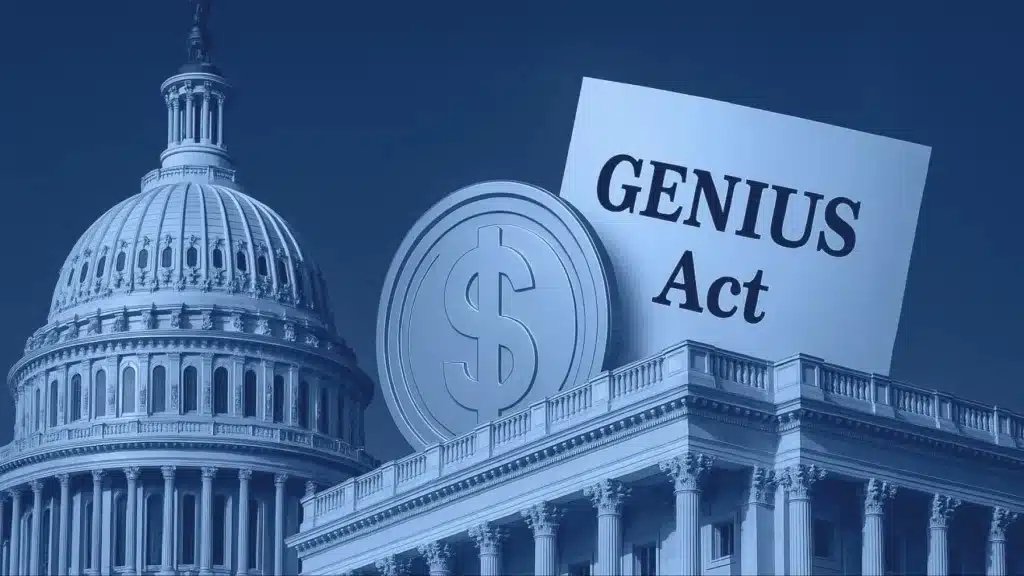
U.S. Treasury invites feedback on groundbreaking stablecoin regulations under GENIUS. Key questions around stablecoin tax treatment and foreign issuer rules. Treasury explores marketing restrictions, oversight balance, and AML enforcement options. The U.S. Treasury Department is now inviting public feedback on the implementation of the groundbreaking GENIUS Act, the first piece of crypto-specific legislation passed in the U.S. this summer. The new law is a milestone in terms of regulation of stablecoins, as the Treasury is aiming to balance the need to innovate and the aim of protecting consumers and monetary stability. According to Treasury officials, the GENIUS Act is designed to stimulate the growth of payment stablecoins while addressing potential risks related to illicit financial activities and maintaining overall economic stability. The department especially shows interest in the acquisition of data that could assist in refining the regulatory guidelines as it proceeds with the writing of its formal proposal. The commenting is active through the October 20 deadline, which gives both opponents and players in the industry time to express their views. One of the most pressing questions under consideration is how the IRS will handle the federal income tax treatment of stablecoins. The GENIUS Act does not directly cover this, and there is room to interpret and make decisions by regulation in the future. Also unclear is when and how foreign issuers can be allowed to offer stablecoins in the U.S., and it does not look like there is a timeline involved in making any changes. Also Read: Ripple Partners with DZ BANK to Launch Institutional Digital Asset Custody Solution Key Areas Under Scrutiny as Treasury Prepares Stablecoin Regulations Several key issues are currently up for discussion as part of the Treasury’s review of the GENIUS Act’s implementation. These include whether stablecoins should have certain marketing limitations, whether it should be at the state or federal level, and how the current anti-money laundering (AML) and sanctions policies will relate to digital assets. Moreover, the Treasury is analyzing how the current regulations, such as the Bank Secrecy Act (BSA), are capable of mitigating the risks of digital assets. This is after it was earlier sought to seek the views of people on the detection of illicit use in the digital asset markets. As the Treasury moves toward finalizing the regulations, it is clear that the department aims to craft a robust and flexible framework that can adapt to the evolving landscape of digital currencies. The outcome will have lasting implications for the future of stablecoin regulation in the U.S., shaping the path forward for both domestic and international players in the crypto space. Also Read: Shiba Inu Faces Major Selling Pressure as 157 Billion SHIB Floods Exchanges! The post U.S. Treasury Seeks Public Input on Game-Changing Stablecoin Regulations appeared first on 36Crypto.
Share
Coinstats2025/09/20 17:22