The post What Retail and Institutional Investors Are Overlooking appeared on BitcoinEthereumNews.com. XRP enters the end of 2025 with a valuation structure that looks increasingly misaligned with the fundamentals shaping its next cycle. Retail traders remain locked onto short-term volatility, and institutions continue modeling XRP through narrow lenses that prioritize liquidity and headline catalysts. Both groups are underestimating how much the surrounding infrastructure — especially yield, governance, and audited DeFi layers — will shape XRPL pricing going into 2026. Growing ETF participation, treasury accumulation, and rising ODL settlement volume offer data-backed signals that the XRPL’s utility cycle is accelerating. Yet one of the most overlooked components in current valuation frameworks is the ecosystem forming around XRP Tundra, a dual-chain revenue engine built to support staking, governance, and cross-chain execution. As analysts revisit their long-term models, the gap between market perception and what XRP’s infrastructure is preparing to deliver has become increasingly obvious. Market Signals Show XRP and Tundra Might be Mispriced Heading Into 2026 The market spent most of Q4 reacting to short-term swings, ignoring deeper infrastructure trends unfolding across the XRPL. ETF inflows remain consistent even during corrective periods, and treasury accumulation by public companies continued through the final weeks of 2025. Meanwhile, ODL settlement corridors expanded into additional regions, producing sustainable, non-speculative throughput. Despite these structural signals, XRP remains priced as if its ecosystem has not evolved. Analysts argue that this gap between fundamentals and sentiment is where the most pronounced mispricing develops. Governance workflows, revenue-backed staking mechanics, and coordinated cross-chain liquidity are advancing far faster than either retail or institutional models reflect. This disconnect has only grown after confirmation that a major institution has begun acquiring XRP Tundra, accelerating its entire roadmap and securing a December 15 launch. As part of this acquisition, the institution approved one final 48-hour retail window at $0.01, marking the last time retail buyers… The post What Retail and Institutional Investors Are Overlooking appeared on BitcoinEthereumNews.com. XRP enters the end of 2025 with a valuation structure that looks increasingly misaligned with the fundamentals shaping its next cycle. Retail traders remain locked onto short-term volatility, and institutions continue modeling XRP through narrow lenses that prioritize liquidity and headline catalysts. Both groups are underestimating how much the surrounding infrastructure — especially yield, governance, and audited DeFi layers — will shape XRPL pricing going into 2026. Growing ETF participation, treasury accumulation, and rising ODL settlement volume offer data-backed signals that the XRPL’s utility cycle is accelerating. Yet one of the most overlooked components in current valuation frameworks is the ecosystem forming around XRP Tundra, a dual-chain revenue engine built to support staking, governance, and cross-chain execution. As analysts revisit their long-term models, the gap between market perception and what XRP’s infrastructure is preparing to deliver has become increasingly obvious. Market Signals Show XRP and Tundra Might be Mispriced Heading Into 2026 The market spent most of Q4 reacting to short-term swings, ignoring deeper infrastructure trends unfolding across the XRPL. ETF inflows remain consistent even during corrective periods, and treasury accumulation by public companies continued through the final weeks of 2025. Meanwhile, ODL settlement corridors expanded into additional regions, producing sustainable, non-speculative throughput. Despite these structural signals, XRP remains priced as if its ecosystem has not evolved. Analysts argue that this gap between fundamentals and sentiment is where the most pronounced mispricing develops. Governance workflows, revenue-backed staking mechanics, and coordinated cross-chain liquidity are advancing far faster than either retail or institutional models reflect. This disconnect has only grown after confirmation that a major institution has begun acquiring XRP Tundra, accelerating its entire roadmap and securing a December 15 launch. As part of this acquisition, the institution approved one final 48-hour retail window at $0.01, marking the last time retail buyers…

What Retail and Institutional Investors Are Overlooking

XRP enters the end of 2025 with a valuation structure that looks increasingly misaligned with the fundamentals shaping its next cycle. Retail traders remain locked onto short-term volatility, and institutions continue modeling XRP through narrow lenses that prioritize liquidity and headline catalysts. Both groups are underestimating how much the surrounding infrastructure — especially yield, governance, and audited DeFi layers — will shape XRPL pricing going into 2026.

Growing ETF participation, treasury accumulation, and rising ODL settlement volume offer data-backed signals that the XRPL’s utility cycle is accelerating. Yet one of the most overlooked components in current valuation frameworks is the ecosystem forming around XRP Tundra, a dual-chain revenue engine built to support staking, governance, and cross-chain execution. As analysts revisit their long-term models, the gap between market perception and what XRP’s infrastructure is preparing to deliver has become increasingly obvious.

Market Signals Show XRP and Tundra Might be Mispriced Heading Into 2026

The market spent most of Q4 reacting to short-term swings, ignoring deeper infrastructure trends unfolding across the XRPL. ETF inflows remain consistent even during corrective periods, and treasury accumulation by public companies continued through the final weeks of 2025. Meanwhile, ODL settlement corridors expanded into additional regions, producing sustainable, non-speculative throughput.

Despite these structural signals, XRP remains priced as if its ecosystem has not evolved. Analysts argue that this gap between fundamentals and sentiment is where the most pronounced mispricing develops. Governance workflows, revenue-backed staking mechanics, and coordinated cross-chain liquidity are advancing far faster than either retail or institutional models reflect.

This disconnect has only grown after confirmation that a major institution has begun acquiring XRP Tundra, accelerating its entire roadmap and securing a December 15 launch. As part of this acquisition, the institution approved one final 48-hour retail window at $0.01, marking the last time retail buyers will have access before institutional pricing takes effect. Every allocation includes both tokens — TUNDRA-S on Solana and TUNDRA-X on the XRP Ledger — preserving the dual-token entry model.

Coverage from analyst channels — including a recent breakdown by CryptoVolt — points to this structural undervaluation as one of the clearest distortions entering 2026.

The Tundra Ecosystem Adds Utility Retail Traders Aren’t Accounting For

Retail analysis tends to overlook how deeply XRP Tundra integrates with the XRPL’s 2026 roadmap. Tundra is designed as a native DeFi layer — a role the XRPL has lacked for more than a decade — and its architecture introduces utility that can meaningfully influence future valuation.

  • TUNDRA-S on Solana handles execution: high-speed yield distribution, liquidity routing, and automation.
  • TUNDRA-X on the XRP Ledger anchors governance, treasury operations, and the foundation for GlacierChain, an upcoming Layer-2 intended to extend XRPL’s programmability and cross-chain functionality.

This structure creates a feedback loop that earlier XRP cycles lacked. As settlement volume rises, stablecoin deployments grow, and EVM-sidechain activity picks up, Tundra provides the environment where these flows translate into on-ledger yield, governance access, and expanding TVL. Retail traders have not fully priced in this mechanism, despite clear demand for verifiable, transparent staking across the community.

Revenue-Backed Yield Is the Missing Variable in Institutional Models

One of the most consistent blind spots in institutional research is the absence of revenue-backed yield in XRP valuation models. Traditional frameworks assume XRP acts exclusively as a settlement and liquidity asset. The Tundra ecosystem introduces an additional dimension: yield that comes from verifiable economic activity rather than token inflation.

Cryo Vault rewards derive from:

  • trading fees across Tundra’s ecosystem
  • derivatives and lending volume
  • bridge activity
  • Frost Key NFT revenue
  • treasury operations that permanently lock TUNDRA-X

Both ecosystem tokens are hard-capped, with no mint functions or hidden allocations. Because returns are backed by protocol revenue rather than emissions, the model mirrors proven real-yield platforms such as GMX and Gains Network — ecosystems that sustained growth even through periods of macro stress.

Verified, Audited Infrastructure Reduces Risk More Than Investors Realize

Another overlooked component of XRP Tundra’s valuation profile is the extent of its independent verification. All core contracts have undergone third-party audits, including assessments from Cyberscope, SolidProof, and FreshCoins. These reports confirm that the system contains no critical vulnerabilities and clearly document the permission structure.

The development team is fully doxxed and identity-verified through Vital Block, and all contracts are open-source with no admin mint keys, no privileged withdrawal roles, and no hidden allocation pathways. A live revenue dashboard tracks fees in real time.

This verification stack is a prerequisite for institutional adoption. It reduces operational risk — one of the primary barriers that kept XRP-aligned DeFi ecosystems from expanding in previous cycles — yet the market continues to underestimate how dramatically it affects the platform’s long-range valuation potential.

What This Means for the 2025–2026 Price

As 2025 closes, both retail and institutional models remain misaligned with the infrastructure shaping XRP’s next cycle. ETF expansion, treasury absorption, and XRPL settlement growth form one half of the story. The other half — increasingly difficult to ignore — is the arrival of a native DeFi layer capable of converting XRPL activity into yield, governance, and cross-chain liquidity.

XRP Tundra introduces the mechanics required for XRP to function as a yield-bearing, governance-enabled asset rather than strictly a transactional token. As this ecosystem matures, valuation frameworks will need to consider dimensions absent from earlier cycles: revenue-backed APYs, cross-chain treasury function, verifiable transparency, and rapid TVL migration as Cryo Vaults activate.

Analysts preparing 2026 scenarios have begun adjusting their models accordingly. The broader market, however, has yet to fully grasp these dynamics — possibly creating one of the most significant mispricings in the XRPL ecosystem heading into the next expansion phase.

Interested investors can review the Tundra ecosystem during the final 48-hour retail window at $0.01 and follow official updates as the platform approaches its accelerated December 15 launch:

Check Tundra Now: official XRP Tundra website

Security and Trust: KYC Certificate

Join The Community: X (Twitter)

Disclaimer: The above article is sponsored content; it’s written by a third party. CryptoPotato doesn’t endorse or assume responsibility for the content, advertising, products, quality, accuracy, or other materials on this page. Nothing in it should be construed as financial advice. Readers are strongly advised to verify the information independently and carefully before engaging with any company or project mentioned and to do their own research. Investing in cryptocurrencies carries a risk of capital loss, and readers are also advised to consult a professional before making any decisions that may or may not be based on the above-sponsored content.

Readers are also advised to read CryptoPotato’s full disclaimer.

SPECIAL OFFER (Exclusive)

SECRET PARTNERSHIP BONUS for CryptoPotato readers: Use this link to register and unlock $1,500 in exclusive BingX Exchange rewards (limited time offer).

Source: https://cryptopotato.com/xrp-tundra-price-outlook-2025-to-2026-what-retail-and-institutional-investors-are-overlooking/

Market Opportunity
XRP Logo
XRP Price(XRP)
$1.4693
$1.4693$1.4693
-3.53%
USD
XRP (XRP) Live Price Chart
Disclaimer: The articles reposted on this site are sourced from public platforms and are provided for informational purposes only. They do not necessarily reflect the views of MEXC. All rights remain with the original authors. If you believe any content infringes on third-party rights, please contact service@support.mexc.com for removal. MEXC makes no guarantees regarding the accuracy, completeness, or timeliness of the content and is not responsible for any actions taken based on the information provided. The content does not constitute financial, legal, or other professional advice, nor should it be considered a recommendation or endorsement by MEXC.

You May Also Like

Ex-Alipay UK Chief Eva Zhang to Lead Blockscout Into AI-Driven Growth

Ex-Alipay UK Chief Eva Zhang to Lead Blockscout Into AI-Driven Growth

Blockscout, the leading open-source block explorer for EVM chains, has appointed Eva Zhang, former CEO of Alipay UK, as its new chief executive officer.
Share
Blockchainreporter2025/09/18 19:00
Gold price in Malaysia: Rates on February 16

Gold price in Malaysia: Rates on February 16

The post Gold price in Malaysia: Rates on February 16 appeared on BitcoinEthereumNews.com. Gold prices fell in Malaysia on Monday, according to data compiled by
Share
BitcoinEthereumNews2026/02/16 13:21
U.S. Treasury Seeks Public Input on Game-Changing Stablecoin Regulations

U.S. Treasury Seeks Public Input on Game-Changing Stablecoin Regulations

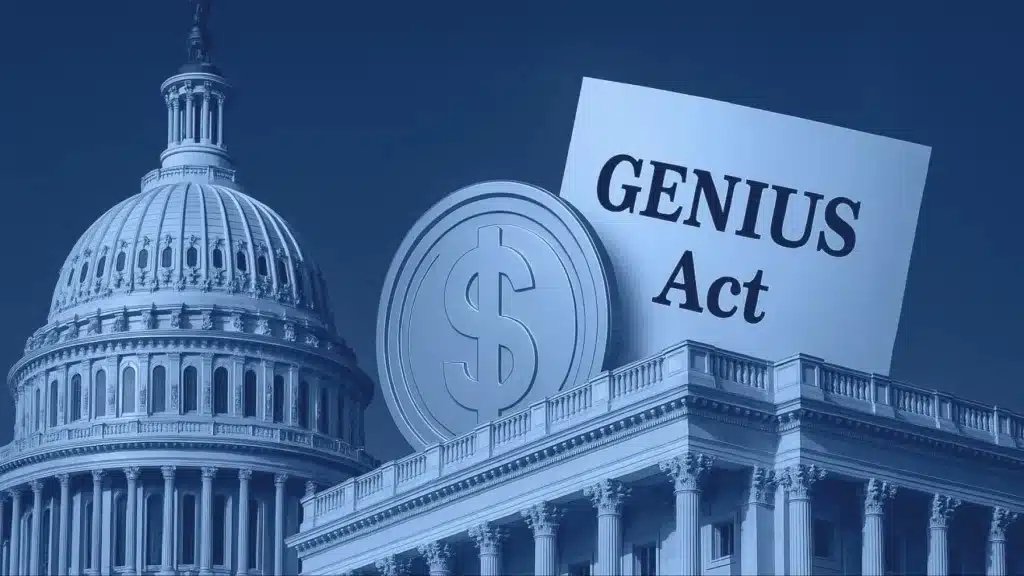
U.S. Treasury invites feedback on groundbreaking stablecoin regulations under GENIUS. Key questions around stablecoin tax treatment and foreign issuer rules. Treasury explores marketing restrictions, oversight balance, and AML enforcement options. The U.S. Treasury Department is now inviting public feedback on the implementation of the groundbreaking GENIUS Act, the first piece of crypto-specific legislation passed in the U.S. this summer. The new law is a milestone in terms of regulation of stablecoins, as the Treasury is aiming to balance the need to innovate and the aim of protecting consumers and monetary stability. According to Treasury officials, the GENIUS Act is designed to stimulate the growth of payment stablecoins while addressing potential risks related to illicit financial activities and maintaining overall economic stability. The department especially shows interest in the acquisition of data that could assist in refining the regulatory guidelines as it proceeds with the writing of its formal proposal. The commenting is active through the October 20 deadline, which gives both opponents and players in the industry time to express their views. One of the most pressing questions under consideration is how the IRS will handle the federal income tax treatment of stablecoins. The GENIUS Act does not directly cover this, and there is room to interpret and make decisions by regulation in the future. Also unclear is when and how foreign issuers can be allowed to offer stablecoins in the U.S., and it does not look like there is a timeline involved in making any changes. Also Read: Ripple Partners with DZ BANK to Launch Institutional Digital Asset Custody Solution Key Areas Under Scrutiny as Treasury Prepares Stablecoin Regulations Several key issues are currently up for discussion as part of the Treasury’s review of the GENIUS Act’s implementation. These include whether stablecoins should have certain marketing limitations, whether it should be at the state or federal level, and how the current anti-money laundering (AML) and sanctions policies will relate to digital assets. Moreover, the Treasury is analyzing how the current regulations, such as the Bank Secrecy Act (BSA), are capable of mitigating the risks of digital assets. This is after it was earlier sought to seek the views of people on the detection of illicit use in the digital asset markets. As the Treasury moves toward finalizing the regulations, it is clear that the department aims to craft a robust and flexible framework that can adapt to the evolving landscape of digital currencies. The outcome will have lasting implications for the future of stablecoin regulation in the U.S., shaping the path forward for both domestic and international players in the crypto space. Also Read: Shiba Inu Faces Major Selling Pressure as 157 Billion SHIB Floods Exchanges! The post U.S. Treasury Seeks Public Input on Game-Changing Stablecoin Regulations appeared first on 36Crypto.
Share
Coinstats2025/09/20 17:22