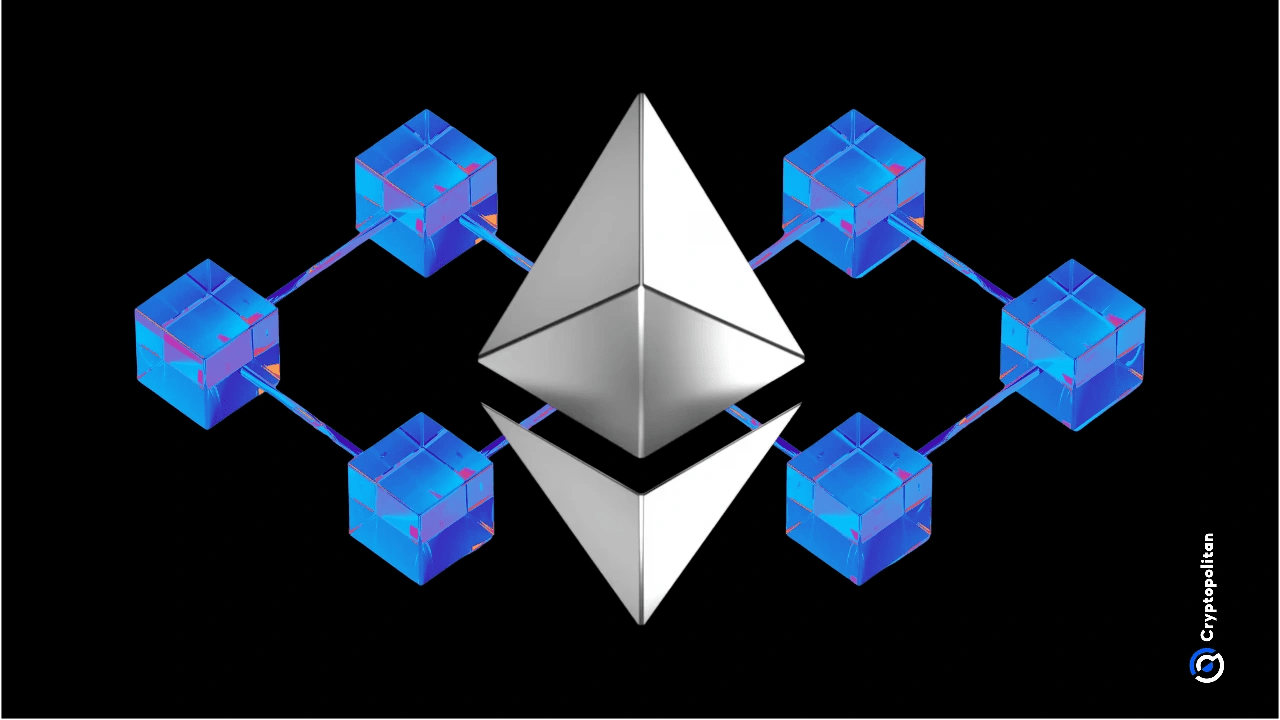
How Decentralized Finance and Gaming are Reshaping Digital Economies
Decentralized Finance (DeFi)and gaming continue to transform the structure of digital economies as blockchain networks merge programmable finance with user-driven virtual worlds. The shift strengthens transparency, ownership, and verifiable logic across connected ecosystems already forming around new Web3 infrastructure.
Convergence of Decentralized Finance and Game-Based Economies
The concept of decentralized DeFi and gaming reflects a growing movement where financial protocols and game environments function inside shared frameworks. GameFi models allow players to earn, trade, or stake assets rather than limit participation to entertainment alone. These structures create digital economies with transferable, user-owned resources.
Tokenized items introduce scarcity and verifiable ownership, allowing characters, skins, or in-game tools to exist as NFTs managed on-chain. Players maintain custody of their items rather than depend on central servers. This change supports a stronger foundation for long-term asset value across multiple platforms.
The connection also brings new roles for economic tools. Users can expand the utility of their assets across connected platforms thanks to the staking, lending, and liquidity functions. As assets can be transferred across different blockchain ecosystems, the value flow is enhanced by further improving cross-game interoperability.
Growing Utility Through Transparent and Portable In-Game Assets
The structure of GameFi relies on the tokenized items as the building blocks of open economies. Players earn rewards and can funnel these rewards into different DeFi channels for increased financial utility. This creates a rewarding loop as users are incentivized to engage in the activity of the game while also accessing decentralized markets.
Liquidity is enhanced as users are able to utilize their NFTs or tokens as collateral without having to sell their assets Borrowing systems allow them to access additional resources or expand their presence in game environments while maintaining ownership. The outcome helps both developers and users as the market expands.
Cross-chain environments also are important. Digital assets are enabled moving beyond the original game and into the associated game, resulting in valuable assets in different experiences. This strengthens the ecosystem to stay in motion and supports developers to create assets with a longer perceived cycle of value.
CASE STUDIES:
- On-Chain Strategy Game Built on the Nexus zkVM
A Web3 studio building a large-scale strategy title adopted the Nexus zkVM to ensure fair and transparent gameplay. The team needed verifiable randomness for battles, item drops, and resource processes while preserving scalability. Traditional structures were not able to support these requirements at the desired speed.
The zkVM allowed complete x game logic to run efficiently. Each action produced a zero-knowledge proof confirming the integrity of results. Players could check the fairness of outcomes without exposing sensitive data or risking exploits inside the environment.
The ecosystem was further extended with the in-game assets being tokenized and linked to the Nexus DEX. The economy of the game was connected to DeFi by liquid pools of rare items, allowing the staking and borrowing of items. The activity level rose tremendously when the users got involved in the gameplay and financial mediums within a single environment.
\
- Autonomous On-Chain Agents for DeFi Portfolio Management
A DeFi fund explored automated methods for managing portfolios but encountered issues linked to centralized bots and opaque logic. The team required transparent execution with verifiable processes to maintain trust among participants. Nexus provided a structure that could meet those needs.
Fund used the agency model to distribute completely autonomous agents fully on-chain. These agents managed portfolio rebalancing, risk evaluation, trade execution, and the Nexus DEX. Each of these actions led to a proof of action occurring and that the action was performed properly and in accordance with request parameters. The model not only led to lower operational implementation costs by eliminating centralized infrastructure but also drastically increased performance through continuous execution.
The model allowed investors access to verifiable logs to evaluate progress, as opposed to opaque summaries (the investors had to trust us that all was done properly). The model improved mutual trust and convicted a more transparent operating model that maximized acceptable risks in a sustainable way as investors adopted long-term models.
\
- Kamirai's Dual-Utility Architecture for Web3 and Console Markets.
Kamirai pursued a major initiative to build an institutional-quality DEX with a full console gaming release. The Kamirex platform addresses liquidity fragmentation in major Asian markets and operates as a high-throughput exchange built on a proprietary structure. Its token powers governance, trading rebates, premium data access, and staking features.
The second component of the ecosystem focuses on a AAA Action-RPG that is a confirmed release that will take place on the major console systems. The main currency of the economy of the game is the Kamirai token. It allows purchasing items, in-game exchange, authenticating the digital assets, and voting on development decisions.
The architecture uses controlled supply reduction tied to both Kamirex activity and gaming purchases. Transaction fees and high-value game actions feed the burn model. This framework seeks to build steady demand through financial usage and mainstream entertainment channels rather than market speculation.
Research Advancements Supporting Emerging Digital Economies
The recent research analyses how intelligent agents are used within GameFi spaces. These agents can manage resources, respond to market changes, or assist users through automated decisions. Their actions are still transparent because each one relates to an on-chain process.
Another proposed model, ServerFi, provides a different dimension of user rewards in gaming economies. Instead of only earning value through play tasks, players earn value when they take part in the wider ecosystem processes, with the goal being a more balanced reward cycle.
Also, researchers are developing lending models that allow players to borrow tokens to access certain modes or levels in the game, with payback occurring through future value, thus enabling even greater participation. All models capture both accessibility and a finance normalization model in a consistent and verifiable manner.
Cross-Chain Marketplaces and Expanding Interoperability
The third sector connected Decentralized DeFi and Gaming involves large-scale asset marketplaces. Developers across different chains face challenges linking their items into unified platforms. Nexus developed a solution by building a marketplace that was able to accept assets from different networks.
Over 120 games integrated their items into this unified structure, with users allowed to stake, borrow, or trade items in and across different blockchains through shared liquidity pools. Authenticity would be verified and fraud minimized through zero-knowledge proofs.
The presence of one shared market also increased overall trading volume and gave players and developers more consistent value for their assets. This environment supports broader participation and encourages creators to design items with longer market presence.
Where the DeFi–Gaming Relationship Is Moving Next
The way ahead of Decentralized DeFi and Gaming is broader integration of zk-based elements into real-time settings. Games are expected to integrate provable fairness systems as part of standard design rather than optional tools.
This might also extend to autonomous agents in gaming environments, where agents support players or maintain parts of the in-game economy without any sort of centralized oversight. Such agents could process tasks continuously, thus creating a predictable operational layer across connected systems.
Meanwhile, the cross-chain frameworks continue to be relevant as developers build networks to support liquidity and portable assets. This encourages cooperation across platforms and helps users manage holdings with more flexibility within decentralized settings.
\ \ \
You May Also Like

Securities Fraud Investigation Into Corcept Therapeutics Incorporated (CORT) Announced – Shareholders Who Lost Money Urged To Contact Glancy Prongay Wolke & Rotter LLP, a Leading Securities Fraud Law Firm

Microsoft Corp. $MSFT blue box area offers a buying opportunity