

Why Michael Saylor Believes Countries Should Launch Bitcoin-Backed Banks
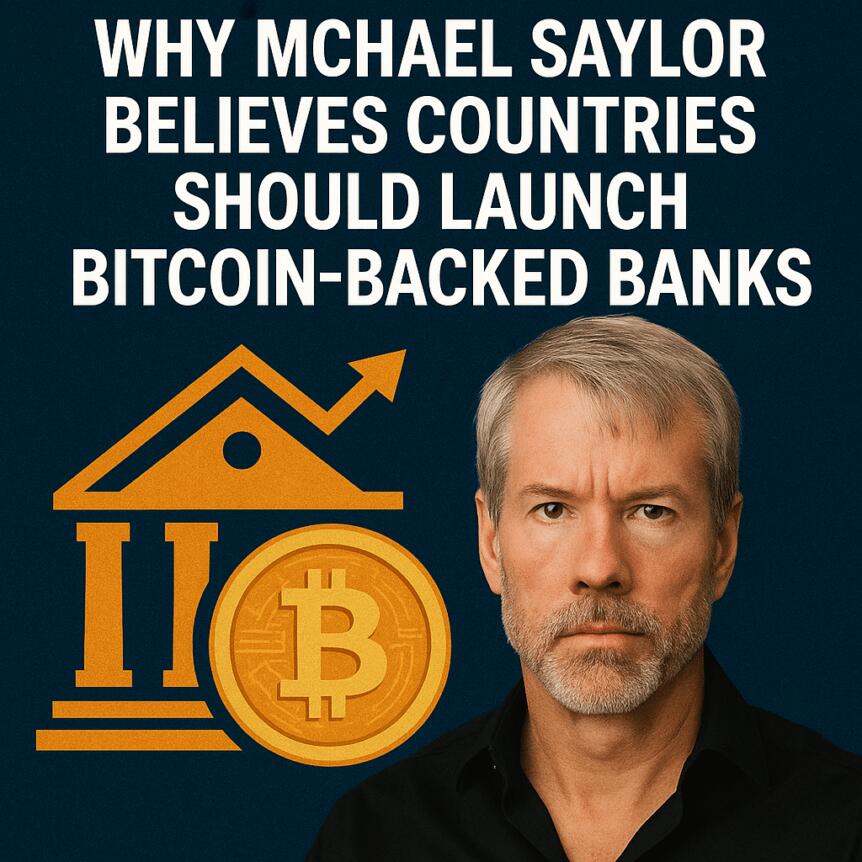
Michael Saylor Proposes Bitcoin-Backed Digital Banking for Regulated Financial Systems
Michael Saylor, executive chairman of Strategy, envisions a transformative future for banking by integrating Bitcoin reserves into a novel digital financial framework. During his keynote at the Bitcoin MENA conference in Abu Dhabi, Saylor advocated for the development of regulated digital banking platforms backed by Bitcoin and collateralized with tokenized credit instruments, aiming to bridge traditional finance with digital assets.
This proposal aligns with Saylor’s longstanding belief that digital assets can become an integral part of mainstream financial ecosystems. His firm, Strategy, continues to expand its Bitcoin holdings, recently acquiring 10,624 BTC valued at roughly $962.7 million, bringing its total to over 660,000 BTC and reinforcing its commitment to digital assets as a cornerstone of future finance.
Saylor’s vision draws on Strategy’s experience with innovative financial products. Earlier this year, the company launched STRC, a preferred share designed to emulate money market instruments with a variable dividend rate, maintaining a stable price near its par value. The product currently has a market capitalization of approximately $2.9 billion, reflecting investor interest while operating within traditional market constraints.
Saylor’s Digital Banking Framework: Collateralized and Regulated
Saylor proposes a structured model where licensed national banks offer digital accounts backed by overcollateralized Bitcoin holdings, tokenized debt instruments, and fiat reserves. He advocates an allocation of roughly 80% to tokenized credit and 20% to fiat, supplemented by a 10% buffer reserve for liquidity. The collateralization ratio for Bitcoin would be set at a 5:1 overcollateralization, aiming to mitigate volatility risks.
These digital banking products could provide regulated exposure to innovative collateral pools, potentially attracting international savers seeking diversified and secure investment options. Governments adopting such frameworks might position themselves as leaders in digital banking, potentially drawing trillions of dollars in cross-border capital.
The Broader Need for Digital Asset-Backed Alternatives
Saylor highlights that persistent low yields in traditional deposit markets—particularly in regions like Japan, parts of Europe, and Switzerland—are incentivizing investors to seek alternative returns. Meanwhile, in higher-rate environments such as the United States, some depositors prefer alternatives like money market funds. He suggests that digital asset-backed models could broaden the spectrum of secure and regulated savings options, encouraging innovation within the financial sector.
He also emphasizes the importance of global competitive positioning. Countries with robust digital banking regulations could attract significant cross-border investment, with projections indicating potential capital inflows between $20 trillion and $50 trillion, establishing new global banking hubs.
Implications and Challenges of Saylor’s Vision
If countries pursue Bitcoin-backed digital banking models, it could lead to significant innovations in financial product design—merging traditional credit markets with digital assets. Such frameworks could reshape banking infrastructure, requiring updated regulatory oversight, new standards for audit and stress testing, and alignment with existing crypto regulations.
However, Saylor’s proposal has sparked skepticism. Bitcoin’s inherent price volatility remains a concern, with recent trading around $90,000—about 29% below its October peak—though long-term gains remain substantial. Liquidity risks, especially in rapid withdrawal scenarios, have also been raised by market experts, underscoring the need for rigorous safeguards.
Operational and regulatory challenges must be addressed as countries contemplate implementing Bitcoin-backed banking systems, including establishing appropriate reserves, ensuring market stability, and creating new supervisory frameworks. Despite these hurdles, Saylor’s vision presents a compelling glimpse into the future integration of digital assets within regulated financial infrastructures.
This article was originally published as Why Michael Saylor Believes Countries Should Launch Bitcoin-Backed Banks on Crypto Breaking News – your trusted source for crypto news, Bitcoin news, and blockchain updates.
You May Also Like

U.S. Court Finds Pastor Found Guilty in $3M Crypto Scam
SEC Clears the Way for Spot Crypto ETFs with New Generic Rules
