

Stunning Growth: Tether Processes $156 Billion in Small-Value USDT Payments This Year
BitcoinWorld
Stunning Growth: Tether Processes $156 Billion in Small-Value USDT Payments This Year
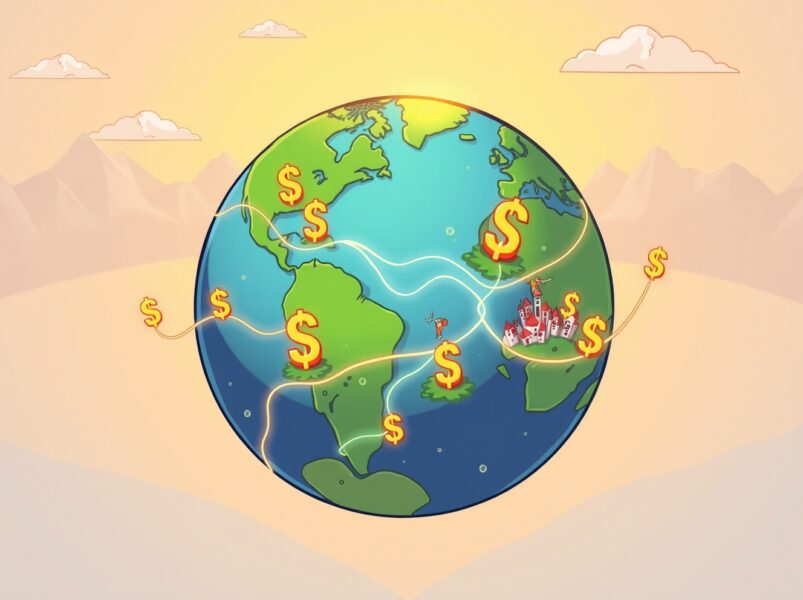
Imagine a digital dollar that moves faster than a bank wire and reaches corners of the world traditional finance can’t. That’s exactly what’s happening with USDT payments. Tether, the company behind the world’s largest stablecoin, has processed a staggering $156 billion in small-value transactions under $1,000 so far this year. This isn’t just a big number—it’s a revolution in how people move money globally.
Why Are Small USDT Payments Exploding in Popularity?
According to data from Chainalysis and Artemis, the average daily volume for these small USDT payments now exceeds $500 million. This massive flow of capital highlights a fundamental shift. People aren’t just holding USDT as a digital asset; they’re actively using it to pay for goods and services. The market clearly views Tether’s stablecoin as a reliable global payment rail for U.S. dollar transactions.
This trend is most powerful in regions with limited access to traditional banking. For millions, opening a dollar-denominated bank account is impossible. However, with a smartphone and an internet connection, anyone can access USDT payments. This bridges a critical gap in the global financial system.
How USDT is Becoming the World’s Digital Dollar Highway
Think of USDT as a new financial infrastructure. Traditional cross-border payments are often slow, expensive, and opaque. In contrast, USDT payments on blockchains like Tron and Ethereum are near-instant and have transparent fees. This efficiency is driving adoption for everyday use cases.
- Remittances: Migrant workers can send money home faster and cheaper than through services like Western Union.
- Freelance Payments: International freelancers receive payments in a stable currency without worrying about bank delays.
- Commerce: Small businesses can accept dollar payments from anywhere in the world, bypassing complex merchant accounts.
This utility transforms USDT from a trading tool into an essential financial service. The $156 billion volume proves that demand for efficient, borderless dollars is not just theoretical—it’s here and growing exponentially.
What Challenges Does This Growth Present?
However, this rapid adoption doesn’t come without hurdles. Regulatory scrutiny remains intense. Authorities worldwide are concerned about the potential for USDT payments to be used for illicit activities due to their pseudonymous nature. Tether must continue to work with regulators and enhance its compliance measures.
Furthermore, the user experience still needs refinement. While sending USDT is technically simple, the process of onboarding fiat currency (real-world money) onto a crypto platform can be confusing for newcomers. Simplifying this journey is crucial for mainstream adoption.
Despite these challenges, the trajectory is clear. The sheer volume of transactions indicates that the benefits—speed, low cost, and accessibility—far outweigh the current friction points for a vast global user base.
The Future of Global Finance Runs on Stablecoins
The data tells a compelling story: USDT is no longer just a crypto trading pair. It has matured into a foundational layer for a new, more inclusive global economy. The $156 billion in small-value USDT payments is a powerful signal that people are voting with their wallets for a better financial system.
This growth will likely push further innovation in wallets, point-of-sale systems, and regulatory frameworks designed specifically for stablecoin payments. As these tools improve, we can expect the daily volume of USDT payments to climb even higher, solidifying its role as the digital dollar for the internet age.
Frequently Asked Questions (FAQs)
What exactly are “small-value” USDT payments?
The report defines them as individual transactions worth less than $1,000. This typically includes everyday payments like remittances, online purchases, and peer-to-peer transfers, rather than large institutional trades.
Why is USDT preferred over other stablecoins for payments?
USDT has the largest market capitalization and the deepest liquidity across the most blockchain networks (like Tron and Ethereum). This makes it the most widely accepted and easiest stablecoin to send and receive globally.
Is it safe to use USDT for everyday payments?
The technology (blockchain) is secure, but users must practice good security. This includes using reputable wallets, safeguarding private keys, and double-checking recipient addresses, as transactions are irreversible.
How does this impact traditional banks?
It presents both a challenge and an opportunity. Banks face competition for cross-border payment services. However, many are now exploring how to integrate stablecoins like USDT into their own offerings to modernize their services.
What does this mean for the future of cash?
In regions with high inflation or poor banking, digital dollars like USDT could become a more common store of value and medium of exchange than physical cash, driving financial inclusion.
Are there fees for sending USDT?
Yes, but they are typically much lower than traditional wire transfers or remittance services. The fee is a small network transaction fee paid in the native cryptocurrency of the blockchain (e.g., TRX for the Tron network) used to process the USDT payment.
Did you find this deep dive into the stunning rise of USDT payments insightful? If this look at the future of money resonated with you, share this article on social media to spark a conversation with your network about the digital dollar revolution.
To learn more about the latest cryptocurrency market trends, explore our article on key developments shaping stablecoin adoption and institutional investment.
This post Stunning Growth: Tether Processes $156 Billion in Small-Value USDT Payments This Year first appeared on BitcoinWorld.
You May Also Like

JPMorgan’s Sobering Reality Check On The $1 Trillion Dream

Will XRP Price Increase In September 2025?
