BitcoinWorld Bitcoin Investment Obsession: Why Wall Street Blindly Ignores DeFi’s Explosive Growth Imagine a technological revolution unfolding with sectors growingBitcoinWorld Bitcoin Investment Obsession: Why Wall Street Blindly Ignores DeFi’s Explosive Growth Imagine a technological revolution unfolding with sectors growing

Bitcoin Investment Obsession: Why Wall Street Blindly Ignores DeFi’s Explosive Growth

2025/12/18 16:00
5 min read
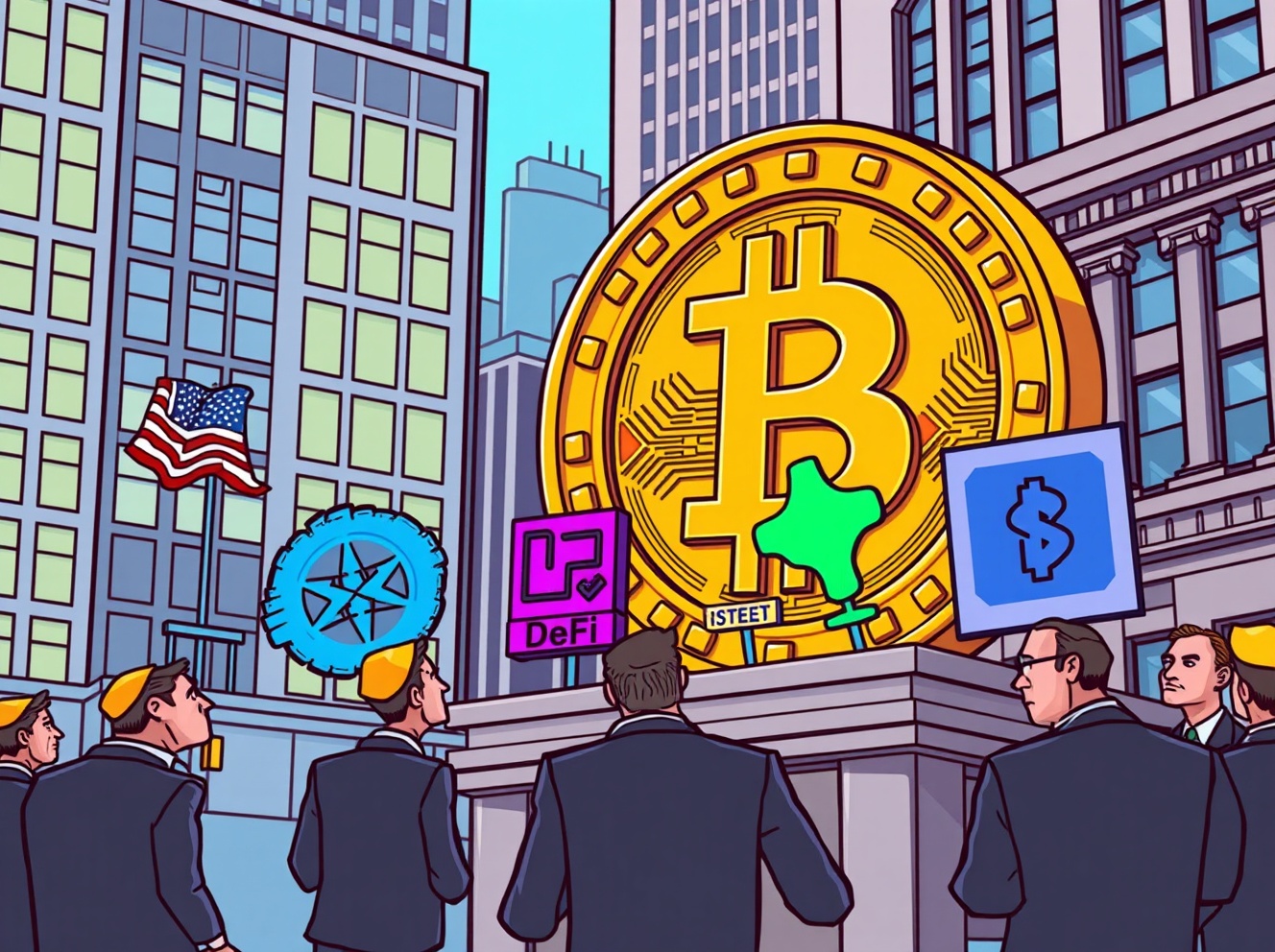
Cartoon illustration of Wall Street's overwhelming Bitcoin investment focus overshadowing vibrant DeFi growth.

BitcoinWorld

Bitcoin Investment Obsession: Why Wall Street Blindly Ignores DeFi’s Explosive Growth

Imagine a technological revolution unfolding with sectors growing at breakneck speed, yet the world’s largest financial institutions remain fixated on just one aspect. According to Jeff Dorman, Chief Investment Officer at Arca, this is precisely the situation with Bitcoin investment today. While decentralized finance, stablecoins, and tokenization transform finance, Wall Street maintains a surprisingly narrow focus.

Why Is Bitcoin Investment Wall Street’s Sole Crypto Focus?

Jeff Dorman identifies a significant disconnect in how traditional finance views blockchain technology. He notes that Wall Street and fintech firms actively participate in issuing new digital assets like stablecoins and tokenized real-world assets. However, they treat these as fee-generating products rather than investment opportunities. The actual Bitcoin investment conversation dominates institutional discussions, leaving other blockchain sectors virtually ignored.

This creates a curious paradox. Financial giants build infrastructure for a broader crypto ecosystem while their capital remains concentrated in one asset. Dorman explains that large banks and institutional investors aren’t even asking which other tokens might hold value. Research and investment solicitation for assets beyond Bitcoin barely exist in traditional finance circles.

What Growth Sectors Are Institutions Missing?

While institutions maintain their Bitcoin investment focus, several blockchain sectors demonstrate remarkable expansion:

  • Decentralized Finance (DeFi): Protocols enabling lending, borrowing, and trading without traditional intermediaries
  • Real-World Asset (RWA) Tokenization: Converting physical assets like real estate and commodities into digital tokens
  • Stablecoin Ecosystems: Dollar-pegged cryptocurrencies facilitating global payments and settlements

These sectors aren’t just theoretical concepts. They’re experiencing what Dorman calls “explosive growth” with real adoption metrics and revenue generation. Yet institutional capital remains largely absent from direct investment in these areas.

How Does This Focus Impact Crypto Markets?

The institutional Bitcoin investment concentration creates several market dynamics. First, it means Bitcoin receives disproportionate attention and capital compared to other crypto assets. This can lead to valuation disparities where Bitcoin’s market dominance doesn’t necessarily reflect relative utility or growth potential.

Second, it creates opportunity for early investors in other blockchain sectors. While institutions focus solely on Bitcoin, savvy investors can potentially identify value in overlooked areas of the crypto ecosystem. However, this also means these sectors develop with less institutional oversight and potentially greater volatility.

What Could Change Wall Street’s Perspective?

Several developments might broaden institutional Bitcoin investment focus:

  • Regulatory clarity for non-Bitcoin crypto assets
  • Demonstrable returns from DeFi and tokenization investments
  • Mainstream adoption forcing institutions to engage with broader crypto ecosystems
  • Educational initiatives highlighting diversification benefits within blockchain

Dorman suggests that currently, institutions view Bitcoin as a “safe” crypto exposure while considering other blockchain investments too complex or risky. This mindset may shift as these technologies mature and demonstrate sustained value creation.

Conclusion: Beyond the Bitcoin Investment Mindset

The Arca CIO’s observations reveal a crucial inflection point for cryptocurrency adoption. While Bitcoin serves as a gateway for institutional crypto exposure, it represents just one facet of blockchain’s transformative potential. The growing disconnect between Bitcoin-focused investment strategies and the broader industry’s development suggests either a massive oversight or a timing discrepancy in institutional adoption.

As DeFi, tokenization, and stablecoins continue their explosive growth, pressure may build for Wall Street to expand its crypto perspective. The question isn’t whether Bitcoin has investment merit, but whether institutions can afford to ignore the rest of the blockchain revolution while focusing exclusively on one digital asset.

Frequently Asked Questions

Why do institutions focus only on Bitcoin investment?

Institutions view Bitcoin as a simpler, more established crypto asset with clearer regulatory treatment. They often consider other blockchain investments too complex or risky for their current frameworks.

What sectors are growing despite being ignored by Wall Street?

Decentralized finance (DeFi), real-world asset tokenization, and stablecoin ecosystems are experiencing explosive growth with minimal institutional investment participation.

How does this Bitcoin investment focus affect crypto markets?

It creates valuation disparities and opportunity for early investors in overlooked sectors. Bitcoin receives disproportionate capital while other innovations develop with less institutional oversight.

Could Wall Street’s perspective change?

Yes, regulatory clarity, demonstrated returns from other blockchain sectors, and mainstream adoption could broaden institutional investment beyond Bitcoin.

What should investors consider given this situation?

Investors might benefit from researching blockchain sectors beyond Bitcoin while recognizing that institutional focus could shift, potentially affecting valuations across the crypto ecosystem.

Is Bitcoin still a good investment despite this narrow focus?

Bitcoin remains a significant crypto asset, but investors should understand that institutional concentration creates both stability and potential blind spots regarding broader blockchain innovation.

Found this analysis of Wall Street’s Bitcoin investment focus insightful? Share this article with fellow crypto enthusiasts and investors to spread awareness about the broader blockchain opportunities institutions might be missing!

To learn more about the latest cryptocurrency trends, explore our article on key developments shaping Bitcoin institutional adoption and market dynamics.

This post Bitcoin Investment Obsession: Why Wall Street Blindly Ignores DeFi’s Explosive Growth first appeared on BitcoinWorld.

Market Opportunity
DeFi Logo
DeFi Price(DEFI)
$0.00031
$0.00031$0.00031
-0.64%
USD
DeFi (DEFI) Live Price Chart
Disclaimer: The articles reposted on this site are sourced from public platforms and are provided for informational purposes only. They do not necessarily reflect the views of MEXC. All rights remain with the original authors. If you believe any content infringes on third-party rights, please contact service@support.mexc.com for removal. MEXC makes no guarantees regarding the accuracy, completeness, or timeliness of the content and is not responsible for any actions taken based on the information provided. The content does not constitute financial, legal, or other professional advice, nor should it be considered a recommendation or endorsement by MEXC.

You May Also Like

Trump 'ashamed' of 'unpatriotic and disloyal' Supreme Court after tariff decision
Trump 'ashamed' of 'unpatriotic and disloyal' Supreme Court after tariff decision

President Donald Trump blasted members of the Supreme Court who ruled against his ability to impose tariffs in a 6-3 decision.During a White House news conference
Share
Rawstory2026/02/21 03:13
The Evolution of Fashion Trends in 2026

The Evolution of Fashion Trends in 2026

Fashion is an ever-changing reflection of culture, technology, and personal identity. In 2026, fashion trends are influenced not only by designers and celebrities
Share
Techbullion2026/02/21 03:34
Google's AP2 protocol has been released. Does encrypted AI still have a chance?

Google's AP2 protocol has been released. Does encrypted AI still have a chance?

Following the MCP and A2A protocols, the AI Agent market has seen another blockbuster arrival: the Agent Payments Protocol (AP2), developed by Google. This will clearly further enhance AI Agents' autonomous multi-tasking capabilities, but the unfortunate reality is that it has little to do with web3AI. Let's take a closer look: What problem does AP2 solve? Simply put, the MCP protocol is like a universal hook, enabling AI agents to connect to various external tools and data sources; A2A is a team collaboration communication protocol that allows multiple AI agents to cooperate with each other to complete complex tasks; AP2 completes the last piece of the puzzle - payment capability. In other words, MCP opens up connectivity, A2A promotes collaboration efficiency, and AP2 achieves value exchange. The arrival of AP2 truly injects "soul" into the autonomous collaboration and task execution of Multi-Agents. Imagine AI Agents connecting Qunar, Meituan, and Didi to complete the booking of flights, hotels, and car rentals, but then getting stuck at the point of "self-payment." What's the point of all that multitasking? So, remember this: AP2 is an extension of MCP+A2A, solving the last mile problem of AI Agent automated execution. What are the technical highlights of AP2? The core innovation of AP2 is the Mandates mechanism, which is divided into real-time authorization mode and delegated authorization mode. Real-time authorization is easy to understand. The AI Agent finds the product and shows it to you. The operation can only be performed after the user signs. Delegated authorization requires the user to set rules in advance, such as only buying the iPhone 17 when the price drops to 5,000. The AI Agent monitors the trigger conditions and executes automatically. The implementation logic is cryptographically signed using Verifiable Credentials (VCs). Users can set complex commission conditions, including price ranges, time limits, and payment method priorities, forming a tamper-proof digital contract. Once signed, the AI Agent executes according to the conditions, with VCs ensuring auditability and security at every step. Of particular note is the "A2A x402" extension, a technical component developed by Google specifically for crypto payments, developed in collaboration with Coinbase and the Ethereum Foundation. This extension enables AI Agents to seamlessly process stablecoins, ETH, and other blockchain assets, supporting native payment scenarios within the Web3 ecosystem. What kind of imagination space can AP2 bring? After analyzing the technical principles, do you think that's it? Yes, in fact, the AP2 is boring when it is disassembled alone. Its real charm lies in connecting and opening up the "MCP+A2A+AP2" technology stack, completely opening up the complete link of AI Agent's autonomous analysis+execution+payment. From now on, AI Agents can open up many application scenarios. For example, AI Agents for stock investment and financial management can help us monitor the market 24/7 and conduct independent transactions. Enterprise procurement AI Agents can automatically replenish and renew without human intervention. AP2's complementary payment capabilities will further expand the penetration of the Agent-to-Agent economy into more scenarios. Google obviously understands that after the technical framework is established, the ecological implementation must be relied upon, so it has brought in more than 60 partners to develop it, almost covering the entire payment and business ecosystem. Interestingly, it also involves major Crypto players such as Ethereum, Coinbase, MetaMask, and Sui. Combined with the current trend of currency and stock integration, the imagination space has been doubled. Is web3 AI really dead? Not entirely. Google's AP2 looks complete, but it only achieves technical compatibility with Crypto payments. It can only be regarded as an extension of the traditional authorization framework and belongs to the category of automated execution. There is a "paradigm" difference between it and the autonomous asset management pursued by pure Crypto native solutions. The Crypto-native solutions under exploration are taking the "decentralized custody + on-chain verification" route, including AI Agent autonomous asset management, AI Agent autonomous transactions (DeFAI), AI Agent digital identity and on-chain reputation system (ERC-8004...), AI Agent on-chain governance DAO framework, AI Agent NPC and digital avatars, and many other interesting and fun directions. Ultimately, once users get used to AI Agent payments in traditional fields, their acceptance of AI Agents autonomously owning digital assets will also increase. And for those scenarios that AP2 cannot reach, such as anonymous transactions, censorship-resistant payments, and decentralized asset management, there will always be a time for crypto-native solutions to show their strength? The two are more likely to be complementary rather than competitive, but to be honest, the key technological advancements behind AI Agents currently all come from web2AI, and web3AI still needs to keep up the good work!
Share
PANews2025/09/18 07:00