The Ultimate Guide to Interoperability Token Development
The Ultimate Guide to Interoperability Token Development
The blockchain ecosystem is rapidly evolving, with new chains, protocols, and dApps emerging every day. While these innovations bring opportunities, they also create a critical challenge: fragmentation. Tokens created on one blockchain are often confined to that ecosystem, limiting their use, liquidity, and adoption. This is where interoperability token development comes into play a solution that bridges blockchains and enables tokens to function across multiple networks seamlessly.
This guide explores everything you need to know about interoperability tokens: what they are, how they work, their benefits, challenges, development process, use cases, and the future of cross-chain tokenization.
Blockchain Interoperability Explained
What Is Blockchain Interoperability?
Interoperable blockchains can seamlessly interact, enabling data exchange and asset transfers across networks. It allows tokens, smart contracts, and applications to operate across multiple chains without being restricted to a single ecosystem.
Without interoperability, blockchain networks operate as isolated silos, which limits scalability, liquidity, and overall adoption. By developing interoperable tokens, businesses and developers can ensure that digital assets move fluidly between Ethereum, Binance Smart Chain, Solana, Polygon, and other chains.
Why Interoperability Matters
Enhanced Liquidity: Tokens can be traded and used across multiple platforms.
User-Friendly Experience: Users do not need to manage multiple tokens for different chains.
DeFi and NFT Expansion: DeFi protocols and NFT marketplaces benefit from broader token accessibility.
Future-Proof Ecosystem: As new blockchains emerge, interoperable tokens maintain relevance and usability.
What Is Interoperability Token Development?
Interoperability token development is the process of creating blockchain tokens that can operate seamlessly across multiple chains, maintaining their identity, value, and functionality. These tokens may include:
Fungible Tokens (e.g., ERC-20, BEP-20)
Non-Fungible Tokens (NFTs) (e.g., ERC-721, ERC-1155)
Stablecoins pegged to fiat or assets
Governance Tokens for multi-chain protocols
The goal is to enable cross-chain usability, allowing tokens to move, trade, and interact across multiple blockchains while preserving security and functionality.
Core Features of Interoperable Tokens
Cross-Chain Compatibility
Tokens should be able to exist and function on multiple blockchains, including major networks like Ethereum, BSC, Solana, Polygon, and Avalanche.
Unified Token Standards
Using standard protocols ensures tokens maintain consistent behavior across chains. Wrapped token mechanisms or multi-chain smart contracts are often used.
Secure Bridging
Tokens must rely on trustless bridges or oracles to facilitate cross-chain transfers without compromising security.
Programmable Utility
Interoperable tokens can support various functions, including payments, governance, staking, and DeFi integration.
Transparency & Traceability
All cross-chain operations are recorded on-chain, ensuring auditable and verifiable transactions.
4. Types of Interoperable Tokens
Cross-Chain Utility Tokens Used to access services across multiple blockchain ecosystems.
Cross-Chain Governance Tokens — Enable voting and protocol decisions on multiple chains.
Wrapped Tokens — Represent original tokens on another blockchain (e.g., Wrapped BTC).
Multi-Chain Stablecoins — Maintain value across different chains for seamless payments and DeFi usage.
NFT Interoperable Assets — NFTs that can be traded and displayed across multiple marketplaces.
5. Benefits of Interoperability Token Development
Market Expansion
Tokens can reach more users, dApps, and exchanges, increasing adoption and liquidity.
Seamless User Experience
Users interact with a single token across multiple platforms, reducing complexity and onboarding friction.
Increased DeFi Integration
Cross-chain tokens can participate in multiple liquidity pools, lending platforms, and yield farms, enhancing utility.
Future-Proofing Digital Assets
As new blockchains emerge, interoperable tokens remain compatible, avoiding obsolescence.
Enhanced Trust and Transparency
All cross-chain transactions are recorded on-chain, increasing security and accountability.
6. Technical Architecture of Interoperable Tokens
Smart Contract Layer
Multi-chain Smart Contracts manage token logic across different blockchains.
Contracts must ensure token consistency, balance updates, and event tracking.
Bridging Mechanism
Trustless Bridges transfer tokens from one blockchain to another.
Wrapped Tokens lock the original token on the source chain and mint an equivalent on the target chain.
Oracles and Data Feeds
Oracles validate token transfers and cross-chain data in real-time.
Ensures transaction integrity across networks.
Security Protocols
Use audits, multi-signature wallets, and secure bridges.
Prevent exploits and double-spending attacks during cross-chain transfers.
Steps to Develop Interoperable Tokens
Define Token Use Case — Utility, governance, stablecoin, or NFT.
Choose Blockchain Networks — Decide which chains the token should operate on.
Design Token Economics — Total supply, distribution, staking, rewards, and governance.
Develop Smart Contracts — Multi-chain compatible contracts with bridging support.
Implement Cross-Chain Bridges — Wrapped tokens or trustless bridges for interoperability.
Testing — Test on multiple testnets (Ethereum Ropsten, BSC Testnet, Polygon Mumbai).
Security Audit — Conduct audits for smart contracts, bridges, and oracles.
Launch & Monitor — Deploy on mainnets, track usage, and ensure seamless cross-chain transfers.
Challenges in Interoperable Token Development
Technical Complexity: Multi-chain smart contracts and bridging mechanisms require advanced engineering.
Security Risks: Bridges are often targeted by hackers.
Regulatory Compliance: Cross-border token transactions can face different jurisdictional rules.
Gas Costs: Cross-chain operations can incur higher transaction fees.
Liquidity Management: Maintaining token supply across chains requires careful planning.
Use Cases for Interoperable Tokens
DeFi Platforms
Multi-chain staking, lending, and liquidity provision with a single token.
NFTs & Gaming
NFTs that move across different marketplaces or blockchain games without losing ownership.
Stablecoins
Tokens usable on multiple chains for cross-border payments and decentralized commerce.
Governance
Cross-chain governance for decentralized autonomous organizations (DAOs).
Enterprise Solutions
Businesses using interoperable tokens for internal processes, rewards, or supply chain tracking.
Best Practices for Interoperable Token Development
Standardization — Use ERC-20, ERC-721, or similar widely accepted standards.
Security First — Conduct audits and implement multi-layer security for smart contracts and bridges.
Gas Optimization — Minimize transaction costs across multiple networks.
Clear Tokenomics — Define token supply, utility, staking, and rewards.
Transparent Monitoring — Provide dashboards for cross-chain transactions.
Community Engagement — Educate users about multi-chain usage and staking opportunities.
Future Trends in Interoperable Tokens
Multi-Chain DeFi Protocols
DeFi protocols will increasingly adopt cross-chain tokens to enhance liquidity and yield opportunities.
AI-Integrated Tokens
AI-driven protocols will leverage interoperable tokens for automated cross-chain decision-making and trading.
Interoperable NFTs
NFTs will become more portable, usable in games, marketplaces, and metaverse platforms across chains.
Cross-Chain DAO Governance
DAOs will manage resources, voting, and proposals across multiple blockchain networks seamlessly.
Layer-0 and Layer-1 Bridges
New blockchain architectures will make cross-chain interoperability more native, faster, and cheaper.
Conclusion
Interoperability token development is no longer optional — it’s a strategic requirement for any blockchain project looking to thrive in a multi-chain world. By enabling tokens to operate across networks, businesses and developers can:
Expand their user base and liquidity
Simplify the user experience
Future-proof their digital assets
Unlock new use cases in DeFi, NFTs, and enterprise blockchain solutions
As blockchain adoption grows, interoperable tokens will be the backbone of scalable, inclusive, and efficient Web3 ecosystems. Businesses that invest in interoperable token development today will position themselves as leaders in the next generation of blockchain innovation.
The Ultimate Guide to Interoperability Token Development was originally published in Coinmonks on Medium, where people are continuing the conversation by highlighting and responding to this story.
You May Also Like
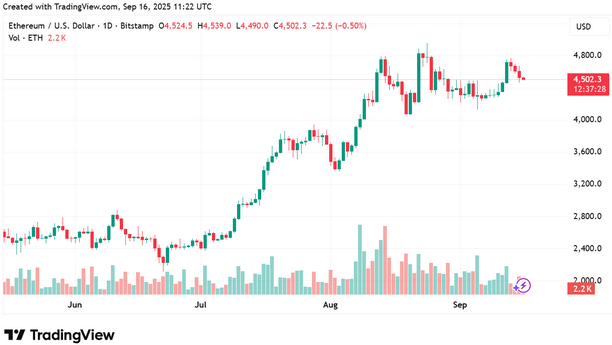
Ethereum Price Prediction: ETH Targets $10,000 In 2026 But Layer Brett Could Reach $1 From $0.0058

Whales Dump 200 Million XRP in Just 2 Weeks – Is XRP’s Price on the Verge of Collapse?