TLDR: Banks withdrew $74.6 billion from the Fed’s Standing Repo Facility in the largest usage since COVID-19. The liquidity surge stems from year-end balance sheetTLDR: Banks withdrew $74.6 billion from the Fed’s Standing Repo Facility in the largest usage since COVID-19. The liquidity surge stems from year-end balance sheet

Fed’s $74.6B Liquidity Injection Marks Largest Year-End Repo Facility Usage Since COVID

2026/01/01 22:13
3 min read

TLDR:

  • Banks withdrew $74.6 billion from the Fed’s Standing Repo Facility in the largest usage since COVID-19.
  • The liquidity surge stems from year-end balance sheet management rather than emergency quantitative easing.
  • Financial institutions use Treasuries and mortgage bonds as collateral for temporary Fed borrowing programs.
  • The funding event suggests the Fed may maintain flexible monetary policy and avoid aggressive tightening in 2026. 

The Federal Reserve recorded its largest single-day liquidity injection in twelve months as banks withdrew $74.6 billion from the Standing Repo Facility on the final days of 2025. 

This marked the highest utilization of the facility since the COVID-19 pandemic. Banks used Treasury securities and mortgage-backed securities as collateral for these temporary borrowings. 

Market analysts attribute this surge to typical year-end funding pressures rather than systemic financial stress.

Year-End Funding Dynamics Drive Record Usage

The substantial withdrawal from the Fed’s lending facility reflects seasonal patterns in banking operations. 

Financial institutions routinely reduce private market borrowing at year-end to present stronger balance sheets in regulatory filings. This practice forces banks to seek alternative funding sources when typical channels tighten.

According to Bull Theory, a financial analysis account on social media, this development represents normal year-end behavior rather than emergency quantitative easing. 

The Standing Repo Facility serves as a backup funding mechanism that banks access when private funding markets become constrained. 

Unlike permanent asset purchases, these operations involve temporary loans that banks must repay.

The timing coincides with traditional December liquidity squeezes that occur across global financial markets. Banks face increased demand for cash while simultaneously managing regulatory requirements and client needs. These dynamics create predictable stress points that the Fed’s facility is designed to address.

Market Implications for 2026 Risk Assets

The Fed’s response to year-end funding pressures typically influences monetary policy decisions in subsequent months. 

When central bank officials observe significant stress in funding markets, they often adopt more accommodative stances. This pattern suggests reduced likelihood of aggressive policy tightening in early 2026.

Financial markets may benefit from this development through multiple channels. Lower probability of rapid interest rate increases creates a more favorable environment for risk assets. 

Additionally, the Fed’s willingness to provide liquidity support reduces the chance of sudden funding disruptions that could trigger market volatility.

The event also signals that central bank officials have clear visibility into financial system pressure points. This awareness generally translates into more measured policy adjustments rather than abrupt changes. 

For cryptocurrency and equity markets, such stability in monetary policy approach often supports price appreciation over time.

However, the immediate market impact remains limited as this represents technical year-end mechanics rather than fundamental policy shifts. 

The true significance emerges through the Fed’s subsequent actions and whether officials maintain their flexible approach to liquidity provision throughout the coming months.

The post Fed’s $74.6B Liquidity Injection Marks Largest Year-End Repo Facility Usage Since COVID appeared first on Blockonomi.

Market Opportunity
SURGE Logo
SURGE Price(SURGE)
$0,03114
$0,03114$0,03114
-2,50%
USD
SURGE (SURGE) Live Price Chart
Disclaimer: The articles reposted on this site are sourced from public platforms and are provided for informational purposes only. They do not necessarily reflect the views of MEXC. All rights remain with the original authors. If you believe any content infringes on third-party rights, please contact service@support.mexc.com for removal. MEXC makes no guarantees regarding the accuracy, completeness, or timeliness of the content and is not responsible for any actions taken based on the information provided. The content does not constitute financial, legal, or other professional advice, nor should it be considered a recommendation or endorsement by MEXC.

You May Also Like

Crypto News: Donald Trump-Aligned Fed Governor To Speed Up Fed Rate Cuts?

Crypto News: Donald Trump-Aligned Fed Governor To Speed Up Fed Rate Cuts?

The post Crypto News: Donald Trump-Aligned Fed Governor To Speed Up Fed Rate Cuts? appeared on BitcoinEthereumNews.com. In recent crypto news, Stephen Miran swore in as the latest Federal Reserve governor on September 16, 2025, slipping into the board’s last open spot right before the Federal Open Market Committee kicks off its two-day rate discussion. Traders are betting heavily on a 25-basis-point trim, which would bring the federal funds rate down to 4.00%-4.25%, based on CME FedWatch Tool figures from September 15, 2025. Miran, who’s been Trump’s top economic advisor and a supporter of his trade ideas, joins a seven-member board where just three governors come from Democratic picks, according to the Fed’s records updated that same day. Crypto News: Miran’s Background and Quick Path to Confirmation The Senate greenlit Miran on September 15, 2025, with a tight 48-47 vote, following his nomination on September 2, 2025, as per a recent crypto news update. His stint runs only until January 31, 2026, stepping in for Adriana D. Kugler, who stepped down in August 2025 for reasons not made public. Miran earned his economics Ph.D. from Harvard and worked at the Treasury back in Trump’s first go-around. Afterward, he moved to Hudson Bay Capital Management as an economist, then looped back to the White House in December 2024 to head the Council of Economic Advisers. There, he helped craft Trump’s “reciprocal tariffs” approach, aimed at fixing trade gaps with China and the EU. He wouldn’t quit his White House gig, which irked Senator Elizabeth Warren at the September 7, 2025, confirmation hearings. That limited time frame means Miran gets to cast a vote straight away at the FOMC session starting September 16, 2025. The full board now features Chair Jerome H. Powell (Trump pick, term ends 2026), Vice Chair Philip N. Jefferson (Biden, to 2036), and folks like Lisa D. Cook (Biden, to 2028) and Michael S. Barr…
Share
BitcoinEthereumNews2025/09/18 03:14
Trump crypto company says ‘coordinated attack‘ on stablecoin failed
Trump crypto company says ‘coordinated attack‘ on stablecoin failed

The price of World Liberty Financial's token dipped about 7% early on Monday, later reported to be the result of a social media and short-seller attack.World Liberty
Share
Coinstats2026/02/24 01:56
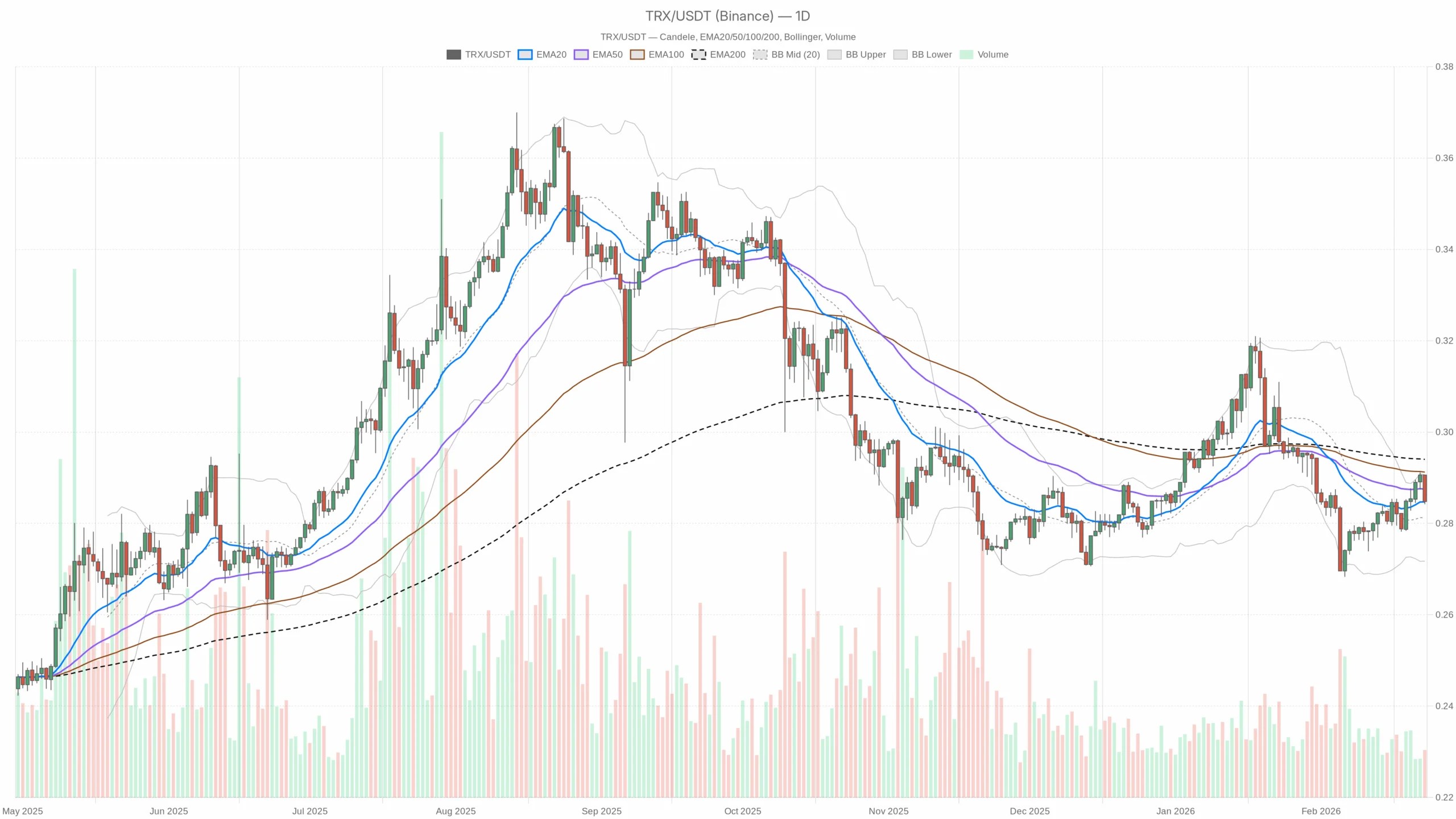
Tron crypto Analysis: 3 Scenarios for TRXUSDT

Tron crypto Analysis: 3 Scenarios for TRXUSDT

The post Tron crypto Analysis: 3 Scenarios for TRXUSDT appeared on BitcoinEthereumNews.com. While the broader crypto market leans risk‑off, Tron crypto (TRXUSDT
Share
BitcoinEthereumNews2026/02/24 02:33