Following Bitwise's Chainlink ETP launch, Hougan said that investors misunderstand the asset's role, despite its dominance across stablecoins, DeFi, tokenizationFollowing Bitwise's Chainlink ETP launch, Hougan said that investors misunderstand the asset's role, despite its dominance across stablecoins, DeFi, tokenization

Why Bitwise’s Matt Hougan Thinks Chainlink (LINK) Is Deeply Undervalued

3 min read

Matt Hougan, chief investment officer at crypto asset manager Bitwise, believes Chainlink (LINK) is one of the “least understood, most important, and possibly most undervalued” crypto assets.

The exec’s comments come days after the quiet launch of Bitwise’s new Chainlink exchange-traded product (ETP).

From Stablecoins to DeFi

In the latest memo, Hougan stated that the Chainlink ETP debuted with modest volumes and tight spreads, but without the strong reception seen by Bitcoin ETPs. He attributed this to investors failing to fully grasp LINK’s role in the crypto ecosystem. He described Chainlink, currently the 11th-largest crypto asset by market capitalization at nearly $10 billion, as a complex project that does not fit neatly into the simple narratives often associated with other major cryptocurrencies, such as Bitcoin as digital gold or Ethereum as a smart contract platform.

Hougan argued that referring to Chainlink just as a “data oracle” understates its function and creates confusion. While oracles are typically described as services that provide blockchains with external information, such as asset prices or real-world events, Hougan said this explanation fails to capture the breadth of what Chainlink does today.

Instead, he framed it as a high-growth software platform that helps solve a “core problem” facing blockchains – their isolation from each other and from the real world. He said Chainlink has achieved dominant market share, which ranges from roughly 50% to nearly 100%, across several of these infrastructure services. The Bitwise exec also argued that many of the fastest-growing and institutionally relevant areas of crypto rely heavily on its technology.

He said stablecoins depend on Chainlink for price feeds, cross-chain movement, and proof-of-reserves mechanisms, while tokenization initiatives rely on it for pricing, asset servicing, and compliance-related processes. Hougan added that decentralized finance applications and prediction markets also depend on its services to function.

He pointed to the project’s adoption by some of the world’s largest institutions and market participants, such as DTCC, SWIFT, JPMorgan, BNP Paribas, Visa, Mastercard, Euroclear, Fidelity, Franklin Templeton, FTSE Russell, Coinbase, Aave, Deutsche Börse, and Polymarket.

The exec expects growing institutional demand for Chainlink ETPs as more financial assets move on-chain.

On the price side of things, LINK has seen increased volatility over the past month. After trading mostly sideways in late December, the token rallied in early January and briefly climbed above the $14 level before losing momentum. However, it soon suffered a pullback, as a result of which LINK gave up a portion of its gains and slid back toward the $12.3 range in recent sessions.

Meanwhile, blockchain analytics firm Santiment said the largest Chainlink holders have resumed accumulating the token as prices slipped back below the $13 level. According to the data, wallets ranked among the top 100 LINK holders have been increasing their balances during the recent pullback, even as smaller retail investors appear to be selling amid impatience and fear, uncertainty, and doubt (FUD).

The firm noted that such behavior is common during periods of market weakness, and large investors often accumulate assets during dips in anticipation of a potential price recovery.

The post Why Bitwise’s Matt Hougan Thinks Chainlink (LINK) Is Deeply Undervalued appeared first on CryptoPotato.

Market Opportunity
DeFi Logo
DeFi Price(DEFI)
$0.000343
$0.000343$0.000343
+0.29%
USD
DeFi (DEFI) Live Price Chart
Disclaimer: The articles reposted on this site are sourced from public platforms and are provided for informational purposes only. They do not necessarily reflect the views of MEXC. All rights remain with the original authors. If you believe any content infringes on third-party rights, please contact service@support.mexc.com for removal. MEXC makes no guarantees regarding the accuracy, completeness, or timeliness of the content and is not responsible for any actions taken based on the information provided. The content does not constitute financial, legal, or other professional advice, nor should it be considered a recommendation or endorsement by MEXC.

You May Also Like

XRP Enters ‘Washout Zone,’ Then Targets $30, Crypto Analyst Says
XRP Enters ‘Washout Zone,’ Then Targets $30, Crypto Analyst Says

XRP has entered what Korean Certified Elliott Wave Analyst XForceGlobal (@XForceGlobal) calls a “washout” phase inside a broader Elliott Wave corrective structure
Share
NewsBTC2026/02/05 08:00
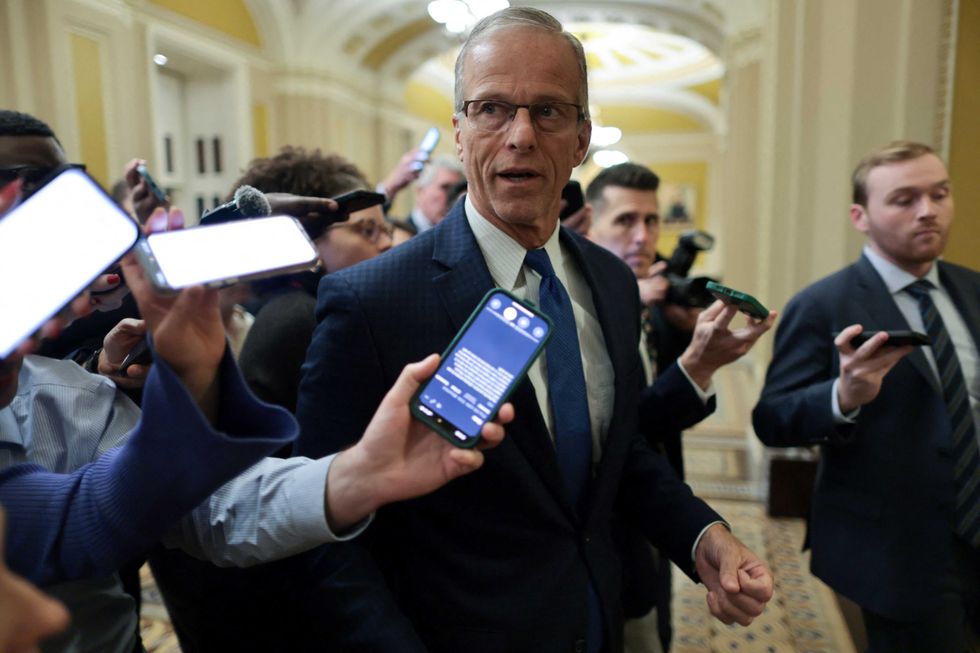
Republicans are 'very concerned about Texas' turning blue: GOP senator

Republicans are 'very concerned about Texas' turning blue: GOP senator

While Republicans in the U.S. House of Representatives have a razor-thin with just a four-seat advantage, their six-seat advantage in the U.S. Senate is seen as
Share
Alternet2026/02/05 08:38
Headwind Helps Best Wallet Token

Headwind Helps Best Wallet Token

The post Headwind Helps Best Wallet Token appeared on BitcoinEthereumNews.com. Google has announced the launch of a new open-source protocol called Agent Payments Protocol (AP2) in partnership with Coinbase, the Ethereum Foundation, and 60 other organizations. This allows AI agents to make payments on behalf of users using various methods such as real-time bank transfers, credit and debit cards, and, most importantly, stablecoins. Let’s explore in detail what this could mean for the broader cryptocurrency markets, and also highlight a presale crypto (Best Wallet Token) that could explode as a result of this development. Google’s Push for Stablecoins Agent Payments Protocol (AP2) uses digital contracts known as ‘Intent Mandates’ and ‘Verifiable Credentials’ to ensure that AI agents undertake only those payments authorized by the user. Mandates, by the way, are cryptographically signed, tamper-proof digital contracts that act as verifiable proof of a user’s instruction. For example, let’s say you instruct an AI agent to never spend more than $200 in a single transaction. This instruction is written into an Intent Mandate, which serves as a digital contract. Now, whenever the AI agent tries to make a payment, it must present this mandate as proof of authorization, which will then be verified via the AP2 protocol. Alongside this, Google has also launched the A2A x402 extension to accelerate support for the Web3 ecosystem. This production-ready solution enables agent-based crypto payments and will help reshape the growth of cryptocurrency integration within the AP2 protocol. Google’s inclusion of stablecoins in AP2 is a massive vote of confidence in dollar-pegged cryptocurrencies and a huge step toward making them a mainstream payment option. This widens stablecoin usage beyond trading and speculation, positioning them at the center of the consumption economy. The recent enactment of the GENIUS Act in the U.S. gives stablecoins more structure and legal support. Imagine paying for things like data crawls, per-task…
Share
BitcoinEthereumNews2025/09/18 01:27