What we are experiencing now is not a market crash, but a structural rebalancing.What we are experiencing now is not a market crash, but a structural rebalancing.

Crypto Market Continues to Slump, Where Are the Marginal Buyers?

2025/04/22 15:00
7 min read

By: Primitive Ventures

Compiled by: Felix, PANews

Crypto Saturation and Structural Shift

This cycle has clearly shown that the market has reached saturation not only in terms of funds but also in terms of attention.

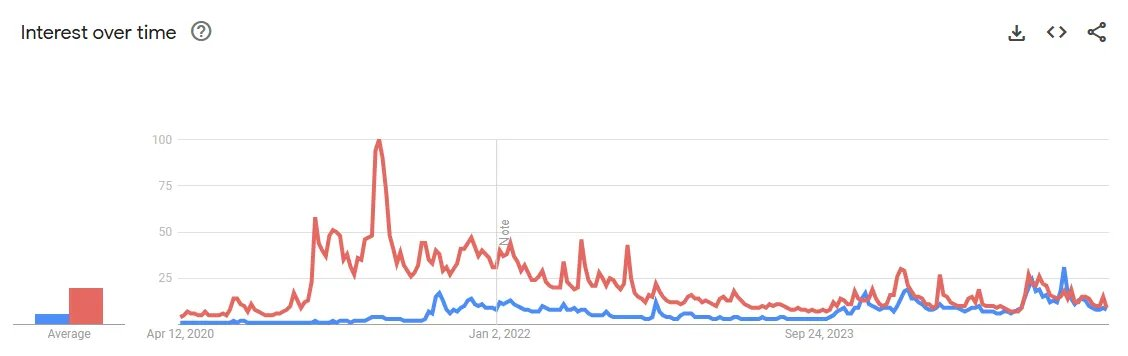
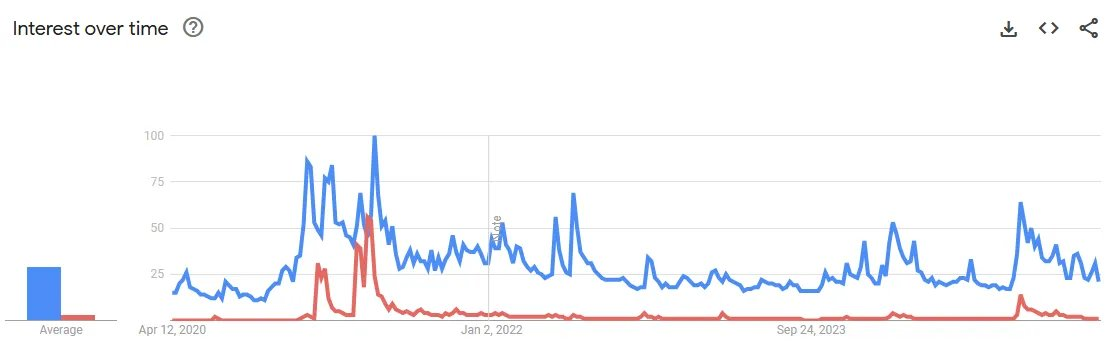
Global Google Trends data illustrates this point. Only Solana hit a new high in search interest. Despite ETF approvals, Bitcoin hitting new highs, and meme-fueled political debate, search interest for Bitcoin, Ethereum, and even Dogecoin has failed to recover to its 2021 peak levels.
Crypto Market Continues to Slump, Where Are the Marginal Buyers?

 Red: Ethereum Google search popularity

Blue: Solana Google search popularity
Crypto Market Continues to Slump, Where Are the Marginal Buyers?

 Blue: Bitcoin Google search popularity

Red: Dogecoin Google search popularity

As attention has fallen, prices have fallen as well. Most major assets are still trading below their highs from the previous cycle. This means that cryptocurrencies have reached mainstream saturation as an asset class, but are still not widely adopted as a currency.

This duality defines the current situation. Speculation is well known, but its actual use is still misunderstood. The next marginal buyer may not come for the coin, but for the infrastructure.

Player Structure: Game is Clearing

To understand why even the top-down narrative can’t sustain momentum, one needs to understand who is still participating.

Crypto Market Continues to Slump, Where Are the Marginal Buyers?

 Source: PV internal research

Spot traders on centralized exchanges (CEXs), once the backbone of retail power, have gradually faded. As the get-rich-quick effect of CEXs fades, the inflow of new users has stagnated. Worse, many existing users have either left or turned to riskier perpetual contract trading. At the same time, the rise of spot ETFs has quietly siphoned off another group of potential buyers. Centralized exchanges are no longer the default entry point.

Yield miners, who typically have larger capital allocations, are increasingly looking off-chain. As on-chain yield opportunities decrease and risk-adjusted returns decline, capital is turning to more stable sources of real-world income.

NFT and GameFi players, once the driving force of cultural adoption of cryptocurrencies, have been largely sidelined. Some have turned to memecoin, but that wave seems to have peaked as the Trump craze fades, leaving most participants disappointed.

Airdrop hunters, often seen as the most persistent group of on-chain participants, are now openly clashing with projects over unfulfilled promises. Many are unable to even cover costs.

Looking across each user group, the trends are clear: engagement is declining, conviction is waning, and retail investors are leaving.

Tipping point: Conversion stagnation

The problem isn’t just fatigue among the existing user base, conversions themselves are stagnant.

Top CEXs serve about 400 million users (excluding duplicate users), but only about 10% of users are converted to on-chain users (wallet users). The penetration rate has hardly changed since 2023; the industry has difficulty converting users from the custody layer.

Crypto Market Continues to Slump, Where Are the Marginal Buyers?

 Source: PV internal research

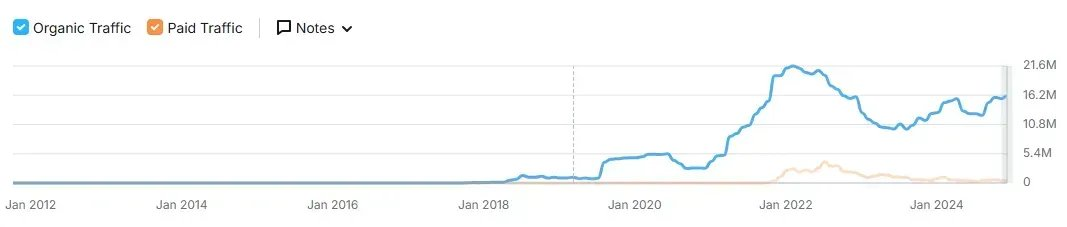
Meanwhile, traffic on major exchanges has continued to decline since the peak of the 2021 bull run, and has not recovered even as Bitcoin hits new highs. The conversion funnel has not expanded.
Crypto Market Continues to Slump, Where Are the Marginal Buyers?

Binance traffic; data source: Semrush

Crypto Market Continues to Slump, Where Are the Marginal Buyers?

 Coinbase traffic; data source: Semrush

Worse still, the threshold of cryptocurrency awareness may have been reached. According to a Consensys survey, 92% of respondents worldwide have heard of cryptocurrency, and 50% claim to understand it. Awareness is no longer a problem, but interest is.

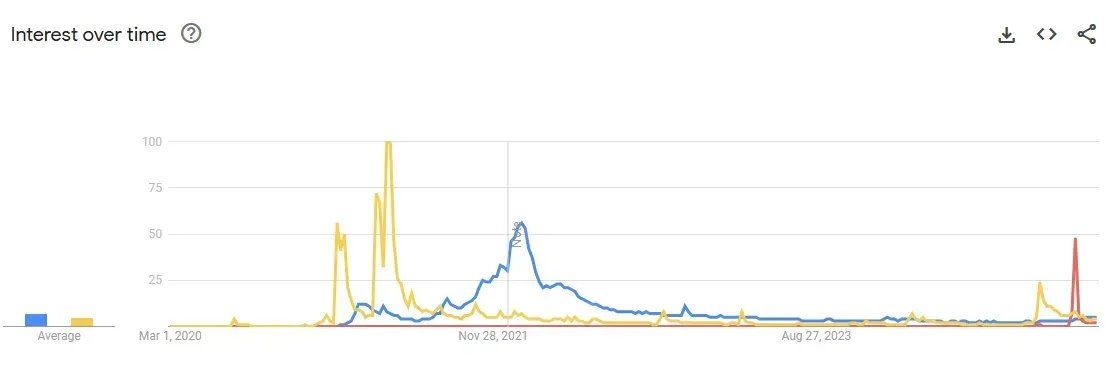
And the enthusiasm curve for retail investors is flattening. In the last cycle, NFT and Dogecoin attracted a large number of users. In this cycle, even Trump's memecoin cannot enter the mainstream. The curiosity that once drove retail inflows is fading.
Crypto Market Continues to Slump, Where Are the Marginal Buyers?

 Yellow: Dogecoin Google search popularity

Blue: NFT Google search popularity

Red: Trump meme Google search popularity

Slogan: The power of mirage

The OM pull-up was a carefully planned action: turning to the hottest RWA, forming an alliance with UAE capital, reaching cooperation, using KOLs for publicity, and squeezing liquidity through token economics reset.

Crypto Market Continues to Slump, Where Are the Marginal Buyers?

 Source: PV internal research

But despite a 100x price surge, no meaningful spot volume has occurred. OM lacks something that even the most perfect script cannot fabricate: true marginal buyers.
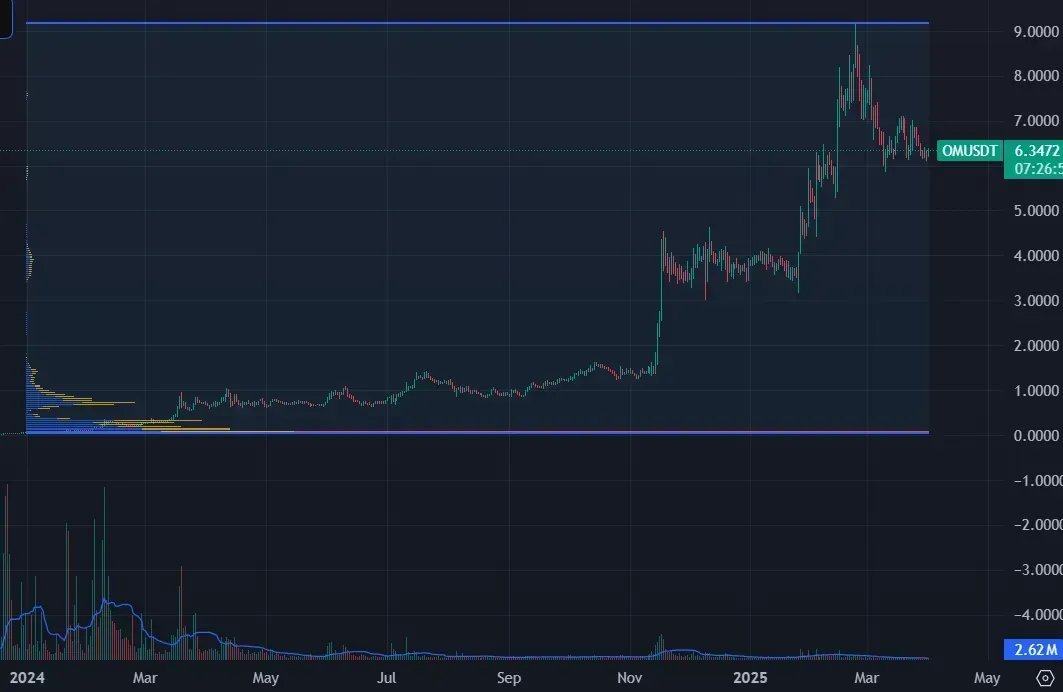
Crypto Market Continues to Slump, Where Are the Marginal Buyers?

 OM Trading Volume

When centralized exchanges adjusted perpetual contract leverage and market makers encountered internal friction, the system quickly broke down. A 95% drop ensued, not due to a minting spiral or a bug, but because there was simply no buying.

OM is not a failure of execution. It reflects a structural problem: on today’s centralized exchanges, even a 100x price surge cannot generate new demand.

Fed Quantitative Tightening and Dollar Shortage

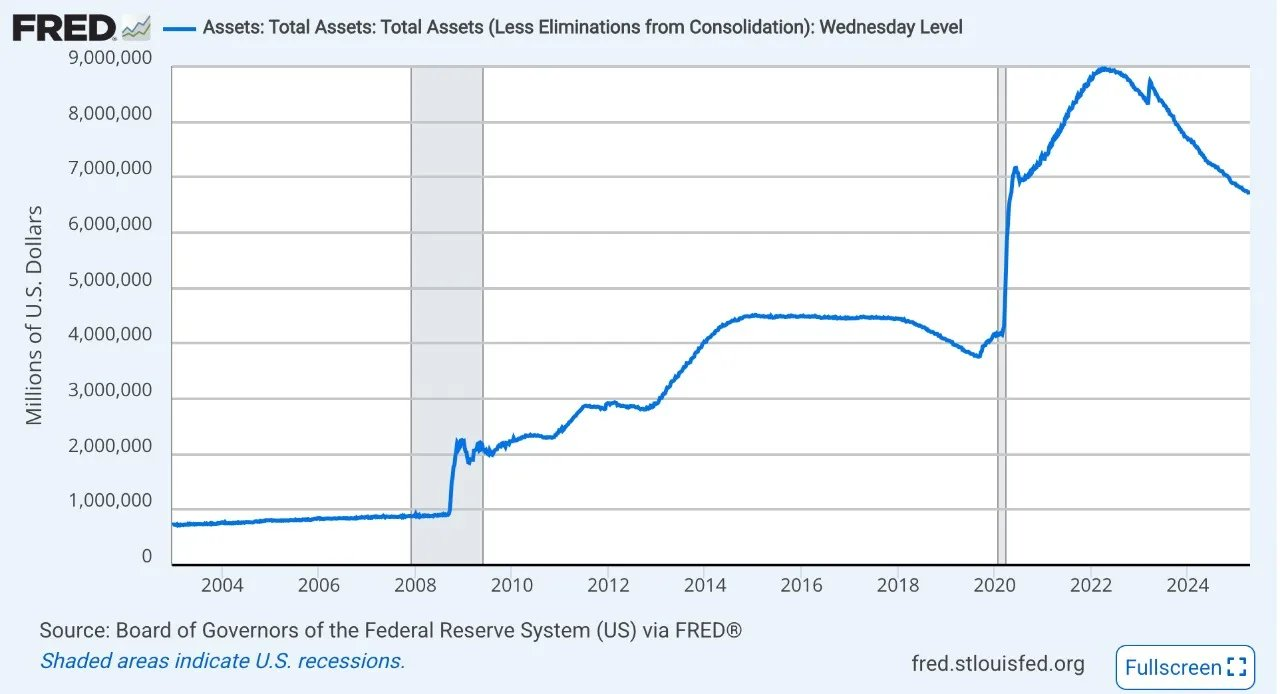
The structural shift in buyer behavior cannot be understood in isolation from macro liquidity. Since 2022, the Federal Reserve has begun to significantly reduce its balance sheet, launching one of the most cautious quantitative tightening cycles in recent years.
Crypto Market Continues to Slump, Where Are the Marginal Buyers?

The Fed’s balance sheet peaked at nearly $9 trillion in the post-COVID-19 period, greatly stimulating global risk appetite through excess liquidity. But as inflation picked up, the Fed changed its strategy, reversing course by draining reserves, tightening financial conditions, and curbing the loose leverage that had fueled speculation in a variety of risky assets, including cryptocurrencies.

This tightening not only slows capital inflows, it also structurally limits the type of buyers that cryptocurrencies have always relied on: fast-moving, risk-taking speculators.

Structural shifts: Where the next demand may emerge

If the next marginal buyers don’t come from crypto-native speculators, they may emerge from structural shifts driven by policy, necessity, and real-world demand.

The normalization of stablecoin regulation could usher in a new phase of digital dollar dominance. In an era of rising tariffs, capital controls, and geopolitical fragmentation, cross-border capital requires faster and more covert channels. Stablecoins, especially those aligned with U.S. interests, are expected to become a practical tool for economic influence.

And adoption is quietly taking off in regions long ignored by the industry. In parts of Africa, Latin America, and Southeast Asia, where national currencies are unstable and large populations are unbanked, stablecoins have real uses in remittances, savings, and cross-border trade. These users are the new frontier of global dollarization.

As the scale of RWA expands, more users will participate in it for the purpose of obtaining real assets on the chain rather than speculation.
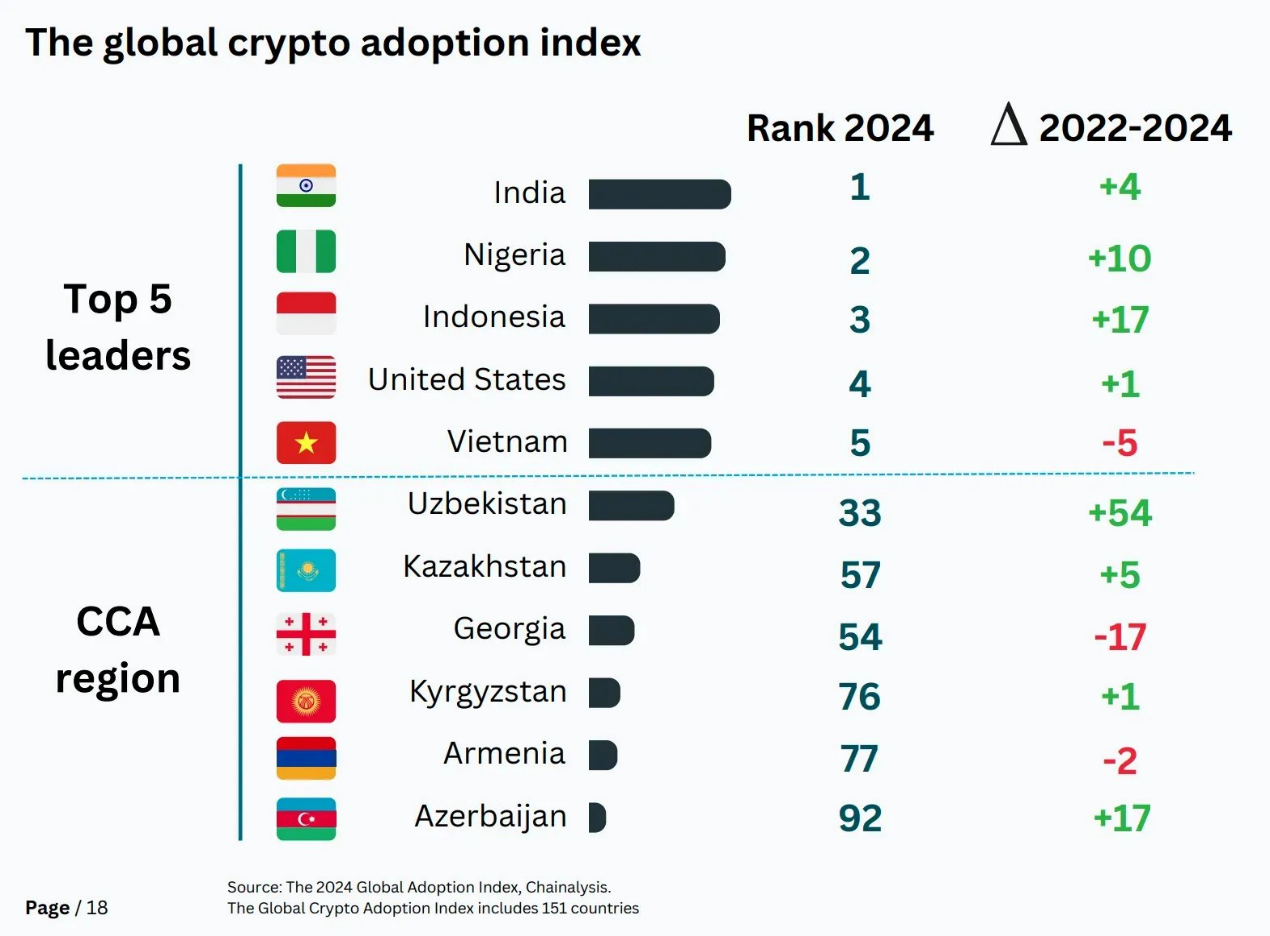
Crypto Market Continues to Slump, Where Are the Marginal Buyers?

The Barbell Era: This is not a collapse, but a rebalancing

The dearth of marginal buyers is not simply a cyclical low, but a structural result, the downstream effect of two forces:

Cryptocurrency as an asset has captured much of the world’s attention. The dream of getting rich overnight has lost its luster.

The dollar shortage is real. The Fed's quantitative tightening and macro tightening have structurally reduced the buyer base.

After all the cycles, narratives, and reinventions, crypto is splitting into two distinct paths, and the divergence is only growing.

On one side is a speculative system once driven by memes, leverage, and narrative reflexivity, now moribund by the withdrawal of liquidity. These markets depend on continued marginal inflows, without which even the most carefully designed strategies cannot sustain buying.

On the other hand, policy-led, utility-driven adoption is slowly but undeniably emerging. Stablecoins, compliant channels, tokenized assets are all growing. Not driven by hype, but out of necessity. Not a bubble, but enduring.

What we are witnessing now is not a market crash but a structural rebalancing.

Related reading: From 100,000 to 75,000: The cyclical truth behind the deep correction and the signal of the bull market restart

Market Opportunity
Notcoin Logo
Notcoin Price(NOT)
$0.0004522
$0.0004522$0.0004522
-0.33%
USD
Notcoin (NOT) Live Price Chart
Disclaimer: The articles reposted on this site are sourced from public platforms and are provided for informational purposes only. They do not necessarily reflect the views of MEXC. All rights remain with the original authors. If you believe any content infringes on third-party rights, please contact service@support.mexc.com for removal. MEXC makes no guarantees regarding the accuracy, completeness, or timeliness of the content and is not responsible for any actions taken based on the information provided. The content does not constitute financial, legal, or other professional advice, nor should it be considered a recommendation or endorsement by MEXC.

You May Also Like

SBI VC Trade Adds Litecoin to Japanese Lending Program

SBI VC Trade Adds Litecoin to Japanese Lending Program

The post SBI VC Trade Adds Litecoin to Japanese Lending Program appeared on BitcoinEthereumNews.com. SBI VC Trade added Litecoin to its regulated lending program
Share
BitcoinEthereumNews2026/02/03 19:53
Work Dogs TGE Is Running — Is WD About to Drop in Q2 After March 30?

Work Dogs TGE Is Running — Is WD About to Drop in Q2 After March 30?

Work Dogs Token Listing Date Expected in Q2 2026 as WD TGE Nears Completion The countdown to the Work Dogs (WD) token listing date has officially begun. Afte
Share
Hokanews2026/02/03 20:16
Bitcoin: Treasury Corporation’s Strategic OTCQX Listing Unlocks New Growth

Bitcoin: Treasury Corporation’s Strategic OTCQX Listing Unlocks New Growth

BitcoinWorld Bitcoin: Treasury Corporation’s Strategic OTCQX Listing Unlocks New Growth The world of cryptocurrency is constantly evolving, and a recent development has captured the attention of investors and enthusiasts alike. Bitcoin Treasury Corporation, a a company dedicated to accumulating digital assets, has made a significant move by listing on the U.S. OTCQX Best Market under the ticker BTCFF. This isn’t just another listing; it signals a growing trend of institutional confidence in digital assets and their long-term potential. What Does This Strategic OTCQX Listing Mean for Bitcoin Treasury Corporation? For those unfamiliar, the OTCQX Best Market is the highest tier of the three marketplaces for the over-the-counter (OTC) trading of stocks. It’s designed for established, investor-focused U.S. and international companies. Being listed here offers several distinct advantages for a company like Bitcoin Treasury Corporation. Enhanced Visibility: The listing provides a more transparent and regulated trading environment, making the company more attractive to a broader range of institutional and retail investors. Increased Liquidity: A higher-tier market often leads to greater trading volumes, which can improve the liquidity of the company’s shares. Credibility Boost: Operating on a recognized market lends significant credibility, especially for an entity deeply involved in the nascent crypto space. Bitcoin Treasury Corporation began its journey of accumulating BTC in June and has rapidly grown its holdings to over 700 BTC. This strategic accumulation underscores their belief in Bitcoin as a foundational asset for the future. Why Are More Companies Embracing Bitcoin for Their Treasuries? The move by Bitcoin Treasury Corporation isn’t an isolated incident. We’ve witnessed a remarkable shift in corporate finance over the past few years, with numerous companies integrating digital assets into their balance sheets. Why this sudden embrace of Bitcoin? Many view Bitcoin as a powerful hedge against inflation, especially in an era of quantitative easing and rising global debt. Its decentralized nature and finite supply of 21 million coins make it an appealing “digital gold” alternative to traditional fiat currencies. Companies like MicroStrategy have famously adopted Bitcoin as their primary treasury reserve asset, demonstrating a bold vision for corporate capital allocation. While the potential for significant gains is attractive, companies must also navigate the inherent volatility of the crypto market and evolving regulatory landscapes. Despite these challenges, the long-term strategic benefits often outweigh the risks for those with a strong conviction in this digital asset. How Does This Listing Impact the Broader Bitcoin Market? Each time a company like Bitcoin Treasury Corporation makes such a move, it sends a ripple through the entire crypto ecosystem. It serves as a strong validation of Bitcoin as a legitimate and valuable asset class, not just a speculative tool. This increased institutional involvement can lead to: Greater Stability: As more large entities hold Bitcoin for the long term, it could potentially reduce some of the extreme price swings often associated with the asset. Mainstream Acceptance: Corporate adoption paves the way for wider public acceptance and understanding of cryptocurrencies. Regulatory Clarity: With more traditional companies engaging, regulators may be compelled to provide clearer guidelines, fostering a more secure environment for everyone involved with digital currencies. For individual investors, this trend suggests a maturation of the market. It implies that fundamental analysis and long-term investment strategies are becoming increasingly relevant in the Bitcoin space. Navigating the Future of Corporate Bitcoin Holdings The listing of Bitcoin Treasury Corporation on the OTCQX Best Market marks a pivotal moment. It highlights a growing confidence among corporations in integrating digital assets into their financial strategies. As the digital economy continues to expand, we can expect more companies to explore similar avenues for their Bitcoin investments. However, it’s crucial for any company considering Bitcoin for its treasury to conduct thorough due diligence. Understanding market dynamics, regulatory compliance, and secure custody solutions are paramount. The journey into corporate crypto holdings is still relatively new, but pioneers like Bitcoin Treasury Corporation are charting a course for others to follow. In conclusion, Bitcoin Treasury Corporation’s OTCQX listing is more than just a procedural step; it’s a powerful testament to the enduring appeal and increasing institutional acceptance of Bitcoin. This move not only benefits the company but also reinforces the broader narrative of digital assets’ emergence as a crucial component of modern financial portfolios. It’s an exciting time to watch the intersection of traditional finance and digital assets evolve. Frequently Asked Questions About Bitcoin Treasury Corporation’s Listing Q1: What is the OTCQX Best Market? A1: The OTCQX Best Market is the highest tier for over-the-counter (OTC) stock trading in the U.S. It’s for established companies that meet stringent financial and disclosure requirements, offering enhanced transparency and credibility for investors. Q2: Why is Bitcoin Treasury Corporation’s listing significant for Bitcoin? A2: This listing signifies increasing institutional confidence in Bitcoin as a legitimate asset. It provides a regulated platform for a company focused on accumulating Bitcoin, potentially encouraging more traditional investors and corporations to consider digital assets. Q3: How much Bitcoin does Bitcoin Treasury Corporation hold? A3: As of their announcement, Bitcoin Treasury Corporation holds over 700 BTC, having begun its accumulation strategy in June. Q4: What are the benefits for Bitcoin Treasury Corporation by listing on OTCQX? A4: Benefits include enhanced visibility, increased liquidity for its shares, and a significant boost in credibility by operating on a recognized and regulated market, making it more attractive to a wider investor base. Q5: Does this mean Bitcoin is becoming more mainstream? A5: Yes, corporate actions like this listing contribute significantly to Bitcoin‘s mainstream acceptance. It helps validate digital assets as a serious component of financial portfolios, paving the way for wider public and institutional understanding. If you found this article insightful and believe in the growing importance of corporate Bitcoin adoption, please share it with your network! Your support helps us continue to provide valuable insights into the evolving world of cryptocurrency. To learn more about the latest Bitcoin trends, explore our article on key developments shaping Bitcoin institutional adoption. This post Bitcoin: Treasury Corporation’s Strategic OTCQX Listing Unlocks New Growth first appeared on BitcoinWorld.
Share
Coinstats2025/09/18 19:40