

Bitfinex Stablecoin Reserves Surge as Bitcoin Trades Near $82,500
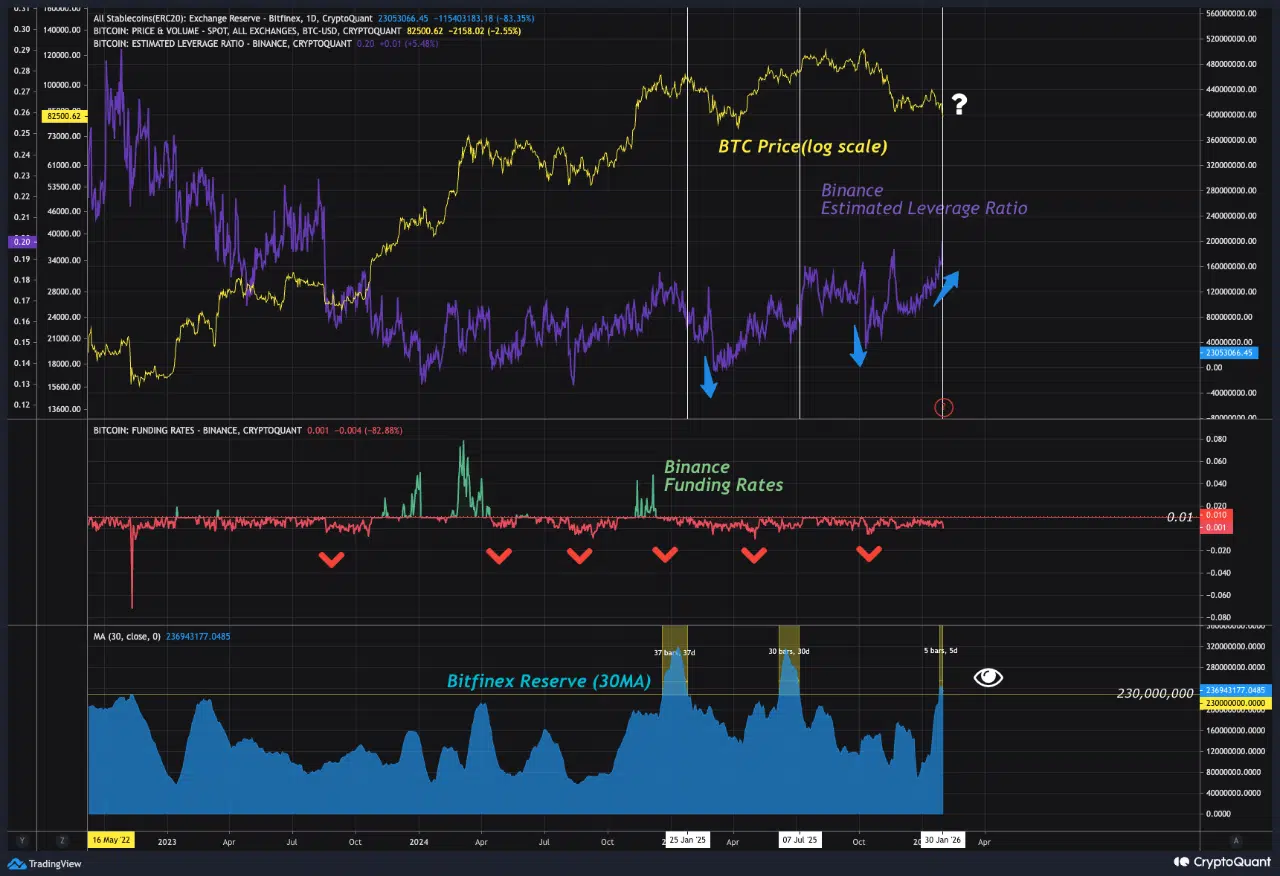
On January 25, 2026, Bitfinex stablecoin reserves crossed 230 million units, as shown by the 30-day moving average on the chart, shared by CryptoQuant.
This level has historically marked major inflection zones in Bitcoin’s market structure rather than short-lived noise.
The last time reserves reached comparable levels was January 2025, a period that preceded a sharp late-January drawdown, followed by a structurally strong recovery later in the year.
A similar reserve expansion also appeared in July 2025, which instead preceded a sustained upside phase, highlighting that the signal reflects transition risk, not directional certainty.
At present, the reserve spike signals that large capital pools are repositioning, likely preparing for volatility rather than chasing price.
 Source: https://cryptoquant.com/insights/quicktake/697c90a7b89dca38c15ecff3-Bitfinex-Reserves-Breach-230M-A-Déjà-Vu-of-January-2025
Bitcoin Price Stalls While Leverage Rebuilds
Bitcoin is currently trading around $82,500, down roughly 2.5% on the day, according to the chart’s spot price overlay. Despite the pullback, the Binance Estimated Leverage Ratio is rising again, forming a clear divergence.
Historically, this combination, flat or falling price with increasing leverage, indicates that traders are re-engaging through derivatives rather than spot accumulation. The chart shows similar leverage rebuilds ahead of prior large price expansions, but also before failed rallies, emphasizing rising fragility.
This setup suggests that positioning is becoming crowded, even as conviction remains uneven.
Funding Rates Stay Negative, Signaling Short Pressure
Binance funding rates remain persistently negative, hovering near -0.01, which indicates that short positions are dominant and paying longs. This condition mirrors previous pre-bottom environments where downside pressure persisted despite weakening sell momentum.
Negative funding alongside rising leverage typically reflects aggressive short exposure, increasing the probability of either a squeeze or a volatility-driven liquidation cascade.
However, without a clear spot demand response, this imbalance alone is insufficient to confirm a bottom.
Why the 230M Level Matters Now
What makes the current setup notable is the timing alignment:
- Bitfinex reserves crossed 230M
- Bitcoin price stalled near $82K–$83K
- Leverage began rising again
- Funding remained negative
This exact combination appeared in late January 2025, shortly before a sharp directional move. While the June 2022 signal failed, the repeated appearance of this structure around major turning points reinforces its relevance as a transition marker, not a timing tool.
Market Structure Points to an Inflection Phase
The data suggest Bitcoin is entering a decision zone, where supply conditions are tightening, but demand remains cautious. Spot markets show no panic selling, yet derivatives positioning is growing increasingly aggressive.
If leverage continues rising without spot confirmation, downside volatility remains a risk. Conversely, any sudden demand impulse could rapidly unwind short exposure.
At current levels, the market is not confirming a bottom, but it is setting the conditions for a large move.
In short, Bitfinex reserve expansion at 230M is flashing early-warning signals, not conclusions. The next directional break will likely define the trend for weeks, not days.
The post Bitfinex Stablecoin Reserves Surge as Bitcoin Trades Near $82,500 appeared first on ETHNews.
You May Also Like

XRP Enters ‘Washout Zone,’ Then Targets $30, Crypto Analyst Says

Republicans are 'very concerned about Texas' turning blue: GOP senator
