Cathie Wood, CEO of ARK Invest, identified Ethereum, Solana, and Hyperliquid as three altcoins offering compelling diversification potential amid the current cryptoCathie Wood, CEO of ARK Invest, identified Ethereum, Solana, and Hyperliquid as three altcoins offering compelling diversification potential amid the current crypto

Cathie Wood Highlights Ethereum, Solana, and Hyperliquid as 2026 Diversification Plays

2026/02/01 07:02
3 min read

Cathie Wood, CEO of ARK Invest, identified Ethereum, Solana, and Hyperliquid as three altcoins offering compelling diversification potential amid the current crypto market downturn.

Wood argued that these assets exhibit low correlation with traditional markets, making them attractive tools for investors seeking improved risk-adjusted returns during periods of macro uncertainty.

Her comments align with ARK’s broader thesis that digital assets are evolving into a distinct asset class, increasingly decoupled from equities, bonds, and commodities.

Ethereum: The Core Smart Contract Asset

Wood reiterated her long-standing conviction in Ethereum, describing it as both a foundational smart contract platform and a “monetary premium” asset. In her view, Ethereum is positioned to capture a substantial share of the projected $6 trillion smart contract market by 2030, driven by decentralized finance, tokenization, and enterprise adoption.

She emphasized that Ethereum’s role goes beyond speculative trading, framing it as critical infrastructure for a future digital financial system where assets, contracts, and identities are natively on-chain.

Solana: High-Performance Challenger

Wood also pointed to Solana as a disruptive force within the smart contract landscape. She highlighted Solana’s high transaction throughput and low fees, noting that these characteristics make it a credible competitor to Ethereum, particularly in high-frequency DeFi and consumer-facing applications.

While acknowledging Solana’s historical volatility, Wood framed the network as a technology-driven bet that could benefit disproportionately if on-chain activity continues to scale.

Hyperliquid: An Emerging Diversifier

A notable addition to Wood’s recent commentary was Hyperliquid. Though less established than Ethereum or Solana, she suggested that Hyperliquid “perhaps” could serve as a useful diversification tool alongside the more widely held crypto assets.

Wood did not position Hyperliquid as a core holding, but rather as an example of how new crypto-native platforms may offer differentiated exposure as market structure evolves.

Which Crypto Exchanges Dominated Spot Trading in 2025?

Why ARK Sees Opportunity in the Downturn

Wood’s 2026 outlook rests on several structural arguments:

  • Low Correlation: She noted that Bitcoin and major altcoins have historically shown very low correlation with traditional assets, citing correlations of 0.06 with bonds and 0.14 with gold, reinforcing their diversification value.
  • Tokenization at Scale: ARK’s Big Ideas 2026 report forecasts that the “tokenization of everything”, including equities, real estate, and financial contracts, could become an $11 trillion opportunity by 2030, largely built on public blockchains.
  • Institutional Shakeout: Recent volatility and flash-crash events are viewed as a healthy reset, clearing excess leverage and accelerating the transition toward what Wood calls a new financial architecture.

Takeaway

Cathie Wood’s January 2026 assessment frames Ethereum, Solana, and Hyperliquid not as short-term trades, but as strategic diversification assets within a broader portfolio. Her thesis hinges on low correlation, technological differentiation, and the long-term impact of tokenization. While near-term volatility remains elevated, Wood argues that the current downturn may ultimately strengthen the foundation for the next phase of institutional crypto adoption.

The post Cathie Wood Highlights Ethereum, Solana, and Hyperliquid as 2026 Diversification Plays appeared first on ETHNews.

Disclaimer: The articles reposted on this site are sourced from public platforms and are provided for informational purposes only. They do not necessarily reflect the views of MEXC. All rights remain with the original authors. If you believe any content infringes on third-party rights, please contact service@support.mexc.com for removal. MEXC makes no guarantees regarding the accuracy, completeness, or timeliness of the content and is not responsible for any actions taken based on the information provided. The content does not constitute financial, legal, or other professional advice, nor should it be considered a recommendation or endorsement by MEXC.

You May Also Like

XRP Enters ‘Washout Zone,’ Then Targets $30, Crypto Analyst Says
XRP Enters ‘Washout Zone,’ Then Targets $30, Crypto Analyst Says

XRP has entered what Korean Certified Elliott Wave Analyst XForceGlobal (@XForceGlobal) calls a “washout” phase inside a broader Elliott Wave corrective structure
Share
NewsBTC2026/02/05 08:00
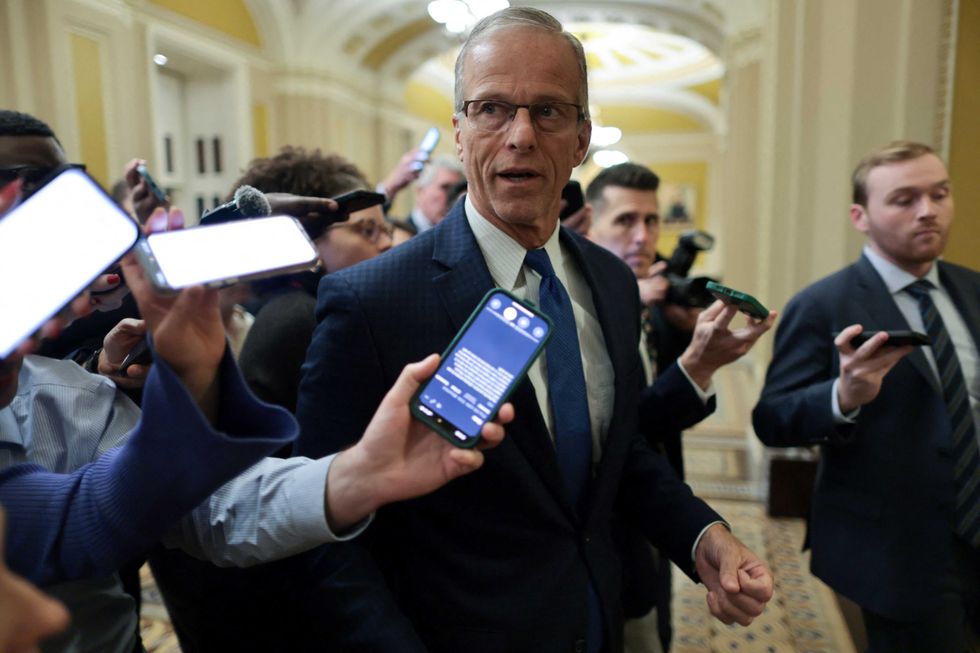
Republicans are 'very concerned about Texas' turning blue: GOP senator

Republicans are 'very concerned about Texas' turning blue: GOP senator

While Republicans in the U.S. House of Representatives have a razor-thin with just a four-seat advantage, their six-seat advantage in the U.S. Senate is seen as
Share
Alternet2026/02/05 08:38
Headwind Helps Best Wallet Token

Headwind Helps Best Wallet Token

The post Headwind Helps Best Wallet Token appeared on BitcoinEthereumNews.com. Google has announced the launch of a new open-source protocol called Agent Payments Protocol (AP2) in partnership with Coinbase, the Ethereum Foundation, and 60 other organizations. This allows AI agents to make payments on behalf of users using various methods such as real-time bank transfers, credit and debit cards, and, most importantly, stablecoins. Let’s explore in detail what this could mean for the broader cryptocurrency markets, and also highlight a presale crypto (Best Wallet Token) that could explode as a result of this development. Google’s Push for Stablecoins Agent Payments Protocol (AP2) uses digital contracts known as ‘Intent Mandates’ and ‘Verifiable Credentials’ to ensure that AI agents undertake only those payments authorized by the user. Mandates, by the way, are cryptographically signed, tamper-proof digital contracts that act as verifiable proof of a user’s instruction. For example, let’s say you instruct an AI agent to never spend more than $200 in a single transaction. This instruction is written into an Intent Mandate, which serves as a digital contract. Now, whenever the AI agent tries to make a payment, it must present this mandate as proof of authorization, which will then be verified via the AP2 protocol. Alongside this, Google has also launched the A2A x402 extension to accelerate support for the Web3 ecosystem. This production-ready solution enables agent-based crypto payments and will help reshape the growth of cryptocurrency integration within the AP2 protocol. Google’s inclusion of stablecoins in AP2 is a massive vote of confidence in dollar-pegged cryptocurrencies and a huge step toward making them a mainstream payment option. This widens stablecoin usage beyond trading and speculation, positioning them at the center of the consumption economy. The recent enactment of the GENIUS Act in the U.S. gives stablecoins more structure and legal support. Imagine paying for things like data crawls, per-task…
Share
BitcoinEthereumNews2025/09/18 01:27