

Nevada Sues Coinbase Over Unlicensed Wagering
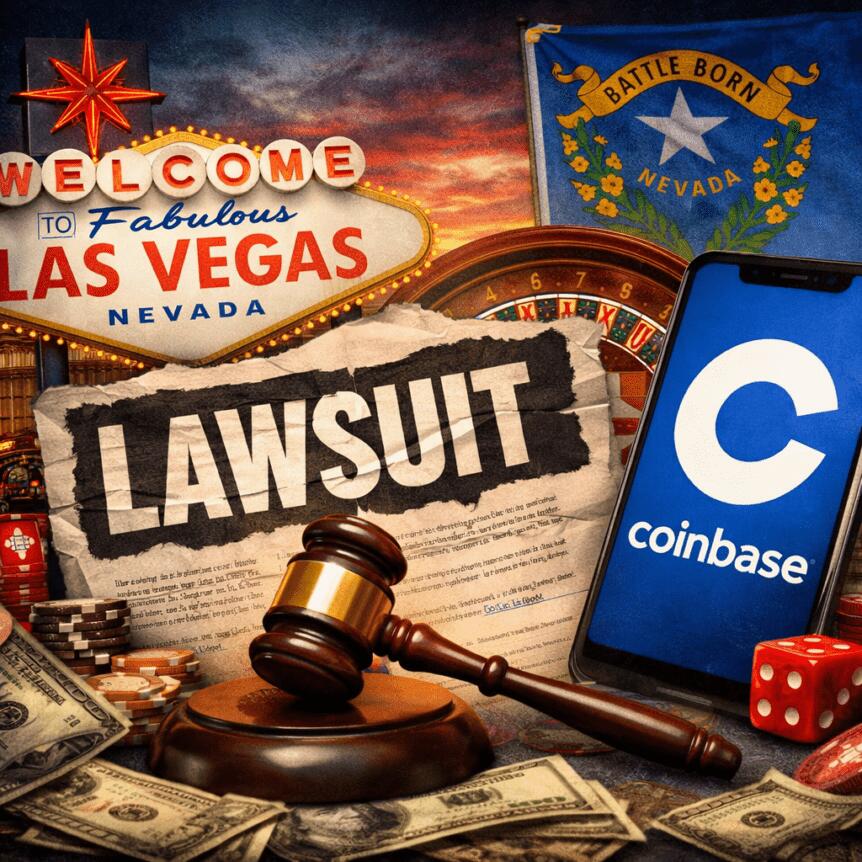
The Nevada Gaming Control Board has taken a formal step into the evolving landscape of crypto-driven betting by filing a civil enforcement action against Coinbase Financial Markets over wagers on sports event contracts. The move follows Coinbase’s public rollout of prediction markets across all 50 states in partnership with Kalshi, a federal-regulated platform. Nevada regulators allege that Coinbase offered unlicensed wagers on sporting events, prompting the board to seek a temporary restraining order and a preliminary injunction to halt operations tied to a derivatives exchange and prediction market focused on sporting bets. The actions reflect intensified scrutiny from state gaming authorities as the footprint of digital prediction markets expands nationwide.
Key takeaways
- Nevada’s Gaming Control Board filed a civil enforcement action against Coinbase Financial Markets for unlicensed wagering on sports-event contracts, signaling a serious regulatory challenge for the exchange.
- The court filings, submitted in Carson City, sought a temporary restraining order and a preliminary injunction to prevent Coinbase from operating a derivatives exchange tied to sports bets in the state.
- Governor-style advocacy from state regulators underscores their obligation to protect consumers and ensure compliance within Nevada’s gaming framework, even as the federal regulatory overlay remains unsettled for prediction markets.
- The enforcement unfolds less than a week after Coinbase announced the nationwide launch of prediction markets in partnership with Kalshi, a move that has drawn federal and state regulatory attention alike.
- Concurrent actions around similar platforms—such as Polymarket in Nevada—highlight a broader regulatory push at the state level, with courts citing potential harm to regulatory ability when licenses are not in place.
Market context: The case sits at the intersection of crypto-enabled prediction markets and gaming regulation, a space where federal oversight by the CFTC coexists with state licensing regimes. Kalshi operates under federal supervision, but state regulators retain authority to challenge or constrain platforms that it views as operating without proper licensure or compliance in their jurisdictions. The Nevada action, paired with heightened scrutiny in other states, signals a cautious approach as the industry tests the boundaries of what prediction markets can offer within regulated gaming environments.
Why it matters
The Nevada filing marks a pivotal moment for crypto-centered prediction markets, which have expanded rapidly after Coinbase’s announcement of nationwide availability. The state’s action demonstrates that even with a nationwide rollout, operators face a patchwork of licensing requirements that vary by jurisdiction. For investors and users, the episode underscores the importance of regulatory due diligence when engaging with prediction markets that intersect with sports betting and other event-based contracts. While Kalshi remains the federally regulated framework, Nevada’s suit suggests that state-level regulators may pursue separate actions when they believe rules are breached on a more localized scale.
Beyond the immediate legal maneuver, the case reinforces the ongoing debate about the proper scope of federal authority over prediction platforms like Kalshi and Polymarket, especially when they touch on state-regulated gaming markets. This dynamic matters not only for operators but also for customers who rely on these markets for hedging or speculative purposes. In the broader macro context, regulators are weighing consumer protection, fraud prevention, and market integrity against the innovative potential of decentralized or digital-native wagering ecosystems. The Nevada proceedings are part of a broader pattern in which regulators at the state level claim the prerogative to license and police betting activity even as federal agencies set overarching standards.
The enforcement actions come amid a continuing pushback against unlicensed betting activity, echoing recent developments in several states. For example, a separate Nevada case involving a Polymarket operator resulted in a temporary restraining order that blocked the platform from offering bets on event-based contracts to state residents, with judges emphasizing the immediacy and seriousness of regulatory gaps that hinder licensing and oversight.
The regulatory dialogue around prediction markets is not merely about permission to operate; it centers on ensuring that platforms meet licensing, consumer protection, and anti-fraud standards that govern traditional gaming. In this environment, even platforms that operate under federal oversight can face state-level challenges if regulators determine that activities occur outside their license framework. Coinbase’s recent nationwide push, therefore, may intensify the regulatory discourse as both sides weigh the best path forward for legitimate, compliant access to prediction markets in the United States.
The ongoing coverage around Kalshi, Polymarket, and other platforms—along with state actions such as Tennessee’s cease-and-desist letters to Kalshi, Polymarket, and Crypto.com—illustrates a regulatory mosaic where outcomes depend on the specific jurisdiction and the precise nature of the offered products. As these cases unfold, market participants should monitor how states interpret and apply licensing requirements to prediction-market activity and how federal regulators respond to a landscape that blends traditional betting frameworks with crypto-enabled innovation.
What to watch next
- Judicial deadlines and hearings in the Nevada case, including any schedule set for the temporary restraining order and preliminary injunction.
- Whether Coinbase or regulators pursue further action or settlement terms and how the court weighs the balance between consumer protection and innovation.
- Any subsequent state-level actions tied to prediction markets in jurisdictions beyond Nevada, including potential licensing clarifications or new rules.
- Possible guidance or statements from federal regulators regarding Kalshi and other federally regulated platforms as the US regulatory framework continues to evolve.
- Updates on the impact of regulatory actions on the nationwide rollout of prediction markets and user participation levels.
Sources & verification
- Nevada Gaming Control Board press release: ngcb-vs-coinbase—complaint-02.02.26.pdf describing the civil enforcement action and unlicensed wagering allegations.
- Nevada Gaming Control Board press release: coinbase—plaintiffs-application-for-ex-parte-temporary-restraining-order-and-motion-for-preliminary-injunction-02.02.26.pdf detailing the motion for a TRO and injunction.
- Nevada Gaming Control Board press release: ngcb-files-civil-enforcement-action-against-coinbase-02.03.26.pdf with quotes from board chair Mike Dreitzer.
- Cointelegraph report on Coinbase’s prediction markets rollout in all 50 states in partnership with Kalshi: https://cointelegraph.com/news/coinbase-prediction-markets-all-50-us-states-kalshi
- Nevada case context and related actions involving Polymarket and other platforms (see Nevada court order in the Polymarket matter) and Tennessee’s cease-and-desist letters to Kalshi, Polymarket, Crypto.com.
Key figures and next steps
The Nevada chair’s public remarks underscore regulators’ intent to protect citizens and ensure that gaming-related activities occur within licensed frameworks. As the legal process unfolds, Coinbase will need to demonstrate compliance with state licensing standards or adjust its offering to align with Nevada’s gaming regulations. The broader implication for operators in the prediction-market space is a clearer signal that state authorities are willing to intervene where they believe licensing gaps exist, even as federal oversight remains in flux. Market participants should watch how the courts balance the goals of consumer protection, market integrity, and the continued growth of prediction markets in the United States.
What to watch next
- Upcoming court moves or settlements in the Nevada action, including any timing around a temporary injunction decision.
- Potential licensing and regulatory clarifications from Nevada and other states as they assess prediction-market offerings’ compliance with existing gaming laws.
- Continuing federal-state dynamics around Kalshi and similar platforms, particularly in the context of CFTC oversight versus state licensing regimes.
- Any additional enforcement actions tied to Polymarket or other platforms facing similar licensing questions in Nevada or elsewhere.
Rewritten Article
The Nevada Gaming Control Board’s action against Coinbase Financial Markets adds a new layer to the ongoing debate about how digital prediction platforms fit within traditional gaming and sports-betting regimes. In filings dated in early February and entering the First Judicial District Court in Carson City, regulators asserted that Coinbase offered wagers on sporting events without the necessary licenses. The board’s move aims to freeze or pause operations tied to sports-related derivatives and prediction markets until the company can demonstrate compliance with Nevada’s licensing framework. The legal filing also seeks a temporary restraining order and a preliminary injunction to prevent Coinbase from continuing activities perceived as operating a derivatives exchange tied to sports bets in the state.
Jake Dreitzer, chair of the Nevada Gaming Control Board, emphasized the authority and responsibility of the agency to safeguard both the gaming ecosystem and residents’ interests. “The Board takes seriously its obligation to operate a thriving gaming industry and to protect Nevada citizens,” he said in a Tuesday statement. “The action taken yesterday reinforces this obligation.” The assertions in the complaint align with a broader regulatory posture that treats prediction markets as a facet of gaming that requires licensing and oversight just like more traditional forms of gambling. The board’s filings request that the court grant an ex parte order to halt the activity while the case proceeds, signaling the gravity of alleged unlicensed operations.
The legal action follows Coinbase’s public announcement that it had rolled out prediction markets in all 50 states in partnership with Kalshi, a platform subject to federal oversight by the Commodity Futures Trading Commission (CFTC). That dual oversight—federal at the Kalshi level and state-level licensing for Nevada—creates a complex regulatory environment for operators. The juxtaposition of a nationwide expansion with state-level enforcement underscores the challenges that can arise when a tech-forward platform expands into jurisdictions that maintain independent gaming regulators. The Kalshi partnership, highlighted in Coinbase’s rollout communications, sits at the center of ongoing questions about how prediction markets will navigate licensing, consumer protections, and market integrity as they scale across the country.
State regulators are not alone in this area. In recent days, other platforms have faced similar pushes from Nevada authorities. A temporary restraining order granted against a Polymarket operator, blocking bets on event-based contracts for state residents, illustrates the friction between rapid product launches and the requirements of licensing regimes. The judge’s decision underscored perceived “immediate” and “irreparable” harm to the state’s capacity to regulate betting without a license. The Nevada case against Coinbase stands in this broader context, signaling that regulators intend to enforce licensing provisions even as federal oversight remains in a nascent or evolving phase.
The regulatory dynamics extend beyond Nevada’s borders. Tennessee authorities have issued cease-and-desist letters to Kalshi, Polymarket, and Crypto.com, highlighting a broader regional appetite for enforcing licensing and compliance as prediction market offerings proliferate. These developments reinforce the idea that the evolution of prediction markets in the United States will depend on a mosaic of regulatory actions across states, rather than a single, uniform federal framework. While the CFTC maintains federal oversight of Kalshi, state-level regulators can still act decisively against platforms that operate without explicit licenses in their jurisdictions. The practical outcome for users is a landscape where access and protections can vary by state, even as the demand for prediction-market products persists.
Coinbase, for its part, has not publicly responded with a detailed statement at the time of publication. As the Nevada court process unfolds, observers will scrutinize how Coinbase responds to the licensing allegations and whether the company adjusts its product offerings to align with state and federal requirements. The case’s ultimate resolution could shape how prediction markets, and the broader class of crypto-enabled wagering tools, are offered in regulated settings across the United States, influencing both operator strategies and consumer expectations.
This article was originally published as Nevada Sues Coinbase Over Unlicensed Wagering on Crypto Breaking News – your trusted source for crypto news, Bitcoin news, and blockchain updates.
You May Also Like

Taiko and Chainlink to Unleash Reliable Onchain Data for DeFi Ecosystem

Why The Green Bay Packers Must Take The Cleveland Browns Seriously — As Hard As That Might Be

