The post Solana Price Reclaims $85, but On-Chain Data Tells a More Cautious Story appeared first on Coinpedia Fintech News Crypto markets witnessed a mild recoveryThe post Solana Price Reclaims $85, but On-Chain Data Tells a More Cautious Story appeared first on Coinpedia Fintech News Crypto markets witnessed a mild recovery

Solana Price Reclaims $85, but On-Chain Data Tells a More Cautious Story
2026/02/07 18:42
4 min read
Why Solana Price Is Surging

The post Solana Price Reclaims $85, but On-Chain Data Tells a More Cautious Story appeared first on Coinpedia Fintech News

Crypto markets witnessed a mild recovery today after last week’s sharp sell-off, with Bitcoin stabilizing and altcoins attempting to form short-term bases. Solana joined the rebound, climbing over 5% to reclaim the $85 level after briefly dipping into the low-$70s. The move has eased immediate downside pressure, but on-chain data suggests the market is still recalibrating rather than transitioning into a fresh uptrend. While SOL price has bounced, the deeper market signals point to balance returning, not conviction. The question now centers on whether Solana (SOL) is building a foundation or merely reacting to exhausted selling.

Solana’s On-Chain Data Reflects Cooling Conditions After the Sell-Off

Solana’s on-chain data reflects a textbook post-liquidation environment. CryptoQuant’s Spot Volume Bubble Map places current activity firmly in a “cooling” region, a phase typically observed after extended declines. Historically, this zone indicates that sellers have largely exited, but buyers have not yet re-engaged with force. Crucially, spot volume remains subdued relative to prior recovery attempts. This matters because sustainable bottoms are usually accompanied by rising spot participation, not just price stabilization. The absence of strong spot inflows suggests that large holders are waiting for confirmation rather than front-running a reversal.
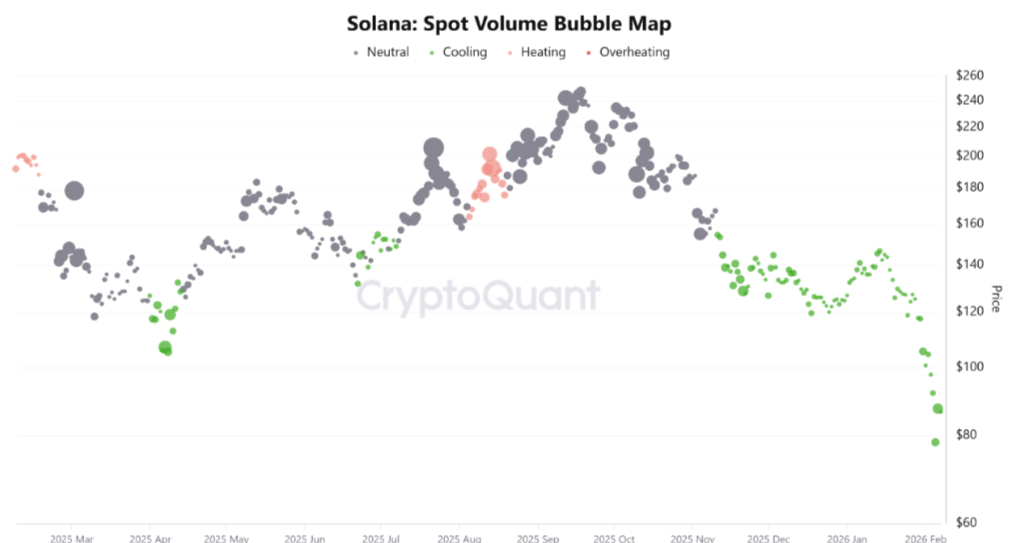
SOL spot volume map

Derivatives data reinforces this view. Futures volume bubble maps show a sharp transition from “overheating” to “cooling,” confirming that speculative leverage has been flushed. Open interest has contracted meaningfully, reducing liquidation risk but also signaling reduced directional conviction. In simple terms, traders have stepped back rather than stepped in.

Stablecoin Inflows Rise as Traders Stay Cautious

Stablecoin flow data adds an important layer to the narrative. Exchange inflows of USDT recently spiked to multi-week highs, reflecting fresh liquidity entering the system. However, this liquidity has not translated into aggressive Solana accumulation.
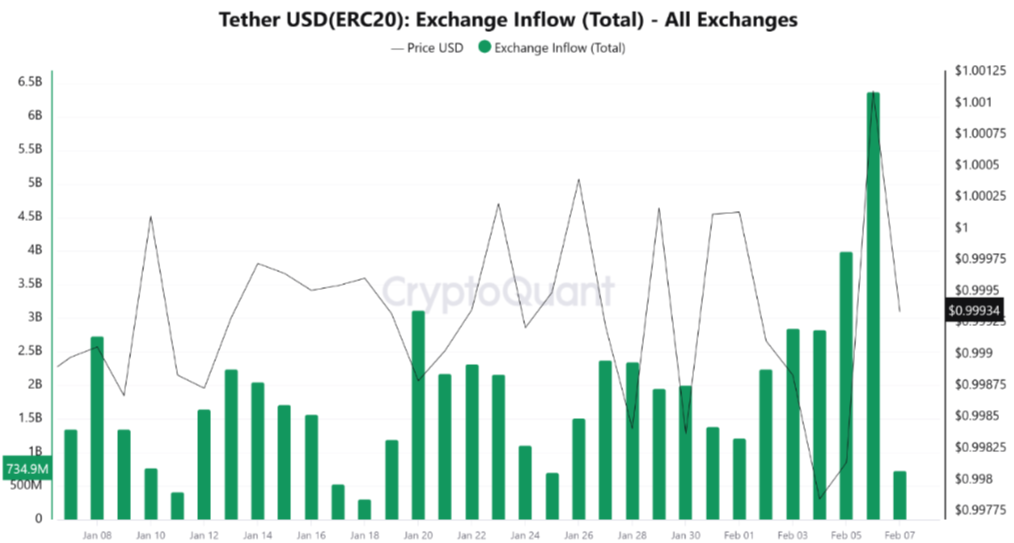
Exchange inflows

Historically, strong bottoms form when rising stablecoin balances coincide with expanding spot volume and declining exchange reserves for the asset itself. At present, Solana’s on-chain footprint shows liquidity availability without decisive allocation. This asymmetry suggests capital is positioning defensively, waiting for clearer signals before committing. In institutional terms, the market is liquid but cautious.

Solana Price Reclaims $85, but Key Resistance Still Overhead

Solana’s price rebound toward the $85 mark marks a clear short-term recovery from recent panic lows, but the broader chart structure suggests the move is still corrective rather than trend-changing. On the daily timeframe, SOL remains confined within a descending channel that has guided price action since the January breakdown, indicating that sellers continue to control the dominant trend. The recent bounce originated from a well-defined demand zone in the $70–$75 region, where historical buying interest previously absorbed heavy sell pressure. That zone acted as a liquidity flush, triggering short covering and a technical rebound. However, the rally has so far stalled near the mid-range of the descending channel, an area that has repeatedly capped upside attempts over the past several weeks.
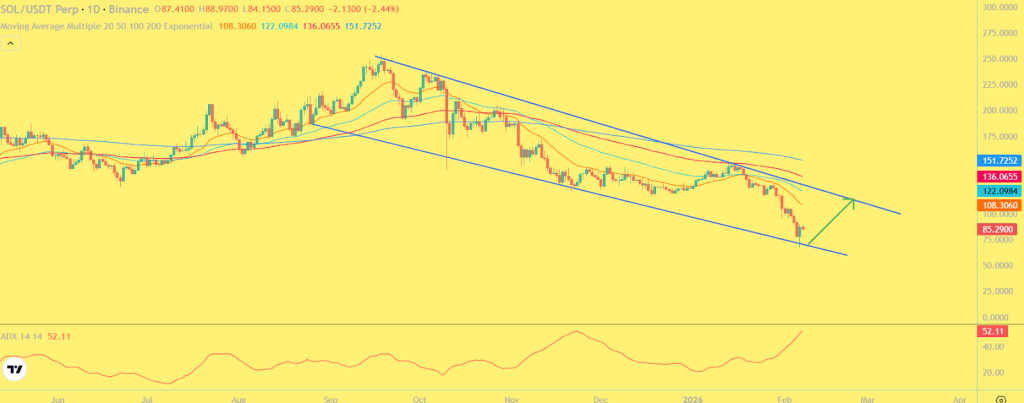
Solana Price

The $88–$92 resistance band now stands out as the first major supply zone. This region aligns with prior breakdown levels, short-term moving averages, and the upper boundary of the declining structure. A clean daily close above this zone would be required to shift market structure and open the door toward $100. Until then, upside moves risk being sold into. On the downside, immediate support now rests near $80, followed by the broader demand block around $72. As long as SOL holds above $80, the rebound structure remains intact. A failure back below that level would signal that the current move is losing momentum and could drag price back toward the lower demand area. Overall, Solana’s price action reflects stabilization after a sharp sell-off, but confirmation of a trend reversal remains absent. 

Final Thoughts

Solana’s price recovery toward $85 reflects short-term relief driven by oversold conditions and cooling on-chain metrics, including declining futures leverage and stabilizing spot volume. That said, exchange inflows and muted follow-through buying suggest conviction is still building. A sustained push above the $90–$95 resistance zone, backed by rising spot demand and reduced sell pressure, is needed to confirm a durable trend shift rather than a temporary rebound.

Market Opportunity
Movement Logo
Movement Price(MOVE)
$0.02237
$0.02237$0.02237
+6.67%
USD
Movement (MOVE) Live Price Chart
Disclaimer: The articles reposted on this site are sourced from public platforms and are provided for informational purposes only. They do not necessarily reflect the views of MEXC. All rights remain with the original authors. If you believe any content infringes on third-party rights, please contact service@support.mexc.com for removal. MEXC makes no guarantees regarding the accuracy, completeness, or timeliness of the content and is not responsible for any actions taken based on the information provided. The content does not constitute financial, legal, or other professional advice, nor should it be considered a recommendation or endorsement by MEXC.

You May Also Like

UK and US Seal $42 Billion Tech Pact Driving AI and Energy Future
UK and US Seal $42 Billion Tech Pact Driving AI and Energy Future

The post UK and US Seal $42 Billion Tech Pact Driving AI and Energy Future appeared on BitcoinEthereumNews.com. Key Highlights Microsoft and Google pledge billions as part of UK US tech partnership Nvidia to deploy 120,000 GPUs with British firm Nscale in Project Stargate Deal positions UK as an innovation hub rivaling global tech powers UK and US Seal $42 Billion Tech Pact Driving AI and Energy Future The UK and the US have signed a “Technological Prosperity Agreement” that paves the way for joint projects in artificial intelligence, quantum computing, and nuclear energy, according to Reuters. Donald Trump and King Charles review the guard of honour at Windsor Castle, 17 September 2025. Image: Kirsty Wigglesworth/Reuters The agreement was unveiled ahead of U.S. President Donald Trump’s second state visit to the UK, marking a historic moment in transatlantic technology cooperation. Billions Flow Into the UK Tech Sector As part of the deal, major American corporations pledged to invest $42 billion in the UK. Microsoft leads with a $30 billion investment to expand cloud and AI infrastructure, including the construction of a new supercomputer in Loughton. Nvidia will deploy 120,000 GPUs, including up to 60,000 Grace Blackwell Ultra chips—in partnership with the British company Nscale as part of Project Stargate. Google is contributing $6.8 billion to build a data center in Waltham Cross and expand DeepMind research. Other companies are joining as well. CoreWeave announced a $3.4 billion investment in data centers, while Salesforce, Scale AI, BlackRock, Oracle, and AWS confirmed additional investments ranging from hundreds of millions to several billion dollars. UK Positions Itself as a Global Innovation Hub British Prime Minister Keir Starmer said the deal could impact millions of lives across the Atlantic. He stressed that the UK aims to position itself as an investment hub with lighter regulations than the European Union. Nvidia spokesman David Hogan noted the significance of the agreement, saying it would…
Share
BitcoinEthereumNews2025/09/18 02:22
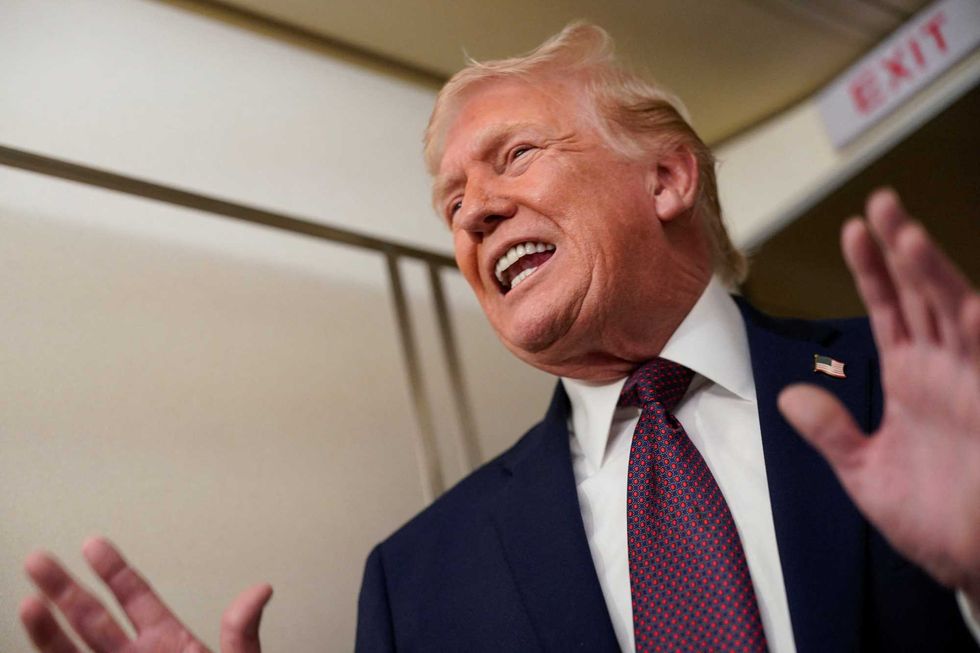
Trump caves on his own snubs as retaliation ploy against Dem governors backfires

Trump caves on his own snubs as retaliation ploy against Dem governors backfires

President Donald Trump on Wednesday walked back a snub he gave to two Democratic Governors. Last week, Trump notably did not invite Democratic governors Wes Moore
Share
Rawstory2026/02/12 10:29
Bitcoin devs cheer block reconstruction stats, ignore security budget concerns

Bitcoin devs cheer block reconstruction stats, ignore security budget concerns

The post Bitcoin devs cheer block reconstruction stats, ignore security budget concerns appeared on BitcoinEthereumNews.com. This morning, Bitcoin Core developers celebrated improved block reconstruction statistics for node operators while conveniently ignoring the reason for these statistics — the downward trend in fees for Bitcoin’s security budget. Reacting with heart emojis and thumbs up to a green chart showing over 80% “successful compact block reconstructions without any requested transactions,” they conveniently omitted red trend lines of the fees that Bitcoin users pay for mining security which powered those green statistics. Block reconstructions occur when a node requests additional information about transactions within a compact block. Although compact blocks allow nodes to quickly relay valid bundles of transactions across the internet, the more frequently that nodes can reconstruct without extra, cumbersome transaction requests from their peers is a positive trend. Because so many nodes switched over in August to relay transactions bidding 0.1 sat/vB across their mempools, nodes now have to request less transaction data to reconstruct blocks containing sub-1 sat/vB transactions. After nodes switched over in August to accept and relay pending transactions bidding less than 1 sat/vB, disparate mempools became harmonized as most nodes had a better view of which transactions would likely join upcoming blocks. As a result, block reconstruction times improved, as nodes needed less information about these sub-1 sat/vB transactions. In July, several miners admitted that user demand for Bitcoin blockspace had persisted at such a low that they were willing to accept transaction fees of just 0.1 satoshi per virtual byte — 90% lower than their prior 1 sat/vB minimum. With so many blocks partially empty, they succumbed to the temptation to accept at least something — even 1 billionth of one bitcoin (BTC) — rather than $0 to fill up some of the excess blockspace. Read more: Bitcoin’s transaction fees have fallen to a multi-year low Green stats for block reconstruction after transaction fees crash After…
Share
BitcoinEthereumNews2025/09/18 04:07