The post Ripple and SBI Push RLUSD Stablecoin Into Japan’s $300B Market appeared first on Coinpedia Fintech News When Ripple first announced plans to enter the stablecoin market earlier this year, many wondered where its enterprise-focused coin would land first. Now, that question has been answered: Japan. Ripple and long-time partner SBI Holdings have signed a memorandum of understanding to distribute Ripple USD (RLUSD) through SBI VC Trade, one of Japan’s licensed Electronic Payment Instruments Exchange Service Providers. Why Japan Matters Japan has become a critical proving ground for new crypto and blockchain applications. It is one of the few countries with a clear licensing framework for stablecoins, giving firms like SBI VC Trade a head start in bringing products to market. By positioning RLUSD here, Ripple gains a regulatory-friendly entry point into Asia, while SBI strengthens its reputation as the first Japanese firm to actively handle stablecoins under official licensing. “Introducing RLUSD is not just about expanding choice. It’s a major step forward for reliability and convenience in the Japanese market and a key milestone in the convergence of finance and digital technology,”  said Tomohiko Kondo, CEO of SBI VC Trade.  Building Trust in Stablecoins The global stablecoin market is already valued at nearly $300 billion and is projected to reach trillions in the coming years. But not all coins are created equal. RLUSD, Ripple insists, is built to institutional standards: fully backed by U.S. dollar deposits, short-term government bonds, and cash equivalents. Independent attestations from third-party accountants are meant to reassure regulators and financial institutions that this is not another “trust me” coin. Jack McDonald, Ripple’s Senior Vice President of Stablecoins, framed the partnership as a broader vision: “Our work with SBI has always been about building a trusted and compliant financial future. RLUSD is designed as an industry standard, a bridge between traditional finance and DeFi. We believe Japan will help set the benchmark for how stablecoins should work.” What Comes Next The rollout of RLUSD in Japan is targeted for the first quarter of 2026, with SBI VC Trade leading distribution. For Ripple, this marks not only an expansion of its product portfolio beyond payments and custody, but also a chance to directly compete with giants like USDT and USDC in Asia.  Japan’s stablecoin rules, paired with the credibility of Ripple and the deep reach of SBI’s financial network, create a powerful stage for RLUSD. If adoption takes off, the partnership could turn Japan into a global showcase for how compliant stablecoins can scale.The post Ripple and SBI Push RLUSD Stablecoin Into Japan’s $300B Market appeared first on Coinpedia Fintech News When Ripple first announced plans to enter the stablecoin market earlier this year, many wondered where its enterprise-focused coin would land first. Now, that question has been answered: Japan. Ripple and long-time partner SBI Holdings have signed a memorandum of understanding to distribute Ripple USD (RLUSD) through SBI VC Trade, one of Japan’s licensed Electronic Payment Instruments Exchange Service Providers. Why Japan Matters Japan has become a critical proving ground for new crypto and blockchain applications. It is one of the few countries with a clear licensing framework for stablecoins, giving firms like SBI VC Trade a head start in bringing products to market. By positioning RLUSD here, Ripple gains a regulatory-friendly entry point into Asia, while SBI strengthens its reputation as the first Japanese firm to actively handle stablecoins under official licensing. “Introducing RLUSD is not just about expanding choice. It’s a major step forward for reliability and convenience in the Japanese market and a key milestone in the convergence of finance and digital technology,”  said Tomohiko Kondo, CEO of SBI VC Trade.  Building Trust in Stablecoins The global stablecoin market is already valued at nearly $300 billion and is projected to reach trillions in the coming years. But not all coins are created equal. RLUSD, Ripple insists, is built to institutional standards: fully backed by U.S. dollar deposits, short-term government bonds, and cash equivalents. Independent attestations from third-party accountants are meant to reassure regulators and financial institutions that this is not another “trust me” coin. Jack McDonald, Ripple’s Senior Vice President of Stablecoins, framed the partnership as a broader vision: “Our work with SBI has always been about building a trusted and compliant financial future. RLUSD is designed as an industry standard, a bridge between traditional finance and DeFi. We believe Japan will help set the benchmark for how stablecoins should work.” What Comes Next The rollout of RLUSD in Japan is targeted for the first quarter of 2026, with SBI VC Trade leading distribution. For Ripple, this marks not only an expansion of its product portfolio beyond payments and custody, but also a chance to directly compete with giants like USDT and USDC in Asia.  Japan’s stablecoin rules, paired with the credibility of Ripple and the deep reach of SBI’s financial network, create a powerful stage for RLUSD. If adoption takes off, the partnership could turn Japan into a global showcase for how compliant stablecoins can scale.

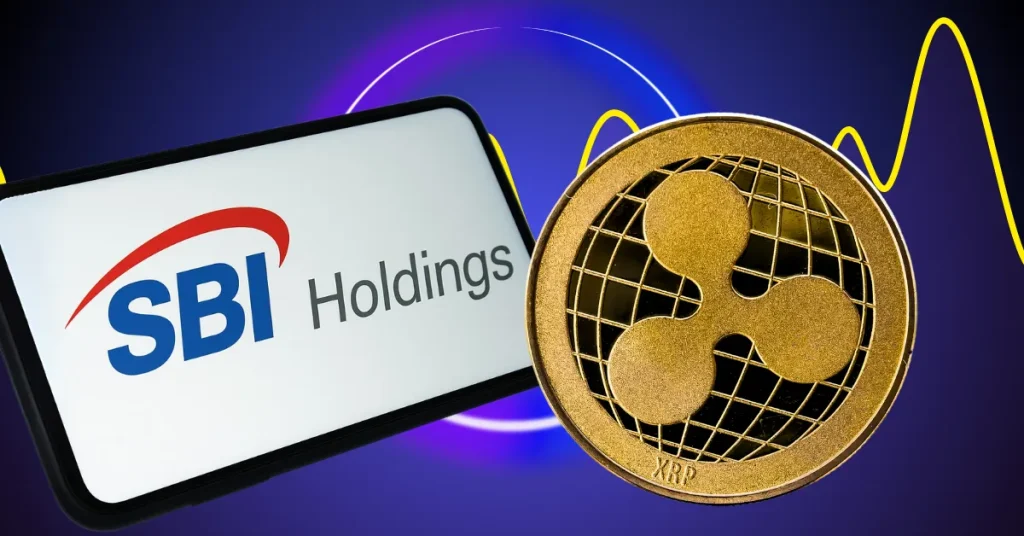
Ripple and SBI Push RLUSD Stablecoin Into Japan’s $300B Market
3 min read
Why SBI Holdings Is CRITICAL for Ripple (XRP) Global Expansion

The post Ripple and SBI Push RLUSD Stablecoin Into Japan’s $300B Market appeared first on Coinpedia Fintech News

When Ripple first announced plans to enter the stablecoin market earlier this year, many wondered where its enterprise-focused coin would land first. Now, that question has been answered: Japan. Ripple and long-time partner SBI Holdings have signed a memorandum of understanding to distribute Ripple USD (RLUSD) through SBI VC Trade, one of Japan’s licensed Electronic Payment Instruments Exchange Service Providers.

Why Japan Matters

Japan has become a critical proving ground for new crypto and blockchain applications. It is one of the few countries with a clear licensing framework for stablecoins, giving firms like SBI VC Trade a head start in bringing products to market. By positioning RLUSD here, Ripple gains a regulatory-friendly entry point into Asia, while SBI strengthens its reputation as the first Japanese firm to actively handle stablecoins under official licensing.

“Introducing RLUSD is not just about expanding choice. It’s a major step forward for reliability and convenience in the Japanese market and a key milestone in the convergence of finance and digital technology,”  said Tomohiko Kondo, CEO of SBI VC Trade. 

Building Trust in Stablecoins

The global stablecoin market is already valued at nearly $300 billion and is projected to reach trillions in the coming years. But not all coins are created equal. RLUSD, Ripple insists, is built to institutional standards: fully backed by U.S. dollar deposits, short-term government bonds, and cash equivalents. Independent attestations from third-party accountants are meant to reassure regulators and financial institutions that this is not another “trust me” coin.

Jack McDonald, Ripple’s Senior Vice President of Stablecoins, framed the partnership as a broader vision: “Our work with SBI has always been about building a trusted and compliant financial future. RLUSD is designed as an industry standard, a bridge between traditional finance and DeFi. We believe Japan will help set the benchmark for how stablecoins should work.”

What Comes Next

The rollout of RLUSD in Japan is targeted for the first quarter of 2026, with SBI VC Trade leading distribution. For Ripple, this marks not only an expansion of its product portfolio beyond payments and custody, but also a chance to directly compete with giants like USDT and USDC in Asia. 

Japan’s stablecoin rules, paired with the credibility of Ripple and the deep reach of SBI’s financial network, create a powerful stage for RLUSD. If adoption takes off, the partnership could turn Japan into a global showcase for how compliant stablecoins can scale.

Market Opportunity
Humanity Logo
Humanity Price(H)
$0.11228
$0.11228$0.11228
-11.22%
USD
Humanity (H) Live Price Chart
Disclaimer: The articles reposted on this site are sourced from public platforms and are provided for informational purposes only. They do not necessarily reflect the views of MEXC. All rights remain with the original authors. If you believe any content infringes on third-party rights, please contact service@support.mexc.com for removal. MEXC makes no guarantees regarding the accuracy, completeness, or timeliness of the content and is not responsible for any actions taken based on the information provided. The content does not constitute financial, legal, or other professional advice, nor should it be considered a recommendation or endorsement by MEXC.

You May Also Like

GCC and India to sign terms for start of free trade talks

GCC and India to sign terms for start of free trade talks

The Gulf Cooperation Council (GCC) and India reportedly will sign terms of reference on Thursday to resume talks aimed at finalising a free trade agreement.  Indian
Share
Agbi2026/02/05 13:45
PEPE Holders Looking For The Next 100x Crypto Set Their Sights On Layer Brett Presale

PEPE Holders Looking For The Next 100x Crypto Set Their Sights On Layer Brett Presale

The post PEPE Holders Looking For The Next 100x Crypto Set Their Sights On Layer Brett Presale appeared on BitcoinEthereumNews.com. Crypto News 18 September 2025 | 01:13 The Shiba Inu price prediction has regained investor attention this month as meme coin traders shift strategies ahead of Q4. While SHIB and PEPE continue to dominate headlines, many early holders are now hunting for the next breakout. Layer Brett (LBRETT), a new Ethereum Layer 2 meme coin, is quickly emerging as a top contender. Shiba Inu price prediction: Ecosystem grows but limited short-term upside Shiba Inu (SHIB) is currently priced at $0.00001307, showing slow but steady performance this September. Despite the relatively quiet price action, SHIB’s long-term vision is continuing to take shape. With the rollout of Shibarium, its Layer 2 network, Shiba Inu is transitioning from meme coin status to ecosystem coin. That said, analysts believe that short-term price action remains capped unless broader meme coin interest returns in full force. Resistance levels near $0.000015 remain tough to crack without major catalysts or a spike in retail enthusiasm. For now, Shiba Inu price predictions remain cautious, with most calling for gradual moves higher rather than a sudden breakout. Still, SHIB’s loyal community and expanding ecosystem keep it on the radar for long-term holders, especially those betting on its metaverse and DeFi ambitions to mature into stronger use cases by 2025. PEPE struggles to reclaim momentum after early hype PEPE exploded onto the meme coin scene in 2023 and gained massive traction with retail investors. However, the token’s parabolic rise was followed by a sharp correction. Currently priced around $0.00001087, PEPE still maintains a large following, but the lack of clear development or new utilities has left holders searching for alternatives with more potential. With many early PEPE investors now down from peak levels, attention has shifted to lower-cap meme coins that offer actual utility and early entry benefits. While PEPE may…
Share
BitcoinEthereumNews2025/09/18 07:02
Morning brief: Asian stocks slump as AI capex fears grow, silver plunges

Morning brief: Asian stocks slump as AI capex fears grow, silver plunges

Asian markets retreated on Thursday as investors rotated out of technology stocks amid mounting concerns over the escalating cost of artificial intelligence investment
Share
Coinstats2026/02/05 13:56