BitcoinWorld Crypto Fear & Greed Index Surges to 60: Unlocking Market Sentiment Insights Are you feeling a buzz in the crypto air? You are not alone! The widely watched Crypto Fear & Greed Index recently surged to a score of 60, officially moving out of the ‘Neutral’ zone and firmly into ‘Greed.’ This shift signals a significant change in investor sentiment across the digital asset landscape. But what does this really mean for your crypto investments and how should you interpret this exciting development? Understanding the Crypto Fear & Greed Index The Crypto Fear & Greed Index acts as a crucial barometer for market sentiment. It provides a daily snapshot of how emotional crypto investors currently feel. Ranging from 0 to 100, the index gives us a clear picture: 0 signifies ‘Extreme Fear’: This often indicates that investors are overly worried, potentially leading to panic selling and undervalued assets. 100 signifies ‘Extreme Greed’: This suggests investors are getting too excited, possibly leading to ‘FOMO’ (Fear Of Missing Out) and overvalued assets. The index helps you gauge whether the market is behaving rationally or is driven by strong emotions. What Factors Drive the Crypto Fear & Greed Index? The index compiles data from several key sources to calculate its daily score. It offers a holistic view of market dynamics. These factors include: Volatility (25%): Measures current Bitcoin price volatility and drawdown compared to average values. Market Momentum/Volume (25%): Compares current volume and market momentum with historical averages. Social Media (15%): Analyzes sentiment and engagement from various social media platforms regarding crypto. Surveys (15%): (Currently paused) Previously gathered investor sentiment directly. Bitcoin Dominance (10%): An increase in Bitcoin’s market cap share can indicate fear of altcoins or a flight to safety. Google Trends (10%): Examines search queries related to Bitcoin and other cryptocurrencies to spot interest trends. Each factor contributes to the overall score, providing a comprehensive assessment of market psychology. Decoding the Shift: From Neutral to Greed The recent jump of 10 points, moving the Crypto Fear & Greed Index from ‘Neutral’ to ‘Greed’ at 60, reflects a notable improvement in market confidence. This shift suggests that more investors are feeling optimistic and are willing to take on more risk. Historically, periods of ‘Greed’ often coincide with rising prices and increased buying activity. However, it is vital to approach such sentiment with caution. While ‘Greed’ can fuel further upward movement, it also often precedes market corrections. When everyone feels confident, it might be a sign that the market is becoming overheated. Therefore, understanding this sentiment is key to making informed decisions. Navigating the Greed Zone: Opportunities and Risks Entering the ‘Greed’ zone presents both exciting opportunities and potential pitfalls for investors. It is crucial to balance enthusiasm with a strategic approach. Here’s what you should consider: Opportunities: Positive Momentum: Increased investor confidence can lead to sustained price rallies for various cryptocurrencies. Broader Market Participation: A greedy market often attracts new capital, expanding the overall crypto ecosystem. Potential for Gains: Those holding assets may see their portfolios grow as buying pressure increases. Risks: Market Overextension: Extreme greed can lead to irrational exuberance, pushing asset prices beyond their fundamental value. Increased Volatility: While positive, rapid price increases can also lead to sharp pullbacks or corrections. FOMO-Driven Decisions: The fear of missing out can cause investors to make impulsive, high-risk purchases at market peaks. Smart investors use the Crypto Fear & Greed Index as a guide, not a definitive trading signal. They avoid getting swept away by emotion. How Savvy Investors Leverage the Crypto Fear & Greed Index For experienced crypto participants, the Crypto Fear & Greed Index serves as an excellent sentiment indicator rather than a direct buy or sell signal. They often use it in conjunction with other analytical tools: Contrarian Strategy: Some investors believe that when the index shows ‘Extreme Fear,’ it might be a good time to consider buying, and when it shows ‘Extreme Greed,’ it might be a good time to consider selling or taking profits. Risk Management: A high ‘Greed’ score can prompt investors to tighten stop-losses or reduce exposure to highly speculative assets. Emotional Discipline: The index reminds investors to check their own emotions and not let fear or greed dictate their decisions. By understanding the underlying sentiment, you empower yourself to make more rational and disciplined investment choices. Conclusion: A Powerful Gauge for Crypto Sentiment The rise of the Crypto Fear & Greed Index to 60, signaling a move into the ‘Greed’ zone, is undoubtedly a positive indicator of current market sentiment. It reflects increased optimism and buying interest among investors. However, this powerful tool also serves as a crucial reminder to exercise caution and maintain a balanced perspective. While positive sentiment can drive growth, extreme greed often precedes market adjustments. By understanding what drives the index and how to interpret its signals, you can navigate the volatile crypto market with greater insight and make more informed decisions. Frequently Asked Questions (FAQs) Q1: What does a ‘Greed’ score of 60 on the Crypto Fear & Greed Index mean? A score of 60 means the market has moved into the ‘Greed’ zone. This indicates that investors are feeling optimistic, confident, and are generally willing to take on more risk, often leading to increased buying activity and rising prices. Q2: How often is the Crypto Fear & Greed Index updated? The Crypto Fear & Greed Index is updated daily, providing a fresh perspective on market sentiment each day. Q3: Should I buy cryptocurrency when the index shows ‘Greed’? The index is a sentiment indicator, not a direct trading signal. While ‘Greed’ can accompany rising prices, it can also signal an an overheated market ripe for a correction. It is wise to combine this insight with your own research and strategy, rather than making decisions based solely on the index. Q4: What factors contribute to the Crypto Fear & Greed Index? The index considers six main factors: volatility, market momentum/volume, social media activity, surveys (currently paused), Bitcoin dominance, and Google Trends data. Q5: Is the Crypto Fear & Greed Index only for Bitcoin? While Bitcoin’s data significantly influences the index due to its market dominance, the index is generally seen as a reflection of overall sentiment across the broader cryptocurrency market. Did you find this analysis helpful? Share this article with your fellow crypto enthusiasts and help them understand the dynamic world of market sentiment! To learn more about the latest crypto market trends, explore our article on key developments shaping Bitcoin price action. This post Crypto Fear & Greed Index Surges to 60: Unlocking Market Sentiment Insights first appeared on BitcoinWorld and is written by Editorial TeamBitcoinWorld Crypto Fear & Greed Index Surges to 60: Unlocking Market Sentiment Insights Are you feeling a buzz in the crypto air? You are not alone! The widely watched Crypto Fear & Greed Index recently surged to a score of 60, officially moving out of the ‘Neutral’ zone and firmly into ‘Greed.’ This shift signals a significant change in investor sentiment across the digital asset landscape. But what does this really mean for your crypto investments and how should you interpret this exciting development? Understanding the Crypto Fear & Greed Index The Crypto Fear & Greed Index acts as a crucial barometer for market sentiment. It provides a daily snapshot of how emotional crypto investors currently feel. Ranging from 0 to 100, the index gives us a clear picture: 0 signifies ‘Extreme Fear’: This often indicates that investors are overly worried, potentially leading to panic selling and undervalued assets. 100 signifies ‘Extreme Greed’: This suggests investors are getting too excited, possibly leading to ‘FOMO’ (Fear Of Missing Out) and overvalued assets. The index helps you gauge whether the market is behaving rationally or is driven by strong emotions. What Factors Drive the Crypto Fear & Greed Index? The index compiles data from several key sources to calculate its daily score. It offers a holistic view of market dynamics. These factors include: Volatility (25%): Measures current Bitcoin price volatility and drawdown compared to average values. Market Momentum/Volume (25%): Compares current volume and market momentum with historical averages. Social Media (15%): Analyzes sentiment and engagement from various social media platforms regarding crypto. Surveys (15%): (Currently paused) Previously gathered investor sentiment directly. Bitcoin Dominance (10%): An increase in Bitcoin’s market cap share can indicate fear of altcoins or a flight to safety. Google Trends (10%): Examines search queries related to Bitcoin and other cryptocurrencies to spot interest trends. Each factor contributes to the overall score, providing a comprehensive assessment of market psychology. Decoding the Shift: From Neutral to Greed The recent jump of 10 points, moving the Crypto Fear & Greed Index from ‘Neutral’ to ‘Greed’ at 60, reflects a notable improvement in market confidence. This shift suggests that more investors are feeling optimistic and are willing to take on more risk. Historically, periods of ‘Greed’ often coincide with rising prices and increased buying activity. However, it is vital to approach such sentiment with caution. While ‘Greed’ can fuel further upward movement, it also often precedes market corrections. When everyone feels confident, it might be a sign that the market is becoming overheated. Therefore, understanding this sentiment is key to making informed decisions. Navigating the Greed Zone: Opportunities and Risks Entering the ‘Greed’ zone presents both exciting opportunities and potential pitfalls for investors. It is crucial to balance enthusiasm with a strategic approach. Here’s what you should consider: Opportunities: Positive Momentum: Increased investor confidence can lead to sustained price rallies for various cryptocurrencies. Broader Market Participation: A greedy market often attracts new capital, expanding the overall crypto ecosystem. Potential for Gains: Those holding assets may see their portfolios grow as buying pressure increases. Risks: Market Overextension: Extreme greed can lead to irrational exuberance, pushing asset prices beyond their fundamental value. Increased Volatility: While positive, rapid price increases can also lead to sharp pullbacks or corrections. FOMO-Driven Decisions: The fear of missing out can cause investors to make impulsive, high-risk purchases at market peaks. Smart investors use the Crypto Fear & Greed Index as a guide, not a definitive trading signal. They avoid getting swept away by emotion. How Savvy Investors Leverage the Crypto Fear & Greed Index For experienced crypto participants, the Crypto Fear & Greed Index serves as an excellent sentiment indicator rather than a direct buy or sell signal. They often use it in conjunction with other analytical tools: Contrarian Strategy: Some investors believe that when the index shows ‘Extreme Fear,’ it might be a good time to consider buying, and when it shows ‘Extreme Greed,’ it might be a good time to consider selling or taking profits. Risk Management: A high ‘Greed’ score can prompt investors to tighten stop-losses or reduce exposure to highly speculative assets. Emotional Discipline: The index reminds investors to check their own emotions and not let fear or greed dictate their decisions. By understanding the underlying sentiment, you empower yourself to make more rational and disciplined investment choices. Conclusion: A Powerful Gauge for Crypto Sentiment The rise of the Crypto Fear & Greed Index to 60, signaling a move into the ‘Greed’ zone, is undoubtedly a positive indicator of current market sentiment. It reflects increased optimism and buying interest among investors. However, this powerful tool also serves as a crucial reminder to exercise caution and maintain a balanced perspective. While positive sentiment can drive growth, extreme greed often precedes market adjustments. By understanding what drives the index and how to interpret its signals, you can navigate the volatile crypto market with greater insight and make more informed decisions. Frequently Asked Questions (FAQs) Q1: What does a ‘Greed’ score of 60 on the Crypto Fear & Greed Index mean? A score of 60 means the market has moved into the ‘Greed’ zone. This indicates that investors are feeling optimistic, confident, and are generally willing to take on more risk, often leading to increased buying activity and rising prices. Q2: How often is the Crypto Fear & Greed Index updated? The Crypto Fear & Greed Index is updated daily, providing a fresh perspective on market sentiment each day. Q3: Should I buy cryptocurrency when the index shows ‘Greed’? The index is a sentiment indicator, not a direct trading signal. While ‘Greed’ can accompany rising prices, it can also signal an an overheated market ripe for a correction. It is wise to combine this insight with your own research and strategy, rather than making decisions based solely on the index. Q4: What factors contribute to the Crypto Fear & Greed Index? The index considers six main factors: volatility, market momentum/volume, social media activity, surveys (currently paused), Bitcoin dominance, and Google Trends data. Q5: Is the Crypto Fear & Greed Index only for Bitcoin? While Bitcoin’s data significantly influences the index due to its market dominance, the index is generally seen as a reflection of overall sentiment across the broader cryptocurrency market. Did you find this analysis helpful? Share this article with your fellow crypto enthusiasts and help them understand the dynamic world of market sentiment! To learn more about the latest crypto market trends, explore our article on key developments shaping Bitcoin price action. This post Crypto Fear & Greed Index Surges to 60: Unlocking Market Sentiment Insights first appeared on BitcoinWorld and is written by Editorial Team

Crypto Fear & Greed Index Surges to 60: Unlocking Market Sentiment Insights

6 min read

BitcoinWorld

Crypto Fear & Greed Index Surges to 60: Unlocking Market Sentiment Insights

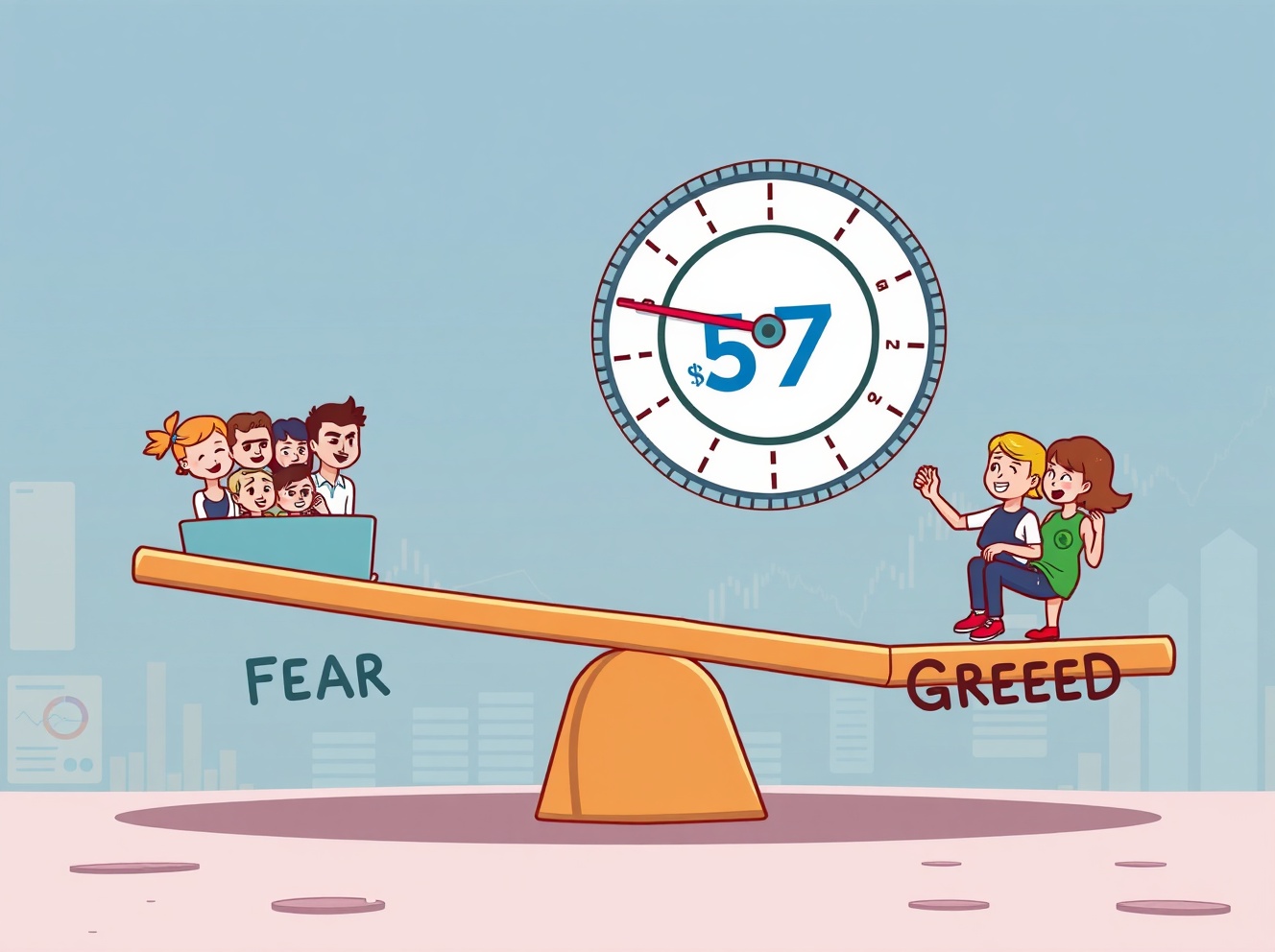
Are you feeling a buzz in the crypto air? You are not alone! The widely watched Crypto Fear & Greed Index recently surged to a score of 60, officially moving out of the ‘Neutral’ zone and firmly into ‘Greed.’ This shift signals a significant change in investor sentiment across the digital asset landscape. But what does this really mean for your crypto investments and how should you interpret this exciting development?

Understanding the Crypto Fear & Greed Index

The Crypto Fear & Greed Index acts as a crucial barometer for market sentiment. It provides a daily snapshot of how emotional crypto investors currently feel. Ranging from 0 to 100, the index gives us a clear picture:

  • 0 signifies ‘Extreme Fear’: This often indicates that investors are overly worried, potentially leading to panic selling and undervalued assets.
  • 100 signifies ‘Extreme Greed’: This suggests investors are getting too excited, possibly leading to ‘FOMO’ (Fear Of Missing Out) and overvalued assets.

The index helps you gauge whether the market is behaving rationally or is driven by strong emotions.

What Factors Drive the Crypto Fear & Greed Index?

The index compiles data from several key sources to calculate its daily score. It offers a holistic view of market dynamics. These factors include:

  • Volatility (25%): Measures current Bitcoin price volatility and drawdown compared to average values.
  • Market Momentum/Volume (25%): Compares current volume and market momentum with historical averages.
  • Social Media (15%): Analyzes sentiment and engagement from various social media platforms regarding crypto.
  • Surveys (15%): (Currently paused) Previously gathered investor sentiment directly.
  • Bitcoin Dominance (10%): An increase in Bitcoin’s market cap share can indicate fear of altcoins or a flight to safety.
  • Google Trends (10%): Examines search queries related to Bitcoin and other cryptocurrencies to spot interest trends.

Each factor contributes to the overall score, providing a comprehensive assessment of market psychology.

Decoding the Shift: From Neutral to Greed

The recent jump of 10 points, moving the Crypto Fear & Greed Index from ‘Neutral’ to ‘Greed’ at 60, reflects a notable improvement in market confidence. This shift suggests that more investors are feeling optimistic and are willing to take on more risk. Historically, periods of ‘Greed’ often coincide with rising prices and increased buying activity.

However, it is vital to approach such sentiment with caution. While ‘Greed’ can fuel further upward movement, it also often precedes market corrections. When everyone feels confident, it might be a sign that the market is becoming overheated. Therefore, understanding this sentiment is key to making informed decisions.

Entering the ‘Greed’ zone presents both exciting opportunities and potential pitfalls for investors. It is crucial to balance enthusiasm with a strategic approach. Here’s what you should consider:

Opportunities:

  • Positive Momentum: Increased investor confidence can lead to sustained price rallies for various cryptocurrencies.
  • Broader Market Participation: A greedy market often attracts new capital, expanding the overall crypto ecosystem.
  • Potential for Gains: Those holding assets may see their portfolios grow as buying pressure increases.

Risks:

  • Market Overextension: Extreme greed can lead to irrational exuberance, pushing asset prices beyond their fundamental value.
  • Increased Volatility: While positive, rapid price increases can also lead to sharp pullbacks or corrections.
  • FOMO-Driven Decisions: The fear of missing out can cause investors to make impulsive, high-risk purchases at market peaks.

Smart investors use the Crypto Fear & Greed Index as a guide, not a definitive trading signal. They avoid getting swept away by emotion.

How Savvy Investors Leverage the Crypto Fear & Greed Index

For experienced crypto participants, the Crypto Fear & Greed Index serves as an excellent sentiment indicator rather than a direct buy or sell signal. They often use it in conjunction with other analytical tools:

  • Contrarian Strategy: Some investors believe that when the index shows ‘Extreme Fear,’ it might be a good time to consider buying, and when it shows ‘Extreme Greed,’ it might be a good time to consider selling or taking profits.
  • Risk Management: A high ‘Greed’ score can prompt investors to tighten stop-losses or reduce exposure to highly speculative assets.
  • Emotional Discipline: The index reminds investors to check their own emotions and not let fear or greed dictate their decisions.

By understanding the underlying sentiment, you empower yourself to make more rational and disciplined investment choices.

Conclusion: A Powerful Gauge for Crypto Sentiment

The rise of the Crypto Fear & Greed Index to 60, signaling a move into the ‘Greed’ zone, is undoubtedly a positive indicator of current market sentiment. It reflects increased optimism and buying interest among investors. However, this powerful tool also serves as a crucial reminder to exercise caution and maintain a balanced perspective. While positive sentiment can drive growth, extreme greed often precedes market adjustments. By understanding what drives the index and how to interpret its signals, you can navigate the volatile crypto market with greater insight and make more informed decisions.

Frequently Asked Questions (FAQs)

Q1: What does a ‘Greed’ score of 60 on the Crypto Fear & Greed Index mean?

A score of 60 means the market has moved into the ‘Greed’ zone. This indicates that investors are feeling optimistic, confident, and are generally willing to take on more risk, often leading to increased buying activity and rising prices.

Q2: How often is the Crypto Fear & Greed Index updated?

The Crypto Fear & Greed Index is updated daily, providing a fresh perspective on market sentiment each day.

Q3: Should I buy cryptocurrency when the index shows ‘Greed’?

The index is a sentiment indicator, not a direct trading signal. While ‘Greed’ can accompany rising prices, it can also signal an an overheated market ripe for a correction. It is wise to combine this insight with your own research and strategy, rather than making decisions based solely on the index.

Q4: What factors contribute to the Crypto Fear & Greed Index?

The index considers six main factors: volatility, market momentum/volume, social media activity, surveys (currently paused), Bitcoin dominance, and Google Trends data.

Q5: Is the Crypto Fear & Greed Index only for Bitcoin?

While Bitcoin’s data significantly influences the index due to its market dominance, the index is generally seen as a reflection of overall sentiment across the broader cryptocurrency market.

Did you find this analysis helpful? Share this article with your fellow crypto enthusiasts and help them understand the dynamic world of market sentiment!

To learn more about the latest crypto market trends, explore our article on key developments shaping Bitcoin price action.

This post Crypto Fear & Greed Index Surges to 60: Unlocking Market Sentiment Insights first appeared on BitcoinWorld and is written by Editorial Team

Market Opportunity
LETSTOP Logo
LETSTOP Price(STOP)
$0.01761
$0.01761$0.01761
-3.66%
USD
LETSTOP (STOP) Live Price Chart
Disclaimer: The articles reposted on this site are sourced from public platforms and are provided for informational purposes only. They do not necessarily reflect the views of MEXC. All rights remain with the original authors. If you believe any content infringes on third-party rights, please contact service@support.mexc.com for removal. MEXC makes no guarantees regarding the accuracy, completeness, or timeliness of the content and is not responsible for any actions taken based on the information provided. The content does not constitute financial, legal, or other professional advice, nor should it be considered a recommendation or endorsement by MEXC.

You May Also Like

XRP Enters ‘Washout Zone,’ Then Targets $30, Crypto Analyst Says

XRP Enters ‘Washout Zone,’ Then Targets $30, Crypto Analyst Says

XRP has entered what Korean Certified Elliott Wave Analyst XForceGlobal (@XForceGlobal) calls a “washout” phase inside a broader Elliott Wave corrective structure
Share
NewsBTC2026/02/05 08:00
Republicans are 'very concerned about Texas' turning blue: GOP senator

Republicans are 'very concerned about Texas' turning blue: GOP senator

While Republicans in the U.S. House of Representatives have a razor-thin with just a four-seat advantage, their six-seat advantage in the U.S. Senate is seen as
Share
Alternet2026/02/05 08:38
Headwind Helps Best Wallet Token

Headwind Helps Best Wallet Token

The post Headwind Helps Best Wallet Token appeared on BitcoinEthereumNews.com. Google has announced the launch of a new open-source protocol called Agent Payments Protocol (AP2) in partnership with Coinbase, the Ethereum Foundation, and 60 other organizations. This allows AI agents to make payments on behalf of users using various methods such as real-time bank transfers, credit and debit cards, and, most importantly, stablecoins. Let’s explore in detail what this could mean for the broader cryptocurrency markets, and also highlight a presale crypto (Best Wallet Token) that could explode as a result of this development. Google’s Push for Stablecoins Agent Payments Protocol (AP2) uses digital contracts known as ‘Intent Mandates’ and ‘Verifiable Credentials’ to ensure that AI agents undertake only those payments authorized by the user. Mandates, by the way, are cryptographically signed, tamper-proof digital contracts that act as verifiable proof of a user’s instruction. For example, let’s say you instruct an AI agent to never spend more than $200 in a single transaction. This instruction is written into an Intent Mandate, which serves as a digital contract. Now, whenever the AI agent tries to make a payment, it must present this mandate as proof of authorization, which will then be verified via the AP2 protocol. Alongside this, Google has also launched the A2A x402 extension to accelerate support for the Web3 ecosystem. This production-ready solution enables agent-based crypto payments and will help reshape the growth of cryptocurrency integration within the AP2 protocol. Google’s inclusion of stablecoins in AP2 is a massive vote of confidence in dollar-pegged cryptocurrencies and a huge step toward making them a mainstream payment option. This widens stablecoin usage beyond trading and speculation, positioning them at the center of the consumption economy. The recent enactment of the GENIUS Act in the U.S. gives stablecoins more structure and legal support. Imagine paying for things like data crawls, per-task…
Share
BitcoinEthereumNews2025/09/18 01:27