

USDT 60-Day Contraction Drops Below -$3B as Bitcoin Trades $65K–$70K
USDT’s 60-day market cap change has fallen below -$3 billion, a threshold reached only once before, during late 2022 when Bitcoin based near $16,000.
The second occurrence is unfolding now, in early 2026, with BTC trading in the $65,000–$70,000 range following its prior all-time high expansion.
The magnitude of the contraction places stablecoin liquidity at the center of current market structure. This is not a routine fluctuation. It reflects sustained capital withdrawal from the crypto ecosystem over a compressed period.
Rare Liquidity Signal Reappears
Stablecoins function as deployable liquidity across the digital asset market. When supply expands, it typically signals fresh capital entering exchanges and on-chain venues. When supply contracts aggressively, it implies redemptions, deleveraging, or capital exiting the ecosystem.
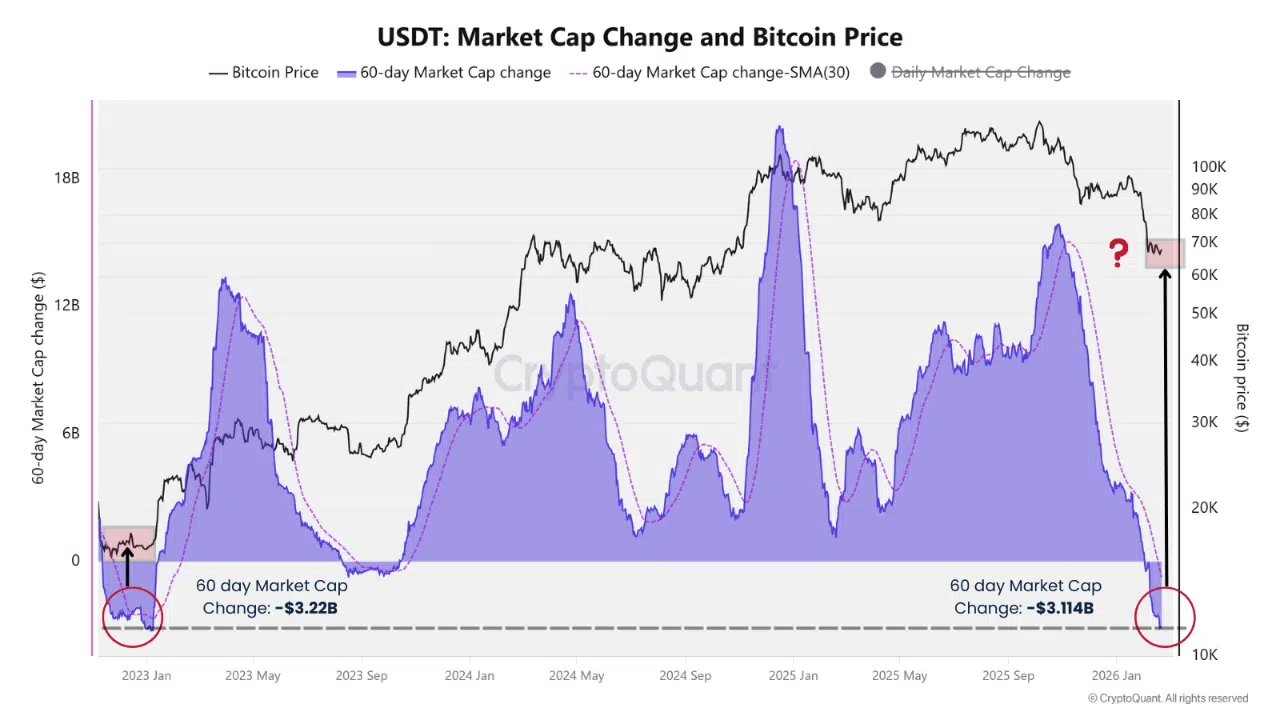 The 60-day USDT contraction below -$3 billion has occurred on only two occasions:
- Late 2022: Bitcoin traded near $16,000, marking a cycle low amid peak capitulation.
- Early 2026: Bitcoin trades between $65,000 and $70,000 after a prior all-time high phase.
The structural difference in price level makes the comparison more complex. In 2022, the contraction aligned with systemic stress and forced selling. Today, the contraction is occurring from significantly higher valuation levels, suggesting liquidity tightening rather than full-cycle collapse.
Daily Outflows Add to the Stress Signal
On a daily basis, USDT has printed three separate single-day outflows exceeding -$1 billion. Historically, episodes of this scale have aligned with either macro bottoms or volatility clusters in Bitcoin.
Large-scale redemptions typically reflect institutional or large-holder activity rather than retail flows. When redemptions accelerate at this magnitude, they often coincide with exhaustion phases, periods where forced positioning unwinds rather than the early stages of sustained structural downtrends.
That distinction matters. Liquidity exits can precede either stabilization or further downside depending on whether the contraction persists.
Bitcoin’s Liquidity Sensitivity
Bitcoin remains deeply reflexive to liquidity conditions. When stablecoin supply compresses, the available on-exchange buying power shrinks. That creates a more fragile environment, especially during periods of heightened volatility.
The current 60-day contraction suggests structural tightening in crypto-native liquidity. If redemptions continue at this pace, downside pressure could extend as market depth thins and risk appetite remains subdued.
However, historical precedent shows that once forced deleveraging phases complete and stablecoin flows stabilize, Bitcoin has often transitioned into strong medium-term recoveries as liquidity normalizes.
Stabilization Is the Inflection Variable
The key variable is not the depth of contraction alone, but whether flows begin to flatten.
If USDT supply continues to decline, structural pressure may persist. If the contraction slows or reverses, the risk-reward profile shifts rapidly, as even modest liquidity expansion can have an outsized effect in a reflexive market.
Extreme liquidity stress has historically marked opportunity, but only after selling exhaustion is confirmed. For now, Bitcoin trades in a tightening liquidity regime, and stabilization in USDT flows remains the condition that could redefine the next structural phase.
The post USDT 60-Day Contraction Drops Below -$3B as Bitcoin Trades $65K–$70K appeared first on ETHNews.
You May Also Like

Crucial Fed Rate Cut: October Probability Surges to 94%
