The post Why Owning 100 XRP Could Become Increasingly Difficult in a Shrinking Supply Market appeared first on Coinpedia Fintech News The claim sounds dramatic The post Why Owning 100 XRP Could Become Increasingly Difficult in a Shrinking Supply Market appeared first on Coinpedia Fintech News The claim sounds dramatic

Why Owning 100 XRP Could Become Increasingly Difficult in a Shrinking Supply Market
2026/02/26 00:15
3 min read
XRP price prediction $100

The post Why Owning 100 XRP Could Become Increasingly Difficult in a Shrinking Supply Market appeared first on Coinpedia Fintech News

The claim sounds dramatic at first: one day, owning just 100 XRP might feel like holding something scarce. But that’s the argument gaining attention after a recent breakdown by Edo Farina, and he insists it’s less about moon-talk and more about simple math.

XRP is trading around $1.37 during a broader market cooldown. Nothing explosive on the surface. But Farina says the price today is a distraction. What matters, in his view, is who could end up holding the supply tomorrow.

The Bank Liquidity Theory

Farina’s core argument starts with global banking plumbing.

Banks currently park massive sums of money in what are known as nostro accounts — prefunded pools used to settle cross-border payments. Trillions of dollars sit idle in that system worldwide. If XRP were used as a bridge asset to replace that structure, he argues, financial institutions would need to hold significant reserves.

His rough model goes like this:

If around 150 central banks held 100 million XRP each, that alone would absorb 15 billion tokens. Add roughly 25,000 private banks holding 1 million XRP each, and another 25 billion tokens would be tied up. Combined, that’s about 40 billion XRP — nearly half of the total 100 billion supply.

Whether those numbers are realistic is up for debate. But the point he’s making is simple: institutional reserves could dramatically thin out the liquid supply.

CBDCs, Wallet Reserves, and Retail Demand

Farina doesn’t stop at banks. He layers in consumer adoption through central bank digital currencies and stablecoins potentially operating on the XRP Ledger. If even a fraction of the global population needed XRP to activate wallets or maintain reserve balances, that demand would add up quickly.

For example, if 800 million users held just five XRP each to operate wallets, that would remove 4 billion tokens from active circulation.

It’s not just accumulation, either. Every transaction on the XRP Ledger burns a tiny amount of XRP. Over time, that mechanism slowly reduces total supply. The burn rate is small, but across large-scale usage, it compounds.

Supply Shock or Stretch Scenario?

The bullish case is clear. If institutions lock reserves, retail users hold base balances, and transaction activity continues to chip away at supply, fewer tokens would remain freely tradable. In theory, prices would need to rise to balance shrinking availability with steady or growing demand.

The counterargument is just as straightforward. These projections assume widespread institutional adoption, coordinated accumulation, and heavy retail usage. That’s a tall order. Global banks move cautiously. Governments move slower. And crypto adoption rarely follows a clean, linear path.

Still, the idea sticks because it reframes the conversation. Instead of asking whether XRP can reach a certain price, it asks how much of the supply could realistically stay liquid if large players begin holding it long term.

If that shift ever materializes, 100 XRP might not sound like pocket change.

For now, it remains a theory built on potential structural demand.

Market Opportunity
XRP Logo
XRP Price(XRP)
$1.4636
$1.4636$1.4636
+1.59%
USD
XRP (XRP) Live Price Chart
Disclaimer: The articles reposted on this site are sourced from public platforms and are provided for informational purposes only. They do not necessarily reflect the views of MEXC. All rights remain with the original authors. If you believe any content infringes on third-party rights, please contact crypto.news@mexc.com for removal. MEXC makes no guarantees regarding the accuracy, completeness, or timeliness of the content and is not responsible for any actions taken based on the information provided. The content does not constitute financial, legal, or other professional advice, nor should it be considered a recommendation or endorsement by MEXC.

You May Also Like

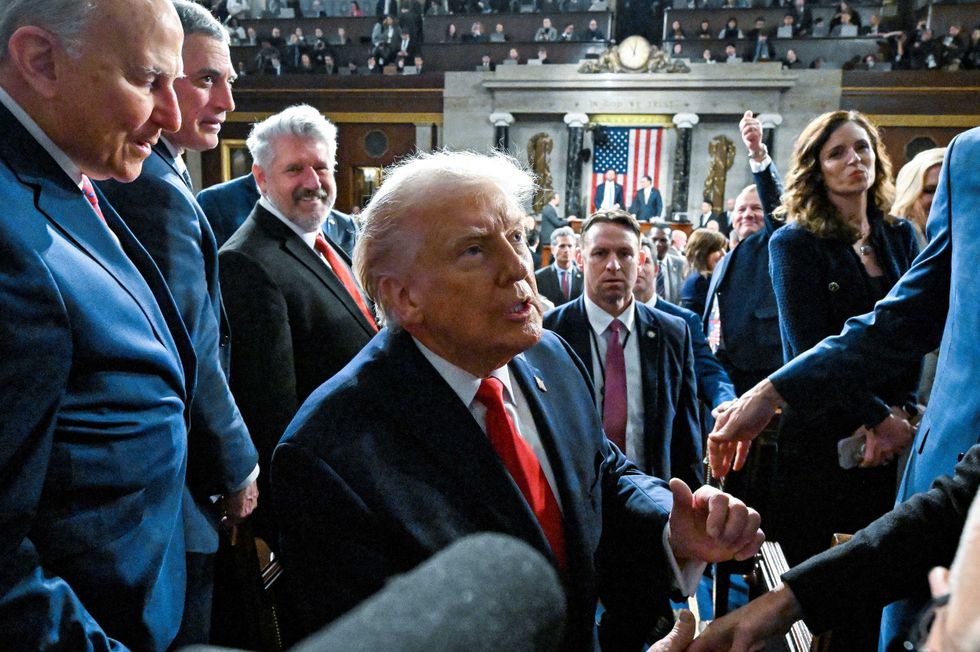
WSJ editors flag glaring omission from Trump's address: 'Seems to have given up'

WSJ editors flag glaring omission from Trump's address: 'Seems to have given up'

Much has been said of President Donald Trump’s record-long State of the Union address on Tuesday, with critics flagging several falsehoods or racist attacks peppered
Share
Rawstory2026/02/26 00:58
U.S. Authorities Seize $61M in Tether Tied to Crypto Scam

U.S. Authorities Seize $61M in Tether Tied to Crypto Scam

The post U.S. Authorities Seize $61M in Tether Tied to Crypto Scam appeared on BitcoinEthereumNews.com. Crime Federal prosecutors in the Eastern District of North
Share
BitcoinEthereumNews2026/02/26 00:51
Headwind Helps Best Wallet Token

Headwind Helps Best Wallet Token

The post Headwind Helps Best Wallet Token appeared on BitcoinEthereumNews.com. Google has announced the launch of a new open-source protocol called Agent Payments Protocol (AP2) in partnership with Coinbase, the Ethereum Foundation, and 60 other organizations. This allows AI agents to make payments on behalf of users using various methods such as real-time bank transfers, credit and debit cards, and, most importantly, stablecoins. Let’s explore in detail what this could mean for the broader cryptocurrency markets, and also highlight a presale crypto (Best Wallet Token) that could explode as a result of this development. Google’s Push for Stablecoins Agent Payments Protocol (AP2) uses digital contracts known as ‘Intent Mandates’ and ‘Verifiable Credentials’ to ensure that AI agents undertake only those payments authorized by the user. Mandates, by the way, are cryptographically signed, tamper-proof digital contracts that act as verifiable proof of a user’s instruction. For example, let’s say you instruct an AI agent to never spend more than $200 in a single transaction. This instruction is written into an Intent Mandate, which serves as a digital contract. Now, whenever the AI agent tries to make a payment, it must present this mandate as proof of authorization, which will then be verified via the AP2 protocol. Alongside this, Google has also launched the A2A x402 extension to accelerate support for the Web3 ecosystem. This production-ready solution enables agent-based crypto payments and will help reshape the growth of cryptocurrency integration within the AP2 protocol. Google’s inclusion of stablecoins in AP2 is a massive vote of confidence in dollar-pegged cryptocurrencies and a huge step toward making them a mainstream payment option. This widens stablecoin usage beyond trading and speculation, positioning them at the center of the consumption economy. The recent enactment of the GENIUS Act in the U.S. gives stablecoins more structure and legal support. Imagine paying for things like data crawls, per-task…
Share
BitcoinEthereumNews2025/09/18 01:27