The post Brent crude advances on Iran risk; rate odds in focus appeared on BitcoinEthereumNews.com. How Iran war oil prices could trigger central bank rate hikesThe post Brent crude advances on Iran risk; rate odds in focus appeared on BitcoinEthereumNews.com. How Iran war oil prices could trigger central bank rate hikes

Brent crude advances on Iran risk; rate odds in focus

For feedback or concerns regarding this content, please contact us at crypto.news@mexc.com

How Iran war oil prices could trigger central bank rate hikes

Analysts say the risk that Iran war oil prices surge could push some central banks toward rate hikes. The channel runs through higher energy costs lifting headline inflation and testing policy credibility.

according to EFG International, institutions that put more weight on headline inflation, common across parts of Europe, are likelier to respond sooner, while the U.S. central bank emphasizes core measures and labor conditions. That split implies asynchronous responses even to the same oil shock.

A 10% rise in oil sustained through most of a year can add roughly 40 basis points to global inflation, according to the International Monetary Fund. That rule of thumb underscores why policy is sensitive to duration rather than one‑off spikes.

Why this matters for inflation expectations and policy credibility

Oxford Economics estimates that higher energy costs could lift UK and euro‑area inflation by about 0.5–0.6 percentage points in the fourth quarter, complicating disinflation and increasing second‑round risks. This challenges communication around “looking through” commodity shocks.

Officials have stressed uncertainty around duration and macro spillovers, favoring a cautious read‑through to policy settings for now. “How long this will last or the broader implications… past experience has shown that movements in oil prices that we’ve seen so far don’t fundamentally shift the economy, but we’ll wait and see,” said New York Fed President John Williams.

If expectations drift, policy credibility can be tested as wage bargaining and price setting adjust. That dynamic can force a tighter stance even if core momentum remains contained.

Frederik Ducrozet at Pictet Wealth Management notes mounting market pressure for the European Central Bank, the Swiss National Bank, and Sweden’s Riksbank to consider tighter settings if energy inflation broadens. Such dynamics raise the bar for early easing.

TS Lombard has assessed that euro‑area inflation could rise by roughly one percentage point if oil and gas prices stay elevated, which would likely keep policy restrictive for longer. That would heighten the risk of second‑round effects.

Across emerging markets, Toru Nishihama at Dai‑Ichi Life Research Institute highlights the risk that higher fuel costs and capital outflow pressures make rate cuts harder to justify, reinforcing higher‑for‑longer stances. Currency stability and terms‑of‑trade pressures are central to these decisions.

Transmission timeline: from oil prices to CPI and wages

Pass-through channels: energy to transport, food, services, expectations

The first pass‑through is to headline energy and transport, then to input costs for food and energy‑intensive services. Broader spillovers depend on contract resets, fuel surcharges, and indexation practices.

Expectations act as an amplifier: if households and firms anticipate persistent energy inflation, they may preemptively adjust wages and prices, raising the risk of more durable core pressures. Communication and credibility shape that feedback loop.

Lags and signposts: duration, supply scale, expectations measures

Typical lags run from weeks for pump prices to quarters for core. Persistence, the scale of supply disruption, and survey‑ or market‑based expectations are key signposts.

Watch negotiated wage rounds, freight and utilities surcharges, and services inflation breadth for second‑round effects. Monitoring these reduces the risk of over‑ or under‑tightening.

FAQ about Iran war oil prices

Which central banks are most likely to tighten first if energy inflation broadens?

Headline‑focused European central banks are candidates to move first, while the U.S. is likelier to wait for core and labor confirmation.

How quickly do oil price shocks pass through to core inflation and wages?

Energy hits headline within weeks; broad core and wages typically react over quarters, contingent on persistence, indexation, and expectations stability.

Source: https://coincu.com/markets/brent-crude-advances-on-iran-risk-rate-odds-in-focus/

Market Opportunity
Lorenzo Protocol Logo
Lorenzo Protocol Price(BANK)
$0.03755
$0.03755$0.03755
-0.60%
USD
Lorenzo Protocol (BANK) Live Price Chart
Disclaimer: The articles reposted on this site are sourced from public platforms and are provided for informational purposes only. They do not necessarily reflect the views of MEXC. All rights remain with the original authors. If you believe any content infringes on third-party rights, please contact crypto.news@mexc.com for removal. MEXC makes no guarantees regarding the accuracy, completeness, or timeliness of the content and is not responsible for any actions taken based on the information provided. The content does not constitute financial, legal, or other professional advice, nor should it be considered a recommendation or endorsement by MEXC.

You May Also Like

The Channel Factories We’ve Been Waiting For

The Channel Factories We’ve Been Waiting For

The post The Channel Factories We’ve Been Waiting For appeared on BitcoinEthereumNews.com. Visions of future technology are often prescient about the broad strokes while flubbing the details. The tablets in “2001: A Space Odyssey” do indeed look like iPads, but you never see the astronauts paying for subscriptions or wasting hours on Candy Crush.  Channel factories are one vision that arose early in the history of the Lightning Network to address some challenges that Lightning has faced from the beginning. Despite having grown to become Bitcoin’s most successful layer-2 scaling solution, with instant and low-fee payments, Lightning’s scale is limited by its reliance on payment channels. Although Lightning shifts most transactions off-chain, each payment channel still requires an on-chain transaction to open and (usually) another to close. As adoption grows, pressure on the blockchain grows with it. The need for a more scalable approach to managing channels is clear. Channel factories were supposed to meet this need, but where are they? In 2025, subnetworks are emerging that revive the impetus of channel factories with some new details that vastly increase their potential. They are natively interoperable with Lightning and achieve greater scale by allowing a group of participants to open a shared multisig UTXO and create multiple bilateral channels, which reduces the number of on-chain transactions and improves capital efficiency. Achieving greater scale by reducing complexity, Ark and Spark perform the same function as traditional channel factories with new designs and additional capabilities based on shared UTXOs.  Channel Factories 101 Channel factories have been around since the inception of Lightning. A factory is a multiparty contract where multiple users (not just two, as in a Dryja-Poon channel) cooperatively lock funds in a single multisig UTXO. They can open, close and update channels off-chain without updating the blockchain for each operation. Only when participants leave or the factory dissolves is an on-chain transaction…
Share
BitcoinEthereumNews2025/09/18 00:09
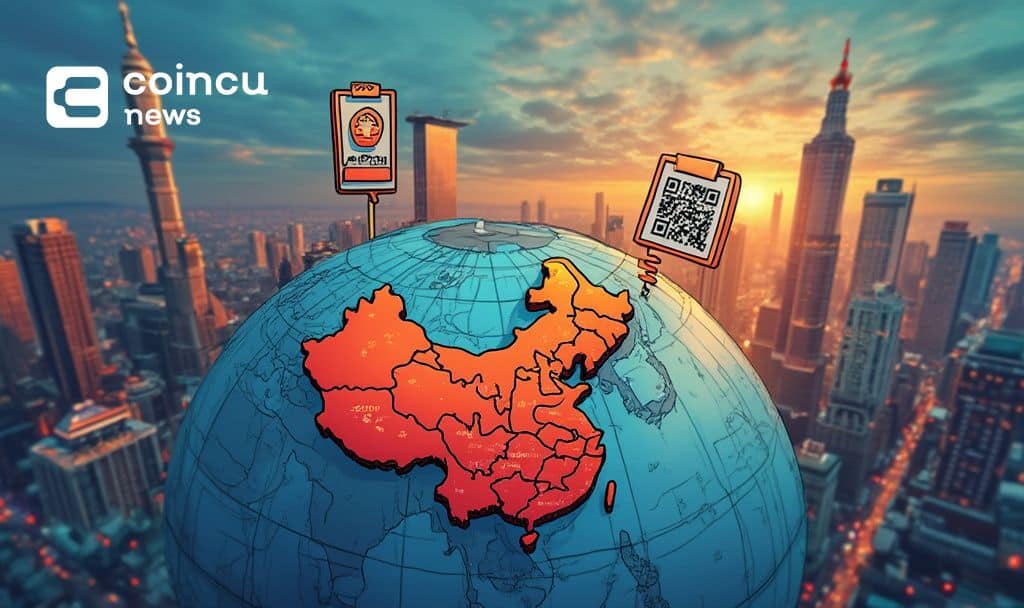
China Launches Cross-Border QR Code Payment Trial

China Launches Cross-Border QR Code Payment Trial

The post China Launches Cross-Border QR Code Payment Trial appeared on BitcoinEthereumNews.com. Key Points: Main event involves China initiating a cross-border QR code payment trial. Alipay and Ant International are key participants. Impact on financial security and regulatory focus on illicit finance. China’s central bank, led by Deputy Governor Lu Lei, initiated a trial of a unified cross-border QR code payment gateway with Alipay and Ant International as participants. This pilot addresses cross-border fund risks, aiming to enhance financial security amid rising money laundering through digital channels, despite muted crypto market reactions. China’s Cross-Border Payment Gateway Trial with Alipay The trial operation of a unified cross-border QR code payment gateway marks a milestone in China’s financial landscape. Prominent entities such as Alipay and Ant International are at the forefront, participating as the initial institutions in this venture. Lu Lei, Deputy Governor of the People’s Bank of China, highlighted the systemic risks posed by increased cross-border fund flows. Changes are expected in the dynamics of digital transactions, potentially enhancing transaction efficiency while tightening regulations around illicit finance. The initiative underscores China’s commitment to bolstering financial security amidst growing global fund movements. “The scale of cross-border fund flows is expanding, and the frequency is accelerating, providing opportunities for risks such as cross-border money laundering and terrorist financing. Some overseas illegal platforms transfer funds through channels such as virtual currencies and underground banks, creating a ‘resonance’ of risks at home and abroad, posing a challenge to China’s foreign exchange management and financial security.” — Lu Lei, Deputy Governor, People’s Bank of China Bitcoin and Impact of China’s Financial Initiatives Did you know? China’s latest initiative echoes the Payment Connect project of June 2025, furthering real-time cross-boundary remittances and expanding its influence on global financial systems. As of September 17, 2025, Bitcoin (BTC) stands at $115,748.72 with a market cap of $2.31 trillion, showing a 0.97%…
Share
BitcoinEthereumNews2025/09/18 05:28
Nvidia (NVDA) vs AMD: The Ultimate AI Stock Showdown for 2025

Nvidia (NVDA) vs AMD: The Ultimate AI Stock Showdown for 2025

Nvidia (NVDA) dominates AI chips with superior margins and ecosystem. AMD challenges but trails. Compare both stocks to determine your best AI investment. The post
Share
Blockonomi2026/03/15 19:42