

Former UK Prime Minister Boris Johnson Calls Bitcoin a Ponzi Scheme
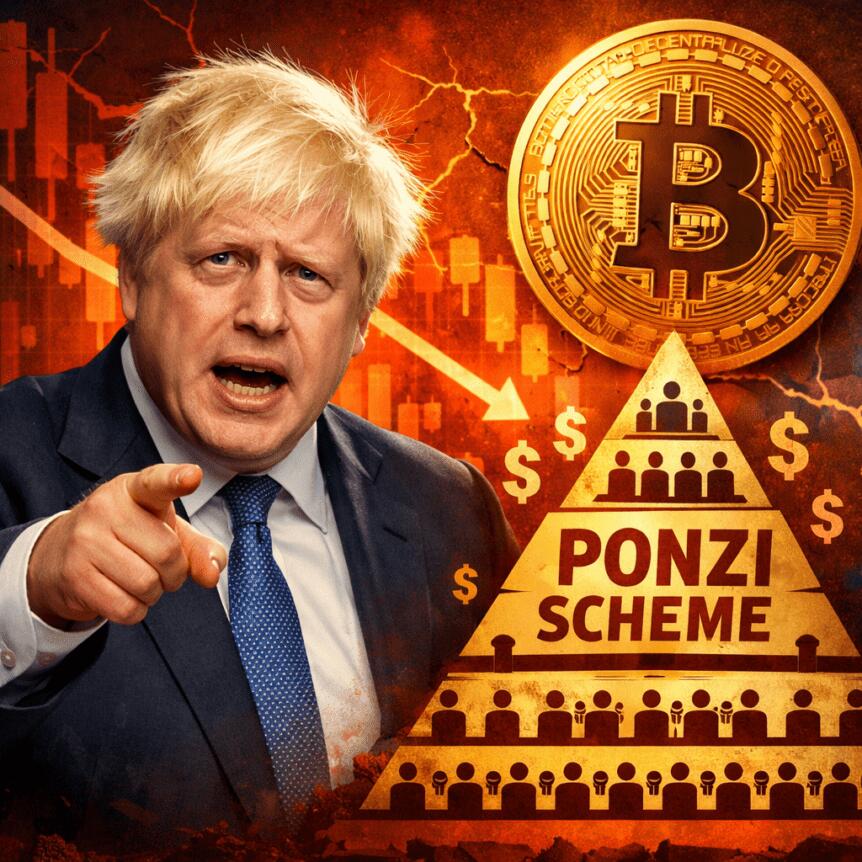
Former UK prime minister Boris Johnson sparked a fresh volley of criticism around Bitcoin by labeling it a Ponzi scheme in a Daily Mail op-ed. He recounts a personal anecdote: a friend who handed over 500 pounds, or about $661, to a promoter who promised to “double his money” via BTC, only to be drawn into a years-long cycle of fees and delays. Over three and a half years, the friend’s losses mounted to roughly 20,000 pounds, around $26,474, leaving him unable to recover his capital and facing financial hardship. The column amplifies a broader distrust of crypto assets, contrasting them with more traditional forms of collecting and trading. Johnson also suggests that collectible Pokémon cards — with a decades-long fan base and a fungible market — are more tradable than Bitcoin. He writes that Pikachu and its peers have sustained appeal across generations, which, in his view, makes them more reliably tradable than the volatile, permissionless network he critiques.
Key takeaways
- A prominent UK political figure frames Bitcoin as a Ponzi scheme, anchoring the debate in a real-world investment loss narrative.
- Proponents of Bitcoin push back by outlining fundamental network properties, including the absence of a central issuer and a lack of guaranteed returns.
- Public commentary highlights a tension between decades-long collectibles markets and the newer, complex dynamics of decentralized digital assets.
- The exchange of views references specific milestones, such as Bitcoin’s mining progress and ongoing discourse about the asset’s role in financial systems.
Tickers mentioned: $BTC
Sentiment: Neutral
Market context: The exchange underscores a continuing public debate about crypto’s legitimacy while markets navigate macro risk sentiment and evolving regulatory discussions that influence investor perception.
Why it matters
The exchange illustrates how public figures, policymakers, and crypto advocates frame Bitcoin in moral, economic, and regulatory terms. When high-profile voices compare a highly decentralized asset to traditional, widely traded collectibles, the narrative risk is a false equivalence: tangible collectibles have long-established markets and price psychology shaped by collectors, whereas decentralized networks derive value from utility, scarce supply, and network effects. This distinction matters for both retail investors and institutions attempting to evaluate risk, duration, and custody considerations in crypto exposure.
From a market-structure perspective, the episode reinforces the central tension around Bitcoin’s identity: is it a currency in the conventional sense, a store of value, or a speculative asset tethered to sentiment and narratives? The backlash from Bitcoiners highlights a sharper claim — that Bitcoin’s coded rules, lack of an issuer, and open-market dynamics constitute a fundamental departure from traditional Ponzi-like constructs where returns depend on new participants. That debate touches regulatory narratives, risk assessment, and how financial products built on BTC are described to investors, including BTC-backed instruments and on-chain monetization strategies.
The discussion also arrives as the crypto industry continues to point to milestones such as the network’s ongoing issuance and scaling achievements. Debates about value, legitimacy, and investor protection persist even as the blockchain network nears notable supply milestones and the ecosystem expands with new products and narrative catalysts. The back-and-forth underscores how societal perception, media framing, and official policy interact to shape the appetite for crypto exposure, particularly among traditionally risk-averse audiences.
Another industry perspective came from Pierre Rochard, who leads a BTC-backed financial product issuer. He argued that the United Kingdom’s financial framework effectively finances itself through debt, a view that casts the Johnson-backed critique as part of a broader dispute over how fiat and crypto should interact within public policy. The back-and-forth reflects broader disagreements about how value is created, transmitted, and safeguarded in a modern financial system that increasingly sits at the intersection of traditional banking and decentralized networks.
As the discussion unfolded online, supporters referenced Bitcoin’s continued development milestones, including the network’s ability to reach new levels of on-chain activity and security. They also cited examples from recent coverage about Bitcoin’s role in mainstream discourse, such as the ongoing interest in how digital assets are described to the public and regulated by authorities. The exchange of ideas demonstrates that the crypto space remains a live laboratory for questions about trust, safeguards, and the potential for new financial instruments to emerge around BTC.
Viewed in this light, Johnson’s critique serves as a catalyst for a wider conversation about what Bitcoin is and what it is not — a debate that will likely persist as policymakers, investors, and developers navigate the evolving landscape of digital money and decentralized finance.
What to watch next
- Response from policymakers and financial regulators in the UK and abroad regarding crypto classification and consumer protections.
- Continued commentary from crypto executives and thought leaders about Bitcoin’s role in value storage, payments, and macro hedging.
- Monitoring milestones like Bitcoin’s network expansion and on-chain activity, including references to the network’s historical supply milestones.
- Public and media discussions comparing traditional assets and collectibles with decentralized digital assets to gauge shifts in narrative and investor sentiment.
Sources & verification
- Johnson, Boris. Daily Mail op-ed on Bitcoin and Ponzi narratives: https://www.dailymail.co.uk/debate/article-15643681/BORIS-JOHNSON-bitcoin-ponzi-scheme.html
- Bitcoin’s fundamental properties explained: https://cointelegraph.com/learn/articles/what-is-bitcoin-a-beginners-guide-to-the-worlds-first-cryptocurrency
- Bitcoin price reference and market context: https://cointelegraph.com/bitcoin-price
- Bitcoin’s 20 millionth coin milestone coverage: https://cointelegraph.com/news/bitcoin-mined-20-million-executives-speculate-1-million-left
- Logan Paul’s Pokémon card record article: https://cointelegraph.com/news/logan-paul-sells-pokemon-card-record-16-million
Bitcoin’s battle of narratives: Johnson vs. the proponents
This article was originally published as Former UK Prime Minister Boris Johnson Calls Bitcoin a Ponzi Scheme on Crypto Breaking News – your trusted source for crypto news, Bitcoin news, and blockchain updates.
You May Also Like

When the Middle East burns, the Filipino nanay feels the heat

The Hidden Costs of a Smart Home: How to Calculate Your Real Electricity Usage
