

Hong Kong retiree loses $840K to trio of crypto-expert scammers
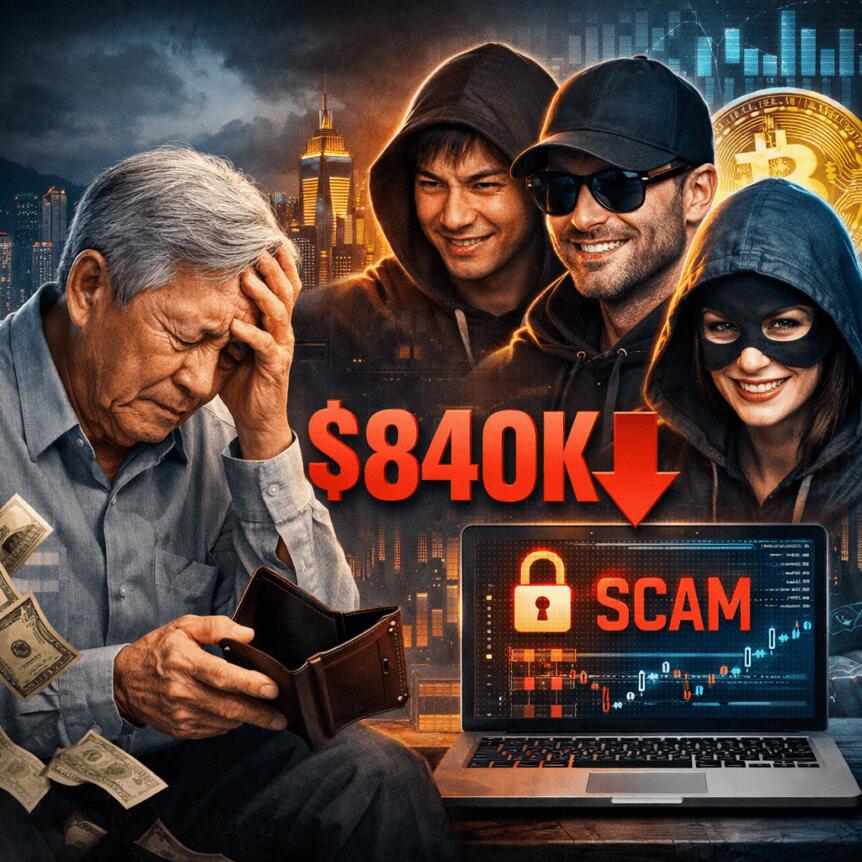
A 66-year-old Hong Kong retiree became the latest victim in a sequence of crypto investment scams that operated through WhatsApp outreach by self-styled “virtual currency experts.” Police say the scam drained about HKD 6.6 million, roughly USD 840,000, over a six-month period. The CyberDefender unit of the Hong Kong Police disclosed the case in a March 20 post on its Facebook page, illustrating how fraudsters recycle the same victim through successive schemes that promise guaranteed profits and later offer recovery services for a fee.
The chronology, as outlined by CyberDefender HK, began in September 2025 when an unknown scammer messaged the retiree claiming to be a virtual currency investment expert and promising steady gains if the victim followed his instructions. The victim transferred USD 180,000 and deposited cryptocurrency into a wallet controlled by the scammer, who subsequently disappeared, prompting a police report.
The case then spiraled into a second round of deceit. Unable to accept the loss, the retiree sought help online from another so-called crypto expert who claimed he could recover the missing funds but demanded a security deposit of USD 75,000. After paying, that second scammer vanished as well.
In January, a third purported specialist contacted the victim via WhatsApp, offering to reclaim both prior losses if the retiree bought USD 585,000 worth of cryptocurrency and sent it to a specified address. Once the transfer was completed, the scammer disappeared, bringing total losses to about USD 840,000 across roughly six months.
The CyberDefender team cautioned that genuine professionals do not reach out randomly, and that the phrases “guaranteed returns” or “inside information” are classic red flags. As the unit put it, “Life has no take two; but scams can have take three.”
Related: How US investigators traced $61M in crypto tied to romance scams across wallets
Key takeaways
- The victim’s losses followed a clear pattern: an initial guaranteed-profit pitch, followed by a recovery-for-fee pitch, and a final attempt to recoup through another “expert.”
- Three different scammers reportedly targeted the same retiree, illustrating how con artists exploit a single victim through successive, increasingly aggressive schemes.
- The case sits amid a broader surge in web3 crime, with industry data pointing to multi‑billion-dollar losses tied to phishing, social engineering, and investment fraud.
- Regulators and security firms have warned repeatedly about impersonation, fake tokens, and recovery scams, urging caution against unsolicited outreach and guaranteed-return promises.
- Practical steps for users include verifying identities through official channels, avoiding unknown wallets, and resisting requests for large, upfront payments or security deposits.
Context: escalating Web3 fraud and the regulatory backdrop
The Hong Kong case arrives as crypto-related crime continues to rise globally. Security firm Hacken has flagged substantial damage in 2025, estimating Web3 losses at about USD 3.95 billion, driven in part by state-linked actors and weak key security across wallets and platforms. The trend underscores the ongoing risk of phishing, social engineering, and investment fraud that can follow a single high‑profile scam.
Authorities around the world have been vocal about new waves of crypto fraud. From phishing schemes to fake tokens and misrepresented investment opportunities, official warnings have become a regular feature of coverage in the crypto security space. For example, coverage linked to the FBI’s warnings about phishing and token scams, as well as investigations into high-profile frauds such as India’s GainBitcoin probe and actions targeting illicit USDT movements, highlights a continued focus on enforcement and forensics as the sector matures.
As the industry grapples with these threats, observers say the most persistent danger remains social engineering—convincing, personalized outreach that exploits trust. The Hong Kong incident reinforces the lesson that scammers often masquerade as credible professionals, using familiar crypto jargon to exploit the hopeful impulse of investors seeking quick, guaranteed gains.
For readers tracking the broader market risk, the message is clear: even as legitimate projects advance and institutional participation grows, ordinary users remain highly exposed to targeted scams conducted through seemingly private channels like WhatsApp and other messaging apps. Keeping a skeptical eye on unsolicited advice, verifying credentials through official company channels, and avoiding rapid transfers to unknown wallets are foundational steps to reduce exposure to these increasingly sophisticated schemes.
Looking ahead, regulators and industry researchers will likely intensify warnings and enforcement related to crypto investment outreach, with a continued emphasis on transparency around the identities of “experts” and the provenance of promised returns. Market watchers should monitor whether more cases like the Hong Kong incident lead to enhanced user education campaigns, stricter messaging guidelines for crypto service providers, and new multi‑party verification practices to curb recovery scams.
Readers should watch for updated guidance from local law enforcement and security firms as they refine best practices for detecting and preventing social-engineering fraud in crypto, as well as for any official statements about new actions against impersonators and bogus recovery services. The evolving landscape suggests that ongoing vigilance—paired with practical safeguards—will remain essential for anyone engaging with crypto investment opportunities, particularly through unregulated channels.
What remains uncertain is how quickly audiences will adopt more robust due-diligence habits when confronted with personalized outreach promising easy gains. As this case illustrates, a moment of trust can quickly turn into a six-figure loss, and the path to recovery can become a perilous new scam in disguise.
This article was originally published as Hong Kong retiree loses $840K to trio of crypto-expert scammers on Crypto Breaking News – your trusted source for crypto news, Bitcoin news, and blockchain updates.
You May Also Like

XRP Builds Case For $22 With Major Chart Shift – But Only If This Breakout Retest Holds

The 1875 Carta General del Archipielago Filipino

