BitcoinWorld Bitcoin Price Plummets: Key Reasons BTC Fell Below $93,000 The cryptocurrency market experienced a sudden jolt as the Bitcoin price tumbled below the critical $93,000 support level. According to real-time data from Binance’s USDT trading pair, BTC is currently trading at $92,979.67. This move has sent ripples through the investor community, prompting urgent questions about the market’s immediate direction. What triggered this decline, and […] This post Bitcoin Price Plummets: Key Reasons BTC Fell Below $93,000 first appeared on BitcoinWorld.BitcoinWorld Bitcoin Price Plummets: Key Reasons BTC Fell Below $93,000 The cryptocurrency market experienced a sudden jolt as the Bitcoin price tumbled below the critical $93,000 support level. According to real-time data from Binance’s USDT trading pair, BTC is currently trading at $92,979.67. This move has sent ripples through the investor community, prompting urgent questions about the market’s immediate direction. What triggered this decline, and […] This post Bitcoin Price Plummets: Key Reasons BTC Fell Below $93,000 first appeared on BitcoinWorld.

Bitcoin Price Plummets: Key Reasons BTC Fell Below $93,000

2025/12/10 04:40
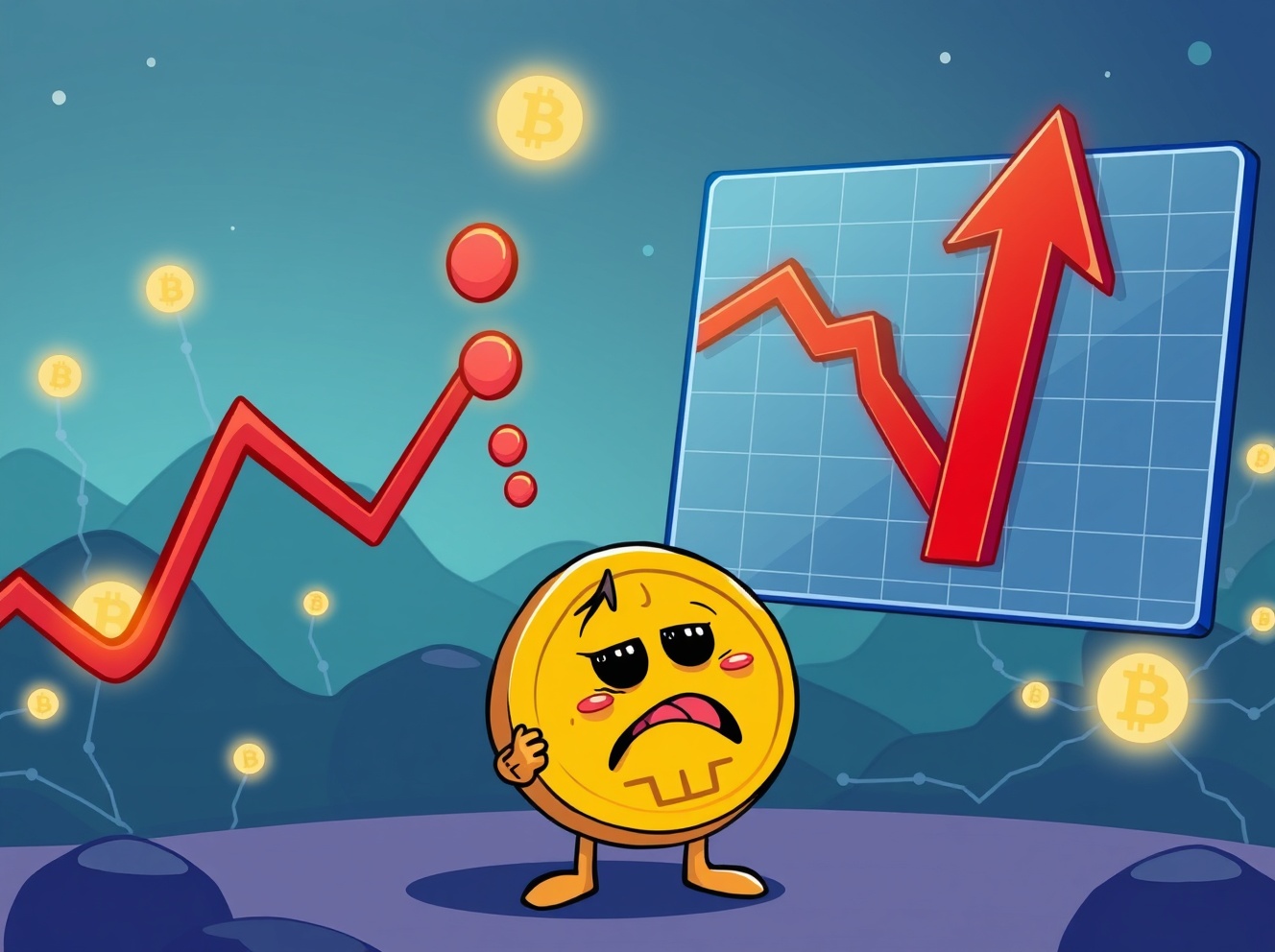
Animated Bitcoin character reacts to a sharp drop in the Bitcoin price chart.

BitcoinWorld

Bitcoin Price Plummets: Key Reasons BTC Fell Below $93,000

The cryptocurrency market experienced a sudden jolt as the Bitcoin price tumbled below the critical $93,000 support level. According to real-time data from Binance’s USDT trading pair, BTC is currently trading at $92,979.67. This move has sent ripples through the investor community, prompting urgent questions about the market’s immediate direction. What triggered this decline, and is it a temporary dip or the start of a deeper correction? Let’s analyze the factors at play.

What Caused the Sudden Bitcoin Price Drop?

Market corrections are a normal part of any financial asset’s lifecycle, and Bitcoin is no exception. The recent dip below $93,000 can be attributed to a confluence of factors. Firstly, profit-taking is a likely contributor. After a significant rally, some investors inevitably cash out to secure gains, creating selling pressure. Secondly, broader macroeconomic sentiment often influences crypto. Concerns about interest rates or geopolitical tensions can lead investors to move capital into perceived safer assets. Finally, technical trading levels play a role. The $93,000 mark may have acted as a key psychological support; breaking through it can trigger automated sell orders, accelerating the decline.

Understanding Bitcoin Price Volatility

For newcomers, the Bitcoin price swings can seem alarming. However, volatility is inherent to the asset class. Unlike traditional stocks, the crypto market operates 24/7 and has a relatively lower market capitalization, making it more susceptible to large moves based on news or sentiment. Therefore, it’s crucial to view price action within a broader context. Is the long-term adoption trend still intact? Are the fundamental reasons for holding Bitcoin still valid? Often, the answer is yes, which means short-term price movements, while nerve-wracking, may not alter the long-term thesis.

When analyzing the Bitcoin price, consider these key aspects:

  • Market Sentiment: Fear and greed indicators can show if the market is overbought or oversold.
  • On-Chain Data: Metrics like exchange inflows/outflows can signal whether holders are moving coins to sell or to cold storage.
  • Global Liquidity: The overall availability of capital in financial markets impacts risk assets like Bitcoin.

What Should Investors Do Now?

Seeing the Bitcoin price fall can trigger emotional decisions. The most important action is to avoid panic selling. History has shown that reacting to short-term dips often leads to missing subsequent recoveries. Instead, this could be a moment for strategic review. For long-term holders, a strategy known as “dollar-cost averaging”—investing a fixed amount regularly regardless of price—can help navigate volatility. For active traders, identifying new support and resistance levels becomes paramount. Always remember, investing should align with your personal risk tolerance and financial goals.

The Long-Term Outlook for Bitcoin

Beyond the daily Bitcoin price quote, the fundamental narrative remains strong. Institutional adoption continues, with more firms offering Bitcoin-related products. The upcoming Bitcoin halving event, which reduces the rate of new supply, is historically a bullish catalyst. Moreover, Bitcoin’s core value proposition as a decentralized store of value and hedge against inflation continues to attract believers worldwide. While price corrections are inevitable, they often create healthier market conditions and opportunities for new investors to enter.

In summary, the drop below $93,000 is a significant market event that demands attention but not alarm. It underscores the volatile nature of cryptocurrency investing. By focusing on fundamentals, employing sound risk management, and maintaining a long-term perspective, investors can navigate these turbulent waters. The journey of Bitcoin is rarely a straight line upward, but its trajectory over the past decade demonstrates remarkable resilience and growth.

Frequently Asked Questions (FAQs)

Q: Is Bitcoin going to crash further after falling below $93,000?
A: No one can predict short-term price movements with certainty. While a further drop is possible, it could also be a temporary correction. It’s essential to look at support levels and broader market indicators rather than reacting to a single data point.

Q: Should I buy more Bitcoin now that the price is lower?
A: This depends entirely on your investment strategy and risk profile. Some investors see dips as buying opportunities, while others wait for more stability. Never invest more than you can afford to lose.

Q: What is the main reason for this price drop?
A: It’s typically a combination of factors including profit-taking by short-term traders, negative broader market sentiment, and the breaking of key technical support levels which triggers automated selling.

Q: How does this affect other cryptocurrencies?
A> Bitcoin often sets the tone for the entire crypto market. A significant drop in BTC price usually leads to declines across most major altcoins, a phenomenon known as “market correlation.”

Q: Where can I reliably track the Bitcoin price?
A> Reputable cryptocurrency data aggregators and major exchanges like Binance, Coinbase, and Kraken provide real-time price information. Always cross-reference data from multiple sources.

Found this analysis of the Bitcoin price movement helpful? Market knowledge is power. Share this article on your social media channels to help other investors stay informed and navigate market volatility with a clear perspective. Let’s build a smarter crypto community together.

To learn more about the latest Bitcoin trends, explore our article on key developments shaping Bitcoin price action and institutional adoption.

This post Bitcoin Price Plummets: Key Reasons BTC Fell Below $93,000 first appeared on BitcoinWorld.

Sorumluluk Reddi: Bu sitede yeniden yayınlanan makaleler, halka açık platformlardan alınmıştır ve yalnızca bilgilendirme amaçlıdır. MEXC'nin görüşlerini yansıtmayabilir. Tüm hakları telif sahiplerine aittir. Herhangi bir içeriğin üçüncü taraf haklarını ihlal ettiğini düşünüyorsanız, kaldırılması için lütfen service@support.mexc.com ile iletişime geçin. MEXC, içeriğin doğruluğu, eksiksizliği veya güncelliği konusunda hiçbir garanti vermez ve sağlanan bilgilere dayalı olarak alınan herhangi bir eylemden sorumlu değildir. İçerik, finansal, yasal veya diğer profesyonel tavsiye niteliğinde değildir ve MEXC tarafından bir tavsiye veya onay olarak değerlendirilmemelidir.

Ayrıca Şunları da Beğenebilirsiniz

Summarize Any Stock’s Earnings Call in Seconds Using FMP API

Summarize Any Stock’s Earnings Call in Seconds Using FMP API

Turn lengthy earnings call transcripts into one-page insights using the Financial Modeling Prep APIPhoto by Bich Tran Earnings calls are packed with insights. They tell you how a company performed, what management expects in the future, and what analysts are worried about. The challenge is that these transcripts often stretch across dozens of pages, making it tough to separate the key takeaways from the noise. With the right tools, you don’t need to spend hours reading every line. By combining the Financial Modeling Prep (FMP) API with Groq’s lightning-fast LLMs, you can transform any earnings call into a concise summary in seconds. The FMP API provides reliable access to complete transcripts, while Groq handles the heavy lifting of distilling them into clear, actionable highlights. In this article, we’ll build a Python workflow that brings these two together. You’ll see how to fetch transcripts for any stock, prepare the text, and instantly generate a one-page summary. Whether you’re tracking Apple, NVIDIA, or your favorite growth stock, the process works the same — fast, accurate, and ready whenever you are. Fetching Earnings Transcripts with FMP API The first step is to pull the raw transcript data. FMP makes this simple with dedicated endpoints for earnings calls. If you want the latest transcripts across the market, you can use the stable endpoint /stable/earning-call-transcript-latest. For a specific stock, the v3 endpoint lets you request transcripts by symbol, quarter, and year using the pattern: https://financialmodelingprep.com/api/v3/earning_call_transcript/{symbol}?quarter={q}&year={y}&apikey=YOUR_API_KEY here’s how you can fetch NVIDIA’s transcript for a given quarter: import requestsAPI_KEY = "your_api_key"symbol = "NVDA"quarter = 2year = 2024url = f"https://financialmodelingprep.com/api/v3/earning_call_transcript/{symbol}?quarter={quarter}&year={year}&apikey={API_KEY}"response = requests.get(url)data = response.json()# Inspect the keysprint(data.keys())# Access transcript contentif "content" in data[0]: transcript_text = data[0]["content"] print(transcript_text[:500]) # preview first 500 characters The response typically includes details like the company symbol, quarter, year, and the full transcript text. If you aren’t sure which quarter to query, the “latest transcripts” endpoint is the quickest way to always stay up to date. Cleaning and Preparing Transcript Data Raw transcripts from the API often include long paragraphs, speaker tags, and formatting artifacts. Before sending them to an LLM, it helps to organize the text into a cleaner structure. Most transcripts follow a pattern: prepared remarks from executives first, followed by a Q&A session with analysts. Separating these sections gives better control when prompting the model. In Python, you can parse the transcript and strip out unnecessary characters. A simple way is to split by markers such as “Operator” or “Question-and-Answer.” Once separated, you can create two blocks — Prepared Remarks and Q&A — that will later be summarized independently. This ensures the model handles each section within context and avoids missing important details. Here’s a small example of how you might start preparing the data: import re# Example: using the transcript_text we fetched earliertext = transcript_text# Remove extra spaces and line breaksclean_text = re.sub(r'\s+', ' ', text).strip()# Split sections (this is a heuristic; real-world transcripts vary slightly)if "Question-and-Answer" in clean_text: prepared, qna = clean_text.split("Question-and-Answer", 1)else: prepared, qna = clean_text, ""print("Prepared Remarks Preview:\n", prepared[:500])print("\nQ&A Preview:\n", qna[:500]) With the transcript cleaned and divided, you’re ready to feed it into Groq’s LLM. Chunking may be necessary if the text is very long. A good approach is to break it into segments of a few thousand tokens, summarize each part, and then merge the summaries in a final pass. Summarizing with Groq LLM Now that the transcript is clean and split into Prepared Remarks and Q&A, we’ll use Groq to generate a crisp one-pager. The idea is simple: summarize each section separately (for focus and accuracy), then synthesize a final brief. Prompt design (concise and factual) Use a short, repeatable template that pushes for neutral, investor-ready language: You are an equity research analyst. Summarize the following earnings call sectionfor {symbol} ({quarter} {year}). Be factual and concise.Return:1) TL;DR (3–5 bullets)2) Results vs. guidance (what improved/worsened)3) Forward outlook (specific statements)4) Risks / watch-outs5) Q&A takeaways (if present)Text:<<<{section_text}>>> Python: calling Groq and getting a clean summary Groq provides an OpenAI-compatible API. Set your GROQ_API_KEY and pick a fast, high-quality model (e.g., a Llama-3.1 70B variant). We’ll write a helper to summarize any text block, then run it for both sections and merge. import osimport textwrapimport requestsGROQ_API_KEY = os.environ.get("GROQ_API_KEY") or "your_groq_api_key"GROQ_BASE_URL = "https://api.groq.com/openai/v1" # OpenAI-compatibleMODEL = "llama-3.1-70b" # choose your preferred Groq modeldef call_groq(prompt, temperature=0.2, max_tokens=1200): url = f"{GROQ_BASE_URL}/chat/completions" headers = { "Authorization": f"Bearer {GROQ_API_KEY}", "Content-Type": "application/json", } payload = { "model": MODEL, "messages": [ {"role": "system", "content": "You are a precise, neutral equity research analyst."}, {"role": "user", "content": prompt}, ], "temperature": temperature, "max_tokens": max_tokens, } r = requests.post(url, headers=headers, json=payload, timeout=60) r.raise_for_status() return r.json()["choices"][0]["message"]["content"].strip()def build_prompt(section_text, symbol, quarter, year): template = """ You are an equity research analyst. Summarize the following earnings call section for {symbol} ({quarter} {year}). Be factual and concise. Return: 1) TL;DR (3–5 bullets) 2) Results vs. guidance (what improved/worsened) 3) Forward outlook (specific statements) 4) Risks / watch-outs 5) Q&A takeaways (if present) Text: <<< {section_text} >>> """ return textwrap.dedent(template).format( symbol=symbol, quarter=quarter, year=year, section_text=section_text )def summarize_section(section_text, symbol="NVDA", quarter="Q2", year="2024"): if not section_text or section_text.strip() == "": return "(No content found for this section.)" prompt = build_prompt(section_text, symbol, quarter, year) return call_groq(prompt)# Example usage with the cleaned splits from Section 3prepared_summary = summarize_section(prepared, symbol="NVDA", quarter="Q2", year="2024")qna_summary = summarize_section(qna, symbol="NVDA", quarter="Q2", year="2024")final_one_pager = f"""# {symbol} Earnings One-Pager — {quarter} {year}## Prepared Remarks — Key Points{prepared_summary}## Q&A Highlights{qna_summary}""".strip()print(final_one_pager[:1200]) # preview Tips that keep quality high: Keep temperature low (≈0.2) for factual tone. If a section is extremely long, chunk at ~5–8k tokens, summarize each chunk with the same prompt, then ask the model to merge chunk summaries into one section summary before producing the final one-pager. If you also fetched headline numbers (EPS/revenue, guidance) earlier, prepend them to the prompt as brief context to help the model anchor on the right outcomes. Building the End-to-End Pipeline At this point, we have all the building blocks: the FMP API to fetch transcripts, a cleaning step to structure the data, and Groq LLM to generate concise summaries. The final step is to connect everything into a single workflow that can take any ticker and return a one-page earnings call summary. The flow looks like this: Input a stock ticker (for example, NVDA). Use FMP to fetch the latest transcript. Clean and split the text into Prepared Remarks and Q&A. Send each section to Groq for summarization. Merge the outputs into a neatly formatted earnings one-pager. Here’s how it comes together in Python: def summarize_earnings_call(symbol, quarter, year, api_key, groq_key): # Step 1: Fetch transcript from FMP url = f"https://financialmodelingprep.com/api/v3/earning_call_transcript/{symbol}?quarter={quarter}&year={year}&apikey={api_key}" resp = requests.get(url) resp.raise_for_status() data = resp.json() if not data or "content" not in data[0]: return f"No transcript found for {symbol} {quarter} {year}" text = data[0]["content"] # Step 2: Clean and split clean_text = re.sub(r'\s+', ' ', text).strip() if "Question-and-Answer" in clean_text: prepared, qna = clean_text.split("Question-and-Answer", 1) else: prepared, qna = clean_text, "" # Step 3: Summarize with Groq prepared_summary = summarize_section(prepared, symbol, quarter, year) qna_summary = summarize_section(qna, symbol, quarter, year) # Step 4: Merge into final one-pager return f"""# {symbol} Earnings One-Pager — {quarter} {year}## Prepared Remarks{prepared_summary}## Q&A Highlights{qna_summary}""".strip()# Example runprint(summarize_earnings_call("NVDA", 2, 2024, API_KEY, GROQ_API_KEY)) With this setup, generating a summary becomes as simple as calling one function with a ticker and date. You can run it inside a notebook, integrate it into a research workflow, or even schedule it to trigger after each new earnings release. Free Stock Market API and Financial Statements API... Conclusion Earnings calls no longer need to feel overwhelming. With the Financial Modeling Prep API, you can instantly access any company’s transcript, and with Groq LLM, you can turn that raw text into a sharp, actionable summary in seconds. This pipeline saves hours of reading and ensures you never miss the key results, guidance, or risks hidden in lengthy remarks. Whether you track tech giants like NVIDIA or smaller growth stocks, the process is the same — fast, reliable, and powered by the flexibility of FMP’s data. Summarize Any Stock’s Earnings Call in Seconds Using FMP API was originally published in Coinmonks on Medium, where people are continuing the conversation by highlighting and responding to this story
Paylaş
Medium2025/09/18 14:40