DUBLIN–(BUSINESS WIRE)–The “Vietnam System Integrator Market 2025-2031” has been added to ResearchAndMarkets.com’s offering. The Vietnam System Integrator MarketDUBLIN–(BUSINESS WIRE)–The “Vietnam System Integrator Market 2025-2031” has been added to ResearchAndMarkets.com’s offering. The Vietnam System Integrator Market

Vietnam System Integrators Market 2025-2031 – SCADA Dominates Vietnam Tech Market with IoT and AI Integration by 2031 – ResearchAndMarkets.com

DUBLIN–(BUSINESS WIRE)–The “Vietnam System Integrator Market 2025-2031” has been added to ResearchAndMarkets.com’s offering.

The Vietnam System Integrator Market is experiencing significant growth fueled by the increasing adoption of Industry 4.0 technologies, expanded ICT infrastructure, and a rising mobile subscriber base. Between 2022 and 2024, Vietnam’s digital economy has continually accelerated with the ICT sector expanding through initiatives such as broadband penetration and 5G rollout.

Government initiatives on e-government and digital transformation have established a strong groundwork for automation and system integration, enhancing Vietnam’s global ranking in e-government readiness by 2024. The burgeoning mobile market, inclusive of total connections, is propelling digital adoption in key industries such as manufacturing, telecom, and transport.

Vietnam System Integrator Market Overview

Projected to grow at a CAGR of 9.1% from 2025 to 2031, the Vietnam System Integrator Market is driven by strong national digitalization policies and large-scale automation projects. In the manufacturing sector, the integration of MES, SCADA, and digital twins progresses rapidly, with notable examples in LEGO’s smart factory in Binh Duong and Foxconn’s Industry 4.0 Lighthouse Factory in Bac Giang.

The transportation sector benefits from sustained infrastructure investments and the development of an EV ecosystem, facilitating automation solutions for baggage handling, passenger processing, and smart security systems, supporting Vietnam’s transition towards a high-value, Industry 4.0-driven economy.

Market Segmentation by Technology

SCADA is anticipated to lead in revenue size by 2031, driven by its upgrades and integration with next-gen technologies like IIoT, AI, and predictive analytics. The smart manufacturing and remote monitoring expansion further strengthens its market dominance.

The IIoT segment is expected to see the fastest growth during 2025-2031, attributed to Vietnam’s ambitious digital transformation strategy across various industries. Increased machine, sensor, and cloud system connectivity for real-time analytics and predictive maintenance will fuel IIoT adoption. Government incentives for smart factories spotlight Vietnam’s progression towards large-scale IIoT deployment.

Market Segmentation by End Users

Manufacturing is poised as the largest revenue earner by 2031, with rapid growth driven by Vietnam’s evolution into a regional manufacturing hub, attracting foreign direct investment in electronics, automotive, and machinery. This sector’s shift towards advanced automation, robotics, and IIoT-based processes significantly boosts system integration demand. Government initiatives in smart industry zones and export-oriented production amplify SI investments.

Key Attractiveness of the Report

  • Comprehensive 10-year market projections.
  • Rich historical data from 2021-2024.
  • Strategic insights and forecasts until 2031.
  • Analysis of key performance indicators impacting the market.
  • Major upcoming industry developments and projects.

Key Highlights of the Report

  • Overview and comprehensive outlook of the Vietnam System Integrator Market.
  • In-depth forecasts and historical data analysis covering revenues by technology and end-users for 2021-2031.
  • Industry analysis including Porter’s Five Forces and life cycle assessments.
  • Market drivers, restraints, and performance indicators.
  • Competitive benchmarking and company profiles.

Key Topics Covered

1. Executive Summary

2. Introduction

2.1 Report Description

2.2 Key Highlights of the Report

2.3 Market Scope & Segmentation

2.4 Research Methodology

2.5 Assumptions

3. Vietnam System Integrator Market Overview

3.1 Vietnam System Integrator Market Revenues, 2021-2031F

3.2 Vietnam System Integrator Market Industry Life Cycle

3.3 Vietnam System Integrator Market Porter’s Five Forces

4. Vietnam System Integrator Market Dynamics

4.1 Impact Analysis

4.2 Market Drivers

4.3 Market Restraints

5. Vietnam System Integrator Market Trends

6. Vietnam System Integrator Market Overview, by Technology

6.1 Vietnam System Integrator Market Revenue Share, by Technology, 2024 & 2031F

6.1.1 SCADA

6.1.2 MES/MOM

6.1.3 ERP

6.1.4 PLC/PAC

6.1.5 Industrial Robots

6.1.6 Cloud Migration / Cloud Services

6.1.7 DCS

6.1.8 HMI

6.1.9 IIoT

6.1.10 Industrial PC

6.1.11 Others

7. Vietnam System Integrator Market Overview, by End Users

7.1 Vietnam System Integrator Market Revenue Share, by End Users, 2024 & 2031F

7.1.1 Manufacturing

7.1.2 BFSI

7.1.3 IT & Telecom

7.1.4 Transportation

7.1.5 Defence & Security

7.1.6 Healthcare

7.1.7 Retail

7.1.8 Oil & Gas

7.1.9 Others

8. Vietnam System Integrator Market Key Performance Indicators

9. Vietnam System Integrator Market Opportunity Assessment

9.1 By Technology, 2031F

9.2 By End Users, 2031F

10. Vietnam System Integrator Market Competitive Landscape

10.1 Market Revenue Ranking, by Companies, 2024

10.2 Competitive Benchmarking, by Operating Parameters

10.3 Competitive Benchmarking, by Technical Parameters

11. Company Profiles

11.1 FPT Corporation

11.2 TMA Solutions

11.3 Viettel Solutions

11.4 VNPT Technology

11.5 CMC Corporation

11.6 SystemEXE Co., Ltd.

11.7 MISA Joint Stock Company

11.8 Advanced Information Technology & Building Automation Co., Ltd.

11.9 SaoBacDau Technologies Group

11.10 ELCOM Telecommunications Technology Joint Stock Company

11.11 KDDI Corporation

11.12 AHT Tech

11.13 Hitachi Digital Services

11.14 Siemens Vietnam

12. Key Strategic Recommendations

For more information about this report visit https://www.researchandmarkets.com/r/8m68lg

About ResearchAndMarkets.com

ResearchAndMarkets.com is the world’s leading source for international market research reports and market data. We provide you with the latest data on international and regional markets, key industries, the top companies, new products and the latest trends.

Contacts

ResearchAndMarkets.com

Laura Wood, Senior Press Manager

press@researchandmarkets.com
For E.S.T Office Hours Call 1-917-300-0470

For U.S./ CAN Toll Free Call 1-800-526-8630

For GMT Office Hours Call +353-1-416-8900

Piyasa Fırsatı
Sleepless AI Logosu
Sleepless AI Fiyatı(AI)
$0.03822
$0.03822$0.03822
+1.32%
USD
Sleepless AI (AI) Canlı Fiyat Grafiği
Sorumluluk Reddi: Bu sitede yeniden yayınlanan makaleler, halka açık platformlardan alınmıştır ve yalnızca bilgilendirme amaçlıdır. MEXC'nin görüşlerini yansıtmayabilir. Tüm hakları telif sahiplerine aittir. Herhangi bir içeriğin üçüncü taraf haklarını ihlal ettiğini düşünüyorsanız, kaldırılması için lütfen service@support.mexc.com ile iletişime geçin. MEXC, içeriğin doğruluğu, eksiksizliği veya güncelliği konusunda hiçbir garanti vermez ve sağlanan bilgilere dayalı olarak alınan herhangi bir eylemden sorumlu değildir. İçerik, finansal, yasal veya diğer profesyonel tavsiye niteliğinde değildir ve MEXC tarafından bir tavsiye veya onay olarak değerlendirilmemelidir.

Ayrıca Şunları da Beğenebilirsiniz

Summarize Any Stock’s Earnings Call in Seconds Using FMP API
Summarize Any Stock’s Earnings Call in Seconds Using FMP API

Turn lengthy earnings call transcripts into one-page insights using the Financial Modeling Prep APIPhoto by Bich Tran Earnings calls are packed with insights. They tell you how a company performed, what management expects in the future, and what analysts are worried about. The challenge is that these transcripts often stretch across dozens of pages, making it tough to separate the key takeaways from the noise. With the right tools, you don’t need to spend hours reading every line. By combining the Financial Modeling Prep (FMP) API with Groq’s lightning-fast LLMs, you can transform any earnings call into a concise summary in seconds. The FMP API provides reliable access to complete transcripts, while Groq handles the heavy lifting of distilling them into clear, actionable highlights. In this article, we’ll build a Python workflow that brings these two together. You’ll see how to fetch transcripts for any stock, prepare the text, and instantly generate a one-page summary. Whether you’re tracking Apple, NVIDIA, or your favorite growth stock, the process works the same — fast, accurate, and ready whenever you are. Fetching Earnings Transcripts with FMP API The first step is to pull the raw transcript data. FMP makes this simple with dedicated endpoints for earnings calls. If you want the latest transcripts across the market, you can use the stable endpoint /stable/earning-call-transcript-latest. For a specific stock, the v3 endpoint lets you request transcripts by symbol, quarter, and year using the pattern: https://financialmodelingprep.com/api/v3/earning_call_transcript/{symbol}?quarter={q}&year={y}&apikey=YOUR_API_KEY here’s how you can fetch NVIDIA’s transcript for a given quarter: import requestsAPI_KEY = "your_api_key"symbol = "NVDA"quarter = 2year = 2024url = f"https://financialmodelingprep.com/api/v3/earning_call_transcript/{symbol}?quarter={quarter}&year={year}&apikey={API_KEY}"response = requests.get(url)data = response.json()# Inspect the keysprint(data.keys())# Access transcript contentif "content" in data[0]: transcript_text = data[0]["content"] print(transcript_text[:500]) # preview first 500 characters The response typically includes details like the company symbol, quarter, year, and the full transcript text. If you aren’t sure which quarter to query, the “latest transcripts” endpoint is the quickest way to always stay up to date. Cleaning and Preparing Transcript Data Raw transcripts from the API often include long paragraphs, speaker tags, and formatting artifacts. Before sending them to an LLM, it helps to organize the text into a cleaner structure. Most transcripts follow a pattern: prepared remarks from executives first, followed by a Q&A session with analysts. Separating these sections gives better control when prompting the model. In Python, you can parse the transcript and strip out unnecessary characters. A simple way is to split by markers such as “Operator” or “Question-and-Answer.” Once separated, you can create two blocks — Prepared Remarks and Q&A — that will later be summarized independently. This ensures the model handles each section within context and avoids missing important details. Here’s a small example of how you might start preparing the data: import re# Example: using the transcript_text we fetched earliertext = transcript_text# Remove extra spaces and line breaksclean_text = re.sub(r'\s+', ' ', text).strip()# Split sections (this is a heuristic; real-world transcripts vary slightly)if "Question-and-Answer" in clean_text: prepared, qna = clean_text.split("Question-and-Answer", 1)else: prepared, qna = clean_text, ""print("Prepared Remarks Preview:\n", prepared[:500])print("\nQ&A Preview:\n", qna[:500]) With the transcript cleaned and divided, you’re ready to feed it into Groq’s LLM. Chunking may be necessary if the text is very long. A good approach is to break it into segments of a few thousand tokens, summarize each part, and then merge the summaries in a final pass. Summarizing with Groq LLM Now that the transcript is clean and split into Prepared Remarks and Q&A, we’ll use Groq to generate a crisp one-pager. The idea is simple: summarize each section separately (for focus and accuracy), then synthesize a final brief. Prompt design (concise and factual) Use a short, repeatable template that pushes for neutral, investor-ready language: You are an equity research analyst. Summarize the following earnings call sectionfor {symbol} ({quarter} {year}). Be factual and concise.Return:1) TL;DR (3–5 bullets)2) Results vs. guidance (what improved/worsened)3) Forward outlook (specific statements)4) Risks / watch-outs5) Q&A takeaways (if present)Text:<<<{section_text}>>> Python: calling Groq and getting a clean summary Groq provides an OpenAI-compatible API. Set your GROQ_API_KEY and pick a fast, high-quality model (e.g., a Llama-3.1 70B variant). We’ll write a helper to summarize any text block, then run it for both sections and merge. import osimport textwrapimport requestsGROQ_API_KEY = os.environ.get("GROQ_API_KEY") or "your_groq_api_key"GROQ_BASE_URL = "https://api.groq.com/openai/v1" # OpenAI-compatibleMODEL = "llama-3.1-70b" # choose your preferred Groq modeldef call_groq(prompt, temperature=0.2, max_tokens=1200): url = f"{GROQ_BASE_URL}/chat/completions" headers = { "Authorization": f"Bearer {GROQ_API_KEY}", "Content-Type": "application/json", } payload = { "model": MODEL, "messages": [ {"role": "system", "content": "You are a precise, neutral equity research analyst."}, {"role": "user", "content": prompt}, ], "temperature": temperature, "max_tokens": max_tokens, } r = requests.post(url, headers=headers, json=payload, timeout=60) r.raise_for_status() return r.json()["choices"][0]["message"]["content"].strip()def build_prompt(section_text, symbol, quarter, year): template = """ You are an equity research analyst. Summarize the following earnings call section for {symbol} ({quarter} {year}). Be factual and concise. Return: 1) TL;DR (3–5 bullets) 2) Results vs. guidance (what improved/worsened) 3) Forward outlook (specific statements) 4) Risks / watch-outs 5) Q&A takeaways (if present) Text: <<< {section_text} >>> """ return textwrap.dedent(template).format( symbol=symbol, quarter=quarter, year=year, section_text=section_text )def summarize_section(section_text, symbol="NVDA", quarter="Q2", year="2024"): if not section_text or section_text.strip() == "": return "(No content found for this section.)" prompt = build_prompt(section_text, symbol, quarter, year) return call_groq(prompt)# Example usage with the cleaned splits from Section 3prepared_summary = summarize_section(prepared, symbol="NVDA", quarter="Q2", year="2024")qna_summary = summarize_section(qna, symbol="NVDA", quarter="Q2", year="2024")final_one_pager = f"""# {symbol} Earnings One-Pager — {quarter} {year}## Prepared Remarks — Key Points{prepared_summary}## Q&A Highlights{qna_summary}""".strip()print(final_one_pager[:1200]) # preview Tips that keep quality high: Keep temperature low (≈0.2) for factual tone. If a section is extremely long, chunk at ~5–8k tokens, summarize each chunk with the same prompt, then ask the model to merge chunk summaries into one section summary before producing the final one-pager. If you also fetched headline numbers (EPS/revenue, guidance) earlier, prepend them to the prompt as brief context to help the model anchor on the right outcomes. Building the End-to-End Pipeline At this point, we have all the building blocks: the FMP API to fetch transcripts, a cleaning step to structure the data, and Groq LLM to generate concise summaries. The final step is to connect everything into a single workflow that can take any ticker and return a one-page earnings call summary. The flow looks like this: Input a stock ticker (for example, NVDA). Use FMP to fetch the latest transcript. Clean and split the text into Prepared Remarks and Q&A. Send each section to Groq for summarization. Merge the outputs into a neatly formatted earnings one-pager. Here’s how it comes together in Python: def summarize_earnings_call(symbol, quarter, year, api_key, groq_key): # Step 1: Fetch transcript from FMP url = f"https://financialmodelingprep.com/api/v3/earning_call_transcript/{symbol}?quarter={quarter}&year={year}&apikey={api_key}" resp = requests.get(url) resp.raise_for_status() data = resp.json() if not data or "content" not in data[0]: return f"No transcript found for {symbol} {quarter} {year}" text = data[0]["content"] # Step 2: Clean and split clean_text = re.sub(r'\s+', ' ', text).strip() if "Question-and-Answer" in clean_text: prepared, qna = clean_text.split("Question-and-Answer", 1) else: prepared, qna = clean_text, "" # Step 3: Summarize with Groq prepared_summary = summarize_section(prepared, symbol, quarter, year) qna_summary = summarize_section(qna, symbol, quarter, year) # Step 4: Merge into final one-pager return f"""# {symbol} Earnings One-Pager — {quarter} {year}## Prepared Remarks{prepared_summary}## Q&A Highlights{qna_summary}""".strip()# Example runprint(summarize_earnings_call("NVDA", 2, 2024, API_KEY, GROQ_API_KEY)) With this setup, generating a summary becomes as simple as calling one function with a ticker and date. You can run it inside a notebook, integrate it into a research workflow, or even schedule it to trigger after each new earnings release. Free Stock Market API and Financial Statements API... Conclusion Earnings calls no longer need to feel overwhelming. With the Financial Modeling Prep API, you can instantly access any company’s transcript, and with Groq LLM, you can turn that raw text into a sharp, actionable summary in seconds. This pipeline saves hours of reading and ensures you never miss the key results, guidance, or risks hidden in lengthy remarks. Whether you track tech giants like NVIDIA or smaller growth stocks, the process is the same — fast, reliable, and powered by the flexibility of FMP’s data. Summarize Any Stock’s Earnings Call in Seconds Using FMP API was originally published in Coinmonks on Medium, where people are continuing the conversation by highlighting and responding to this story
Paylaş
Medium2025/09/18 14:40
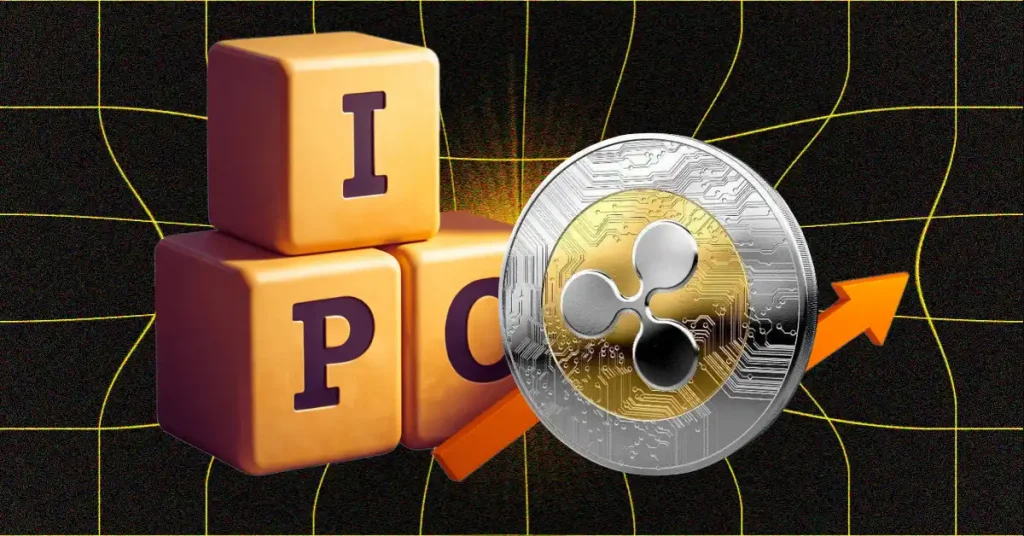
Ripple IPO Back in Spotlight as Valuation Hits $50B

Ripple IPO Back in Spotlight as Valuation Hits $50B

The post Ripple IPO Back in Spotlight as Valuation Hits $50B appeared first on Coinpedia Fintech News Ripple, the blockchain payments company behind XRP, is once
Paylaş
CoinPedia2025/12/27 14:24
Solana co-founder predicts that by 2026: the stablecoin market will exceed one trillion US dollars, and 100,000 humanoid robots will be shipped.

Solana co-founder predicts that by 2026: the stablecoin market will exceed one trillion US dollars, and 100,000 humanoid robots will be shipped.

PANews reported on December 27th that Anatoly Yakovenko, co-founder of Solana, released some predictions about 2026 on X, as follows: The total size of stablecoins
Paylaş
PANews2025/12/27 15:04
