Author: Castle Labs Compiled by AididiaoJP, Foresight News What is Resolv Resolv is an overcollateralized, interest-earning stablecoin protocol that mints USR and RLP. The USR stablecoin earns interest through delta-neutral strategies; RLP is a liquidity token that earns leveraged returns by assuming the risks inherent in these strategies. USR and RLP users earn income from the liquidity staking income generated by ETH liquidity staking tokens (LST) and the funding rate obtained from shorting ETH on centralized exchanges. Resolv now has its own governance token, RESOLV, which can be staked to earn rewards. The token’s airdrop was not well received by the market, and many long positions were quickly liquidated, causing the TVL to drop by more than 50% from its all-time high (ATH) within a few months. Then the Resolv team started announcing new partnerships, strategies, and protocol integrations, as well as fee switches (and token buybacks), and the price and TVL rebounded from recent lows. Resolv Buyback Program Last week, the Resolv Foundation launched a program to buy back RESOLV tokens, using revenue from the protocol on a weekly basis. But where does this revenue come from? The protocol earns 10% from interest paid to the staking pool, as well as incentives from external participants like EtherFi, thanks to their fee switch enabled in July. To date, the project has generated over $22 million in interest for its depositors, and since the fee switch went live, the protocol has accumulated $226,000 in fees, 75% of which has been used to buy back RESOLV. Benefits of the Program Not only are buybacks effective for token price growth because they reduce the circulating supply, but they are also important for what they represent to the community: the protocol is sacrificing some of the revenue that would have been earned by the team in favor of the project’s token. These repurchased tokens will then be allocated to future initiatives to drive ecosystem development, effectively re-entering the protocol’s economics. Supporting their tokens for the long term through buybacks is a reliable way to increase trust among community members and plan for the future of the token, effectively retaining more supply in the long term. Final Thoughts Redirecting a small portion of proceeds toward staking and buybacks is a necessary step to support a token that has yet to find its purpose, as stakeholders currently have no say in the future of the protocol. While this move makes sense, I have some concerns about how these buybacks are executed. Weekly buybacks don't always align with market conditions (such as liquidity, volume, and spreads), so they could end up filling pending orders during price increases and provide limited support to prices when needed. On the other hand, there are ways to improve this, such as developing a strategy that uses market maker (limit) orders to support prices when necessary, such as during cyclical declines, prolonged downturns, or when low liquidity conditions cause prices to fall. Fluid and Raydium have already used this strategy.Author: Castle Labs Compiled by AididiaoJP, Foresight News What is Resolv Resolv is an overcollateralized, interest-earning stablecoin protocol that mints USR and RLP. The USR stablecoin earns interest through delta-neutral strategies; RLP is a liquidity token that earns leveraged returns by assuming the risks inherent in these strategies. USR and RLP users earn income from the liquidity staking income generated by ETH liquidity staking tokens (LST) and the funding rate obtained from shorting ETH on centralized exchanges. Resolv now has its own governance token, RESOLV, which can be staked to earn rewards. The token’s airdrop was not well received by the market, and many long positions were quickly liquidated, causing the TVL to drop by more than 50% from its all-time high (ATH) within a few months. Then the Resolv team started announcing new partnerships, strategies, and protocol integrations, as well as fee switches (and token buybacks), and the price and TVL rebounded from recent lows. Resolv Buyback Program Last week, the Resolv Foundation launched a program to buy back RESOLV tokens, using revenue from the protocol on a weekly basis. But where does this revenue come from? The protocol earns 10% from interest paid to the staking pool, as well as incentives from external participants like EtherFi, thanks to their fee switch enabled in July. To date, the project has generated over $22 million in interest for its depositors, and since the fee switch went live, the protocol has accumulated $226,000 in fees, 75% of which has been used to buy back RESOLV. Benefits of the Program Not only are buybacks effective for token price growth because they reduce the circulating supply, but they are also important for what they represent to the community: the protocol is sacrificing some of the revenue that would have been earned by the team in favor of the project’s token. These repurchased tokens will then be allocated to future initiatives to drive ecosystem development, effectively re-entering the protocol’s economics. Supporting their tokens for the long term through buybacks is a reliable way to increase trust among community members and plan for the future of the token, effectively retaining more supply in the long term. Final Thoughts Redirecting a small portion of proceeds toward staking and buybacks is a necessary step to support a token that has yet to find its purpose, as stakeholders currently have no say in the future of the protocol. While this move makes sense, I have some concerns about how these buybacks are executed. Weekly buybacks don't always align with market conditions (such as liquidity, volume, and spreads), so they could end up filling pending orders during price increases and provide limited support to prices when needed. On the other hand, there are ways to improve this, such as developing a strategy that uses market maker (limit) orders to support prices when necessary, such as during cyclical declines, prolonged downturns, or when low liquidity conditions cause prices to fall. Fluid and Raydium have already used this strategy.

With the fee switch activated and weekly buybacks, Resolv is more than just an Ehena imitation.

2025/09/05 15:00

Author: Castle Labs

Compiled by AididiaoJP, Foresight News

What is Resolv

Resolv is an overcollateralized, interest-earning stablecoin protocol that mints USR and RLP. The USR stablecoin earns interest through delta-neutral strategies; RLP is a liquidity token that earns leveraged returns by assuming the risks inherent in these strategies.

USR and RLP users earn income from the liquidity staking income generated by ETH liquidity staking tokens (LST) and the funding rate obtained from shorting ETH on centralized exchanges.

Resolv now has its own governance token, RESOLV, which can be staked to earn rewards. The token’s airdrop was not well received by the market, and many long positions were quickly liquidated, causing the TVL to drop by more than 50% from its all-time high (ATH) within a few months.
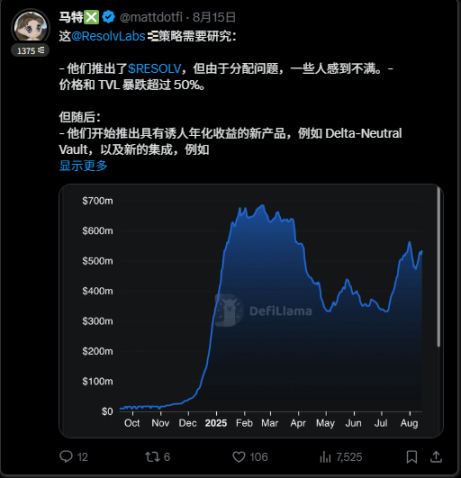
Then the Resolv team started announcing new partnerships, strategies, and protocol integrations, as well as fee switches (and token buybacks), and the price and TVL rebounded from recent lows.

Resolv Buyback Program

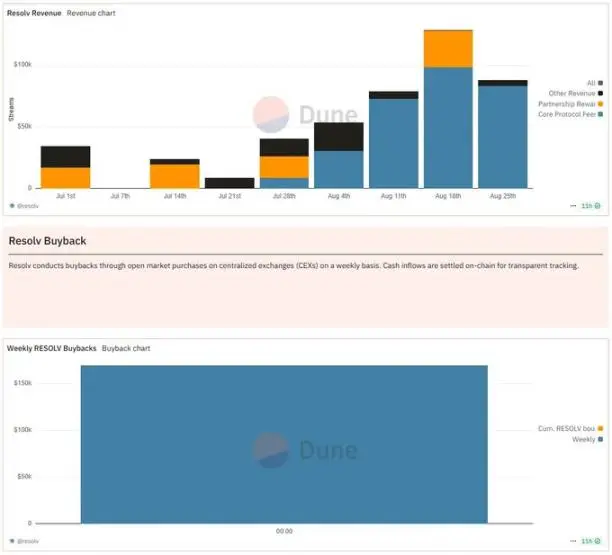
Last week, the Resolv Foundation launched a program to buy back RESOLV tokens, using revenue from the protocol on a weekly basis.
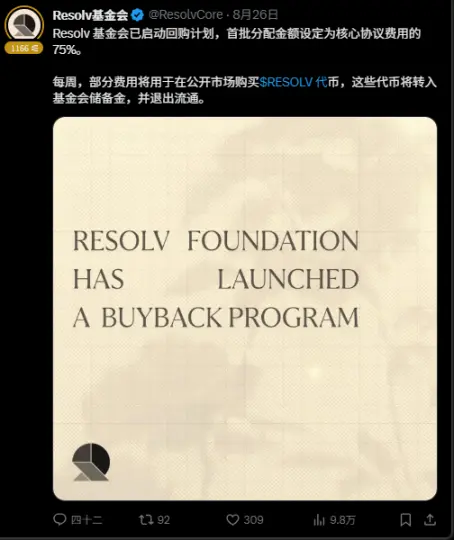
But where does this revenue come from? The protocol earns 10% from interest paid to the staking pool, as well as incentives from external participants like EtherFi, thanks to their fee switch enabled in July.
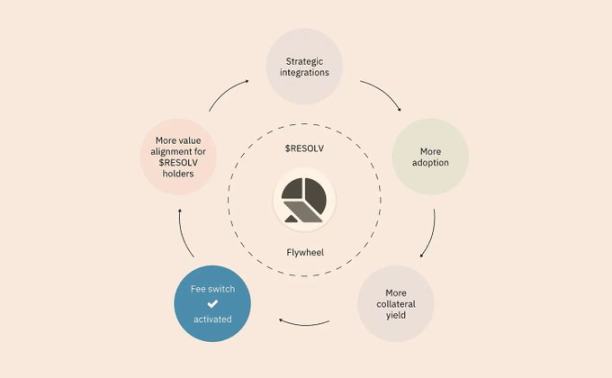
To date, the project has generated over $22 million in interest for its depositors, and since the fee switch went live, the protocol has accumulated $226,000 in fees, 75% of which has been used to buy back RESOLV.

Benefits of the Program

Not only are buybacks effective for token price growth because they reduce the circulating supply, but they are also important for what they represent to the community: the protocol is sacrificing some of the revenue that would have been earned by the team in favor of the project’s token.

These repurchased tokens will then be allocated to future initiatives to drive ecosystem development, effectively re-entering the protocol’s economics.

Supporting their tokens for the long term through buybacks is a reliable way to increase trust among community members and plan for the future of the token, effectively retaining more supply in the long term.
Final Thoughts

Redirecting a small portion of proceeds toward staking and buybacks is a necessary step to support a token that has yet to find its purpose, as stakeholders currently have no say in the future of the protocol.

While this move makes sense, I have some concerns about how these buybacks are executed. Weekly buybacks don't always align with market conditions (such as liquidity, volume, and spreads), so they could end up filling pending orders during price increases and provide limited support to prices when needed.
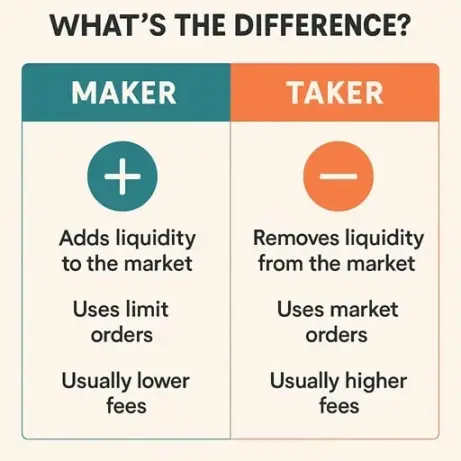
On the other hand, there are ways to improve this, such as developing a strategy that uses market maker (limit) orders to support prices when necessary, such as during cyclical declines, prolonged downturns, or when low liquidity conditions cause prices to fall. Fluid and Raydium have already used this strategy.

Sorumluluk Reddi: Bu sitede yeniden yayınlanan makaleler, halka açık platformlardan alınmıştır ve yalnızca bilgilendirme amaçlıdır. MEXC'nin görüşlerini yansıtmayabilir. Tüm hakları telif sahiplerine aittir. Herhangi bir içeriğin üçüncü taraf haklarını ihlal ettiğini düşünüyorsanız, kaldırılması için lütfen service@support.mexc.com ile iletişime geçin. MEXC, içeriğin doğruluğu, eksiksizliği veya güncelliği konusunda hiçbir garanti vermez ve sağlanan bilgilere dayalı olarak alınan herhangi bir eylemden sorumlu değildir. İçerik, finansal, yasal veya diğer profesyonel tavsiye niteliğinde değildir ve MEXC tarafından bir tavsiye veya onay olarak değerlendirilmemelidir.

Ayrıca Şunları da Beğenebilirsiniz

SEC urges caution on crypto wallets in latest investor guide

SEC urges caution on crypto wallets in latest investor guide

The SEC’s Office of Investor Education and Assistance issued a bulletin warning retail investors about crypto asset custody risks. The guidance covers how investors
Paylaş
Crypto.news2025/12/15 01:45
A Netflix ‘KPop Demon Hunters’ Short Film Has Been Rated For Release

A Netflix ‘KPop Demon Hunters’ Short Film Has Been Rated For Release

The post A Netflix ‘KPop Demon Hunters’ Short Film Has Been Rated For Release appeared on BitcoinEthereumNews.com. KPop Demon Hunters Netflix Everyone has wondered what may be the next step for KPop Demon Hunters as an IP, given its record-breaking success on Netflix. Now, the answer may be something exactly no one predicted. According to a new filing with the MPA, something called Debut: A KPop Demon Hunters Story has been rated PG by the ratings body. It’s listed alongside some other films, and this is obviously something that has not been publicly announced. A short film could be well, very short, a few minutes, and likely no more than ten. Even that might be pushing it. Using say, Pixar shorts as a reference, most are between 4 and 8 minutes. The original movie is an hour and 36 minutes. The “Debut” in the title indicates some sort of flashback, perhaps to when HUNTR/X first arrived on the scene before they blew up. Previously, director Maggie Kang has commented about how there were more backstory components that were supposed to be in the film that were cut, but hinted those could be explored in a sequel. But perhaps some may be put into a short here. I very much doubt those scenes were fully produced and simply cut, but perhaps they were finished up for this short film here. When would Debut: KPop Demon Hunters theoretically arrive? I’m not sure the other films on the list are much help. Dead of Winter is out in less than two weeks. Mother Mary does not have a release date. Ne Zha 2 came out earlier this year. I’ve only seen news stories saying The Perfect Gamble was supposed to come out in Q1 2025, but I’ve seen no evidence that it actually has. KPop Demon Hunters Netflix It could be sooner rather than later as Netflix looks to capitalize…
Paylaş
BitcoinEthereumNews2025/09/18 02:23
Fed rate decision September 2025

Fed rate decision September 2025

The post Fed rate decision September 2025 appeared on BitcoinEthereumNews.com. WASHINGTON – The Federal Reserve on Wednesday approved a widely anticipated rate cut and signaled that two more are on the way before the end of the year as concerns intensified over the U.S. labor market. In an 11-to-1 vote signaling less dissent than Wall Street had anticipated, the Federal Open Market Committee lowered its benchmark overnight lending rate by a quarter percentage point. The decision puts the overnight funds rate in a range between 4.00%-4.25%. Newly-installed Governor Stephen Miran was the only policymaker voting against the quarter-point move, instead advocating for a half-point cut. Governors Michelle Bowman and Christopher Waller, looked at for possible additional dissents, both voted for the 25-basis point reduction. All were appointed by President Donald Trump, who has badgered the Fed all summer to cut not merely in its traditional quarter-point moves but to lower the fed funds rate quickly and aggressively. In the post-meeting statement, the committee again characterized economic activity as having “moderated” but added language saying that “job gains have slowed” and noted that inflation “has moved up and remains somewhat elevated.” Lower job growth and higher inflation are in conflict with the Fed’s twin goals of stable prices and full employment.  “Uncertainty about the economic outlook remains elevated” the Fed statement said. “The Committee is attentive to the risks to both sides of its dual mandate and judges that downside risks to employment have risen.” Markets showed mixed reaction to the developments, with the Dow Jones Industrial Average up more than 300 points but the S&P 500 and Nasdaq Composite posting losses. Treasury yields were modestly lower. At his post-meeting news conference, Fed Chair Jerome Powell echoed the concerns about the labor market. “The marked slowing in both the supply of and demand for workers is unusual in this less dynamic…
Paylaş
BitcoinEthereumNews2025/09/18 02:44