Dapp

Dapps are digital applications that run on a P2P network of computers rather than a single server, typically utilizing smart contracts to ensure transparency and uptime. In 2026, Dapps have achieved mass-market appeal through Account Abstraction, allowing for a "Web2-like" user experience with the security of Web3. This tag covers the entire ecosystem of decentralized software—from social media and productivity tools to governance platforms and identity management.

4941 Articles
Created: 2026/02/02 18:52
Updated: 2026/02/02 18:52
ETH and XMR Rise as BZIL Dominates Q4

ETH and XMR Rise as BZIL Dominates Q4

The post ETH and XMR Rise as BZIL Dominates Q4 appeared on BitcoinEthereumNews.com. Crypto News Ethereum and Monero impress, but BullZilla’s presale steals the spotlight among the best cryptos to buy right now. What if the next legendary crypto wasn’t one of the familiar titans, but a new apex token engineered to rise every 48 hours? In a market where timing makes millionaires, identifying the best cryptos to buy right now isn’t about luck; it’s about spotting conviction before it becomes consensus. Every bull run starts with whispers, and those whispers are already echoing through Ethereum’s blue fire. Ethereum and Monero have long proven their strength, Ethereum leading Web3’s innovation frontier and Monero preserving privacy as its purest form of financial sovereignty. Yet amid their enduring stability, a new force is rewriting meme coin mythology: BullZilla ($BZIL). Its cinematic presale isn’t just moving, it’s evolving, turning every chapter into a live burn, every holder into part of the legend. BullZilla’s Branding Brilliance and Lore Mechanism Make It One of the Best Cryptos to Buy Right Now BullZilla blends narrative mastery with tokenomic precision. Its Strong Narrative & Branding aren’t mere marketing; they’re a full-scale mythology. The “Lore Bible,” spanning 24 cinematic chapters, chronicles the beast’s on-chain evolution. Each chapter triggers a Roar Burn, permanently removing tokens from circulation, fueling scarcity, and visually signaling community growth. It’s storytelling that pays, literally. This cinematic approach makes BullZilla not just one of the best cryptos to buy right now, but also a token that turns narrative into a measurable on-chain impact. Then there’s The Mythos Play, BullZilla’s presale system, where the price ascends automatically every $100K raised or every 48 hours. This dynamic model transforms participation into progress, rewarding believers who act early. Layer in the HODL Furnace, a staking system yielding a blazing 70% APY, and you have a meme coin built on measurable mechanics,…

Author: BitcoinEthereumNews
The Next 1000x Crypto Might Not Be ETH or XMR — It Might Be BullZilla: The Best Crypto to Buy Right Now

The Next 1000x Crypto Might Not Be ETH or XMR — It Might Be BullZilla: The Best Crypto to Buy Right Now

What if the next legendary crypto wasn’t one of the familiar titans, but a new apex token engineered to rise […] The post The Next 1000x Crypto Might Not Be ETH or XMR — It Might Be BullZilla: The Best Crypto to Buy Right Now appeared first on Coindoo.

Author: Coindoo
A former veteran developer exposed an internal letter expressing dissatisfaction. Is the Ethereum Foundation facing another crisis of trust?

A former veteran developer exposed an internal letter expressing dissatisfaction. Is the Ethereum Foundation facing another crisis of trust?

Author: Zen, PANews A long-hidden internal letter has once again put the Ethereum Foundation (EF) in the spotlight. On October 20, Péter Szilágyi, a former Ethereum core developer and main maintainer of the Geth client, published a letter to the leadership of the Ethereum Foundation (EF) in May last year, which once again aroused widespread criticism of EF in the community. After Péter ignited the criticism of EF, Polygon co-founder and Polygon Foundation CEO Sandeep Nailwa and Sonic co-founder Andre Cronje also expressed dissatisfaction, disappointment, and doubt. After Sandeep published a lengthy article, Ethereum co-founder Vitalik Buterin also responded and "appeased" him with a post. Péter Szilágyi: Counting the Ethereum Foundation’s “Three Sins” As a veteran Ethereum core developer, Péter Szilágyi’s feud with EF is not the first time it has been made public. In June of this year, Péter Szilágyi and EF officially parted ways. Péter Szilágyi Péter claims he was offered approximately $5 million to spin off Geth, Ethereum's most popular execution layer client, from EF into a private company, but he declined the offer. He also claims to have discovered that EF was secretly funding another Geth team, intentionally undermining and marginalizing the original one. Péter claims he was fired shortly after discovering this. In this open letter, Péter reveals further details of EF's exploitation. He claims that the "leader" persona he was given at EF was merely "perceived leadership," a symbol of diverse perspectives in public, but held no real power in private decision-making. When he publicly opposed powerful figures or conflicts of interest, he damaged both his reputation and that of Geth, while also failing to change course. In Péter's view, the primary reason for Ethereum's failure is that, despite its lofty ambitions, it was easily swayed by the allure of money and abandoned its principles without hesitation. "I'm glad you built an empire for us. Now step aside and let those who can make us money lead us," he wrote, expressing his disappointment with the money-driven culture on social media. On the other hand, EF is overly stingy with its employees, chronically suppressing salaries. Péter reported that his total pre-tax compensation for his first six years at EF (2015-2021) was $625,000, with zero bonuses. This level of salary is typically just entry-level at major US companies and in high-paying cities. Meanwhile, ETH's market capitalization has soared from zero to $450 billion. Péter claims that the underpaid "worker" situation at EF has improved in the past two years. This may also be related to the Protocol Guild, a funder of Ethereum core developers established in 2022 to address gaps in developer compensation. Related reading: Are Ethereum developers working with passion? Salaries are only half the market rate, and the Protocol Guild steps in to fill the gap. Finally, he believes that Ethereum has formed a "top ruling elite" around Vitalik - Vitalik's attention, donations and investments almost determine which projects will succeed. As a result, many new projects bypass public offerings and instead strive for the support or advisors of the 5 to 10 core opinion leaders and the 1 to 3 VCs behind them. From the media to the research network, they "sing in unison" with each other, and the opportunities for ecological development are completely dominated by the relationship network. Péter believes that the above-mentioned problems of EF are already terminal and difficult to reverse: the foundation has exhausted the community's loyalty to it, and the elite circle around Vitalik will not give up power. Continuing to ferment: Sandeep's disappointment and AC's questioning After forwarding Peter's long post, Polygon Foundation CEO Sandeep Nailwa also took the opportunity to express his dissatisfaction with EF and the community. Sandeep expressed his doubts about his loyalty to Ethereum, believing it was worth addressing publicly. Similar to core developers like Péter Szilágyi, who have made significant contributions to Ethereum, Sandeep believes that Polygon has made significant infrastructure and ecosystem contributions to Ethereum, yet has long lacked recognition and support from Ethereum Foundation and its core community. Instead, it has been marginalized and questioned as a true Ethereum Layer 2. Sandeep explained that Polygon, out of loyalty, has long insisted on positioning itself as Ethereum's Layer 2, rather than as an independent Layer 1. This has significantly compromised Polygon's narrative and prevented it from earning the recognition premium it deserves from the ecosystem. He noted that if Polygon had shifted to a Layer 1 narrative, its valuation could have increased by two to five times. "The Ethereum community needs to take a serious look at itself," Sandeep also criticized the Ethereum community, pointing out that Ethereum contributors like Péter Szilágyi were forced to question or even regret their loyalty to Ethereum, and the community also "made an indelible contribution." Taking advantage of this controversy, Yearn and Sonic co-founder Andre Cronje (AC) directly published a statement questioning where EF's funding went. AC stated that he has been building on Ethereum for years, burning over 700 ETH on infrastructure deployment alone. However, repeated attempts to contact EF have yielded no response, with "no business connections, no funding, no support, not even a retweet." He questioned: If EF doesn't support core clients/developers, nor does it support leading L2s, then who is actually receiving the funding? It's worth noting that, taking advantage of the Ethereum frenzy, Solana co-founders Toly and Raj used the comments sections of AC and Sandeep, respectively, to recruit them to join the Solana ecosystem. Someone pointed out to Raj a news report in which Sandeep described Solana as having no future, to which Raj simply replied, "Everything is forgivable." Vitalik responded: To clear Sandeep's name, only talk about product technology Faced with the overwhelming public opinion, Vitalik Buterin responded to Sandeep's remarks. Vitalik first positively affirmed the long-term contributions of Sandeep and Polygon, including hosting Polymarket, one of the few truly "non-pure financial" popular dApps with positive externalities for society, hosting many applications with high scalability requirements, and investing heavily in ZK-EVM in the early days to promote the zero-knowledge proof ecosystem. Vitalik also praised Sandeep, the leader who pushed for this initiative, for his moral compliments. He mentioned that after he donated SHIB to the Indian anti-epidemic fund, Sandeep voluntarily "returned" approximately $190 million to Vitalik to use for the Balvi Foundation's open-source research project on combating airborne pathogens. This, Vitalik believed, was crucial, accelerating relevant public health progress. Apart from this, Vitalik did not respond to any EF-related topics, but instead focused on products and technology. He said he understood that Polygon had to undertake the most difficult exploration period in the early days, but now the ecosystem has formed a pattern of "L2 team" and "ZK team" each specializing in their own areas. He personally hopes that Polygon can directly adopt mature, ready-made ZK technology on the PoS chain as soon as possible, so as to obtain the stronger security guarantee of Ethereum L1. Vitalik's response felt like a precise "technical appeasement"—he affirmed the value of contributors while deftly avoiding core questions about EF's governance structure and resource allocation. This may temporarily calm Sandeep's personal emotions, but it will hardly quench the deeper concerns ignited by this controversy. This controversy, sparked by an old letter, ultimately became a mirror, reflecting the governance paradox that Ethereum must face after its enormous success: how to find a new balance between scale and power, ideals and reality. “Let’s wait and see what the future holds,” Peter wrote at the end of his letter. This statement isn’t just a personal sentiment; it’s a poignant question about the future of the entire Ethereum ecosystem.

Author: PANews
DeFi Falters as AAVE and WLD Lose Steam, BlockDAG’s $430M Presale Sparks Rush Before $1 Price Revaluation

DeFi Falters as AAVE and WLD Lose Steam, BlockDAG’s $430M Presale Sparks Rush Before $1 Price Revaluation

Crypto’s spotlight is shifting fast. AAVE and Worldcoin (WLD) are showing just how fragile momentum can be, while BlockDAG (BDAG) is proving that real participation still drives the biggest payoffs. The difference? AAVE and WLD are reacting to markets, BlockDAG is building its own. With $430 million raised, 27 billion+ coins sold, and Batch 31 […] The post DeFi Falters as AAVE and WLD Lose Steam, BlockDAG’s $430M Presale Sparks Rush Before $1 Price Revaluation appeared first on Live Bitcoin News.

Author: LiveBitcoinNews
Arkade Launches as Bitcoin’s First Major Layer 2 Since Lightning Network

Arkade Launches as Bitcoin’s First Major Layer 2 Since Lightning Network

The post Arkade Launches as Bitcoin’s First Major Layer 2 Since Lightning Network appeared on BitcoinEthereumNews.com. Oct 21, 2025 at 21:51 // News Coinidol.com: Ark Labs officially launched the public beta of Arkade, a new Layer 2 scaling solution for Bitcoin. This launch is highly notable as it represents the first major, independently developed scaling layer for Bitcoin since the Lightning Network’s debut nearly a decade ago, marking a pivotal moment in the evolution of Bitcoin as a programmable asset. Unlocking Bitcoin’s programmable potential Historically, Bitcoin’s robust security and decentralized nature have come at the cost of limited programmability, pushing advanced financial applications like decentralized finance (DeFi) and tokenization onto competing smart contract platforms like Ethereum and Solana. Arkade aims to solve this by virtualizing Bitcoin’s transaction layer to enable the creation of sophisticated decentralized applications (dApps) directly on Bitcoin’s security-first foundation. The core innovation lies in Virtual Transaction Outputs (VTXOs), which allow for near-instant off-chain transaction execution while maintaining a secure, one-to-one exit path back to the Bitcoin main chain. This approach allows developers to build complex applications such as Bitcoin-backed lending protocols, trading platforms, and smart wallets without relying on wrapped tokens or custodial compromises. Furthermore, the technology leverages batch settlement to compress thousands of off-chain operations into a single Bitcoin mainnet transaction, dramatically reducing costs and increasing efficiency. Introducing Arkade Assets for stablecoins and tokens Accompanying the mainnet launch, Ark Labs unveiled Arkade Assets, a native asset framework designed to support multiple token types, most notably stablecoins. With over $200 billion in stablecoin value primarily residing on other chains, bringing a framework like this directly to the Bitcoin execution layer is seen as a crucial step for Bitcoin to capture a larger share of the digital finance market. The company has already announced plans for Tether (USDT) support, which would be a massive driver for decentralized trading and…

Author: BitcoinEthereumNews
Metis Partners with Spheron Network to Develop AI-Driven Web3 Infrastructure

Metis Partners with Spheron Network to Develop AI-Driven Web3 Infrastructure

Metis, a prominent L2 scaling entity, has announced its new partnership with Spheron Network, a well-known Web3 infrastructure platform. The collaboration is aimed at developing a unique foundation for the deployment of AI-led decentralized applications (dApps). As mentioned in the official social media announcement of Spheron Network, the development is set to enable Web3 dApp deployment with infinite scalability while eliminating dependence on conventional cloud providers. Hence, the users and developers can anticipate a truly decentralized, robust, and relatively autonomous digital ecosystem. Imagine a Web3 ecosystem where builders can deploy AI-powered dApps with infinite scalability and zero cloud dependency.That’s what @MetisL2 and @spheron are creating.Metis brings the multi-network ecosystem, and Spheron provides the GPU backbone, enabling real decentralized… pic.twitter.com/deDJzYIrC3— Spheron Network (@spheron) October 21, 2025 Metis Offers Next-Gen Decentralized Web3 Infrastructure Led by AI In collaboration with Spheron, Metis endeavors to offer unparalleled Web3 infrastructure. In this respect, Metis, which is famous for its L2 multi-network platform, brings interoperability and scalability for complicated blockchain operations. Additionally, Spheron delivers decentralized GPU-based compute energy, playing the role of a pivotal engine to power AI-led applications, cutting-edge DeFi projects, and decentralized physical infrastructure networks (DePINs). Keeping this in view, with the merger of the core strengths of both the entities, the partnership paves the way for a developer-first environment. The respective ecosystem will be marked by innovation without any limitations faced by centrally controlled cloud systems. As a result of this, the joint initiative promises the development of a network that backs seamless dApp deployment and guarantees accessibility, security, and efficiency for consumers around the world. Redefining Decentralized Computation and Web3 Evolution According to Spheron Network, the partnership provides a next-gen solution to reliance on centrally-controlled cloud computing entities such as Azure, Google Cloud, and AWS. Additionally, with the decentralized GPUs spine of Spheron integrated into the cutting-edge L2 ecosystem of Metis lets developers access comprehensive computing scalability while enjoying decentralization. Ultimately, the development focuses on revolutionizing decentralized computation, fortifying Web3 evolution, and driving cross-sector adoption.

Author: Coinstats
BlockDAG’s $430M Success Story Blends Bitcoin-Level Protection with Cutting-Edge Transaction Speed

BlockDAG’s $430M Success Story Blends Bitcoin-Level Protection with Cutting-Edge Transaction Speed

The post BlockDAG’s $430M Success Story Blends Bitcoin-Level Protection with Cutting-Edge Transaction Speed appeared on BitcoinEthereumNews.com. Crypto News Explore how BlockDAG’s $430M presale success comes from merging Bitcoin-grade security with next-gen transaction speed in one hybrid system. Progress in technology often comes from blending proven ideas into something stronger. BlockDAG has achieved this by combining two of crypto’s most powerful systems to address a major industry challenge: maintaining both speed and security. Its design delivers the trusted protection of Bitcoin while enabling the high-speed performance of next-generation blockchains. This thoughtful balance has gained strong attention, leading to a presale that has now crossed $430 million. BlockDAG (BDAG) aims to build a system ready for real-world use, ensuring performance and safety go hand in hand. With the presale reaching Batch 31, it presents a late opportunity for those following its steady progress. Inside the Dual Power Behind BlockDAG’s Design At the heart of BlockDAG’s framework is a unique hybrid architecture that merges two leading technologies into one seamless structure. Unlike earlier blockchains that had to trade one feature for another, this design maintains both strength and speed. The result is a system that functions like a secure fortress while moving like a digital expressway. The foundation operates on two essential pillars: Bitcoin-Level Security: Built on the Proof-of-Work (PoW) mechanism that has safeguarded Bitcoin for more than a decade. Superhighway Speed: Using a Directed Acyclic Graph (DAG) structure, it processes multiple transactions at once, creating faster throughput. Together, these form BlockDAG’s hybrid system, giving it the ability to combine institutional-grade safety with efficient, scalable performance suited for global users and modern applications. Why BlockDAG’s Hybrid Model Redefines Blockchain Reach One of blockchain’s longest-standing problems has been achieving speed, decentralization, and security all at the same time. BlockDAG’s hybrid approach successfully tackles this issue, making it a system that can serve everyone from enterprises to individuals. This balance gives…

Author: BitcoinEthereumNews
NBA Top Shot 2025–26 Season NFTs Add Digital Autographs and Limited Rookie Clips

NBA Top Shot 2025–26 Season NFTs Add Digital Autographs and Limited Rookie Clips

The post NBA Top Shot 2025–26 Season NFTs Add Digital Autographs and Limited Rookie Clips appeared on BitcoinEthereumNews.com. The NBA, NBPA, and Dapper Labs have announced updates to NBA Top Shot for the 2025–26 season, introducing onchain highlight storage, new player partnerships, and digital autograph features for select rookies. New NBA Top Shot Season Includes Rookie Signatures and Onchain Verification The National Basketball Association (NBA), the National Basketball Players Association (NBPA), and Dapper […] Source: https://news.bitcoin.com/nba-top-shot-2025-26-season-nfts-add-digital-autographs-and-limited-rookie-clips/

Author: BitcoinEthereumNews
BlockDAG Beats Ethereum & Hyperliquid With $430M Presale

BlockDAG Beats Ethereum & Hyperliquid With $430M Presale

The post BlockDAG Beats Ethereum & Hyperliquid With $430M Presale appeared on BitcoinEthereumNews.com. Crypto News Ethereum nears $5K and Hyperliquid rises 8.5%, but BlockDAG’s $430M presale, $0.0015 TGE code, and Tier-1 listings set a new market benchmark. The crypto market is witnessing another defining moment as Hyperliquid, Ethereum (ETH), and BlockDAG (BDAG) each capture attention for different reasons. Hyperliquid has risen 8.58% this week, fueled by on-chain derivative activity and its ongoing campaign for transparent trading. Ethereum whales have added over $480 million to holdings, bringing ETH closer to retesting the $5,000 level. Yet both assets are encountering familiar obstacles: limited scalability, centralization risks, and dependency on external solutions. BlockDAG (BDAG), by contrast, is completing its launch checklist with measurable delivery, verified testnet, miner shipment, Tier-1 listings, and transparent audits. Priced at $0.0015 via code “TGE,” BDAG is moving from proof of concept to real-world implementation. This analysis examines each project’s structure, growth, and practical value to determine which truly delivers beyond price action. Hyperliquid’s 8.5% Surge Shows Strength but Limited Depth Hyperliquid’s recent 8.58% price increase reflects strong sentiment across the decentralized derivatives segment. The platform’s appeal lies in low transaction costs and transparency, amplified when its founder criticized centralized exchanges for “concealing liquidation risks.” That statement resonated with traders seeking trust and data integrity in high-leverage environments. Still, Hyperliquid’s growth remains narrowly concentrated in derivatives trading. It lacks broader ecosystem expansion, cross-chain functionality, and diverse dApp engagement. Without staking options, governance protocols, or an interoperable framework, Hyperliquid risks staying confined to its niche rather than evolving into a full-scale network. The current rally appears more sentiment-driven than adoption-based. Rising trading volumes show renewed interest, but they haven’t translated into ecosystem buildout or long-term retention. For those seeking exposure to utility-driven networks, Hyperliquid’s trajectory highlights an early-stage project with strong narrative momentum but limited structural foundation. Ethereum Approaches $5K as Whale Demand…

Author: BitcoinEthereumNews
Did Solana Mobile Quietly End Support for Saga? Here’s What We Know

Did Solana Mobile Quietly End Support for Saga? Here’s What We Know

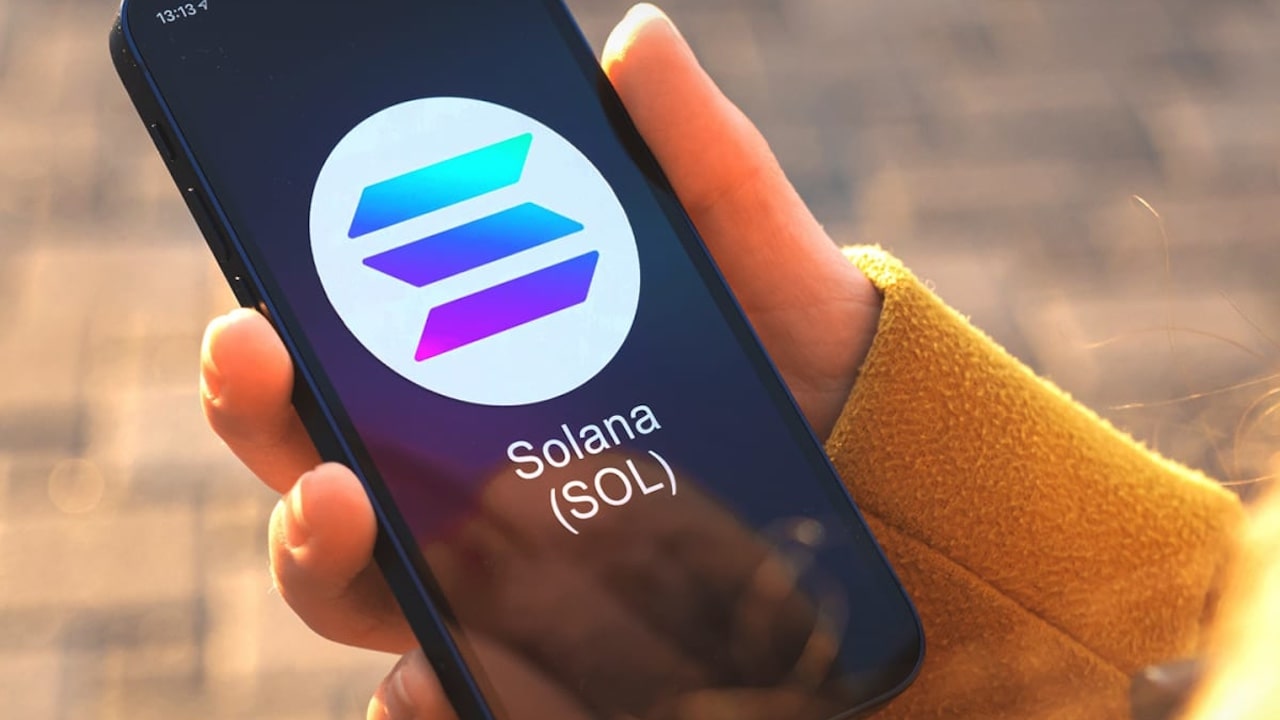
Solana Mobile, the phone-making subsidiary of Solana Labs, confirmed the end of software updates for the Saga phone, marking the close of its lifecycle on October 20, 2025. Launched in April 2023, the Android device, which sold for $1,000, introduced Web3 features like Seed Vault for secure key storage. The decision came through a message on Discord. This move implies that there will be no more updates or security fixes for Saga users, exposing them to potential risks. A Quiet Sunset for Saga Phone Initially, sales for the Saga phone started slowly, with only 2,500 units sold. However, a BONK token airdrop in late 2023 changed that. The value of the airdrop was greater than the phone’s price, causing resales to reach $5,000 and allowing 20,000 units to sell by early 2024. Additional rewards, like SHDW mining, also made the Saga popular among Solana fans and developers testing decentralized applications (dApps). Now, the company is focusing on the Seeker phone, which received over 130,000 pre-orders worldwide. Meanwhile, while support for it ends, Saga’s dApp Store will still function, but might face compatibility issues without updates. Although hardware repairs and customer support through Zendesk are still available, Solana Mobile’s focus has, however, shifted to the Seeker device. A Shift to the Seeker Device Saga users are beginning to embrace the reality of the shift to the Seeker device, with some already experiencing its impact. Solana Mobile launched the Seeker phone in August 2024, which is why it stopped supporting the Saga. The Seeker costs between $450 and $500 and offers better hardware, increased security, and support for multiple chains, unlike the Saga, which only supports Solana. Shipping for the device commenced earlier in August. This comes around a year after thousands have preordered the crypto-centric mobile device. Solana Mobile, the tech firm behind the mobile device, has announced several new features for the Seeker phone. Features like preloaded SOL for quick transactions are designed to attract more users, and early feedback has been positive about the interface’s ease of use and smooth wallet integration. However, while Saga owners have limited choices—either keep using their unsupported device or switch to the Seeker—users who have acquired the Seeker may wonder if the same fate as that of the Saga awaits them after a two-year support period. The post Did Solana Mobile Quietly End Support for Saga? Here’s What We Know appeared first on CoinTab News.

Author: Coinstats