DePIN

DePIN utilizes blockchain and token incentives to build and maintain physical infrastructure, such as wireless networks, cloud storage, and energy grids.By decentralizing the ownership of hardware, projects like Helium and Hivemapper disrupt traditional centralized monopolies.In 2026, DePIN is a core pillar of the Web3 + AI economy, providing the decentralized compute and data collection necessary for autonomous agents. This tag tracks the growth of hardware-based rewards, crowdsourced infrastructure, and the democratization of global utility networks.

1501 Articles
Created: 2026/02/02 18:52
Updated: 2026/02/02 18:52

Largest US Union Federation Opposes Crypto Bill, Says It Exposes Workers’ Retirement Funds to Risk

Largest US Union Federation Opposes Crypto Bill, Says It Exposes Workers’ Retirement Funds to Risk

The AFL-CIO has urged the Senate Banking Committee to oppose the Responsible Financial Innovation Act, warning that the legislation would expose workers’ retirement funds to crypto volatility while increasing systemic financial risk. In an October 7 letter to Chairman Scott and Ranking Member Warren, AFL-CIO Director of Government Affairs Jody Calemine stated the bill would greenlight retirement plans like 401(k)s and pensions to hold risky crypto assets rather than insulating workers from instability. The union federation represents millions of American workers whose retirement security could be affected by the legislation. The opposition comes as President Trump signed an executive order in August allowing American workers to add alternative assets, including cryptocurrency, to their $12.5 trillion 401(k) portfolios. More than 90 million Americans participate in employer-sponsored defined-contribution plans, with total US retirement assets valued at $43.4 trillion as of March 31, 2025. House Financial Services Committee Chairman French Hill and Subcommittee Chairman Ann Wagner urged SEC Chair Paul Atkins on September 22 to implement the directive swiftly by recognizing FINRA-certified professionals as accredited investors. Union Warns Bill Creates Shadow Markets and Exposes FDIC to Risk The AFL-CIO claimed to have identified two immediate systemic risks in the legislation. First, the proposal would expand the ability of FDIC-backed banks and bank holding companies to hold and trade crypto assets directly, rather than only on behalf of clients. This, according to them, would expose banks to a heightened risk of losses and failures, while also putting the FDIC’s taxpayer-backed Deposit Insurance Fund at greater risk. Second, the bill codifies the tokenization of securities and assets, allowing private companies to create shadow public stock outside SEC oversight. Calemine warned these blockchain-based shadow stocks, notionally tied to traditional public stock but trading independently, would create new risks for both shadow stockholders and public stockholders who did not opt into unregulated markets. The union expressed deep concern about the potential impact on the stability of traditional financial markets and institutions, comparing the risks to unregulated derivatives markets that contributed to the 2008 financial crisis.Source: BIS The legislation substantially weakens federal and state enforcement tools to police fraud and conflicts of interest, according to the AFL-CIO. The bill creates avenues for securities issuers to evade SEC regulation through tokenization, reduces public disclosure requirements, and preempts state-level antifraud, securities, and consumer protection laws. While most pensions currently do not carry crypto assets due to associated risks, Calemine claimed the bill provides a “facade of regulation” that may make crypto more mainstream in portfolios, allowing the proliferation of assets investors will wrongly perceive as safe. Industry Pushes Forward as Regulators Signal Friendlier Stance The draft Responsible Financial Innovation Act, released in July by Senate Banking Chair Tim Scott alongside Senators Cynthia Lummis, Bill Hagerty, and Bernie Moreno, proposes explicit recognition that digital assets referred to as “ancillary assets” are not inherently securities. The legislation attempts to resolve jurisdictional tension between the SEC and the CFTC, with most digital assets regulated as commodities under the CFTC, while the SEC retains oversight of investment contracts and investor protection. A revised September 7 draft introduced protections for DeFi developers and emerging blockchain sectors, such as DePINs, proposing the formation of a Joint Advisory Committee on Digital Assets comprising SEC and CFTC members. Developers contributing to decentralized protocols, validators, liquidity providers, and wallet builders would not automatically fall under traditional financial regulations if protocols aren’t centrally controlled. Airdrops, staking rewards, and liquid-staking outputs are defined as “gratuitous distributions” rather than securities offerings. Last month, SEC Chair Paul Atkins announced the agency would end “regulation by enforcement,” giving firms preliminary notices of technical violations and up to six months to address issues before enforcement is considered. Since taking office in April, Atkins has dropped several high-profile cases inherited from Gary Gensler’s tenure and launched a Crypto Task Force. He rejected the broad classification of cryptocurrencies as securities, showing openness to tokenized stocks and bonds that mirror existing instruments. Little before then, CFTC Acting Chair Caroline D. Pham outlined on September 8 a cross-border framework allowing foreign crypto exchanges to operate under U.S. regulatory frameworks, potentially widening market access for American traders. Pham noted many American crypto firms moved operations abroad, citing a lack of clear rules, with jurisdictions in Europe, Asia, and the Middle East developing digital asset frameworks that drew companies away

Author: CryptoNews
Solana Generated $2.85 Billion in Annual Revenue — 220x Growth in Just Two Years

Solana Generated $2.85 Billion in Annual Revenue — 220x Growth in Just Two Years

The Solana network generated more than $2.85 billion in revenue between October 2024 and September 2025, this follows the 21shares report. Experts noted that the network’s revenue sources were DeFi protocols, memcoins, DePIN solutions, AI applications and trading tools. The highest monthly figure was $616 million in January 2025. It was mainly driven by memcoins, […] Сообщение Solana Generated $2.85 Billion in Annual Revenue — 220x Growth in Just Two Years появились сначала на INCRYPTED.

Author: Incrypted
21Shares reported that Solana generated more than $2.8B in annual revenue

21Shares reported that Solana generated more than $2.8B in annual revenue

21Shares reported that Solana generated more than $2.8B in annual revenue, surpassing Ethereum’s.

Author: Cryptopolitan
DePIN project Grass is raising $10 million in bridge financing, with participation from Polychain and Tribe Capital

DePIN project Grass is raising $10 million in bridge financing, with participation from Polychain and Tribe Capital

PANews reported on October 8th that, according to Blockworks, the Solana Decentralized Physical Infrastructure Network (DePIN) project, Grass, is raising $10 million in a bridge financing round. This follows the project's previous seed and Series A funding rounds. Andrej Radonjic of Grass revealed to Blockworks that Polychain and Tribe Capital participated in this bridge round, which primarily involved token purchases. The Grass team is reportedly looking to prepare for the transition from training computation cycles to inference, with the ultimate goal of achieving "internet-scale web crawler" operations, which will enable them to build real-time contextual retrieval capabilities.

Author: PANews
Altcoin Listed on Major Exchanges Announces Significant Investment: Falling Price Drops Further

Altcoin Listed on Major Exchanges Announces Significant Investment: Falling Price Drops Further

The post Altcoin Listed on Major Exchanges Announces Significant Investment: Falling Price Drops Further appeared on BitcoinEthereumNews.com. Grass (GRASS), the Decentralized Physical Infrastructure Network (DePIN) project operating within the Solana ecosystem, raised $10 million in a bridge investment round led by Polychain Capital and Tribe Capital. The investment primarily consisted of token purchases. Grass has previously closed both a seed and Series A funding round. The project aims to allow users to sell their idle internet bandwidth, allowing data to be shared under user control rather than being collected by large corporations for profit. The GRASS price, already declining, fell even further following the announcement. Grass co-founder Andrej Radonjic said in a statement, “Grass is a piece of technology that gives companies access to data at an unprecedented scale. The possibilities that can be built upon it are virtually endless. We plan to develop new solutions, especially around live context.” According to Radonjic, AI companies currently scrape data to train their models, often using search engines. However, this method is limited by scalability and access barriers. Grass offers an alternative infrastructure that provides internet-scale data access. *This is not investment advice. Follow our Telegram and Twitter account now for exclusive news, analytics and on-chain data! Source: https://en.bitcoinsistemi.com/altcoin-listed-on-major-exchanges-announces-significant-investment-falling-price-drops-further/

Author: BitcoinEthereumNews
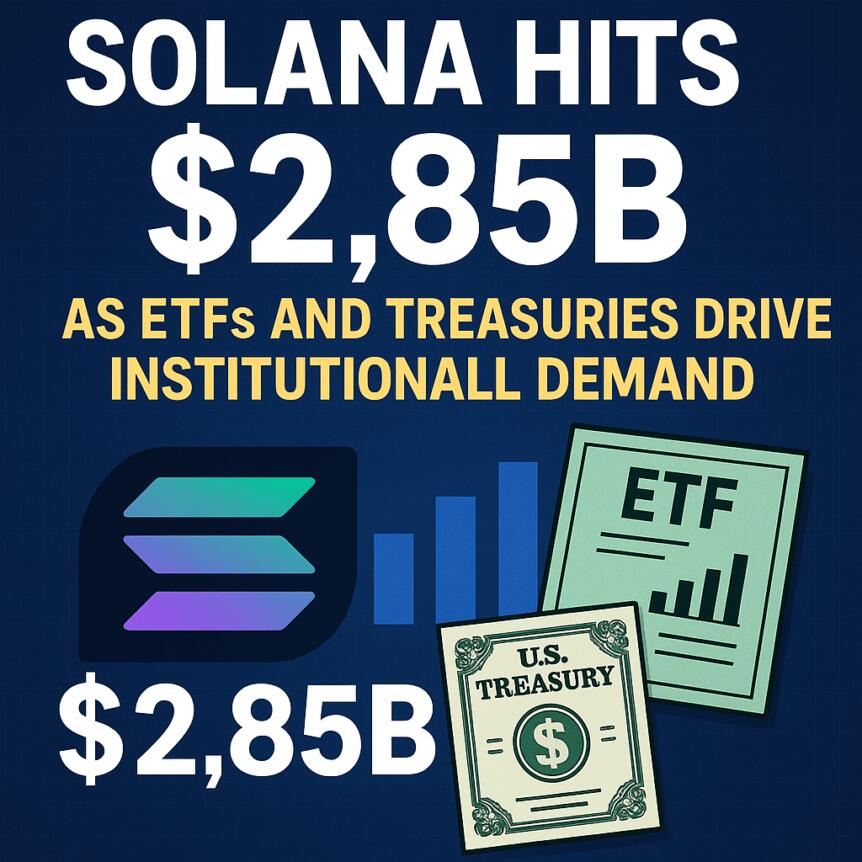
Solana Hits $2.85B as ETFs and Treasuries Drive Institutional Demand

Solana Hits $2.85B as ETFs and Treasuries Drive Institutional Demand

As the cryptocurrency landscape continues to evolve, Solana has emerged as a significant revenue-generating blockchain platform, with recent reports highlighting its impressive financial performance over the past year. Driven largely by activity on trading platforms and various ecosystem applications, Solana’s revenue showcases its growing influence within the broader crypto markets. Solana earned approximately $2.85 billion [...]

Author: Crypto Breaking News
Solana’s $2.8B revenue outpaces Ethereum’s early growth: 21Shares

Solana’s $2.8B revenue outpaces Ethereum’s early growth: 21Shares

                                                                               Solana pulled in $2.85 billion in annual revenue across DeFi, AI and trading apps, as institutions push the network into mainstream finance.                     Solana generated $2.85 billion in revenue over the past year, according to a new report from 21Shares, driven by trading platform activity. Between October 2024 and September 2025, Solana averaged about $240 million in monthly revenue, peaking at $616 million in January during the memecoin boom led by tokens like Official Trump (TRUMP). But even after the frenzy cooled, monthly revenue was between $150 million and $250 million.Solana validators earn revenue from fees on transactions. Over the past year, revenue from fees flowed from across the ecosystem, including decentralized finance (DeFi), memecoins, AI apps, decentralized exchanges, DePIN, launchpads and trading tools.Read more

Author: Coinstats
DePIN Grass raises $10M from Polychain, Tribe Capital

DePIN Grass raises $10M from Polychain, Tribe Capital

The post DePIN Grass raises $10M from Polychain, Tribe Capital appeared on BitcoinEthereumNews.com. Grass, the Solana DePIN project, is raising $10 million in a bridge raise, Blockworks has exclusively learned.  The project previously raised both a seed and a Series A round.  The decentralized AI project which allows folks to sell access to idle internet bandwidth — essentially giving you more power to hand over your data rather than having a large company scrape it for profit.  Polychain and Tribe Capital participated in the bridge round, which is primarily a token purchase, Grass’s Andrej Radonjic told Blockworks. “Grass is a piece of technology that allows companies to access data at an unprecedented scale,” Radonjic said when asked why Grass was interested in a token purchase.  “The possibilities are kind of endless in terms of the directions that you’re able to go. And there are multiple things that we think are vital to build on top of this, namely live context retrieval.” He further explained that, at this moment, the way AI companies are training their models is to scrape search engines such as Google. However, they can’t deploy internet-scale web crawls because they’re being blocked, but Grass offers a solution.  Grass wasn’t necessarily actively looking to raise at the moment, Radonjic said, but it happened at the right time for the team.  “I was mentioning that commercially, things are going really well, and…we’re seeing amazing growth in terms of selling training data to AI companies that are looking to train things like video models and text to speech models,” he said.  “But I had mentioned that one of the things that we’re looking forward to over the next year to two years…[is actually] having Grass become infrastructure for not just training data, but also inference data.” There’ll be a shift from compute cycles on training to inference, and the Grass team wants to…

Author: BitcoinEthereumNews
Best Coin to Invest In (October 2025): Why Tapzi Tops Our List

Best Coin to Invest In (October 2025): Why Tapzi Tops Our List

Tapzi tops October’s best coins to invest in with real token utility, staking, and gaming rewards. Analysts see huge upside as the project expands.

Author: Blockchainreporter
Solana’s $2.85B Revenue Rivals Palantir, Robinhood Amid Waning Memecoin Craze

Solana’s $2.85B Revenue Rivals Palantir, Robinhood Amid Waning Memecoin Craze

The post Solana’s $2.85B Revenue Rivals Palantir, Robinhood Amid Waning Memecoin Craze appeared on BitcoinEthereumNews.com. Solana’s network continues to show unexpected resilience, according to new research from Matt Mena, a crypto research strategist at 21Shares. In a blog post published Monday, Mena said Solana generated roughly $2.85 billion in annual revenue from October 2024 through September 2025, cementing its position as one of crypto’s fastest-growing blockchain economies. He described the revenue as “remarkably strong,” even as the speculative memecoin frenzy that drove early-year trading volumes has cooled. Mena attributed Solana’s strength to its broad mix of activity. He said decentralized exchanges, trading tools, lending apps, wallets, and emerging sectors like DePIN and AI-driven applications all contributed meaningfully to network fees and usage. While trading tools such as Photon and Axiom led the way — collectively generating about $1.12 billion, or 39% of total revenue — Mena emphasized that Solana’s value now comes from its diversity rather than a single trend. Even after the peak months of late 2024, Mena noted that Solana’s monthly revenues have stabilized between $150 million and $250 million, suggesting sustained demand for blockspace and activity beyond speculative surges. He compared the network’s total revenue to Palantir’s $2.8 billion and Robinhood’s $2.95 billion in 2024, saying Solana is “approaching the scale of major Web2 platforms.” Mena also contrasted Solana’s position with Ethereum’s earlier stage of development. He said that four to five years after launch — roughly where Solana is now — Ethereum averaged less than $10 million per month in revenue, highlighting how quickly Solana has monetized onchain usage. He credited the blockchain’s high throughput, low transaction fees, and growing ecosystem for accelerating adoption. According to Mena, Solana’s evolution reflects a shift from resilience to readiness. He pointed to upcoming technical upgrades such as Firedancer and Alpenglow that aim to enhance speed and scalability, adding that these advances could position Solana…

Author: BitcoinEthereumNews