DePIN

DePIN utilizes blockchain and token incentives to build and maintain physical infrastructure, such as wireless networks, cloud storage, and energy grids.By decentralizing the ownership of hardware, projects like Helium and Hivemapper disrupt traditional centralized monopolies.In 2026, DePIN is a core pillar of the Web3 + AI economy, providing the decentralized compute and data collection necessary for autonomous agents. This tag tracks the growth of hardware-based rewards, crowdsourced infrastructure, and the democratization of global utility networks.

1507 Articles
Created: 2026/02/02 18:52
Updated: 2026/02/02 18:52

Crypto 2025: Why Blockchain Became Mainstream

Crypto 2025: Why Blockchain Became Mainstream

2025 marks crypto’s mainstream breakthrough as institutions adopt blockchain, stablecoins rival Visa, and regulation finally clears the path.

Author: Crypto Ticker
Hyra Network and XDC Network Partner to Transform Trade Finance with AI and Blockchain

Hyra Network and XDC Network Partner to Transform Trade Finance with AI and Blockchain

Hyra Network collaborates with XDC Network to merge decentralized AI infrastructure with enterprise blockchain, enabling trade finance and RWA tokenization.

Author: Blockchainreporter
2025 Marks the Year America Became Crypto-Friendly Again

2025 Marks the Year America Became Crypto-Friendly Again

The post 2025 Marks the Year America Became Crypto-Friendly Again appeared on BitcoinEthereumNews.com. AltcoinsBitcoin After years of uncertainty and regulatory pressure, the United States has re-emerged as one of the most promising environments for digital assets. According to a16z’s State of Crypto 2025 report, the world’s largest economy is entering a new era of clarity, confidence, and capital inflows, signaling that crypto’s center of gravity is once again shifting back to U.S. soil. From Hostility to Leadership Just two years ago, the American crypto landscape was defined by enforcement actions, confusion, and hesitation. Many projects relocated offshore to escape unclear rules, and venture funding for U.S.-based blockchain startups plummeted. But 2025 has marked a dramatic reversal. The bipartisan GENIUS Act, combined with the CLARITY Act, has transformed the tone of U.S. policy toward crypto. Together, these laws provide a structured framework for stablecoins, market oversight, and digital asset classification. The legislation has brought long-awaited predictability to how crypto companies operate – a critical factor for innovation and capital formation. We’re excited to share our 2025 State of Crypto report. This year’s story: the maturation of the crypto industry — with growing institutional adoption, the rise of stablecoins, better infrastructure, new consumer experiences, and long-awaited regulatory clarity. Read the full… pic.twitter.com/c8NESXnQE3 — Chris Dixon (@cdixon) October 22, 2025 Complementing these legislative milestones, Executive Order 14178 reversed earlier restrictive measures, mandating federal agencies to coordinate on pro-innovation digital asset policies. A cross-agency task force was established to modernize how government systems interact with blockchain-based infrastructure, creating channels for collaboration rather than confrontation. a16z notes that this environment has reignited builder optimism across the country. The U.S. is once again seen as a viable home for blockchain development, startup formation, and institutional deployment of crypto products. Capital and Talent Return Home With the legal fog lifting, capital is flowing back into U.S.-based blockchain ventures. Venture firms,…

Author: BitcoinEthereumNews
How Ozak AI Became the Breakout Success of 2025 With $3.7M in Funding

How Ozak AI Became the Breakout Success of 2025 With $3.7M in Funding

The post How Ozak AI Became the Breakout Success of 2025 With $3.7M in Funding appeared on BitcoinEthereumNews.com. Disclaimer: This article is a sponsored post provided by a third party. It is not part of editorial content and should not be considered financial advice. Ozak AI, being one of the top blockchain technologies of 2025, has drawn various investors’ interest that has also helped in revolutionizing the relationship between AI and decentralized infrastructure. The native token, $OZ, has garnered significant attention as investors seek out performing altcoins ahead of the next bull cycle. The project’s incredible funding success—over $3.8 million raised during its presale—reflects the growing faith in Ozak AI’s model. The platform has maintained a consistent growth pattern throughout various stages and remains on track to reach its $1 listing target. This momentum has positioned Ozak AI among the few tokens capable of delivering a 200x ROI, potentially outperforming significant assets like SOL as the market recovers. Ozak AI’s Expanding Ecosystem and Technological Design Ozak AI combines DePIN (Decentralized Physical Infrastructure Network) and Artificial Intelligence (AI) to enhance data processing and security. Through its Ozak Stream Network (OSN), the project maintains tamper-proof and accurate financial and business data. The network sources input from multiple blockchains, maintaining trustless verification and real-time access to analytics. DePIN infrastructure enables autonomous processing and storage of information by distributed nodes independent of centralized systems. This architecture provides greater speed, resilience, and scalability.  Smart contracts manage interactions, while a transparent ledger guarantees accountability. As new nodes are added, the system strengthens its performance and reliability across real-world applications. Ozak’s Prediction Agent expands its core AI capability by autonomously analyzing both internal and external datasets. The feature enables predictive financial modeling, market signal generation, and high-accuracy decision-making—all critical functions in enterprise and trading environments. Strong Presale Growth and Investor Confidence The presale has sold 953 million $OZ tokens, generating a total of $3.8 million…

Author: BitcoinEthereumNews
Can Decentralized Networks Make the Internet More Resilient?

Can Decentralized Networks Make the Internet More Resilient?

The post Can Decentralized Networks Make the Internet More Resilient? appeared on BitcoinEthereumNews.com. After the recent major AWS outage, experts weigh the risks of centralized clouds and the role of decentralized alternatives. Amazon Web Services’ (AWS) latest outage on Oct. 20 has sparked debate over decentralized alternatives and hybrid strategies for resilience. The outage lasted several hours and disrupted major websites and apps, including Robinhood. Experts say it highlights the fragility of today’s internet, where a few centralized cloud providers dominate. AWS holds 30% of the global cloud market, ahead of Microsoft Azure at 21% and Google Cloud at 12%, giving the three more than 60% of total cloud share, per Statista. “The vast majority of data making up the websites we use every day sits in data warehouses owned by just three companies. We have repeatedly seen these companies suffer blackouts, and vast swaths of the web go down for hours,” Marta Belcher, President and Chair at the Filecoin Foundation, said in comments shared with The Defiant. “This latest AWS outage is just another example of the problem with having single points of failure.” This incident has renewed interest in alternatives to centralized infrastructure, including blockchain-based and decentralized networks such as Filecoin and Akash, Kadan Stadelmann, CTO of Komodo, told The Defiant. “Every time AWS goes down, it reminds the entire tech industry, not just [decentralized finance], that the internet still runs on single points of failure,” he said. “The irony is that many ‘decentralized’ projects still rely on centralized cloud infrastructure, and even those that don’t still operate on ISPs or some form of centralized tech infrastructure. That’s the weakest link.” Filecoin Filecoin, a decentralized storage network with a total value locked (TVL) of $21 million, uses cryptographic proofs to ensure data is securely stored and continuously accessible across a network of independent providers. This approach reduces reliance on any single…

Author: BitcoinEthereumNews
Japanese Giant SBI Holdings Bets on AI Startups

Japanese Giant SBI Holdings Bets on AI Startups

The post Japanese Giant SBI Holdings Bets on AI Startups appeared on BitcoinEthereumNews.com. SBI Holdings, a major Japanese financial group, has made a strategic investment in a new fund launched by the US-based AI incubator AI2 Incubator Partners. Industry observers see the move as part of SBI’s long-term plan to integrate artificial intelligence into its expanding Web3 and digital asset businesses. Investment Overview and Partnership with AI2 Incubator SBI Holdings announced on October 23 that it has invested in AI2 Incubator Fund III through its US subsidiary, SBI Holdings USA, Inc. The investment aims to expand the company’s access to emerging AI technologies and strengthen collaboration with early-stage startups. Sponsored Sponsored AI2 Incubator is a spin-off from the Allen Institute for AI, co-founded by Microsoft’s Paul Allen. It focuses on commercializing advanced AI research. The fund focuses on startups developing technologies such as natural language processing, synthetic voice, and autonomous AI agents. SBI is the only strategic investor from Japan, gaining joint investment rights in promising AI startups curated by the incubator. AI and Blockchain Integration Although the investment centers on AI, it may have longer-term implications for SBI’s Web3 initiatives. The company is already a key player in Japan’s blockchain sector. It operates the crypto exchange SBI VC Trade and engages in blockchain infrastructure development through SBI R3 Japan. Analysts note that AI capabilities could be increasingly relevant to the next phase of decentralized finance (DeFi) and digital asset management. Financial institutions are exploring how to combine blockchain transparency with AI analytics. Projects like decentralized AI governance and DePIN are gaining attention. By accessing advanced AI research and development ecosystems, SBI could be positioning itself to apply AI models in blockchain-based risk assessment, asset management, and transaction monitoring. Such integration may contribute to more efficient and resilient digital financial systems. Strategic Positioning The investment gives SBI access to AI2 Incubator’s US network…

Author: BitcoinEthereumNews
A Complete Guide to Developing Cross-Chain AI Agents

A Complete Guide to Developing Cross-Chain AI Agents

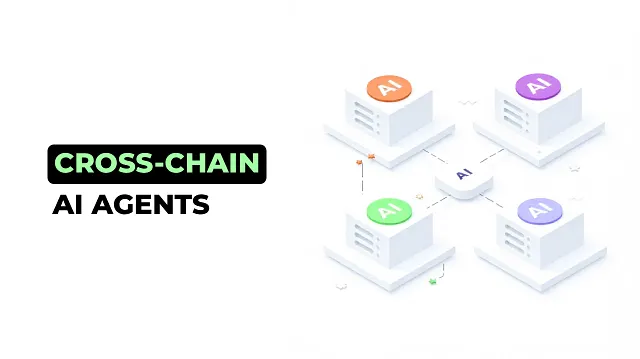
A Complete Guide to Developing Cross-Chain AI Agents In the ever-evolving landscape of Web3 and artificial intelligence (AI), one innovation stands out for its transformative potential — Cross-Chain AI Agents. These intelligent, autonomous systems are designed to operate seamlessly across multiple blockchain networks, enabling true interoperability between decentralized ecosystems. Traditionally, AI and blockchain have existed in parallel realms — AI handling data-driven automation, while blockchain ensures trust, transparency, and decentralization. However, as Web3 matures, these technologies are converging. The emergence of Cross-Chain AI Agents represents a new era of decentralized intelligence, where smart agents can move assets, share data, and make autonomous decisions across various blockchain networks like Ethereum, Solana, Polygon, BNB Chain, and Polkadot. This guide provides a comprehensive, step-by-step overview of how to develop Cross-Chain AI Agents from concept and architecture to implementation and deployment. What Are Cross-Chain AI Agents? Cross-Chain AI Agents are intelligent, autonomous entities capable of performing tasks, executing smart contracts, and making data-driven decisions across multiple blockchain networks. Unlike traditional agents limited to a single chain, these systems are equipped with interoperability protocols that allow them to communicate, transact, and coordinate between different decentralized ecosystems. In essence, they merge AI-driven automation with cross-chain interoperability, resulting in agents that can manage DeFi operations, data exchange, digital identity, and decentralized governance without manual intervention. Why Cross-Chain AI Agents Matter in 2025 and Beyond Interoperability The biggest challenge in blockchain is network isolation. Cross-chain AI agents bridge this gap, enabling smooth communication and transaction flow between multiple chains. Automation in DeFi and Web3 Agents can autonomously perform yield farming, liquidity balancing, or arbitrage trading across chains — making DeFi more efficient. Enhanced Scalability Offloading tasks across different blockchains optimizes performance and reduces congestion on any single network. Smarter Decision-Making AI models embedded in agents analyze multi-chain data, helping in predictive analytics, risk management, and asset optimization. Trustless Execution Blockchain ensures that agent actions are transparent, verifiable, and immutable — eliminating the need for centralized intermediaries. Core Components of Cross-Chain AI Agents Building Cross-Chain AI Agents involves combining various technological layers. Let’s break them down:

  1. AI Core / Intelligence LayerThis layer is responsible for processing data, learning, and decision-making. It often includes: ✦Machine learning models (TensorFlow, PyTorch) ✦Natural language processing (NLP) ✦Reinforcement learning (for adaptive behavior) ✦Predictive analytics for on-chain data
  2. Blockchain Integration LayerThis enables interaction with multiple chains using: ✦Interoperability protocols like Cosmos IBC, Polkadot Parachains, ✦LayerZero, or Chainlink CCIP. ✦Smart contracts that allow automated asset transfers or data exchange between chains. ✦Bridges and oracles that provide cross-chain data and liquidity flow.
  3. Smart Contract LayerThis handles the logic behind the agent’s operations: ✦Executes pre-defined conditions (e.g., “If token price drops by 5%, move liquidity”) ✦Controls fund movement securely ✦Records agent actions on-chain for auditability
  4. Communication LayerAI agents need real-time communication to function effectively. This involves: ✦Message passing protocols (XMTP, Waku) ✦Decentralized storage systems (IPFS, Arweave) ✦APIs that enable cross-chain coordination
  5. Security LayerAs agents act autonomously across networks, security is paramount: ✦Use of zero-knowledge proofs (ZKPs) for private computation ✦Multi-signature wallets for secure transactions ✦Decentralized identity (DID) systems for authentication Step-by-Step Process to Develop Cross-Chain AI Agents Step 1: Define Purpose and Use CaseBefore development, define your agent’s objective: DeFi Arbitrage Agent: Moves assets across blockchains to exploit price differences. Data Exchange Agent: Shares verified data between decentralized apps. Governance Agent: Participates in DAO voting across multiple ecosystems. NFT Cross-Chain Agent: Manages NFTs across marketplaces and blockchains. Having a clear purpose helps in choosing the right architecture and tools. Step 2: Choose a Cross-Chain Framework To enable multi-chain operations, select an interoperability framework: Cosmos IBC (Inter-Blockchain Communication): Enables cross-chain message passing. Polkadot Parachains: Provides shared security and seamless interoperability. LayerZero Protocol: Offers low-latency cross-chain communication. Chainlink CCIP (Cross-Chain Interoperability Protocol): Facilitates secure messaging and data sharing between chains. Your choice depends on the agent’s function — real-time DeFi execution, governance, or data transfer. Step 3: Develop the AI Engine Use AI frameworks to power the intelligence behind your agent: TensorFlow / PyTorch: For predictive modeling and learning algorithms. LangChain or AutoGPT frameworks: To enable autonomous reasoning and multi-step task execution. OpenAI APIs: To integrate conversational and decision-making capabilities. Train your AI engine on both on-chain and off-chain data to help it make informed decisions. Step 4: Design Smart Contracts for Multi-Chain Execution Smart contracts are the operational backbone of Cross-Chain AI Agents. Key components: ✦Asset management contracts for liquidity or staking. ✦Execution contracts to trigger cross-chain functions. ✦Reputation contracts to rate agent performance. These contracts should be modular, auditable, and interoperable with multiple chains. Step 5: Implement Data and Token Bridges Agents must be able to transfer assets or information seamlessly. ✦Integrate token bridges like Wormhole, Multichain, or Axelar for asset movement. ✦Use oracle networks (Chainlink, Pyth) for real-world data. ✦Store metadata or training results using IPFS or Filecoin. This ensures your Cross-Chain AI Agents can access decentralized resources efficiently. Step 6: Deploy and Test in Multi-Chain Environments Testing is crucial before going live: ✦Simulate cross-chain operations in testnets (Goerli, Mumbai, Kusama). ✦Validate contract performance, agent decision accuracy, and interoperability. ✦Perform stress testing to ensure scalability and security. Once validated, deploy to mainnets with appropriate monitoring tools. Step 7: Integrate Governance and Incentives A decentralized marketplace for AI agents thrives on incentives: ✦Introduce native tokens to reward agent contributions and transactions. ✦Use staking models to ensure reliability and reduce malicious actions. ✦Implement DAO governance so the community can propose updates or new features. Step 8: Build a User Interface and SDK To make Cross-Chain AI Agents accessible, create an intuitive dashboard: ✦Display active agents, performance metrics, and transaction logs. ✦Enable users to deploy or customize their own AI agents. ✦Offer SDKs or APIs for developers to integrate new features. ✦A user-friendly interface increases adoption and trust. Key Benefits of Cross-Chain AI Agents Interoperable Ecosystem Connects multiple blockchain networks, ensuring data and value flow without barriers. Autonomous Operation Agents execute smart contracts, analyze data, and act without human intervention. Enhanced Security and Transparency Blockchain ensures that every agent action is verifiable and tamper-proof. Scalable AI Infrastructure Distributes workloads across chains for better efficiency and lower costs. Decentralized Intelligence AI models operate in a trustless, transparent environment — ensuring fairness and accountability. Use Cases of Cross-Chain AI Agents
  6. Decentralized Finance (DeFi)Agents can automate yield optimization, liquidity provision, or arbitrage trading across multiple DEXs and chains.
  7. Decentralized Data MarketsFacilitates secure, privacy-preserving data sharing between platforms like Ocean Protocol and Fetch.ai.
  8. DAO GovernanceAgents vote and execute governance decisions autonomously across multi-chain DAOs.
  9. NFT and Gaming EcosystemsAI agents manage cross-chain NFT transfers, asset tracking, and player interactions.
  10. Supply Chain and IoTSmart agents monitor logistics data across private and public blockchains, ensuring traceability and automation. Security Considerations for Cross-Chain AI Agents Security challenges increase with cross-chain operations. Address them through: Audited Smart Contracts: Prevent exploits through third-party code audits.ZK-Proofs: Protect user privacy during computations.Multi-Signature Controls: Require multiple approvals for high-value transactions.Decentralized Identity (DID): Verify and authenticate AI agent identities. By embedding these safeguards, Cross-Chain AI Agents can operate securely in complex environments. The Future of Cross-Chain AI Agents The next generation of Cross-Chain AI Agents will likely feature: ✦Self-learning capabilities using reinforcement learning on-chain. ✦Integration with DePIN (Decentralized Physical Infrastructure Networks) for real-world automation. ✦AI marketplaces where agents can buy, sell, and rent intelligence services. ✦Agent-to-Agent commerce, allowing autonomous trading between digital entities. As AI and blockchain ecosystems continue to merge, these agents will become the backbone of decentralized digital economies — powering everything from finance and logistics to metaverse and healthcare applications. Conclusion Building Cross-Chain AI Agents marks a significant step toward achieving fully interoperable, autonomous, and decentralized digital ecosystems. By combining the intelligence of AI with the trustless architecture of blockchain, developers can create agents capable of operating seamlessly across chains — driving efficiency, transparency, and scalability in Web3 applications. From developing smart contracts to deploying interoperability frameworks, the journey to building cross-chain AI agents requires a deep understanding of blockchain mechanics, AI architecture, and decentralized governance. But those who master it today will be the pioneers of tomorrow’s autonomous Web3 world — where machines collaborate, transact, and evolve across networks without human oversight.
A Complete Guide to Developing Cross-Chain AI Agents was originally published in Coinmonks on Medium, where people are continuing the conversation by highlighting and responding to this story

Author: Medium
Netcoins Names SOL Strategies for Solana Staking in Canada

Netcoins Names SOL Strategies for Solana Staking in Canada

The post Netcoins Names SOL Strategies for Solana Staking in Canada appeared on BitcoinEthereumNews.com. Netcoins selects SOL Strategies as its Solana validator partner, migrating retail staking under an institutional, regulated setup in Canada. The move strengthens regulated Solana staking in Canada for retail users while aligning with BIGG Digital Assets’ compliance footprint. SOL trades weak near support; RSI sits in high-30s, leaving room for a reflex bid if momentum flips. SOL Strategies Inc. confirmed a new institutional staking partnership with Netcoins, the fully regulated Canadian crypto platform owned by BIGG Digital Assets  Under the agreement, Netcoins migrates its Solana staking to SOL Strategies’ enterprise validator infrastructure, aiming to improve yields without stepping outside Canadian compliance guardrails. For Netcoins’ retail customers, that means staking stays simple while custody and reporting remain within a regulated framework. Why this matters for Solana participants Regulated exchanges increasingly want reliable validator partners that can operate at institutional standards. SOL Strategies says its validator network already serves a large wallet base and supports institutional clients, positioning it to standardize Solana staking operations for platforms that must evidence compliance. Despite the market downturn, SOL Strategies continues to expand its validator footprint. The company’s network supports retail and institutional staking clients, including notable partners such as Ark Invest’s Digital Asset Revolutions Fund and Solana Mobile.  Related: Hong Kong Approves ChinaAMC Solana ETF As 23 U.S. Spot Filings Stack Up Additionally, SOL Strategies maintains white-label validator partnerships with emerging Web3 brands like Pudgy Penguins, signaling a diversified approach to staking revenue streams. SOL Price context and near-term setup Meanwhile, Solana’s market performance remains under pressure. The token trades around $185, marking 4% drop over a week. This correction reflects a broader risk-off sentiment in the crypto market, although Solana maintains a strong market capitalization exceeding $100 billion. Technical Outlook Suggests Near-Term Recovery Potential Market indicators point to potential stabilization for Solana. The MACD…

Author: BitcoinEthereumNews
Blazpay Shakes Hands with Astra Network to Merge Wearable Data with DeFi Innovation

Blazpay Shakes Hands with Astra Network to Merge Wearable Data with DeFi Innovation

Blazpay and Astra Network merging wearable data with DeFi to enable the cross-chain rewards, seamless settlements, and tokenized digital assets.

Author: Blockchainreporter
Polygon Vs. Ethereum? That’s Something New! or Maybe Not?

Polygon Vs. Ethereum? That’s Something New! or Maybe Not?

Polygon is a sidechain, not a rival to Ethereum. Polygon team has done nothing to filter out spam on the network. The network has 117 pages of NFTs, compared to 12 on Etherum...

Author: Hackernoon