Index

A crypto Index provides a way for investors to gain diversified exposure to a specific basket of digital assets through a single tokenized product. These indices often track specific sectors, such as DeFi, DePIN, or RWA, and are automatically rebalanced via smart contracts. In 2026, AI-managed thematic indices have become the gold standard for passive investing, allowing users to track the "blue chips" of the Web3 economy without manual portfolio management. This tag covers index methodology, rebalancing frequency, and the benefits of diversified crypto baskets.

25385 Articles
Created: 2026/02/02 18:52
Updated: 2026/02/02 18:52
Bitcoin Hyper Nears $13M in Presale

Bitcoin Hyper Nears $13M in Presale

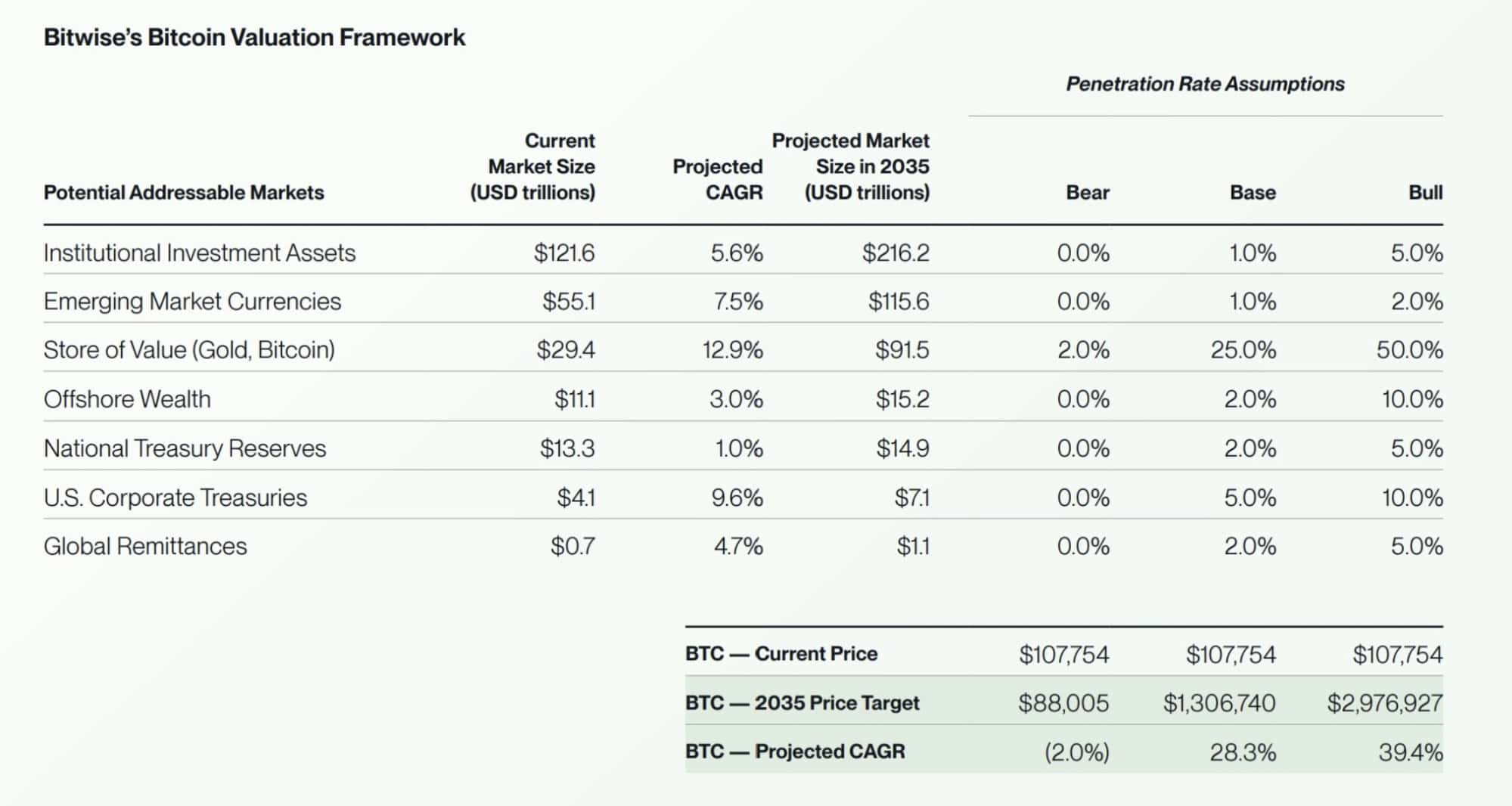
The post Bitcoin Hyper Nears $13M in Presale appeared on BitcoinEthereumNews.com. Bitcoin Hyper boldly reimagines Bitcoin as the new Web3 hub, tapping into the Solana Virtual Machine (SVM) to build a Layer 2 that brings speed, smart contracts, and cross-chain utility to Bitcoin without sacrificing safety. Why Bitcoin Needs More Than Digital Gold Status Bitcoin is often called “digital gold” because of its massive value appreciation over the years. But this also reveals Bitcoin’s biggest weakness. It can’t do much beyond sitting pretty in a wallet. To put it simply, Bitcoin is stupendously slow. The network can only handle about seven transactions per second. By comparison, Visa and Solana process thousands per second. This means each Bitcoin transaction can take several minutes to confirm. If the network gets busy, you can wait much longer and pay much higher fees, sometimes over $10 just to send as little as $20. This makes everyday payments with Bitcoin impractical. For developers, Bitcoin is hopeless. It doesn’t have smart contract support, and can’t power apps, lending platforms, NFTs, or games like other blockchains. So it’s no surprise that most of the innovation has moved to other chains like Ethereum and Solana. Bitcoin remains valuable owing to its place in history, but it has been left behind in the Web3 race. The Stars Are Aligning for Bitcoin And yet, despite its shortcomings, the long-term case for Bitcoin has never been louder. Coinbase CEO Brian Armstrong, Ark Invest’s Cathie Wood, and Block Inc.’s Jack Dorsey have all projected $BTC could hit $1M or more by 2030. The latest forecast comes from Bitwise, which expects Bitcoin to trade near $1.3M by 2035. Bitcoin Valuation Framework. Source: Bitwise That confidence is backed by real action in the market. Institutional adoption is growing, with traditional finance firms expanding their crypto exposure. On the regulatory side, the SEC’s Project Crypto and…

Author: BitcoinEthereumNews
Fed’s favorite inflation gauge surges 0.4% in July, cementing a September rate cut

Fed’s favorite inflation gauge surges 0.4% in July, cementing a September rate cut

The U.S. economy just gave the Federal Reserve its next move. The Personal Consumption Expenditures price index, the central bank’s preferred tool for tracking inflation, climbed 0.4% in July, confirming that pricing pressures haven’t gone away. The data came directly from the U.S. Bureau of Economic Analysis and now feeds into a broader story: the […]

Author: Cryptopolitan
Institutions Seek High-Yield Bitcoin Returns—BitFuFu Cloud Mining Delivers

Institutions Seek High-Yield Bitcoin Returns—BitFuFu Cloud Mining Delivers

This content is provided by a sponsor. Institutional interest in Bitcoin has entered a new phase in 2025, propelled by landmark developments that firmly integrated the cryptocurrency into mainstream finance. The start of U.S. President Donald Trump’s second term brought a wave of pro-crypto policy shifts in Washington, while record-breaking inflows into the spot Bitcoin […]

Author: Bitcoin.com News
Layer-2 Magic: Bitcoin Hyper Presale Rockets Toward $13M

Layer-2 Magic: Bitcoin Hyper Presale Rockets Toward $13M

Bitcoin Hyper ($HYPER) is about to cross $13M in its hot presale, reflecting growing demand for a faster and more versatile Bitcoin.

Author: Brave Newcoin
PCE inflation report July 2025:

PCE inflation report July 2025:

The post PCE inflation report July 2025: appeared on BitcoinEthereumNews.com. Inflation edged higher in July, according to the Federal Reserve’s preferred inflation measure, indicating that President Donald Trump’s tariffs are weaning their way through the U.S. economy. The personal consumption expenditures price index showed that core inflation, which excludes food and energy costs, ran at a 2.9% seasonally adjusted annual rate, according to a Commerce Department report Friday. That was up 0.1 percentage point from the June level but in line with the Dow Jones consensus forecast. On a monthly basis, the core PCE index increased 0.3%, also in line with expectations. The all-items index showed the annual rate at 2.6% and the monthly gain at 0.2%, also hitting the consensus outlook. The Fed uses the PCE price index as its primary forecasting tool. Though it watches both numbers, policymakers consider core inflation to be a better indicator of longer-term trends as it excludes the volatile gas and groceries figures. Central bankers target inflation at 2%, so Friday’s report shows the economy still a distance from where the Fed feels comfortable. Nevertheless, markets expect the Fed to resume lowering its benchmark interest rate when policymakers convene next month. Fed Governor Christopher Waller reiterated his support for a cut in a speech Thursday, saying he would entertain a larger move if labor market data continue weakening. Along with the inflation moves, consumer spending increased 0.5% on the month, in line with forecasts and indicative of strength despite the higher prices. Personal income accelerated 0.4%, rounding out a report that saw all figures hit the consensus outlook. Stock market futures remained negative after the release while Treasury yields held gains. This is breaking news. Please refresh for updates. Source: https://www.cnbc.com/2025/08/29/pce-inflation-report-july-2025.html

Author: BitcoinEthereumNews
U.S. consumer spending grew steadily in July, but inflationary pressures remained stubborn

U.S. consumer spending grew steadily in July, but inflationary pressures remained stubborn

PANews reported on August 29th that, according to Jinshi, despite persistently high inflation, U.S. consumer spending grew at its fastest pace in four months in July, demonstrating resilient demand. Data from the U.S. Bureau of Economic Analysis on Friday showed that inflation-adjusted consumer spending rose 0.3% month-over-month. Income growth fueled the increase, with goods consumption being the primary driver. The core personal consumption expenditures price index, excluding food and energy, rose 0.3% month-over-month, bringing the year-over-year increase to 2.9%, the highest level since February.

Author: PANews
The U.S. core PCE price index rose by 2.9% in July, the highest level since February 2025.

The U.S. core PCE price index rose by 2.9% in July, the highest level since February 2025.

PANews reported on August 29 that according to Jinshi, the annual rate of the U.S. core PCE price index in July was 2.9%, the highest since February 2025. The expected rate was 2.90%, and the previous value was 2.80%. The U.S. core PCE price index rose by 0.3% month-on-month in July, in line with expectations of 0.30% and the previous value of 0.30%.

Author: PANews
XRP crashes 5% in a day erasing $10 billion

XRP crashes 5% in a day erasing $10 billion

The post XRP crashes 5% in a day erasing $10 billion appeared on BitcoinEthereumNews.com. XRP price crashed more than 5% in the past 24 hours, erasing $10 billion in market capitalization as technical weakness and mixed ETF sentiment weighed on the token. The price dropped to $2.84, down from $3.05 support and below the $3 psychological threshold, with the decline pushed XRP’s market cap from $179.82 billion to $169.72 billion, underperforming the broader crypto market’s 3.35% decline over the same period. XRP 1-day market cap chart. Source: CoinMarketCap Technical indicators confirm the bearish shift. XRP’s MACD histogram printed at –0.0146, while the relative strength index (RSI) fell to 46.58, signaling downside momentum. The breakdown also triggered $113 million in long liquidations, according to CoinMarketCap’s community data. $2.88 is the next key Fibonacci retracement level (78.6%). A sustained move below $2.75, the swing low, could open the door to a deeper correction. Crypto trading expert weighs in The intraday slide also arrived amid a public forecast shift from on-chain analyst Ali Martinez.  On August 25, Martinez posted on X that “it won’t take long” before XRP returned to $3.70, a call Finbold noted looked unlikely at the time with the token trading below $3, pointing out that it was much more likely for XRP to trade at $2.70 instead. Four days later, on August 28, Martinez wrote that “$XRP continues to retrace toward $2.83 as anticipated!” bringing his outlook in line with the prevailing downside momentum as price action gravitated toward that level. The selloff follows a week of mixed sentiment around potential XRP spot ETF approval. While CME XRP futures open interest recently crossed $1 billion in record time, optimism has been tempered by broader market weakness and uncertainty over regulatory decisions. Source: https://finbold.com/xrp-crashes-5-in-a-day-erasing-10-billion/

Author: BitcoinEthereumNews
Crypto Market Displays Mixed Signals Amid Growing Volatility

Crypto Market Displays Mixed Signals Amid Growing Volatility

Crypto market shows mixed signals with rising volatility as Bitcoin ($BTC) and Ethereum ($ETH) dip while altcoin gainers surge, and DeFi TVL records growth.

Author: Blockchainreporter
US Dollar’s Pivotal Moment: Decoding PCE Inflation’s Impact

US Dollar’s Pivotal Moment: Decoding PCE Inflation’s Impact

BitcoinWorld US Dollar’s Pivotal Moment: Decoding PCE Inflation’s Impact In the dynamic world of cryptocurrency, understanding broader macroeconomic trends is paramount. While digital assets often carve their own path, they are not immune to the gravitational pull of traditional markets. Today, all eyes are on the US Dollar’s strength as a pivotal economic indicator looms large: the Personal Consumption Expenditures (PCE) inflation report. This crucial data release has the power to reshape market sentiment, influencing everything from global currencies to your crypto portfolio. Let’s delve into what’s at stake and how the dollar’s performance could signal significant shifts. What’s Driving US Dollar Strength Amidst Uncertainty? The US Dollar strength has been a persistent theme in recent times, often acting as a safe haven during periods of global economic uncertainty. However, its trajectory is rarely straightforward. Ahead of the critical PCE inflation report, the dollar has shown a modest upward trend, reflecting cautious optimism or perhaps simply a flight to quality as investors brace for new data. This short-term resilience, however, is juxtaposed against a broader market expectation of a potential monthly decline, signaling a complex interplay of forces at play. Several factors contribute to the dollar’s current stance: Interest Rate Differentials: The Federal Reserve’s relatively higher interest rates compared to other major central banks continue to make dollar-denominated assets attractive. Global Economic Slowdown: Concerns over economic growth in Europe and China often push investors towards the perceived safety of the US dollar. Market Positioning: Traders adjusting their positions ahead of major economic announcements can create short-term volatility and upward pressure. Yet, the underlying narrative suggests a potential weakening. The market has largely priced in future rate cuts by the Federal Reserve, which could erode the dollar’s yield advantage. The upcoming PCE data will be instrumental in confirming or challenging these expectations, directly impacting the dollar’s medium-term outlook. Decoding the PCE Inflation Report: Why It Matters to the Federal Reserve At the heart of the current market anticipation is the PCE inflation report. Unlike the more commonly cited Consumer Price Index (CPI), the Personal Consumption Expenditures price index is the Federal Reserve’s preferred measure of inflation. This preference stems from several key characteristics: Broader Coverage: PCE covers a wider range of goods and services than CPI. Adaptive Weighting: PCE adjusts for changes in consumer behavior, reflecting when consumers substitute cheaper alternatives for more expensive items. This makes it a more accurate gauge of actual spending patterns. Inclusion of Employer-Sponsored Healthcare: PCE includes costs paid by employers on behalf of employees, offering a more comprehensive view of economic activity. The core PCE, which strips out volatile food and energy prices, is particularly scrutinized as it provides a clearer picture of underlying inflationary pressures. A higher-than-expected PCE reading could signal persistent inflation, potentially pushing the Federal Reserve to maintain a tighter monetary policy for longer. Conversely, a softer reading might bolster arguments for earlier rate cuts, significantly impacting the US Dollar strength and global markets. Here’s a quick comparison between CPI and PCE: Feature Consumer Price Index (CPI) Personal Consumption Expenditures (PCE) Scope Household spending on goods and services Broader, includes non-profit institutions and employer-sponsored healthcare Weighting Fixed basket of goods and services Dynamically adjusts for consumer substitution Source Survey of households Survey of businesses How Does the PCE Inflation Report Influence Federal Reserve Policy? The Federal Reserve policy framework places immense emphasis on the PCE inflation report. As the central bank’s primary gauge for price stability, the PCE data directly informs their decisions regarding interest rates and quantitative easing/tightening. The Fed has a dual mandate: to achieve maximum employment and maintain price stability (typically targeting 2% inflation). When inflation deviates significantly from this target, the Fed adjusts its monetary policy tools. A higher-than-expected PCE figure would suggest that inflation is proving more stubborn than anticipated. This scenario could lead the Federal Reserve to: Maintain Current Rates: Keep the federal funds rate at its elevated level for a longer duration, extending the “higher for longer” narrative. Delay Rate Cuts: Postpone any planned rate cuts, which are currently priced into market expectations for later in the year. Signal Future Tightening: In an extreme case, if inflation were to re-accelerate, the Fed might even hint at further rate hikes, though this is a less likely scenario given current trends. Conversely, a PCE report showing inflation cooling faster than expected would provide the Fed with greater flexibility to consider rate cuts sooner. Such a move would be aimed at preventing an economic slowdown and supporting growth. Traders and investors meticulously analyze every nuance of the PCE report, as it offers a direct window into the future direction of US monetary policy, significantly impacting the Forex market analysis and beyond. Navigating the Forex Market Analysis: What Does PCE Mean for Currency Pairs? For participants in the Forex market analysis, the PCE inflation report is a seismic event. The dollar’s reaction to this data will dictate the movement of major currency pairs globally. A stronger dollar, driven by hawkish Fed expectations, typically sees the USD gain against other currencies, while a weaker dollar suggests the opposite. Consider these potential scenarios and their implications for key currency pairs: PCE Higher Than Expected (Hawkish Outcome): Impact on USD: Stronger, as higher inflation could mean delayed Fed rate cuts or even a hawkish surprise. EUR/USD: Likely to fall, as the Euro weakens against a stronger dollar. USD/JPY: Likely to rise, as the dollar strengthens against the Japanese Yen, which typically benefits from a dovish Fed. GBP/USD: Likely to fall. PCE Lower Than Expected (Dovish Outcome): Impact on USD: Weaker, as lower inflation strengthens the case for earlier Fed rate cuts. EUR/USD: Likely to rise, as the Euro gains against a weaker dollar. USD/JPY: Likely to fall, as the Yen strengthens against a weaker dollar. GBP/USD: Likely to rise. Traders will be scrutinizing not just the headline PCE number but also the core PCE, month-over-month, and year-over-year figures. Divergences from consensus forecasts will trigger immediate market reactions. Understanding these dynamics is crucial for anyone involved in currency trading, providing valuable context for their strategies and risk management. Broader Economic Data Impact: Ripple Effects on Global Markets and Crypto The ripple effects of the PCE inflation report extend far beyond the Forex market, influencing the broader economic data impact on global financial markets, including the volatile cryptocurrency space. When the US dollar strengthens due to hawkish Fed expectations, it can create headwinds for riskier assets. This is because a stronger dollar often implies tighter global financial conditions, making it more expensive for international borrowers to repay dollar-denominated debt and reducing liquidity. Here’s how the PCE outcome can influence other markets: Cryptocurrencies: A stronger dollar and higher interest rates can reduce investor appetite for speculative assets like Bitcoin and altcoins. Investors might shift capital from crypto to less risky, yield-bearing traditional assets. Conversely, a weaker dollar and the prospect of rate cuts could inject liquidity and boost crypto valuations. Commodities: Gold, often seen as an inflation hedge or safe haven, typically has an inverse relationship with the dollar. A stronger dollar can depress gold prices, while a weaker dollar can support them. Oil prices can also be affected, as a stronger dollar makes oil more expensive for non-dollar holders, potentially dampening demand. Equity Markets: US equity markets can react to PCE data based on its implications for corporate earnings and economic growth. Persistent high inflation or aggressive Fed tightening can weigh on stock valuations, especially growth stocks. The interconnectedness of these markets means that the PCE report is not just a US statistic; it’s a global market driver. Investors across all asset classes, including crypto, must pay close attention to this key economic release to anticipate shifts in market sentiment and adjust their portfolios accordingly. The challenge lies in accurately predicting market reactions and managing the inherent volatility that follows such significant data releases. As the market braces for the Personal Consumption Expenditures (PCE) inflation report, the future trajectory of the US Dollar strength hangs in the balance. This pivotal economic indicator is not merely a number; it’s a crucial determinant for Federal Reserve policy, directly influencing interest rates and, by extension, global capital flows. Our Forex market analysis shows that whether the PCE inflation report comes in higher or lower than expected, its economic data impact will reverberate across currency pairs, commodity markets, and even the cryptocurrency ecosystem. For investors, staying informed and adapting strategies based on these macro shifts is paramount to navigating the complex financial landscape. The coming report will undoubtedly provide a clearer picture of the inflation outlook and the Fed’s next steps, offering both challenges and opportunities for vigilant market participants. To learn more about the latest Forex market trends, explore our article on key developments shaping the US Dollar and global interest rates. This post US Dollar’s Pivotal Moment: Decoding PCE Inflation’s Impact first appeared on BitcoinWorld and is written by Editorial Team

Author: Coinstats