Lending

Lending protocols form the backbone of the decentralized money market, allowing users to lend or borrow digital assets without intermediaries. Using smart contracts, platforms like Aave and Morpho automate interest rates based on supply and demand while requiring over-collateralization for security. The 2026 lending landscape features advanced permissionless vaults and institutional-grade credit lines. This tag covers the evolution of capital efficiency, liquidations, and the integration of diverse collateral types, including LSTs and tokenized RWAs.

16270 Articles
Created: 2026/02/02 18:52
Updated: 2026/02/02 18:52

Deep Dive into AgentLISA: The Critical Security Play You Can’t Miss in the AI Era

Deep Dive into AgentLISA: The Critical Security Play You Can’t Miss in the AI Era

The Watershed Moment That Changed Blockchain Security Forever Singapore – Blockman PR – December 2025 marked a turning point. Anthropic’s research team published findings that sent shockwaves through crypto: AI systems could successfully exploit smart contract vulnerabilities with 55.88% accuracy, simulating $4.6 million in potential theft from real-world contracts. The implications were existential. If AI […] The post Deep Dive into AgentLISA: The Critical Security Play You Can’t Miss in the AI Era appeared first on TechBullion.

Author: Techbullion
PNC becomes first top-10 US bank to offer Bitcoin trading through Coinbase

PNC becomes first top-10 US bank to offer Bitcoin trading through Coinbase

The post PNC becomes first top-10 US bank to offer Bitcoin trading through Coinbase appeared on BitcoinEthereumNews.com. PNC Bank, a US banking giant with more than $569 billion in assets under management (AUM), has embedded spot Bitcoin trading into its private banking platform, marking a distinct pivot in the institutional adoption cycle. This makes it the first top-10 US lender to allow clients to buy, sell, and hold digital assets directly alongside their checking accounts. The integration, powered by a partnership with Coinbase, arrives nearly two years after the launch of spot Bitcoin ETFs fundamentally altered the market’s structure. Since early 2024, products from BlackRock and Fidelity have dominated flows by offering low-fee, liquid exposure wrapped in a familiar brokerage structure. PNC is offering an alternative route. They are wagering that mass-affluent and high-net-worth clients will value the operational cohesion of a single banking dashboard over the razor-thin efficiency of an ETF. William S. Demchak, PNC’s chairman and CEO, said the bank is positioning Bitcoin not as an outlier asset requiring a separate app, but as a component of a holistic financial life. He added: “As client interest in digital assets continues to grow, our responsibility is to offer secure and well-designed options that fit within the broader context of their financial lives.” The elasticity of demand The immediate question for market observers is where this new offering fits in the existing distribution map. Spot ETFs have successfully commoditized Bitcoin exposure, driving fees down to the 20-basis-point range. Historically, bank-integrated trading has operated under a different economic logic. While PNC has not disclosed its fee schedule, bank-facilitated access to volatile asset classes typically carries a premium—a cost borne by the client in exchange for convenience and integration. This becomes a live experiment in how far convenience can stretch pricing power. If PNC’s wealth clients adopt the service despite costs that may exceed ETF access, it would imply…

Author: BitcoinEthereumNews
KindlyMD Turns to Kraken as Fourth Provider for BTC-Backed $210M Loan at 8%

KindlyMD Turns to Kraken as Fourth Provider for BTC-Backed $210M Loan at 8%

The post KindlyMD Turns to Kraken as Fourth Provider for BTC-Backed $210M Loan at 8% appeared on BitcoinEthereumNews.com. KindlyMD (NAKA), a health-care company that holds bitcoin BTC$92,003.57 as a treasury asset, said it agreed to borrow $210 million from crypto exchange Kraken to repay an existing loan from Antalpha Digital that itself was used to repay a credit line from Two Prime Lending. The one-year loan signed by KindlyMD’s subsidiary Nakamoto Holdings matures on Dec. 4, 2026 and bears an annual interest rate of 8%, KindlyMD said in an SEC filing Tuesday. The agreement allows it to borrow fiat or digital assets “from time to time” under individual loan term sheets. The SEC filing notes that the new credit is backed entirely by bitcoin, with the borrower required to post collateral of not less than $323.4 million in value, about 3,500 BTC at current prices. KindlyMD, the 19th-largest corporate bitcoin holder, owns 5,398, according to BitcoinTreasuries.net Kraken becomes the latest in a sequence of lenders the company has relied on this year, following previous financings involving Yorkville Advisors, Two Prime, and Antalpha Digital. NAKA is trading at $0.46, down 99% from its all time high. Source: https://www.coindesk.com/markets/2025/12/10/kindlymd-turns-to-kraken-as-fourth-provider-for-bitcoin-backed-usd210m-loan-at-8

Author: BitcoinEthereumNews
PNC Bank just launched direct Bitcoin trading, but one specific restriction effectively holds your digital assets hostage

PNC Bank just launched direct Bitcoin trading, but one specific restriction effectively holds your digital assets hostage

PNC Bank, a US banking giant with more than $569 billion in assets under management (AUM), has embedded spot Bitcoin trading into its private banking platform, marking a distinct pivot in the institutional adoption cycle. This makes it the first top-10 US lender to allow clients to buy, sell, and hold digital assets directly alongside […] The post PNC Bank just launched direct Bitcoin trading, but one specific restriction effectively holds your digital assets hostage appeared first on CryptoSlate.

Author: CryptoSlate
Mutuum Finance (MUTM) Heats Up Ahead of V1 Testnet Launch, Presale Phase 6 Now 95% Sold Out

Mutuum Finance (MUTM) Heats Up Ahead of V1 Testnet Launch, Presale Phase 6 Now 95% Sold Out

The countdown to the Mutuum Finance V1 testnet launch is sending excitement surging through the market as the crypto cements its position as the new crypto coin to watch in 2025. With Presale Phase 6 now 95% sold out and more than 18,400 investors already onboard, the project is rapidly gaining traction among analysts searching […]

Author: Cryptopolitan
Singapore Tops 2025 Global Crypto Rankings as RWA Tokenization Jumps 63%: Report

Singapore Tops 2025 Global Crypto Rankings as RWA Tokenization Jumps 63%: Report

Singapore has taken the top position in Bybit’s World Crypto Rankings 2025, strengthening its status as one of the most active and structured digital-

Author: CryptoNews
Folks Finance announces xChain V2 with $10m+ incentives: Scaling crosschain DeFi into mainstream use

Folks Finance announces xChain V2 with $10m+ incentives: Scaling crosschain DeFi into mainstream use

The post Folks Finance announces xChain V2 with $10m+ incentives: Scaling crosschain DeFi into mainstream use appeared on BitcoinEthereumNews.com. Folks Finance to launch xChain V2 in H1 2026 with $10M in incentives for crosschain lending users. V2 upgrade brings simpler crosschain DeFi, new strategy vaults, and EVM + non-EVM support. Mobile app integration to enable debit-card borrowing while keeping collateral exposure. Singapore, December 10, 2025 – Folks Finance, the leading crosschain lending protocol backed by Coinbase Ventures, Jump, ParaFi, and Borderless Capital, is entering its next development phase with the release of xChain V2, scheduled for H1 2026. To support the rollout, Folks Finance will allocate 1 million FOLKS (valued at ~$10M at the time of publishing) toward incentives to fuel unified crosschain pools and efficient strategy vaults, rewarding users who explore the upgraded system as it scales toward a $1 billion TVL target. V2 builds on the success of the FOLKS token launch and the first iteration of true crosschain lending with xChain, taking the model to a much wider audience by removing the complexity traditionally tied to crosschain DeFi. The upgrade brings higher efficiency, support for both EVM and non-EVM ecosystems, and new vault-based crosschain loans that enable curated, crosschain yield strategies from a single interface. As part of this vision, xChain V2 will also connect with the upcoming Folks Mobile app to enable debit-card-based borrowing: users can borrow against their collateral, keep their exposure and yield, and spend the borrowed balance directly in the real world. The goal is simple: turn advanced DeFi mechanics into tools anyone can use, both onchain and in everyday life. The FOLKS token will also expand its utility alongside the V2 launch, with further details to be shared as development progresses. xChain V2 is currently in active development. With over a year as the leading crosschain lending protocol on mainnet and extensive market experience across eight chains, Folks Finance is positioned…

Author: BitcoinEthereumNews
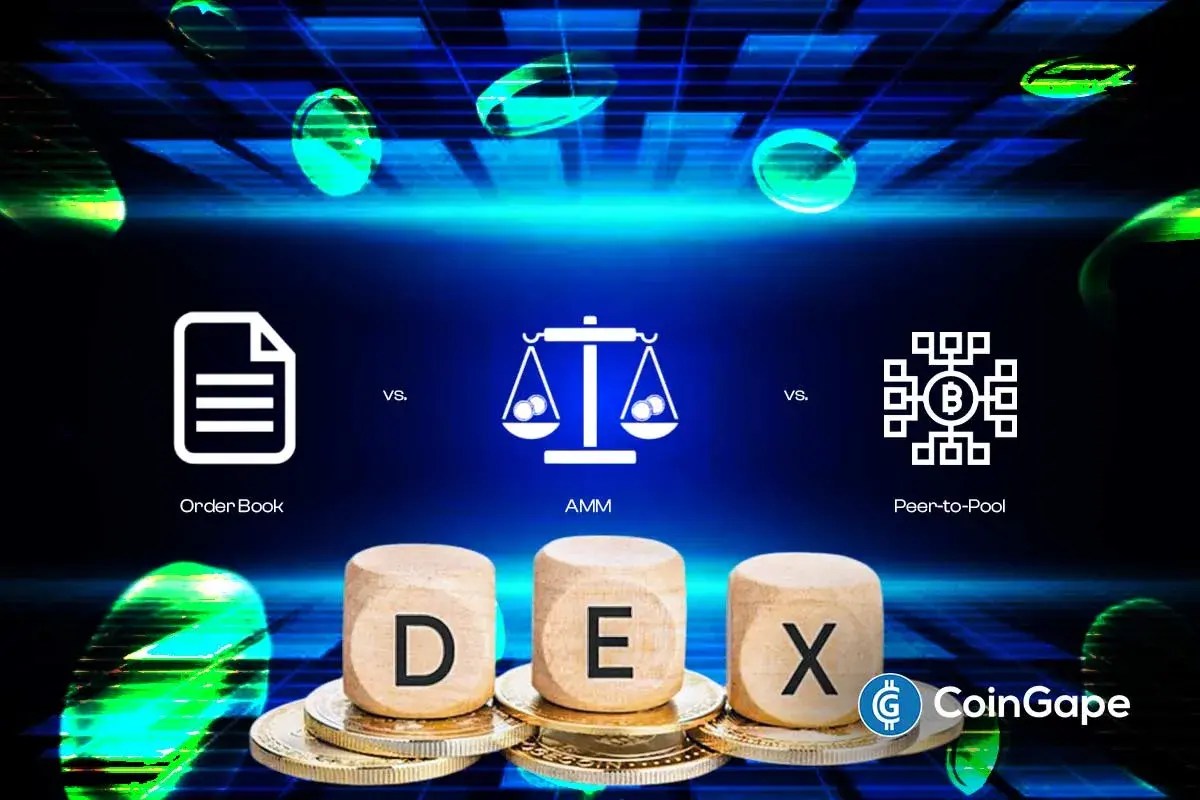
Order Book vs. AMM vs. Peer-to-Pool – DEX Models Explained

Order Book vs. AMM vs. Peer-to-Pool – DEX Models Explained

The post Order Book vs. AMM vs. Peer-to-Pool – DEX Models Explained appeared on BitcoinEthereumNews.com. As crypto investors shift to non-custodial trading platforms, decentralized exchanges continually experiment with new methods to manage trades and enhance security, user experience, and cost efficiency.  The primary liquidity models are strategies used by decentralized exchanges to handle users’ trade requests and execute asset swaps efficiently. How a Dex manages liquidity and handles trade requests is essential to its general operation. Key Takeaways Decentralized trading platforms use different models to create a liquidity layer for traders to execute trades freely. Popular models are the Order Book, AMM, and Peer-to-pool liquidity models. Order Books are similar to centralized exchange trading engines, while AMM Dexs use liquidity pools and an Automated Market Market to serve traders. The Peer-to-pool or intent-based model gamifies trading on a Dex Each model scores a point in terms of usability, security, and cost-efficiency. In this article, we review and compare the three major liquidity models used by centralized exchanges. Liquidity models contribute significantly to an exchange’s cost-efficiency, security, privacy, and overall user experience. AMM Dexs are unarguably the most popular, but other liquidity models are rising to fame. First, let’s understand the primary liquidity models used by contemporary decentralized exchanges. Understanding the Different Decentralized Exchange Models Here, let’s explain the different Dex liquidity models. 1. Order Book Model The order book model is similar to the trading system used on centralized crypto exchanges. To create an order, users specify their trading terms (the amount they wish to swap and the desired price they want their order to be settled).  A central order book holds trade requests created by users and matches the trades using a price and time priority-based system. That is, it displays the highest bid and lowest ask prices at the top, and executes trades automatically when orders are matched. This model is used by…

Author: BitcoinEthereumNews
Etherzilla’s Game-Changing Move: Acquires $21.1M Stake in Zippy Lending Platform

Etherzilla’s Game-Changing Move: Acquires $21.1M Stake in Zippy Lending Platform

BitcoinWorld Etherzilla’s Game-Changing Move: Acquires $21.1M Stake in Zippy Lending Platform In a move that underscores the accelerating maturity of crypto finance, Nasdaq-listed Etherzilla (ETHZilla) has made a strategic power play. The Ethereum-focused investor announced a significant acquisition: a 15% stake in the institutional-grade digital lending platform, Zippy. This $21.1 million deal is more than a simple transaction; it’s a bold statement about the future of […] This post Etherzilla’s Game-Changing Move: Acquires $21.1M Stake in Zippy Lending Platform first appeared on BitcoinWorld.

Author: bitcoinworld
Ethereum (ETH) Price Prediction for 2026 as This Cheap Crypto Gains Market Attention

Ethereum (ETH) Price Prediction for 2026 as This Cheap Crypto Gains Market Attention

Investors evaluating what crypto to buy now have shifted focus toward Ethereum after a turbulent week that forced the market to reassess near-term risks and long-term value. ETH has been retesting the $3,000 support area, and despite technical setbacks and intensified liquidations, participation remains high.  As traders search for the best cryptocurrency to invest in [...] The post Ethereum (ETH) Price Prediction for 2026 as This Cheap Crypto Gains Market Attention appeared first on Blockonomi.

Author: Blockonomi