Lending

Lending protocols form the backbone of the decentralized money market, allowing users to lend or borrow digital assets without intermediaries. Using smart contracts, platforms like Aave and Morpho automate interest rates based on supply and demand while requiring over-collateralization for security. The 2026 lending landscape features advanced permissionless vaults and institutional-grade credit lines. This tag covers the evolution of capital efficiency, liquidations, and the integration of diverse collateral types, including LSTs and tokenized RWAs.

15991 Articles
Created: 2026/02/02 18:52
Updated: 2026/02/02 18:52
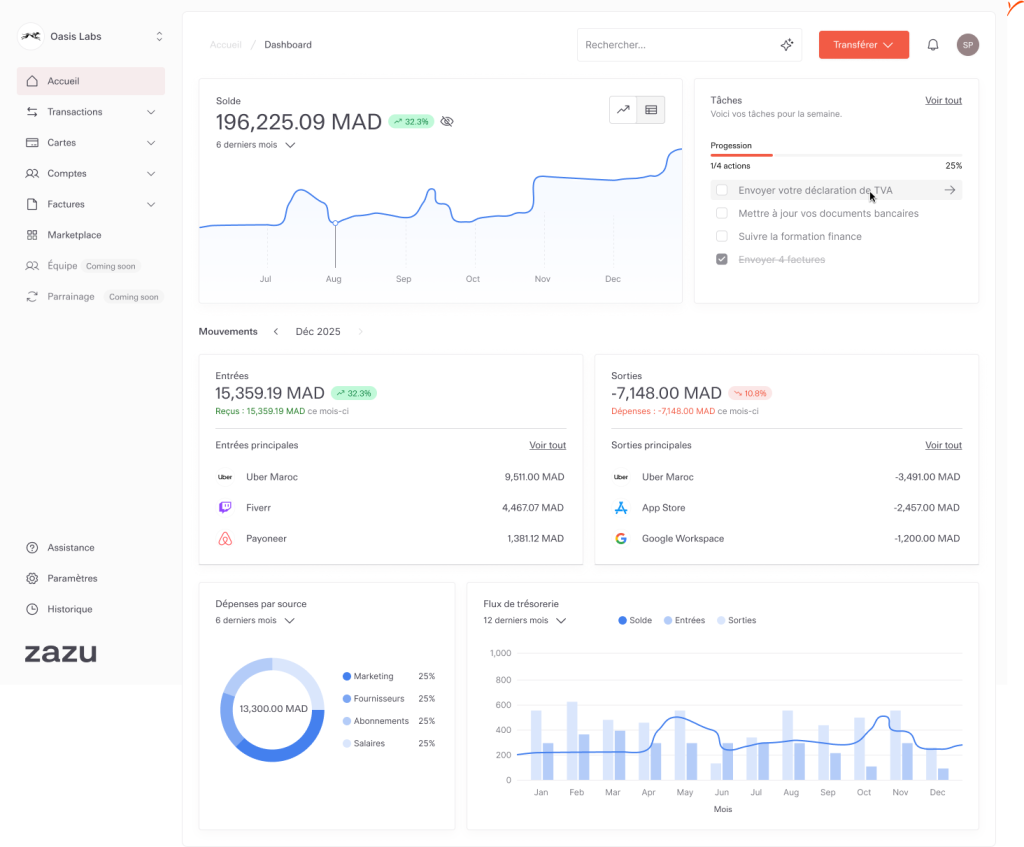
Backed by $1 million, Zazu is building a Mercury-style banking experience for African SMEs

Backed by $1 million, Zazu is building a Mercury-style banking experience for African SMEs

Zazu, a digital financial operating system designed for African small and medium-sized enterprises (SMEs), has raised $1 million in pre-seed funding to accelerate its rollout in South Africa and Morocco.

Author: Techcabal
Tokens That Do, Not Just Trade: 8LNDS Case as a Sustainable Token Shift

Tokens That Do, Not Just Trade: 8LNDS Case as a Sustainable Token Shift

The crypto market has been addicted to quick money. Every cycle produced the same formula: launch a token with a massive airdrop, create a liquidity spike, engineer an aggressive exchange listing — and watch the initial hype inflate valuations far beyond anything the underlying product could justify.  The pattern is now well-documented. ‘High-FDV, low-float’ tokens […]

Author: Cryptopolitan
BxLend Announces First Token Sale and Early Access Launch

BxLend Announces First Token Sale and Early Access Launch

BxLend, Europe’s emerging leader in regulated crypto banking, has announced its first presale round launching December 3rd, followed by the early access release of its platform on December 20th. The announcements mark a significant milestone for the project, which aims to bridge traditional banking with decentralized finance under full EU regulatory compliance. Token Sale and […] The post BxLend Announces First Token Sale and Early Access Launch appeared first on TechBullion.

Author: Techbullion
Ripple’s Singapore Approval Hits as XRP Whales Make Their Move

Ripple’s Singapore Approval Hits as XRP Whales Make Their Move

The post Ripple’s Singapore Approval Hits as XRP Whales Make Their Move appeared on BitcoinEthereumNews.com. Ripple has secured expanded regulatory approval in Singapore, strengthening its payments business in Asia just as XRP whale activity surges across spot markets. The move arrives during a challenging week for XRP’s price, but on-chain data suggests institutional-scale traders remain active. Sponsored Sponsored Ripple Gains Wider MAS Approval for Regulated Payments Ripple announced on December 1 that the Monetary Authority of Singapore (MAS) approved an expanded scope of payment activities under its Major Payment Institution (MPI) license for its subsidiary, Ripple Markets APAC Pte. Ltd. “With this approval, Ripple can broaden its regulated payment offerings and deliver greater value to customers in Singapore,” the company said in its statement. Monica Long, President of Ripple, praised MAS’s regulatory clarity. She explained that MAS has set a leading standard for regulatory clarity in the digital asset sector. This expanded license, she said, would enable Ripple to continue investing in Singapore. It would also power the firm’s capacity to build the infrastructure that financial institutions need to move money efficiently, quickly, and safely. Huge news from Singapore: https://t.co/KVxTs7IEKc The @MAS_sg has approved an expanded scope of payment activities for our Major Payment Institution license – enabling us to deliver end-to-end, fully licensed payment services to our customers in the region. 🇸🇬 — Ripple (@Ripple) December 1, 2025 The upgrade reinforces Ripple’s long-standing presence in Singapore, which has been home to its Asia-Pacific headquarters since 2017. MAS remains a global reference point for digital asset regulation, helping institutions scale adoption under clear compliance standards. Recently, MAS delayed the implementation of Basel crypto capital rules to January 2027 or later, giving banks more time to strengthen their risk and disclosure systems. Sponsored Sponsored Ripple emphasized that its payments suite, leveraging digital payment tokens (DPTs) such as RLUSD and XRP, offers fast, compliant cross-border settlement. The…

Author: BitcoinEthereumNews
Ripple Wins Singapore License To Grow XRP Use

Ripple Wins Singapore License To Grow XRP Use

The post Ripple Wins Singapore License To Grow XRP Use appeared on BitcoinEthereumNews.com. Ripple received MAS approval to expand its MPI license, enabling end-to-end crypto payment services. The upgrade allows Ripple to act as a custodian and broker for institutions, not just a payment switch. The move follows a $500M fundraising round, valuing the fintech giant at $40 billion. Ripple has cemented its status as a dominant institutional player in Asia, announcing Monday that the Monetary Authority of Singapore (MAS) has approved an expansion of its Major Payment Institution (MPI) license. The regulatory upgrade allows its subsidiary, Ripple Markets APAC, to offer a “full-stack” digital asset service, covering custody, token trading, and cross-border settlement, under a single regulated umbrella. While Ripple has had an MPI license since 2023, the expanded scope authorizes it to facilitate end-to-end payment flows using Digital Payment Tokens (DPTs) like XRP and the newly launched RLUSD stablecoin. “… This expanded license strengthens our ability to continue investing in Singapore and to build the infrastructure financial institutions need to move money efficiently, quickly, and safely,” Ripple stated. Related: Ripple’s RLUSD Secures ‘Accepted Token’ Status from Abu Dhabi Regulator Singapore License Puts Ripple’s XRPL Payments In Institutional Flow The company announced that its subsidiary based in Singapore dubbed Ripple Markets APAC Pte. Ltd., received the Major Payment  Institution (MPI) license. With this approval, institutional players in Singapore can now access the end-to-end payment solution, which Ripple provides through the XRPL blockchain. Ripple will be providing seamless access to digital payment tokens (DPTs) on the XRPL chain. The DPTs are equivalent to ERC20 tokens on the Ethereum (ETH) network.  The ability Ripple is lending to Singapore’s market will enable people in the country to experience web3-boosted growth. Ripple has enabled services related to real-time cross-border payments for more than 10 years, especially between the United States and the Latin America (LATAM) corridor.…

Author: BitcoinEthereumNews
Finfactor raises $15M in Series A funding led by WestBridge Capital

Finfactor raises $15M in Series A funding led by WestBridge Capital

The newly raised capital will support product development, expansion of its analytics capabilities and efforts to strengthen its technology stack for banks and other financial institutions.

Author: Yourstory
Strategy’s Green Dots Suggest Flexibility, Fueling Interest in $HYPER Presale

Strategy’s Green Dots Suggest Flexibility, Fueling Interest in $HYPER Presale

What to Know: Strategy’s willingness to keep Bitcoin sales ‘on the table’ reflects a broader shift toward tactical, actively managed $BTC exposure without abandoning long-term conviction. As Bitcoin’s base layer remains constrained by low throughput and high, cyclical fees, traders increasingly look to Layer 2 infrastructure as leveraged expressions of $BTC upside. Bitcoin Hyper targets Bitcoin’s speed and programmability gap with an SVM-powered Layer 2 that aims for Solana-level performance while settling to Bitcoin. When you see a long-term Bitcoin accumulator suddenly flashing ‘green dots’ instead of just quietly stacking sats, you aren’t just watching a trade, you’re watching a shift in conviction. Many saw the green dots as a sign for more Bitcoin purchases, while others saw it as buybacks or a restructuring of assets. The willingness of major players like Strategy to keep potential $BTC sales on the table signals a massive evolution in the market. Even the loudest ‘HODL forever’ thesis is now being wrapped in active risk management. For you as a trader or allocator, that nuance changes everything. If the most visible corporate-style HODLers are comfortable dialing risk up and down around a core $BTC position, it legitimizes a more tactical approach for the rest of us. It’s no longer a binary choice between ‘all spot, all the time’ or exiting to fiat. Instead, we are seeing sophisticated traders keeping their ‘hard money’ core while rotating a slice of their stack into high-beta ecosystem plays. Why? Because everyone agrees on one thing: Bitcoin’s base layer is incredible for settlement, but it is too slow (~7 TPS) and too rigid for modern apps. The market is realizing that infrastructure, scaling, and programmability layers could outgrow $BTC itself on a percentage basis in a bull cycle. Just as we saw with Ethereum’s modular stack, the real leverage often lies in the layers built on top of the base asset. This is why tactical Bitcoin exposure is drifting toward Layer-2s. Traders are looking for leveraged expressions of Bitcoin’s strength without leaving the ecosystem, hunting for the infrastructure that finally unlocks $BTC for DeFi and gaming. And this is where Bitcoin Hyper ($HYPER) enters the fold. Bitcoin Hyper: The ‘Best of Both Worlds’ Engine If you believe Bitcoin will remain the king of settlement but acknowledge it can’t host high-speed gaming or complex DeFi, then you need a high-performance execution layer. Bitcoin Hyper ($HYPER) is designed to be exactly that. It creates a fusion that combines Bitcoin’s massive liquidity and security with a real-time Solana Virtual Machine (SVM) Layer-2 for execution. By integrating the SVM, Bitcoin Hyper isn’t just trying to be faster; it’s aiming for sub-second confirmations and throughput in the thousands of transactions per second. It leans into Solana-style performance while settling back to Bitcoin. This directly solves the biggest headaches we all face with $BTC: agonizingly slow block times and fees that spike when the mempool gets clogged. Crucially, this system relies on a Canonical Bridge. This decentralized bridge is the vital link that handles $BTC transfers into the ecosystem, ensuring that assets move securely between the mainnet and the Layer 2. It positions the network not as a competitor trying to kill Bitcoin, but as a modular extension that finally makes your $BTC usable for high-speed swaps, lending, and staking. For full details, check out our ‘What is Bitcoin Hyper’ guide. The Financial Upside: Whales and ROI Potential For traders who are reading the market’s ‘green dots’ as a sign to be nimble, the financial setup for $HYPER is looking increasingly attractive. Smart money is already making significant moves to secure its position before the public catches on. We aren’t talking about small change here; we are seeing massive whale conviction. In the last months, we tracked buy-ins of $500K and $379.9K. When wallets of this size start accumulating a presale token, it’s usually a signal that they see something the retail market hasn’t fully priced in yet. Currently, the token is priced at $0.013355. However, our experts see $HYPER hitting $0.08625 by the end of 2026. If you choose to invest at today’s price, hitting that target would give you an ROI of around 545%. The presale has already raised over $28.8M, and with staking rewards at 40% the incentives are aligned for early adopters. If you want $HYPER, get it soon, as a price increase is coming. Don’t miss your chance to be part of the $HYPER revolution. Remember, this isn’t intended as financial advice, and you should always do your own research before investing. Authored by Aaron Walker, NewsBTC — https://www.newsbtc.com/news/strategy-green-bitcoin-dots-fuel-interest-bitcoin-hyper  

Author: NewsBTC
Most digital asset treasuries are bad ETFs

Most digital asset treasuries are bad ETFs

The post Most digital asset treasuries are bad ETFs appeared on BitcoinEthereumNews.com. Disclosure: The views and opinions expressed here belong solely to the author and do not represent the views and opinions of crypto.news’ editorial. The cold reality is that many digital asset treasuries, or DATs, are bad exchange-traded funds. They are struggling companies trying to bump their share price and salvage their hemorrhaging balance sheets.  Summary Many digital asset treasuries resemble weak ETFs, boosting share prices with BTC buys but lacking real operations, leaving them vulnerable compared to regulated spot ETFs for BTC, ETH, and SOL. To survive, digital asset treasuries must build genuine operational advantages: become validators, diversify beyond BTC. Strategy stands out due to its ability to fund BTC purchases through equity, but most DATcos rely on debt and face higher risk; long-term winners will be those developing real expertise and sustainable participation in crypto networks, not speculators chasing short-term bumps. This story isn’t new. In 2017, spiraling companies like the infamous “Long Island Ice Tea Company” rebranded to the “Long Island Blockchain Co” and saw their stock price rocket 300 percent. Their experiment, like the many copycats they spawned, ended in disaster. In the five years since Strategy hard-launched the digital asset treasury model with an initial purchase of 21,000 Bitcoin (BTC), some 200 other DATcos have followed suit.  Many have enjoyed early share price gains, only to descend back to earth just days later. In the words of Bitwise’s Matt Hougan, “the best DATs are doing something hard.” Differentiating from ETFs with real, operational expertise to justify their equity premium over NAV.  DATs vs ETFs The U.S. has approved spot ETFs for BTC, Ethereum (ETH), and Solana (SOL). Some include staking returns for SOL and ETH, narrowing the competitive advantage of digital asset treasuries even further. To survive in the long term, digital asset treasuries must maintain…

Author: BitcoinEthereumNews
Sony Prepares Dollar Stablecoin to Power Its Entertainment Ecosystem

Sony Prepares Dollar Stablecoin to Power Its Entertainment Ecosystem

The post Sony Prepares Dollar Stablecoin to Power Its Entertainment Ecosystem appeared on BitcoinEthereumNews.com. The bank applied for a US banking license, partnered with stablecoin issuer Bastion, and expanded its Web3 ambitions through its new subsidiary, BlockBloom. Meanwhile, Uzbekistan is also moving forward with stablecoin adoption by launching a regulated sandbox in 2026 to test blockchain-based payment systems and allowing tokenized securities to be issued and traded domestically. This is part of the regional push across Central Asia where countries like Kyrgyzstan and Kazakhstan are quickly moving forward with stablecoin, CBDC, and digital asset initiatives. Sony Bank Plans US Stablecoin Sony Bank, the digital lending arm of Sony Financial Group, is preparing a major push into the US market with plans to launch its own US dollar-pegged stablecoin as early as 2026. According to reporting from Nikkei, the stablecoin is expected to play a key role in Sony’s huge entertainment ecosystem, and will allow users in the United States to pay for PlayStation games, subscriptions, anime content, and other digital services directly with a blockchain-based asset rather than traditional payment methods.  The initiative is designed not only to expand Sony’s presence in the US, which is a region that accounts for roughly 30% of the company’s external sales, but it will also reduce the fees it currently pays to major credit-card networks. Report from NikkeiAsia Sony Bank submitted an application for a US banking license in October as part of its plan to establish a stablecoin-focused subsidiary. In addition to this, the company partnered with Bastion, a US stablecoin issuer backed by Coinbase Ventures. Sony’s venture arm also participated in Bastion’s recent $14.6 million funding round. If approved, the new subsidiary will allow Sony to issue its stablecoin under US regulatory oversight while directly integrating blockchain payments into its existing product lines. The stablecoin project is part of Sony Bank’s expansion into Web3, an…

Author: BitcoinEthereumNews
HSBC Mistral AI partnership targets next-generation enterprise banking innovation

HSBC Mistral AI partnership targets next-generation enterprise banking innovation

In a move that underlines how fast generative technology is reshaping finance, HSBC mistral ai is at the center of a new strategic push to modernise global banking operations. How will the HSBC and Mistral AI partnership transform the bank? HSBC and Mistral AI have signed a multi-year strategic partnership to accelerate the use of […]

Author: The Cryptonomist