Lending

Lending protocols form the backbone of the decentralized money market, allowing users to lend or borrow digital assets without intermediaries. Using smart contracts, platforms like Aave and Morpho automate interest rates based on supply and demand while requiring over-collateralization for security. The 2026 lending landscape features advanced permissionless vaults and institutional-grade credit lines. This tag covers the evolution of capital efficiency, liquidations, and the integration of diverse collateral types, including LSTs and tokenized RWAs.

15211 Articles
Created: 2026/02/02 18:52
Updated: 2026/02/02 18:52
Beijing accelerates de-dollarization as global yuan loans hit new record

Beijing accelerates de-dollarization as global yuan loans hit new record

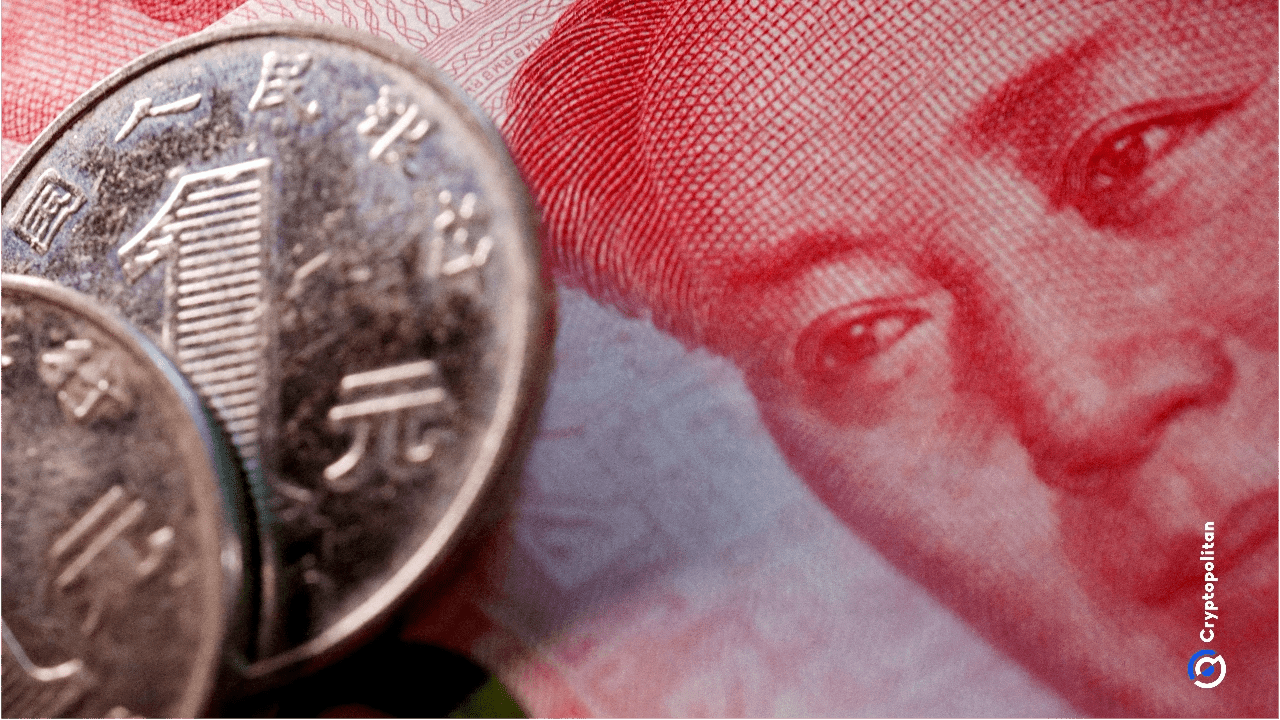
The post Beijing accelerates de-dollarization as global yuan loans hit new record appeared on BitcoinEthereumNews.com. China just smashed another milestone in its war on dollar dominance. Official figures show overseas renminbi lending, bond investments, and deposits by Chinese banks have quadrupled in five years, hitting RMB3.4 trillion (roughly $480 billion). This is a full-blown, long-term campaign to cut down exposure to the US dollar and force its own currency deeper into global finance. China’s central planners have made it clear: they want the renminbi to matter on the world stage, especially in trade and sovereign credit.One big reason? U.S. and EU sanctions are targeting Chinese banks for alleged ties to Russian weapons parts. China is trying to guarantee it can keep trading uninterrupted, no matter what Washington or Brussels do. “From China’s perspective, [settlement in renminbi] is important because it shows that no matter what happens, it can still trade,” said Adam Wolfe from Absolute Strategy Research in London. China expands bond channels and trade financing to build RMB dominance According to China’s State Administration of Foreign Exchange, fixed-income assets held by banks outside the country more than doubled over the past decade, jumping to $1.5 trillion, with RMB-denominated assets now at $484 billion. That includes $360 billion in loans and deposits, up from just $110 billion in 2020. The Bank for International Settlements says renminbi loans to emerging markets spiked by $373 billion between 2020 and 2024.“The year 2022 marked a turning point away from dollar- and euro-denominated credit and towards renminbi-denominated credit,” the BIS said. Countries like Kenya, Angola, and Ethiopia have already swapped old dollar debts into RMB. Indonesia and Slovenia plan to issue RMB bonds, and Kazakhstan sold RMB2 billion in offshore bonds at a 3.3% yield last month. The currency’s share of global trade finance jumped from under 2% to 7.6% over just three years, Swift reported, making it the…

Author: BitcoinEthereumNews
France Seeks Flexible Path for EV Transition in EU Decarbonization Efforts

France Seeks Flexible Path for EV Transition in EU Decarbonization Efforts

The post France Seeks Flexible Path for EV Transition in EU Decarbonization Efforts appeared on BitcoinEthereumNews.com. COINOTAG recommends • Exchange signup 💹 Trade with pro tools Fast execution, robust charts, clean risk controls. 👉 Open account → COINOTAG recommends • Exchange signup 🚀 Smooth orders, clear control Advanced order types and market depth in one view. 👉 Create account → COINOTAG recommends • Exchange signup 📈 Clarity in volatile markets Plan entries & exits, manage positions with discipline. 👉 Sign up → COINOTAG recommends • Exchange signup ⚡ Speed, depth, reliability Execute confidently when timing matters. 👉 Open account → COINOTAG recommends • Exchange signup 🧭 A focused workflow for traders Alerts, watchlists, and a repeatable process. 👉 Get started → COINOTAG recommends • Exchange signup ✅ Data‑driven decisions Focus on process—not noise. 👉 Sign up → France is advocating for flexible measures in the EU’s EV decarbonization push to support its automotive industry, emphasizing European production and job preservation while maintaining commitment to the Green Deal. This balanced approach aims to ensure competitiveness amid economic pressures without compromising environmental goals. France reaffirms dedication to EV transition through innovation and strategic autonomy in vehicle manufacturing. EU’s new carbon market introduces price controls to mitigate fuel bill increases and encourage cleaner transport options. 19 countries, including France and Germany, urged stricter controls; the EU plans to double permits up to 80 million annually from 2027 to stabilize prices, per EU climate commissioner Wopke Hoekstra. Discover France’s push for pragmatic EV decarbonization amid EU Green Deal challenges. Learn how new carbon market measures balance emissions cuts with economic stability and support for electric vehicle adoption. Stay informed on sustainable mobility trends. What is France’s Position on the EU’s EV Decarbonization Efforts? France’s position on the EU’s EV decarbonization efforts focuses on securing practical flexibilities to bolster the competitiveness of its automotive sector while upholding the Green Deal’s ambitions.…

Author: BitcoinEthereumNews
Spark Moves $100 Million from US Treasurys to Superstate’s DeFi Fund

Spark Moves $100 Million from US Treasurys to Superstate’s DeFi Fund

TLDR Spark moves $100M from US Treasurys to Superstate’s yield-generating fund. Spark’s $100M shift marks DeFi’s shift to uncorrelated yield strategies. Superstate’s fund offers 9.26% yield, uncorrelated with Fed rate policy. Spark’s move signals a growing trend of DeFi protocols seeking advanced returns. Spark, a decentralized finance (DeFi) lending protocol, has made a notable shift [...] The post Spark Moves $100 Million from US Treasurys to Superstate’s DeFi Fund appeared first on CoinCentral.

Author: Coincentral
Digital Asset Treasuries: Bitcoin’s Institutional Test Case

Digital Asset Treasuries: Bitcoin’s Institutional Test Case

The post Digital Asset Treasuries: Bitcoin’s Institutional Test Case appeared on BitcoinEthereumNews.com. A small but growing class of companies is moving beyond holding Bitcoin as a static reserve. They are integrating it into capital strategy, using it to raise funds, secure credit, and engineer returns. These Digital Asset Treasuries (DATs) are the first laboratories testing how a decentralized asset can operate as productive capital within the architecture of corporate finance. The phenomenon began with Strategy but has since broadened. Japan’s Metaplanet, France’s The Blockchain Group and Europe’s Twenty One Capital are major examples of companies that have each developed models that position bitcoin not just as an investment, but as a working financial instrument. Their experiments are accelerating a larger process: the financialization of Bitcoin, and potentially other tokens as well. From asset to balance-sheet infrastructure Historically, bitcoin functioned as an alternative store of value, an uncorrelated hedge against monetary debasement. DATs are expanding that equation. By using bitcoin to access liquidity through loans, convertible debt or fund structures, they are treating it as programmable collateral and a productive asset. This shift from ownership to utilization marks bitcoin’s entry into mainstream corporate finance. Convertible issuance has become a common feature of this strategy. Zero-coupon bonds and equity-linked notes allow corporates to raise fiat capital while maintaining upside exposure to bitcoin’s appreciation. Investors gain asymmetric payoff potential, while issuers optimize their cost of capital. It is an inversion of the traditional view that volatility is purely a risk factor; in this new model, upside volatility becomes part of the value proposition. Measuring resilience through mNAV To evaluate these new treasury models, investors have begun to rely on a metric known as the market Net Asset Value, or mNAV, a measure of how effectively a company converts digital holdings into real, productive capital. The key to understanding the sustainability of these strategies lies in…

Author: BitcoinEthereumNews
Pave Bank Raises $39 Million to Expand Programmable Banking Services

Pave Bank Raises $39 Million to Expand Programmable Banking Services

TLDR Pave Bank raised $39M in Series A funding to expand programmable banking services. Accel and Tether led Pave Bank’s $39M Series A funding round. Pave Bank combines crypto and fiat banking services for institutional clients. Pave Bank plans to expand into the UAE, Hong Kong, and the EEA. Pave Bank, a digital bank based [...] The post Pave Bank Raises $39 Million to Expand Programmable Banking Services appeared first on CoinCentral.

Author: Coincentral
PBOC sets USD/CNY reference rate at 7.0928 vs. 7.1235 previous

PBOC sets USD/CNY reference rate at 7.0928 vs. 7.1235 previous

The post PBOC sets USD/CNY reference rate at 7.0928 vs. 7.1235 previous appeared on BitcoinEthereumNews.com. The People’s Bank of China (PBOC) set the USD/CNY central rate for the trading session ahead on Friday at 7.0928 compared to the previous day’s fix of 7.1235 and 7.1192 Reuters estimate. PBOC FAQs The primary monetary policy objectives of the People’s Bank of China (PBoC) are to safeguard price stability, including exchange rate stability, and promote economic growth. China’s central bank also aims to implement financial reforms, such as opening and developing the financial market. The PBoC is owned by the state of the People’s Republic of China (PRC), so it is not considered an autonomous institution. The Chinese Communist Party (CCP) Committee Secretary, nominated by the Chairman of the State Council, has a key influence on the PBoC’s management and direction, not the governor. However, Mr. Pan Gongsheng currently holds both of these posts. Unlike the Western economies, the PBoC uses a broader set of monetary policy instruments to achieve its objectives. The primary tools include a seven-day Reverse Repo Rate (RRR), Medium-term Lending Facility (MLF), foreign exchange interventions and Reserve Requirement Ratio (RRR). However, The Loan Prime Rate (LPR) is China’s benchmark interest rate. Changes to the LPR directly influence the rates that need to be paid in the market for loans and mortgages and the interest paid on savings. By changing the LPR, China’s central bank can also influence the exchange rates of the Chinese Renminbi. Yes, China has 19 private banks – a small fraction of the financial system. The largest private banks are digital lenders WeBank and MYbank, which are backed by tech giants Tencent and Ant Group, per The Straits Times. In 2014, China allowed domestic lenders fully capitalized by private funds to operate in the state-dominated financial sector. Source: https://www.fxstreet.com/news/pboc-sets-usd-cny-reference-rate-at-70928-vs-71235-previous-202510240123

Author: BitcoinEthereumNews
T. Rowe Price Files for Active Multi-Coin ETF Including Bitcoin, Potentially Fueling Crypto Market Expansion

T. Rowe Price Files for Active Multi-Coin ETF Including Bitcoin, Potentially Fueling Crypto Market Expansion

The post T. Rowe Price Files for Active Multi-Coin ETF Including Bitcoin, Potentially Fueling Crypto Market Expansion appeared on BitcoinEthereumNews.com. COINOTAG recommends • Exchange signup 💹 Trade with pro tools Fast execution, robust charts, clean risk controls. 👉 Open account → COINOTAG recommends • Exchange signup 🚀 Smooth orders, clear control Advanced order types and market depth in one view. 👉 Create account → COINOTAG recommends • Exchange signup 📈 Clarity in volatile markets Plan entries & exits, manage positions with discipline. 👉 Sign up → COINOTAG recommends • Exchange signup ⚡ Speed, depth, reliability Execute confidently when timing matters. 👉 Open account → COINOTAG recommends • Exchange signup 🧭 A focused workflow for traders Alerts, watchlists, and a repeatable process. 👉 Get started → COINOTAG recommends • Exchange signup ✅ Data‑driven decisions Focus on process—not noise. 👉 Sign up → The T. Rowe Price Active Crypto ETF is an innovative filing by the 87-year-old asset manager, aiming to launch an actively managed fund holding 5-15 digital assets like Bitcoin and Ethereum. It seeks to outperform the FTSE Crypto U.S. Listed Index using fundamental analysis, valuation, and momentum factors, marking a significant entry into the crypto space. T. Rowe Price filed an S-1 form with the SEC on October 22 for its debut Active Crypto ETF, trading on NYSE Arca. The ETF will diversify across eligible digital assets including Bitcoin, Ethereum, Solana, and others, with cash and stablecoins for liquidity. Unlike passive single-asset ETFs, this actively managed fund uses strategic factors to select and weight holdings, potentially outperforming benchmarks with over 200 new crypto products expected soon. Discover T. Rowe Price Active Crypto ETF details: SEC filing for multi-asset fund with Bitcoin, Ethereum. Outperform benchmarks via active management. Stay ahead in crypto investments—explore now! What is the T. Rowe Price Active Crypto ETF? The T. Rowe Price Active Crypto ETF represents the firm’s first venture into cryptocurrency investments through a…

Author: BitcoinEthereumNews
Dr. Maurice Herlihy Guides BlockDAG with AMA Insights and Academic Authority

Dr. Maurice Herlihy Guides BlockDAG with AMA Insights and Academic Authority

The post Dr. Maurice Herlihy Guides BlockDAG with AMA Insights and Academic Authority appeared on BitcoinEthereumNews.com. Crypto News Discover how Dr. Maurice Herlihy’s role on BlockDAG’s board brings unmatched academic credibility and trust to its technology. In the fast-changing crypto world, separating real progress from passing hype is a major challenge. BlockDAG’s presale has now raised over $432 million, showing huge global confidence, yet its strongest validation comes from an even higher authority. The project’s direction is shaped by Dr. Maurice Herlihy, a true legend in computer science. Dr. Herlihy is the recipient of both the Gödel and Dijkstra prizes, the top awards in distributed computing, the core field behind blockchain itself. His involvement turns BlockDAG (BDAG) into a project grounded in proven academic excellence rather than market speculation. It signals a platform supported by deep technical knowledge instead of hype, making it one of the most credible names in the crypto space. Searching for Real Innovation in a Sea of Noise In today’s crowded digital asset market, finding genuine innovation is harder than ever. Many projects make big promises, relying on marketing and influencer campaigns instead of real technology. This environment makes it difficult to tell whether a project is built for long-term value or short-term attention. True progress in this space depends on solid computer science, not just social media buzz. That’s why the background of those who validate a project is crucial. When a respected figure in distributed computing supports a blockchain project, it gives the technology a rare and powerful stamp of authenticity. For those following BlockDAG’s journey, an exclusive AMA will take place this Friday, October 24, at 3 PM UTC. The session will reveal insider updates, roadmap developments, and important insights before Keynote 4: The Launch Note and Genesis Day. Dr. Maurice Herlihy: The Academic Force Behind the Vision BlockDAG’s story becomes even more compelling through the expertise of Dr.…

Author: BitcoinEthereumNews
When Blockchain Meets Genius: Dr. Maurice Herlihy Guides BlockDAG with AMA Insights and Academic Authority

When Blockchain Meets Genius: Dr. Maurice Herlihy Guides BlockDAG with AMA Insights and Academic Authority

In the fast-changing crypto world, separating real progress from passing hype is a major challenge. BlockDAG’s presale has now raised […] The post When Blockchain Meets Genius: Dr. Maurice Herlihy Guides BlockDAG with AMA Insights and Academic Authority appeared first on Coindoo.

Author: Coindoo
Spark transfers $100 million in stablecoin reserves to Superstate crypto arbitrage fund

Spark transfers $100 million in stablecoin reserves to Superstate crypto arbitrage fund

PANews reported on October 24th that according to The Block, DeFi lending protocol Spark (part of the Sky ecosystem) announced that it will allocate $100 million of its stablecoin reserves to the Superstate’s USCC (Crypto Carry Fund) to generate returns through spot-futures basis trading. USCC currently has a TVL of approximately $411 million. Spark previously generated income primarily through tokenized US Treasury products such as Blackstone BUIDL and Franklin FOBXX. Superstate claims that USCC has achieved an annualized return of approximately 8.35% over the past 30 days and operates within a compliant framework. It also manages USTB (a tokenized US Treasury fund). Spark has also deployed approximately $1.1 billion to Ethena's USDe/sUSDe and $25 million to the Maple Finance pool this year.

Author: PANews