Lending

Lending protocols form the backbone of the decentralized money market, allowing users to lend or borrow digital assets without intermediaries. Using smart contracts, platforms like Aave and Morpho automate interest rates based on supply and demand while requiring over-collateralization for security. The 2026 lending landscape features advanced permissionless vaults and institutional-grade credit lines. This tag covers the evolution of capital efficiency, liquidations, and the integration of diverse collateral types, including LSTs and tokenized RWAs.

15050 Articles
Created: 2026/02/02 18:52
Updated: 2026/02/02 18:52

Goldman Sachs Cuts Jobs, But AI Hiring Keeps Headcount Rising

Goldman Sachs Cuts Jobs, But AI Hiring Keeps Headcount Rising

TLDRs; Goldman Sachs trims select roles, yet overall workforce grows due to AI-driven hiring. “OneGS 3.0” strategy pushes AI in onboarding, lending, and regulatory reporting. Net headcount reached 48,300 by September, surpassing 2023 year-end by 1,800. AI adoption reflects a broader trend in banks aiming to boost efficiency and cut costs. Goldman Sachs is preparing [...] The post Goldman Sachs Cuts Jobs, But AI Hiring Keeps Headcount Rising appeared first on CoinCentral.

Author: Coincentral
Ripple Expands into Corporate Finance with $1 Billion GTreasury Acquisition

Ripple Expands into Corporate Finance with $1 Billion GTreasury Acquisition

TLDR Ripple spent $1 billion to acquire GTreasury, aiming to modernize treasury management. The acquisition expands Ripple’s reach in the multi-trillion-dollar corporate finance sector. Ripple’s strategy focuses on integrating blockchain tech into traditional finance systems. GTreasury’s expertise will help Ripple unlock trapped capital and streamline payments. Ripple has made its third major acquisition of 2025, [...] The post Ripple Expands into Corporate Finance with $1 Billion GTreasury Acquisition appeared first on CoinCentral.

Author: Coincentral
Visa: Stablecoins to take on lending, Huma Finance leads

Visa: Stablecoins to take on lending, Huma Finance leads

A new report by Visa explains that stablecoins are no longer just for payments and are taking a growing share of the credit markets. Stablecoins are no longer just for cross-border payments or crypto trading. On Thursday, October 16, credit…

Author: Crypto.news
$3.8B fund tokenized on BNB marks China’s boldest RWA move yet

$3.8B fund tokenized on BNB marks China’s boldest RWA move yet

The post $3.8B fund tokenized on BNB marks China’s boldest RWA move yet appeared on BitcoinEthereumNews.com. CMB International Asset Management tokenized the CMB International USD Money Market Fund on BNB Chain through the CMBMINT and CMBIMINT tokens on Oct. 15. The fund manages over $3.8 billion and ranked first among Asia-Pacific money market peers in Bloomberg’s performance rankings as of October 2025. Launched in 2024, the fund invests at least 70% of its net asset value in US dollar-denominated short-term deposits and high-quality instruments issued by governments, quasi-governmental entities, and top-tier financial institutions. Through tokenization, accredited investors can subscribe using fiat or stablecoins and redeem their holdings in real-time via DigiFT’s liquidity management smart contracts, supported by infrastructure provider OnChain. Adam Bai, head of CMB International Asset Management, said BNB Chain’s infrastructure enables the firm to “securely and compliantly extend our money market strategies to a broader global investor base.” BNB Chain’s RWA ecosystem comprises issuance partners, including Franklin Templeton, Ondo, Securitize, Backed, OpenEden, and Asseto. Among the financial assets issued on the network are Circle’s USYC, VBill, Benji, and Cash+. The CMBMINT and CMBIMINT tokens will integrate with the Venus Protocol and ListaDAO, enabling investors to use them as collateral for lending or in yield strategies. Sarah, head of business development at BNB Chain, called the collaboration “another milestone in our RWA journey,” adding that it reinforces BNB Chain’s vision to become the tokenization layer for all assets. Regulatory context On Sept. 23, Reuters reported that China’s securities watchdog advised some local brokerages to pause their RWA tokenization business in Hong Kong. At least two leading brokerages received informal guidance from the China Securities Regulatory Commission to refrain from conducting RWA business outside China. Shares in top Chinese brokerages listed in Hong Kong, including Guotai Junan International and GF Securities, fell between 2% and 7.25% on the news. Hong Kong’s Financial Services, the Treasury Bureau,…

Author: BitcoinEthereumNews
M&T Bank Corporation (MTB) Stock: Q3 Earnings Top Expectations as Fee Income and Credit Quality Strengthen

M&T Bank Corporation (MTB) Stock: Q3 Earnings Top Expectations as Fee Income and Credit Quality Strengthen

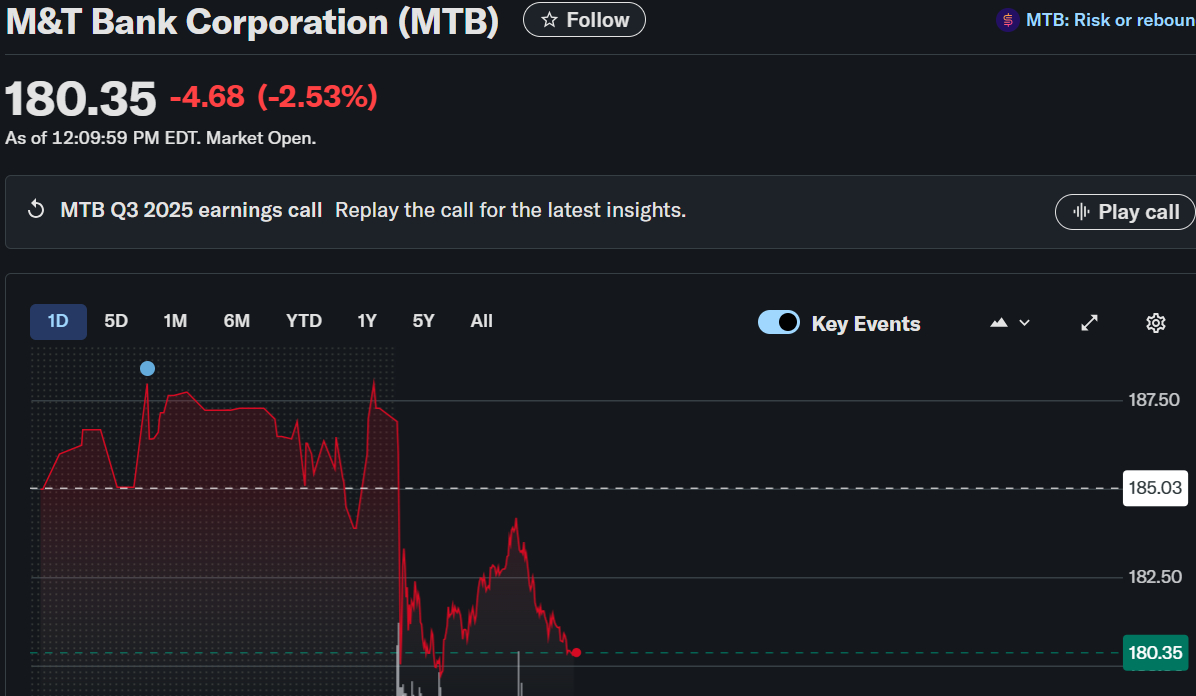
TLDR Q3 EPS came in at $4.87, beating the analyst estimate of $4.42. Revenue rose to $2.51B, above the forecast of $2.44B. Net income increased 10% YoY to $792M, supported by higher fee income. Noninterest income jumped 24% YoY to $752M, aided by investment distributions. The bank repurchased 2.1M shares for $409M, maintaining a CET1 [...] The post M&T Bank Corporation (MTB) Stock: Q3 Earnings Top Expectations as Fee Income and Credit Quality Strengthen appeared first on CoinCentral.

Author: Coincentral
Analysts Call This Token Top Crypto to Join Over XLM and DOT

Analysts Call This Token Top Crypto to Join Over XLM and DOT

The post Analysts Call This Token Top Crypto to Join Over XLM and DOT appeared on BitcoinEthereumNews.com. Crypto News Stellar (XLM) and Polkadot (DOT) rebound in October 2025 while analysts highlight a hidden Ethereum-based project as the top crypto to join for the short term. Stellar (XLM) and Polkadot (DOT) are back in the spotlight this October 2025, bouncing after a chaotic week that wiped out more than $19 billion in leveraged trades. Stellar is holding firm around $0.3381, showing solid support, while Polkadot steadies near $3.27 with impressive buying volume kicking in. Both altcoins are flashing early recovery signs, drawing attention from short-term traders who love quick reversals. But the real buzz isn’t just about stability, it’s about MoonBull ($MOBU). With an explosive ROI model, a fast-growing ecosystem, and a community that’s stacking early, MoonBull has officially become the top crypto to join for short term this season. MoonBull ($MOBU): The Top Crypto To Join For Short Term MoonBull ($MOBU) has quickly earned its reputation as the top crypto to join for short term, blending powerful DeFi mechanics with accessible participation. Built on Ethereum’s ERC-20 framework, it ensures security, liquidity, and transparency. Its precision-engineered tokenomics reward both small and large community members through staking, reflections, and long-term value stability. What makes MoonBull ($MOBU) stand apart is its reward-driven structure. Every trade strengthens its ecosystem by adding liquidity, redistributing tokens, and burning supply to boost scarcity. With 95% APY staking, a 15% referral bonus, and on-chain governance, MoonBull creates real earning opportunities, making short-term participation not just profitable but sustainable for every early buyer. MoonBull ($MOBU) Presale ROI Scenario: 9,256% Potential Gains for Early Adopters MoonBull ($MOBU) presale is now in Stage 5 at $0.00006584, already delivering 163.36% ROI potential since launch. With $400K+ raised and 1,200+ holders, it’s targeting a $0.00616 listing, possible 9,256% ROI. A $5,000 buy today could be worth $467,800 at listing. Its…

Author: BitcoinEthereumNews
There is a $200K Bug Hunt for XRPL’s New Institutional Lending Protocol

There is a $200K Bug Hunt for XRPL’s New Institutional Lending Protocol

The post There is a $200K Bug Hunt for XRPL’s New Institutional Lending Protocol appeared on BitcoinEthereumNews.com. Fintech company Ripple is partnering with security platform Immunefi for an upcoming “Attackathon” event, designed to put a new decentralized finance protocol on the XRPL through rigorous testing. The event will offer $200,000 in rewards to participants who help identify vulnerabilities in the proposed XRPL Lending Protocol, a new system designed to bring fixed-term, uncollateralized loans to the XRP Ledger. Attackathon, which runs from Oct. 27 to Nov. 29, will invite white-hat hackers and security researchers to probe the codebase and report vulnerabilities before the protocol goes live. Ripple will offer full educational support through an “Attackathon Academy,” including walkthroughs and Devnet environments, to help researchers get familiar with XRPL’s architecture. The learning stage runs from Oct. 13 to Oct. 27. Following this, the bug hunting competition starts Oct. 27 and continues through November, giving researchers ample time to thoroughly examine the protocol. If a valid exploit is found, the entire reward pool unlocks. If not, $30,000 will be distributed to participants who contribute meaningful findings. The XRPL Lending Protocol, governed under XLS-66, takes a different path from typical DeFi models. There are no smart contracts, wrapped assets, or on-chain collateral. Instead, creditworthiness is assessed off-chain, which allows financial institutions to apply their own risk models, while funds and repayments are recorded directly on the ledger. It is an approach Ripple is pitching as a bridge between traditional credit markets and on-chain finance, offering transparency while keeping regulatory guardrails intact. Institutions that need collateralized structures can still manage those through licensed custodians or tri-party agreements, with the protocol acting as the execution layer. Researchers will focus on vulnerabilities that could threaten fund safety or protocol solvency. In-scope targets include vault logic, liquidation and interest calculations, and permissioned access controls. Bugs must be reproducible and come with working proof-of-concepts to qualify.…

Author: BitcoinEthereumNews
Ethereum briefly hosts $300 trillion PYUSD mint blunder by Paxos

Ethereum briefly hosts $300 trillion PYUSD mint blunder by Paxos

The post Ethereum briefly hosts $300 trillion PYUSD mint blunder by Paxos appeared on BitcoinEthereumNews.com. For a few surreal moments on Oct. 15, the Ethereum blockchain seemed to host the financial equivalent of a dream. Paxos, the issuer behind PayPal’s stablecoin PYUSD, accidentally minted $300 trillion worth of tokens, which is roughly 300 times the global GDP, before burning them just as fast. The minting, visible on Ethereum’s public ledger, sent analysts, traders, and bots into overdrive. Within minutes, Paxos confirmed the incident resulted from an internal operational error, not a hack. The firm said no user funds were impacted. Still, the sheer number involved in the mistake made “PYUSD” the most discussed coin in crypto for 24 hours straight. Blockchain analytics firm Santiment reported thousands of mentions per minute as social media reacted in disbelief. Paypal PYUSD Dominates Social Media Mentions (Source: Santiment) What happened? Blockchain security firm Quill Audits traced the mishap to the token’s contract structure. According to the security firm, the PYUSD contract gave one externally owned address (EOA) unrestricted minting and burning rights with no rate limits, amount caps, or multi-party approvals. It added that the single key executed three transactions in quick succession: minting $300 trillion PYUSD, burning it, and then minting another $300 billion. Considering this, Quill Audits concluded that: “This suggests a backend system bug or a catastrophic human error— or all two.” Meanwhile, Sam Ramirez, lead engineer at Argentum, suggested that Paxos initially meant to transfer 300 million PYUSD between wallets but mistakenly burned it. According to him, the attempt to restore those tokens allegedly resulted in the 300-trillion overmint. Paypal PYUSD Stablecoin Mints (Source: Ramirez/X) Lessons? The Paxos mistake might have been harmless, but its implications aren’t. Over $300 billion in stablecoins now circulate globally, moving billions daily across Ethereum, Solana, and Tron. At that scale, even a single automation error could cascade through decentralized…

Author: BitcoinEthereumNews
How Grayscale Transformed Crypto Staking for Wall Street Investors

How Grayscale Transformed Crypto Staking for Wall Street Investors

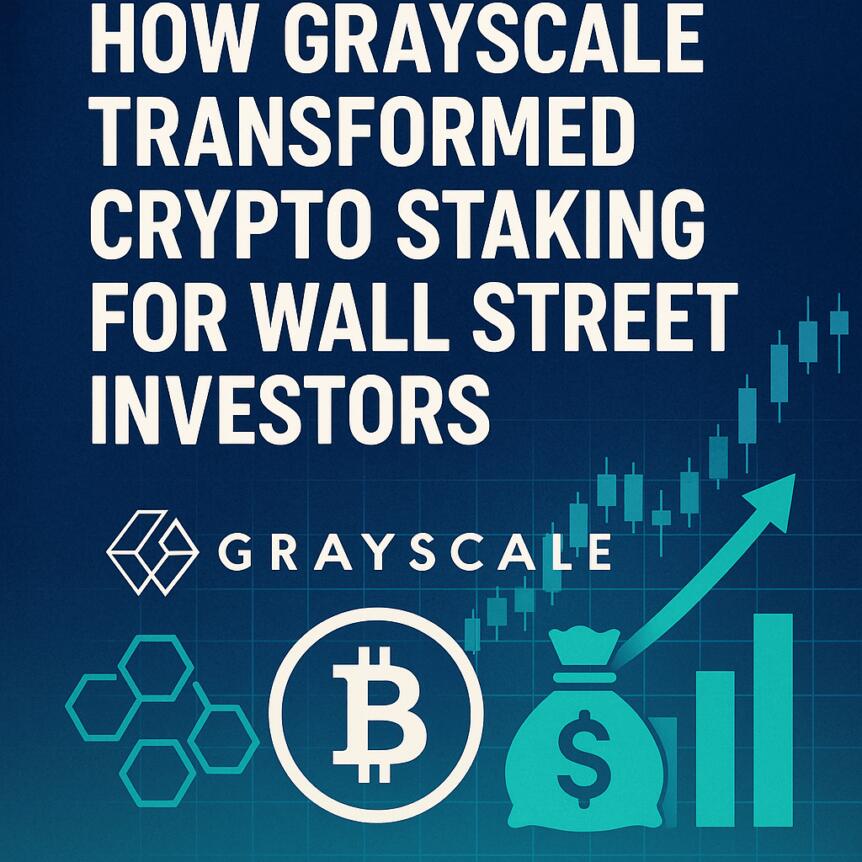
Cryptocurrency staking is increasingly gaining mainstream acceptance as a means to earn passive income on digital assets. With regulatory clarity gradually emerging, traditional investors are now able to participate in staking through regulated, accessible investment vehicles. The launch of Grayscale’s first publicly traded staking-focused exchange-traded products (ETPs) signifies a major breakthrough, integrating blockchain yield mechanics [...]

Author: Crypto Breaking News
Encrypted computing 2025: Privacy 2.0 unlocks confidential medical data

Encrypted computing 2025: Privacy 2.0 unlocks confidential medical data

Healthcare and privacy researchers are testing systems that use encrypted computing and blockchain to process patient records without exposing raw data. How do zero knowledge proofs protect private healthcare data? What guarantees matter for medical records? Zero knowledge proofs enable a party to demonstrate a claim without revealing the underlying data. In healthcare this can […]

Author: The Cryptonomist