Lending

Lending protocols form the backbone of the decentralized money market, allowing users to lend or borrow digital assets without intermediaries. Using smart contracts, platforms like Aave and Morpho automate interest rates based on supply and demand while requiring over-collateralization for security. The 2026 lending landscape features advanced permissionless vaults and institutional-grade credit lines. This tag covers the evolution of capital efficiency, liquidations, and the integration of diverse collateral types, including LSTs and tokenized RWAs.

14221 Articles
Created: 2026/02/02 18:52
Updated: 2026/02/02 18:52

Solv Protocol Integrates Chainlink Price Feeds for SolvBTC Pricing, Advanced Transparency, and Adoption

Solv Protocol Integrates Chainlink Price Feeds for SolvBTC Pricing, Advanced Transparency, and Adoption

The launch of the Chainlink price feed provides Solv Protocol with reliable, safe, and decentralized price data required to expand the adoption of SolvBTC.

Author: Blockchainreporter
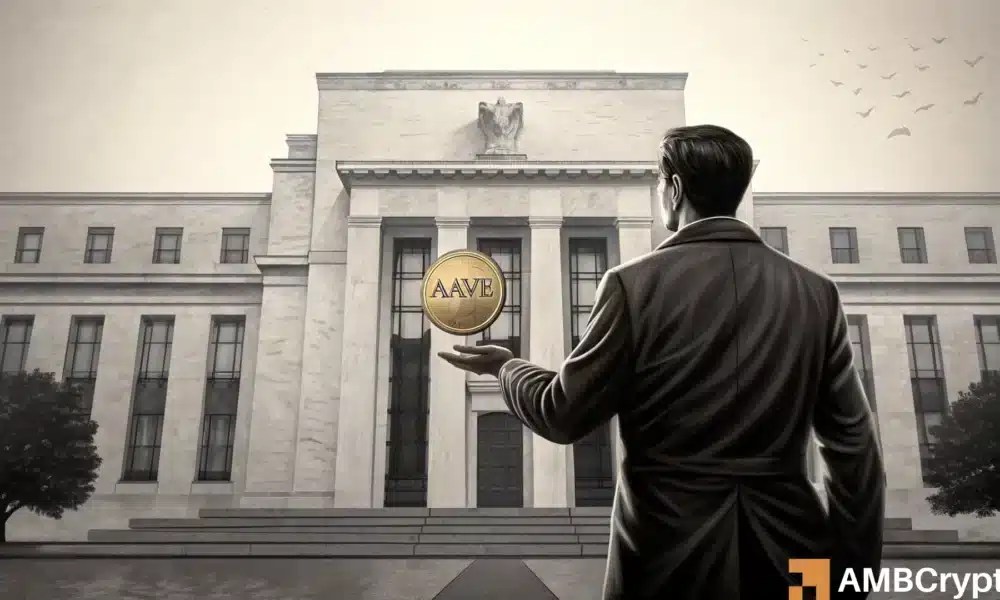
AAVE Leads DeFi Lending With $40B TVL and $3M Daily Fees

AAVE Leads DeFi Lending With $40B TVL and $3M Daily Fees

AAVE has recorded significant growth as its Total Value Locked (TVL) reached over half of the combined TVL of all the lending protocols, which was around $78.5 billion in August.  The AAVE V3 ecosystem had $69 billion TVL, with the founder expecting deposits to reach $100 billion by year’s end.  AAVE records outstanding numbers in [...]]]>

Author: Crypto News Flash
Chainlink Teams Up with Solv Protocol to Secure SolvBTC Feed

Chainlink Teams Up with Solv Protocol to Secure SolvBTC Feed

Chainlink and Solv Protocol introduce a secure exchange rate feed for SolvBTC, combining Proof of Reserve with transparent on-chain data.]]>

Author: Crypto News Flash
A whale sold 602.8 WBTC to ETH 3 hours ago and currently holds 16,909 ETH.

A whale sold 602.8 WBTC to ETH 3 hours ago and currently holds 16,909 ETH.

PANews reported on September 2nd that according to Ember's monitoring, a whale purchased 602.8 WBTC at $110,993 per unit using leveraged lending six days ago, with a total value of $66.9 million. Three hours ago today, the whale sold all of its WBTC for 15,083 ETH. Currently, the whale holds 16,909 ETH, with a total value of approximately $73.84 million, at an average cost of approximately $4,441.

Author: PANews
Mutuum Finance (MUTM) vs Shiba Inu (SHIB) Price Prediction: Which Crypto Could Deliver the Next 5000% Breakout?

Mutuum Finance (MUTM) vs Shiba Inu (SHIB) Price Prediction: Which Crypto Could Deliver the Next 5000% Breakout?

The post Mutuum Finance (MUTM) vs Shiba Inu (SHIB) Price Prediction: Which Crypto Could Deliver the Next 5000% Breakout?  appeared on BitcoinEthereumNews.com. Mutuum Finance (MUTM) is quickly making a name for itself as a breakout in the crypto market, and traders are paying attention because they want to benefit from the next volatile breakout. As the market’s pendulum swings between hype and innovation, Mutuum Finance’s unique tokenomics and growing community leave enthusiasts teetering on the edge between optimism and cautious consideration about whether it might rise to the echelons of market legends like Shiba Inu (SHIB).  The pre-public funding stage 6 of Mutuum Finance (MUTM) is, for the meantime, being conducted at the price of $0.035 token per unit, meaning investors in such a token can increase their portfolio at a minimum of 500% within a limited time. The project has already generated over $15.25 million in raises and has the support of over 15,950 token holders. With the right momentum, Mutuum Finance has the potential to achieve $3 per token by the year 2025. Shiba Inu Holds Near $0.00001238 as Market Sentiment Stays Cautious Shiba Inu (SHIB) is at 0.00001238 with little changes over the last day as meme coin activity declines. Recently, trading volume shot off the scale though analysts are hesitant to suggest that this is a long-term trend and not a short-term speculation. Although SHIB still retains its ranking among the top meme tokens, there is a gradual increase in the investor interest in new decentralized finance projects like Mutuum Finance. Stage 6 Presale Live for Mutuum Finance (MUTM) Phase 6 just got started on the Mutuum Finance (MUTM) pre-stage sale this day, selling tokens at a cost of $0.035 each and giving early investors an excellent opportunity to strike early in the hype cycle before prices go up throughout subsequent time frames. Mutuum Finance a rapidly rising participant in the DeFi arena, has attracted over 15,950 traders…

Author: BitcoinEthereumNews
Forget Stablecoins, Fiat Is the Real Scam: Surviving EM Currency Snaps with Bitcoin and Beyond

Forget Stablecoins, Fiat Is the Real Scam: Surviving EM Currency Snaps with Bitcoin and Beyond

Forget Stablecoins, Fiat Is the Real Scam: Surviving EM Currency Snaps with Bitcoin and BeyondPhoto by Sunday Abegunde on Unsplash Hello Crypto Trailblazers, You’re chilling with your morning smoothie or maybe burning the midnight oil over a coding session, when you catch wind of the Nigerian naira trading at a staggering 1,535 per USD, scraping its 52-week lows like a crypto token in a bear market freefall. It’s a gut punch, right? If you’re thinking, “I’m safe in my DeFi bubble, no worries,” pump the brakes. If your income, suppliers, or even your NFT collectors are tied to emerging market (EM) currencies, this is your wake-up call. Currency slides in places like Nigeria don’t just drift downward like a lazy river. They snap, like a rubber band stretched too far, then spiral into a chaotic cascade that wrecks prices, erodes wages, and obliterates savings faster than a scam coin’s rug pull. For our crypto crew, this isn’t just news; it’s a signal to act, because those ripples can hit your wallet, your operations, or your decentralized dreams harder than a 51% attack. I’m not here to spook you, but to arm you with the knowledge and tools to surf these waves like a pro. Whether you’re a Bitcoin HODLer, a DeFi yield farmer, a DAO contributor, or just someone dabbling in cross-border crypto trades, EM currency volatility is a beast you need to tame. Let’s dive deep into what’s happening, share some real-world stories, and map out how to protect your stack when fiat currencies start acting like memecoins gone wrong. Plus, I’ll throw in some extra context on why this matters for our global crypto community and how you can stay ahead of the game. The Naira’s Nosedive: A Case Study in Fiat Fragility Let’s zoom in on Nigeria, where the naira’s been on a wild ride, hitting 1,535 against the dollar and flirting with historic lows. Inflation’s clocking in at a brutal 34%, driven by a mix of skyrocketing import costs, policy hiccups, and global economic headwinds. This isn’t just a stat; it’s a reality check for anyone whose business or investments touch Nigeria’s economy. Maybe you’re a Web3 founder hiring Nigerian developers, paying them in USD through a crypto wallet, only to hear they’re struggling because their local costs are exploding. Or perhaps you’re running a remittance service, and your Nigerian users are watching their naira payouts buy less groceries each week. If you’re trading on a decentralized exchange with liquidity pools tied to EM economies or backing blockchain startups in Africa, these currency swings can turn your sweet 15% APY into a bitter 20% loss before you can say “gas fees.” This isn’t unique to Nigeria. We’ve seen this movie play out in Argentina, where the peso’s been in a death spiral, or Turkey, where the lira’s taken a beating, or Venezuela, where the bolívar’s worth less than the paper it’s printed on. Emerging market currencies don’t just trend downward like a stock chart with a bad earnings report. They snap under pressure, whether it’s from central bank missteps, capital fleeing to safer havens, or global shocks like oil price spikes. Once that snap happens, the cascade kicks in: import prices soar, local businesses jack up costs, wages lose purchasing power, and savings? They’re toast, like a wallet drained by a phishing scam. For anyone in the crypto space with exposure to these markets, whether through suppliers, clients, or investments, ignoring this is like leaving your private keys on a sticky note. Why Crypto Folks Should Care If you’ve been in crypto for more than a hot minute, you’re used to volatility. Price pumps, dumps, and sideways action are just part of the game. But EM currency slides add a layer of fiat chaos that can mess with even the tightest blockchain strategies. Think about it: Bitcoin was born from the ashes of the 2008 financial crisis, a middle finger to centralized monetary systems that keep printing money like it’s going out of style. Fast forward to 2025, and stablecoins like USDC or USDT are lifelines for millions in EMs, letting people preserve value when their local currency’s in freefall. Nigeria’s a prime example, with crypto adoption skyrocketing as folks swap naira for Bitcoin or stables to protect their wealth. The data backs this up: Nigeria’s one of the top countries globally for crypto transaction volume per capita, and it’s no surprise why. When fiat fails, crypto steps up. But here’s the flip side. If you’re on the sending end, say, a crypto fund investing in African blockchain projects or a dev team paying EM-based talent, these currency snaps can hit you hard. Your dollar-based payouts might seem stable, but your partners’ costs are ballooning, squeezing their margins or forcing you to renegotiate. If you’re running a DAO with global contributors or trading in liquidity pools with EM exposure, those naira-to-dollar swings can erode your returns faster than a flash crash. I’ve heard stories from crypto friends who got burned when they didn’t hedge their EM exposure, like one dev who paid Nigerian freelancers in USD but lost big when their local costs forced a 30% rate hike. Another buddy running a remittance app saw his Nigerian user base shrink because payouts couldn’t keep up with inflation. These aren’t hypotheticals; they’re real risks we face in this borderless crypto world. Your Crypto Hedge Playbook: Stay Ahead of the Snap Alright, let’s get to the good stuff: how to protect your bag when EM currencies start wobbling. Crypto’s our superpower here, built to outmaneuver fiat’s fragility. Here’s a playbook tailored for our community of builders, traders, and dreamers: Stack Bitcoin Like It’s Digital Gold: Bitcoin’s fixed supply is your shield against fiat devaluation. When currencies like the naira tank, BTC’s scarcity makes it a rock-solid store of value. Same goes for Ethereum, with its DeFi and NFT utility. If you’ve got naira or other EM currencies in your orbit, swap some for BTC or ETH to lock in value before the next snap. Stablecoins to the Rescue: USDC or USDT on fast, cheap networks like Solana or Polygon are your go-to for dodging FX volatility. Paying suppliers in Nigeria? Invoice in stables to keep things predictable. Your partners get stability, you avoid currency conversion headaches, and everyone sleeps better. I’ve seen startups save thousands by switching to USDC for cross-border payments. DeFi: Work Hard, Yield Harder: Got capital exposed to EM markets? Put it to work in DeFi. Lend USDC on protocols like Aave or Compound for steady yields, or explore options markets on dYdX to bet against further EM currency drops. Want to get fancy? Look into tokenized real-world assets from EM regions, but only if they’re backed by diversified collateral to avoid counterparty risk. A friend of mine doubled his returns by lending stables while hedging with ETH calls during a currency dip. Streamline Cross-Border Flows: If your business involves sending money to EMs, use crypto-native solutions like Stellar for fast, low-cost transfers. Local platforms in Nigeria, like BuyCoins or Bundle, can bridge naira to crypto smoothly, letting your partners convert at the best rates without bank fees eating their lunch. This is a game-changer for remittances or payroll. Stay Sharp with On-Chain Intel: Use analytics platforms like Dune or Nansen to track wallet flows from EM regions. A sudden spike in stablecoin deposits often signals a currency crisis brewing. Set alerts, monitor trends, and move your funds before the cascade hits. One trader I know saved his portfolio by spotting a USDT inflow surge from Nigeria and hedging early. This isn’t financial advice, so do your own research, but these strategies are battle-tested by crypto OGs who’ve navigated fiat storms before. The beauty of crypto is its permissionless nature, letting us move faster than the bureaucrats who tanked the naira in the first place. Crypto’s Role in EM Resilience Let’s zoom out. Nigeria’s naira drama is just one chapter in a global story. Similar currency woes in Egypt, Pakistan, and beyond are pushing people toward crypto as a lifeline. In these markets, blockchain isn’t just tech; it’s a survival tool. When local currencies lose trust, Bitcoin, Ethereum, and stables become the people’s money, bypassing banks and borders. Ethereum’s upgrades, like the Merge anniversaries, keep making it a powerhouse for EM adoption, with layer-2 solutions like Arbitrum slashing fees for users in high-inflation zones. Meanwhile, Nigeria’s own eNaira, a central bank digital currency, is trying to keep up, but it’s tethered to the naira’s shaky foundation, while true crypto runs free and untamed. This is why we’re in crypto, right? To build a world where centralized failures don’t dictate our financial freedom. I think of folks I’ve met in the community, like a Nigerian artist who turned his NFT sales into USDC to buy a house, or a dev in Argentina who escaped peso inflation by HODLing BTC. These stories remind us that crypto isn’t just about profits; it’s about empowerment. If you’re exposed to EM currencies, whether through business, investments, or personal ties, don’t wait for the next snap to hit. Hedge now, build redundancies, and keep your eyes on the blockchain horizon. A Personal Note from Your Sidekick I got into this crypto journey because I saw what fiat chaos did to real people, from friends in Zimbabwe who lost everything to inflation, to family in Lebanon whose savings evaporated. Those who got into crypto early? They’re still standing, some even thriving. If you’re reading this and you’ve got ties to EM markets, take it from me: don’t sleep on this. Hedge your exposure, diversify your stack, and lean into the tools that make crypto so powerful. Got a story about dodging a currency crisis with crypto? I’d love to hear it, so hit reply and share your tale. Stay decentralized, stay unstoppable, Crypto Circuit P.S. Digging these newsletters? Subscribe for free weekly drops packed with crypto insights and global vibes. No fluff, just the real stuff. And if you’re in Nigeria or another EM, you’re the heart of this revolution, keep pushing the boundaries of what’s possible. Forget Stablecoins, Fiat Is the Real Scam: Surviving EM Currency Snaps with Bitcoin and Beyond was originally published in Coinmonks on Medium, where people are continuing the conversation by highlighting and responding to this story

Author: Medium
Metaplanet’s 20K BTC holdings vs. sliding stocks: Where is sentiment headed?

Metaplanet’s 20K BTC holdings vs. sliding stocks: Where is sentiment headed?

The post Metaplanet’s 20K BTC holdings vs. sliding stocks: Where is sentiment headed? appeared on BitcoinEthereumNews.com. Key Takeaways Japan’s Metaplanet boosted its Bitcoin holdings to 20,000 BTC with a $112 million purchase, cementing its spot as the nation’s top corporate holder, though its stock continues to plummet. Japan’s Metaplanet continues its aggressive Bitcoin [BTC] accumulation, purchasing an additional 1,009 BTC for approximately ¥16.48 billion ($112 million). With this latest buy, the firm’s treasury swelled to a staggering 20,000 BTC, solidifying its position as the country’s largest corporate Bitcoin holder and sending ripples through its stock price. Metaplanet Bitcoin holdings surge According to its recent filing, Metaplanet purchased the latest 1,009 BTC at an average price of roughly $111,068 per coin, further expanding its treasury to 20,000 BTC. If looked closely, Metaplanet is following a “buy the dip” strategy similar to Michael Saylor’s, widely recognized as MicroStrategy’s approach to accumulating Bitcoin. This pushed the firm to the sixth spot globally among public companies holding Bitcoin, likely surpassing Riot Platforms, according to data from Bitcointreasuries.net. The company also disclosed performance metrics that reflect its aggressive Bitcoin accumulation strategy. Its BTC Yield, which measures the percentage change in the ratio of total holdings to fully diluted shares outstanding, came in at 30.7% for the July–September period. This was lower than the preceding quarter, when the yield spiked to 129.4%, but still underscored the firm’s rapid accumulation pace. Other plans to boost Bitcoin Metaplanet also informed shareholders about the recent exercise of its 20th series of stock acquisition rights. Issued on the 23rd of June, the latest tranche was exercised between the 27th to the 29th of August, resulting in the issuance of more than 739 million shares, including nearly 26,000 treasury shares. By the end of August, the company’s total issued shares had reached 751.2 million, with 11.5 million new shares exercised during the reporting window. According to CompaniesMarketCap…

Author: BitcoinEthereumNews
AAVE lending TVL hits $40B, fees skyrocket – Here’s why it matters

AAVE lending TVL hits $40B, fees skyrocket – Here’s why it matters

The post AAVE lending TVL hits $40B, fees skyrocket – Here’s why it matters appeared on BitcoinEthereumNews.com. Journalist Posted: September 2, 2025 Key Takeaways AAVE commands 51% of DeFi lending TVL, generating $3 million+ in daily fees, signaling strong network effects and token utility. On-chain activity for AAVE [AAVE] underscores its DeFi expansion. Since breaking $22 billion in December, AAVE’s TVL has doubled, hitting a $40 billion all-time high in late August. For a lending protocol, this TVL surge signals strong capital inflows, and solid network traction. In fact, across all lending protocols, combined TVL stands at $78.5 billion, meaning AAVE accounts for roughly 51% of the market, highlighting its dominance in the DeFi lending space. Source: DeFiLlama Why does this matter? Deeper TVL means more liquidity for borrowers and lenders, smoother execution, and lower slippage. That translates to higher protocol fees, boosting token economics. Backing this up, AAVE pulled in $3 million+ in fees over the last 24 hours, outpacing all other lending protocols combined.  All of this highlights AAVE’s strong network effects. On a macro level, it cements AAVE as the “go-to” lending protocol, highlighting a key milestone as modern finance moves from traditional systems to DeFi. AAVE’s fundamentals fuel token’s long-term upside AAVE’s protocol growth continues to support token utility and demand. Amid broader risk-off flows, AAVE closed August +20.96% from its $260 base, reclaiming $300 for the first time since Q1. A push past $400 would put the token back near 2021 levels, signaling renewed strength. On the numbers side, things are looking solid. Network fees jumped 39% QoQ to $178 million and revenue popped 51% to $28.3 million, making this AAVE’s fattest quarter since Q4. Source: Token Terminal In short, the token’s utility is showing through in the numbers. Its strong fundamentals are moving in tandem with price action. As a result, the market appears to be catching up to the network,…

Author: BitcoinEthereumNews
El Salvador Is Turning Its Capital Into the World’s First Bitcoin Citywide Festival

El Salvador Is Turning Its Capital Into the World’s First Bitcoin Citywide Festival

The post El Salvador Is Turning Its Capital Into the World’s First Bitcoin Citywide Festival appeared on BitcoinEthereumNews.com. Bitcoin This November, San Salvador will transform into the epicenter of Bitcoin culture as El Salvador prepares to host Bitcoin Histórico, the first government-sponsored Bitcoin conference in the world. The event, scheduled for November 12–13, is designed to be more than a tech gathering—it’s being framed as a cultural milestone and a showcase of how Bitcoin can shape nations. A City-Wide Experience Instead of a single convention center, the entire Centro Histórico will act as the venue. The National Palace will house keynote speeches, while giant LED screens will broadcast talks across Plaza Gerardo Barrios. Side events are spread across the National Library and the National Theater, blending historical architecture with modern debates on the future of money. Organizers say the goal is to create an immersive experience that connects finance, culture, and national identity. Early-bird tickets are being sold exclusively in Bitcoin, underscoring the country’s commitment to its legal tender experiment before fiat options open later this fall. The Voices Shaping Bitcoin’s Future The guest list is stacked with influential names: Ricardo Salinas, one of Mexico’s wealthiest entrepreneurs; Jeff Booth, the author known for exploring deflationary economics; and Lightning pioneer Jack Mallers. Bitcoin advocates Max Keiser and Stacy Herbert will also take the stage, joined by respected developers and entrepreneurs like Pierre Rochard, Jimmy Song, and Darin Feinstein. Politics and Bitcoin Intertwined The conference coincides with a new chapter for President Nayib Bukele. Following constitutional changes that extended presidential terms and permitted indefinite re-election, Bukele now has an even stronger mandate to push his Bitcoin agenda. Since 2021, his government has accumulated more than 6,200 BTC and promoted Bitcoin as a tool for financial sovereignty. Critics warn of risks tied to volatility, but supporters see Bukele’s extended presidency as a guarantee of policy continuity—something that could cement El Salvador’s…

Author: BitcoinEthereumNews
Next Big Crypto Alert: Contrarians Are Betting on a $0.035 DeFi Project Over ADA and SOL in 2026, Are They Right?

Next Big Crypto Alert: Contrarians Are Betting on a $0.035 DeFi Project Over ADA and SOL in 2026, Are They Right?

The mainstream crowd in crypto investing often rushes toward big names like SOL and ADA, following momentum and headlines. But history shows that true gains rarely come from chasing hype. Contrarian traders—those who look where others are not—will be the ones who uncover the real gems before the rest of the market catches up. In [...] The post Next Big Crypto Alert: Contrarians Are Betting on a $0.035 DeFi Project Over ADA and SOL in 2026, Are They Right? appeared first on Blockonomi.

Author: Blockonomi