Lending

Lending protocols form the backbone of the decentralized money market, allowing users to lend or borrow digital assets without intermediaries. Using smart contracts, platforms like Aave and Morpho automate interest rates based on supply and demand while requiring over-collateralization for security. The 2026 lending landscape features advanced permissionless vaults and institutional-grade credit lines. This tag covers the evolution of capital efficiency, liquidations, and the integration of diverse collateral types, including LSTs and tokenized RWAs.

16281 Articles
Created: 2026/02/02 18:52
Updated: 2026/02/02 18:52
SEI Network and Xiaomi Partnership May Boost Global DeFi Access Through Pre-Installed Wallets

SEI Network and Xiaomi Partnership May Boost Global DeFi Access Through Pre-Installed Wallets

The post SEI Network and Xiaomi Partnership May Boost Global DeFi Access Through Pre-Installed Wallets appeared on BitcoinEthereumNews.com. The SEI Network Xiaomi partnership integrates a pre-installed SEI wallet on new Xiaomi devices outside Mainland China, enabling millions of users to access decentralized finance and stablecoin payments directly from their phones. This collaboration aims to simplify blockchain onboarding and boost global crypto adoption through everyday mobile use. Partnership Overview: SEI Network teams up with Xiaomi to embed a finance app on 168 million annual devices, focusing on stablecoin transactions. Accessibility Boost: Users can log in via Google or Xiaomi ID, connecting to top DeFi apps without complex setups. Market Impact: SEI token rose 2.2% to $0.14 post-announcement, with $81 million in netflows over three months signaling renewed interest. Discover how the SEI Network Xiaomi partnership revolutionizes mobile crypto access with pre-installed wallets on global devices. Explore stablecoin payments and DeFi integration for seamless onboarding. Learn more about this blockchain milestone today. What is the SEI Network Xiaomi Partnership? The SEI Network Xiaomi partnership marks a significant step in embedding blockchain technology into consumer smartphones. Announced on December 10, 2025, this collaboration will pre-install a SEI-powered finance app on new Xiaomi devices distributed outside Mainland China, excluding the USA. The initiative targets Xiaomi’s vast user base of over 168 million new devices annually, providing direct access to decentralized finance, stablecoin payments, and peer-to-peer transfers through an intuitive mobile interface. This partnership builds on SEI Network’s strengths as a high-performance Layer 1 blockchain optimized for trading and DeFi applications. By integrating with Xiaomi’s ecosystem, it addresses key barriers to crypto adoption, such as user onboarding and accessibility. The app will support login via Google credentials or Xiaomi ID, granting immediate entry to popular decentralized applications while prioritizing security and ease of use. How Does the SEI Network Enhance Mobile Blockchain Adoption? The SEI Network enhances mobile blockchain adoption by leveraging its…

Author: BitcoinEthereumNews
PBOC sets USD/CNY reference rate at 7.0686 vs. 7.0753 previous

PBOC sets USD/CNY reference rate at 7.0686 vs. 7.0753 previous

The post PBOC sets USD/CNY reference rate at 7.0686 vs. 7.0753 previous appeared on BitcoinEthereumNews.com. The People’s Bank of China (PBOC) sets the USD/CNY central rate for the trading session ahead on Thursday at 7.0686 compared to the previous day’s fix of 7.0753. PBOC FAQs The primary monetary policy objectives of the People’s Bank of China (PBoC) are to safeguard price stability, including exchange rate stability, and promote economic growth. China’s central bank also aims to implement financial reforms, such as opening and developing the financial market. The PBoC is owned by the state of the People’s Republic of China (PRC), so it is not considered an autonomous institution. The Chinese Communist Party (CCP) Committee Secretary, nominated by the Chairman of the State Council, has a key influence on the PBoC’s management and direction, not the governor. However, Mr. Pan Gongsheng currently holds both of these posts. Unlike the Western economies, the PBoC uses a broader set of monetary policy instruments to achieve its objectives. The primary tools include a seven-day Reverse Repo Rate (RRR), Medium-term Lending Facility (MLF), foreign exchange interventions and Reserve Requirement Ratio (RRR). However, The Loan Prime Rate (LPR) is China’s benchmark interest rate. Changes to the LPR directly influence the rates that need to be paid in the market for loans and mortgages and the interest paid on savings. By changing the LPR, China’s central bank can also influence the exchange rates of the Chinese Renminbi. Yes, China has 19 private banks – a small fraction of the financial system. The largest private banks are digital lenders WeBank and MYbank, which are backed by tech giants Tencent and Ant Group, per The Straits Times. In 2014, China allowed domestic lenders fully capitalized by private funds to operate in the state-dominated financial sector. Source: https://www.fxstreet.com/news/pboc-sets-usd-cny-reference-rate-at-70686-vs-70753-previous-202512110115

Author: BitcoinEthereumNews
Revolutionary Move: Figure Launches YLDS, the Interest-Bearing Stablecoin on Solana

Revolutionary Move: Figure Launches YLDS, the Interest-Bearing Stablecoin on Solana

BitcoinWorld Revolutionary Move: Figure Launches YLDS, the Interest-Bearing Stablecoin on Solana The world of decentralized finance just got a powerful new player. In a groundbreaking announcement, Figure, the innovative blockchain lending platform, has revealed it will issue its YLDS token on the Solana network. This isn’t just another stablecoin; YLDS is an interest-bearing stablecoin, designed to grow your holdings while maintaining price stability. This strategic move […] This post Revolutionary Move: Figure Launches YLDS, the Interest-Bearing Stablecoin on Solana first appeared on BitcoinWorld.

Author: bitcoinworld
Gold drifts higher above $4,200 as Fed delivers expected cut

Gold drifts higher above $4,200 as Fed delivers expected cut

The post Gold drifts higher above $4,200 as Fed delivers expected cut appeared on BitcoinEthereumNews.com. Gold price (XAU/USD) gains momentum to around $4,235 during the early Asian session on Thursday. The precious metal extends its upside after the US Federal Reserve (Fed) delivered an expected third consecutive interest rate cut and maintained its outlook for just one cut in 2026. Traders will keep an eye on the US weekly Initial Jobless Claims report later on Thursday.  The US Fed decided to lower its key lending rate by 25 basis points (bps), bringing it in a range of 3.50% to 3.75%. This marks its lowest level in three years. Fed Chair Jerome Powell said during the press conference that policymakers need time to see how the Fed’s three cuts this year work their way through the US economy.  Powell added that the Fed officials will closely examine incoming data leading up to the Fed’s next meeting in January. Lower interest rates could reduce the opportunity cost of holding Gold, supporting the non-yielding precious metal. Markets are currently pricing in nearly a 78% chance that the Fed will hold interest rates steady next month, compared with a 70% probability just before the rate cut announcement, according to the CME FedWatch tool.  US President Donald Trump told Ukrainian President Volodymyr Zelensky that he has until Christmas to accept his deal to end the war with Russia, per the Telegraph. Meanwhile, Zelensky said he is finalizing a revised peace proposal that he will deliver to the US soon, hinting at potential progress as Trump increases pressure on Kyiv to agree to a peace deal with Moscow. Any signs of progress in the Ukraine peace deal could undermine a traditional safe-haven asset like Gold in the near term.  Gold FAQs Gold has played a key role in human’s history as it has been widely used as a store of value and medium of exchange. Currently,…

Author: BitcoinEthereumNews
Unstoppable FUN Token Sale: Coinbase’s Sport.Fun Hits $90M Milestone

Unstoppable FUN Token Sale: Coinbase’s Sport.Fun Hits $90M Milestone

BitcoinWorld Unstoppable FUN Token Sale: Coinbase’s Sport.Fun Hits $90M Milestone The on-chain sports world is buzzing with a major announcement. Sport.Fun, the consumer app dominating Coinbase’s Base network, has revealed plans for its highly anticipated FUN token sale. This move follows a period of explosive growth, making it a pivotal moment for fans of crypto and sports alike. What is Driving the FUN Token Sale? […] This post Unstoppable FUN Token Sale: Coinbase’s Sport.Fun Hits $90M Milestone first appeared on BitcoinWorld.

Author: bitcoinworld
Crossroads in US and European Encryption Regulation: Testing Ground or Museum?

Crossroads in US and European Encryption Regulation: Testing Ground or Museum?

Author: Castle Labs Compiled by: Yangz, Techub News When Satoshi Nakamoto published the white paper, mining Bitcoin was incredibly simple; any player with a mainstream CPU could easily accumulate wealth worth millions of dollars. On a home computer, instead of playing The Sims, it's better to build a substantial fortune, allowing future generations to live without hard work—a return on investment of approximately 250,000 times. However, most gamers remain engrossed in Halo 3 on Xbox, with only a few teenagers using their home computers to amass wealth surpassing that of modern tech giants. Napoleon created his legend by conquering Egypt and even Europe, while you, simply click "Start Mining." Over the past fifteen years, Bitcoin has evolved into a global asset, with its mining relying on massive operations supported by billions of dollars in funding, hardware, and energy investment. On average, each Bitcoin consumes as much as 900,000 kilowatt-hours of electricity. Bitcoin has given rise to a completely new paradigm, standing in stark contrast to the tightly controlled financial world we grew up in. It may be the first truly significant rebellion against the elite since the failed "Occupy Wall Street" movement. It's noteworthy that Bitcoin was born precisely after the major financial crisis of the Obama era—a crisis largely stemming from the tolerance of high-risk, casino-like banking practices. The Sarbanes-Oxley Act of 2002 was intended to prevent a repeat of the dot-com bubble; ironically, the 2008 financial collapse was far more severe. Whoever Satoshi Nakamoto was, his invention was timely, a fierce yet well-thought-out rebellion, like a wildfire, aimed directly at the powerful and omnipresent Leviathan. Prior to 1933, the U.S. stock market was essentially unregulated, governed only by scattered state-level "Blue Sky" laws, leading to severe information asymmetry and rampant wash trading. The liquidity crisis of 1929 served as a stress test that broke this model, proving that decentralized self-regulation could not contain systemic risk (sound familiar?). In response, the US government implemented a hard reset through the Securities Act of 1933 and 1934, replacing the "buyer beware" principle (risk-bearing model) with a central enforcement agency (SEC) and mandatory disclosure mechanisms, thereby unifying the legal norms for all publicly traded assets to restore credibility to the system's solvency... We are witnessing the exact same process repeating itself in the DeFi space. Until recently, cryptocurrencies operated as permissionless "shadow banking" assets, functioning similarly to those before 1933, but many times more dangerous due to a complete lack of regulation. The system, governed by code and speculation, failed to adequately consider the immense risks posed by this financial beast. The wave of bankruptcies in 2022, reminiscent of the stress tests of 1929, demonstrated that decentralization does not equate to unlimited returns or sound money; on the contrary, it creates risk nodes that could devour multiple asset classes. We are witnessing a shift in the zeitgeist from a libertarian, casino-like paradigm to a mandatory shift towards compliant asset classes—regulators are attempting a U-turn on cryptocurrencies: as long as it's legal, funds, institutions, high-net-worth individuals, and even nations can hold them like any other asset, thus making them taxable. This article attempts to reveal the origins of the institutional rebirth of cryptocurrencies—a transformation that is now inevitable. Our goal is to extrapolate the inevitable end of this trend and precisely define the final form of the DeFi ecosystem. Implementation of the regulatory framework Before DeFi truly entered its first dark age in 2021, its early development relied less on new legislation and more on federal agencies extending existing laws to fit the definition of digital assets. Indeed, everything had to be done step by step. The first major federal action occurred in 2013 when FinCEN issued guidelines classifying crypto "exchanges" and "service providers" as money services businesses, effectively subjecting them to the Bank Secrecy Act and anti-money laundering regulations. We can consider 2013 as the year that DeFi was first recognized by Wall Street, paving the way for enforcement while also sowing the seeds for suppression. In 2014, the IRS complicated matters by declaring that virtual currencies were considered "property" rather than currency for federal tax purposes, with each transaction triggering a capital gains tax obligation. Bitcoin thus gained legal status and the ability to be taxed—a far cry from its original purpose! At the state level, New York introduced the controversial BitLicense in 2015, the first regulatory framework requiring crypto companies to disclose information. Ultimately, the Securities and Exchange Commission (SEC) brought the frenzy to a close with its DAO Investigation Report, confirming that many tokens were unregistered securities based on the Howe Test. In 2020, the Office of the Comptroller of the Currency briefly opened the door for national banks to offer crypto asset custody services, but this move was later questioned by the Biden administration—a common practice among successive presidents. On the other side of the Atlantic, in the Old World, similarly outdated conventions dominate the crypto world. Influenced by rigid Roman law (distinct from common law), the same anti-individualistic spirit permeates it, imprisoning the potential of DeFi within a regressive civilization. We must remember that the United States is essentially a Protestant nation; this spirit of self-governance has shaped America, a nation consistently defined by entrepreneurship, freedom, and a pioneering mentality. In Europe, Catholicism, Roman law, and remnants of feudalism gave rise to vastly different cultures. Therefore, it's not surprising that ancient nations like France, England, and Germany took different paths. In a world that values conformity over risk-taking, encryption technology was destined to face severe suppression. Therefore, early Europe was characterized by decentralized bureaucracy rather than a unified vision. The industry achieved its first victory in 2015 when the European Court of Justice (Skatteverket v. Hedqvist) ruled that Bitcoin transactions were exempt from VAT, effectively granting crypto-asset currency legal status. Before the enactment of unified EU law, countries diverged on cryptocurrency regulation. France (PACTE law, a poor legal system) and Germany (crypto custody licenses) established strict national frameworks, while Malta and Switzerland competed to attract businesses with top-notch regulations. This chaotic era ended with the implementation of the Fifth Anti-Money Laundering Directive in 2020, which mandated strict KYC across the EU, effectively eliminating anonymous transactions. Realizing that 27 conflicting rules were unsustainable, the European Commission finally introduced the Crypto Asset Market Regulation (MiCA) at the end of 2020, marking the end of the era of piecemeal regulation and the beginning of a unified regulatory system… much to everyone's dismay. America's advanced paradigm Oh, blockchain, can you see, when Donald cleared the way, what was long imprisoned is now legally established? The reform of the US regulatory system is not a true systemic restructuring; it is primarily driven by opinion leaders. The power shift in 2025 brings a new philosophy: mercantilism has triumphed over moralism. Trump's launch of his infamous memecoin in December 2024 may or may not be the climax, but it demonstrates the elite's willingness to make crypto great again. Several crypto popes are now at the helm, forever striving for more freedom and space for founders, builders, and retail investors. Paul Atkins' appointment to head the SEC is less a personnel appointment and more a change of regime. His predecessor, Gary Gensler, viewed the crypto industry with outright hostility. He became a thorn in the side of our generation; Oxford University even published a paper revealing how painful Gensler's rule was. It is believed that it was his radical stance that caused DeFi leaders to miss years of development opportunities, hindered by a regulator who should have led the industry but was instead out of touch with it. Atkins not only halted the lawsuit but also essentially apologized. His "Project Crypto" plan is a prime example of a bureaucratic shift. The plan aimed to establish an extremely tedious, standardized, and comprehensive information disclosure mechanism, allowing Wall Street to trade Solana like oil. Anli International Law Firm summarized the plan as follows: Establishing a clear regulatory framework for the issuance of crypto assets in the United States Ensure freedom of choice for custodians and trading venues Embrace market competition and promote the development of "super apps" Support on-chain innovation and decentralized finance Innovation Exemption and Commercial Feasibility Perhaps the most crucial shift occurred within the Treasury Department. Janet Yellen had viewed stablecoins as a systemic risk. But Scott Bessant—a bureaucrat with a hedge fund mindset—saw their true nature: the only net new buyer of U.S. Treasury bonds. Bessant is well-versed in the intricate calculations of the US deficit. In a world where foreign central banks are slowing their purchases of US Treasury bonds, the insatiable thirst of stablecoin issuers for short-term treasury bonds is a solid boon for the new Treasury Secretary. In his view, USDC/USDT is not a competitor to the dollar, but rather a precursor, capable of extending dollar hegemony to volatile countries where people prefer to hold stablecoins rather than depreciating fiat currencies. Another "villain" who switched from short to long positions is Jamie Dimon, who once threatened to fire any trader who touched Bitcoin, but has now completed one of the most lucrative 180-degree turns in financial history. JPMorgan Chase's cryptocurrency-backed lending business, launched in 2025, is a prime example of this shift. According to The Block, JPMorgan plans to allow institutional clients to use their Bitcoin and Ethereum holdings as collateral for loans by the end of this year, marking Wall Street's further foray into the cryptocurrency space. Bloomberg, citing sources familiar with the matter, reports that the plan will be offered globally and will rely on third-party custodians to hold the pledged assets. The war was effectively over when Goldman Sachs and BlackRock began eroding JPMorgan's custody fee revenue. The banks won without a fight. Finally, Senator Cynthia Lummis, the lone crypto senator, has become one of the most ardent advocates of the new collateral system in the United States. Her proposal for a "strategic Bitcoin reserve" has moved from fringe conspiracy theories to serious committee hearings. While her grand pronouncements haven't actually impacted the price of Bitcoin, her efforts are genuine. The legal landscape of 2025 will be defined by those issues that have been settled and those that remain dangerously unresolved. Current government enthusiasm for the crypto space is so high that top law firms have established real-time tracking services for the latest crypto news: for example, Riesling's "US Crypto Policy Tracker" closely monitors the latest developments in the tireless rollout of new regulations for DeFi by numerous regulatory bodies. However, we are still in the exploratory stage. Currently, the debate in the United States mainly revolves around two major legal systems: The GENIUS Act (passed in July 2025); this act (officially the National Innovation and Establishment Stablecoin Act) marks Washington's move to address the most critical asset after Bitcoin—stablecoins. By mandating a strict 1:1 backing of US Treasury bonds, it transforms stablecoins from a systemic risk into a geopolitical tool, similar to gold or oil. The act effectively authorizes private issuers like Circle and Tether to become legitimate purchasers of US Treasury bonds. A win-win situation indeed. Conversely, the CLARITY Act remains a long way off. This market structure bill, intended to finally clarify the SEC and CFTC's dispute over the definition of securities and commodities, is currently stalled by the House Financial Services Committee. Until the bill passes, exchanges will be in a comfortable but fragile intermediate state—operating on temporary regulatory guidance (as it still is), rather than with the permanent protection of written law. Currently, the bill has become a focal point of contention between Republicans and Democrats, with both sides seemingly using it as a weapon in their political games. Finally, the repeal of Staff Accounting Bulletin 121 (a technical accounting rule that required banks to treat custodial assets as liabilities, effectively preventing banks from holding cryptocurrencies) opened the floodgates, signifying that institutional capital (even pension funds!) can finally buy crypto assets without fear of regulatory repercussions. Correspondingly, Bitcoin-denominated life insurance products have begun to appear on the market; the future looks bright. Old World: An Innate Aversion to Risk Ancient times were often filled with slavery, customs, and laws that benefited the powerful and oppressed the common people. — Cicero What is the point of a mature civilization that has nurtured geniuses like Plato, Hegel, and even Macron (just kidding) if its current builders are stifled by a group of mediocre bureaucrats who only know how to prevent others from creating? Just as the Church once burned scientists at the stake (or merely tried them), today's regional powers are devising complex and obscure laws that may only serve to deter entrepreneurs. The gap between the vibrant, youthful, and rebellious American spirit and the disorganized, sluggish Europe has never been so vast. Brussels had the opportunity to shed its long-standing rigidity, but instead chose intolerable stagnation. The Crypto Asset Markets Regulation (MiCA), which will be fully implemented by the end of 2025, is a masterpiece of bureaucratic intent and an absolute disaster for innovation. MiCA was marketed to the public as a "comprehensive framework," but in Brussels, the term usually means "comprehensive torture." It does bring clarity to the industry, but clarity that is daunting. MiCA's fundamental flaw lies in its misclassification: it regulates startups as if they were sovereign banks. The high compliance costs are destined to lead crypto businesses to failure. Norton Rose released a memo that objectively explained the regulation. Structurally, MiCA is actually an exclusionary mechanism: it includes digital assets in a highly regulated category (asset reference tokens and electronic money tokens) while burdening crypto asset service providers (CASPs) with a heavy compliance framework that replicates the MiFID II regulatory system typically designed for financial giants. According to Chapters 3 and 4, the regulations impose a strict 1:1 liquidity reserve requirement on stablecoin issuers, effectively banning algorithmic stablecoins from the outset by placing them in a legally "bankrupt" state (which in itself could pose a significant systemic risk; imagine being declared illegal overnight by Brussels?). Furthermore, institutions issuing "significant" tokens (the infamous sART/sEMT) face increased regulation from the European Banking Authority, including capital requirements, making it economically unfeasible for startups to issue such tokens. Today, starting a cryptocurrency company is virtually impossible without a top-tier legal team and capital comparable to that of traditional financial businesses. For intermediaries, Chapter 5 completely eliminates the concepts of offshore and cloud exchanges. CASPs must establish registered offices within member states, appoint resident directors who undergo "qualification" tests, and implement segregated custody agreements. Article 6's "white paper" requires the transformation of technical documentation into a binding prospectus, imposing strict civil liability for any material misrepresentations or omissions, thus piercing the corporate veil of anonymity that the industry typically cherishes. This is tantamount to requiring you to open a digital bank. While the regulation introduces the right of way, allowing a CASP authorized in one member state to operate throughout the European Economic Area without further localization, this "harmonization" (a dreaded term in EU law) comes at a high cost. It creates a regulatory moat where only extremely well-capitalized institutional players can afford the costs of anti-money laundering/counter-terrorist financing integration, market abuse monitoring, and prudent reporting. MiCA does more than regulate the European crypto market; it effectively blocks entry for participants who lack the legal and financial resources that crypto founders almost always lack. Above EU law, Germany's regulatory body, BaFin, has become a mediocre compliance machine, its efficiency limited only to paperwork in a declining industry. Meanwhile, France's ambitions to become Europe's "Web3 hub" or "startup nation" have hit a wall it has built itself. French startups aren't coding; they're fleeing. Unable to compete with the pragmatic pace of American innovation or Asia's relentless drive for talent, a massive brain drain has occurred to Dubai, Thailand, and Zurich. But the real death knell was the ban on stablecoins. The EU, citing "protection of monetary sovereignty," effectively banned non-euro stablecoins (such as USDT), effectively ending the only reliable sector in DeFi. The global crypto economy operates on stablecoins. By forcing European traders to use low-liquidity "euro tokens" that no one outside the Schengen Area wanted to hold, Brussels created a liquidity trap. The European Central Bank (ECB) and the European Committee on Systemic Risk (ECB) have urged Brussels to ban the "multi-jurisdictional issuance" model, which allows global stablecoin companies to treat tokens issued within the EU as interchangeable with those issued outside the region. The ESRB, chaired by ECB President Christine Lagarde, stated in a report that a rush by non-EU holders to redeem EU-issued tokens could "amplify the risk of runs within the region." Meanwhile, the UK wants to limit individual stablecoin holdings to £20,000... while leaving altcoins completely unregulated. Europe's risk-averse strategies urgently need a radical overhaul to prevent regulators from triggering a full-blown collapse. My explanation is simple: Europe wants its citizens to remain bound to the euro, unable to participate in the US economy and escape economic stagnation, or rather, death. As Reuters reported: the European Central Bank warned that stablecoins could siphon valuable retail deposits from eurozone banks, and a run on any stablecoin could have widespread implications for the stability of the global financial system. This is utter nonsense! Ideal Paradigm: Switzerland Some countries, unburdened by partisan politics, ignorance, or outdated laws, have successfully escaped the binary opposition of "excessive or insufficient" regulation and found a path of inclusiveness. Switzerland is such an extraordinary country. Its regulatory framework is diverse, yet effective and friendly, and is welcomed by both service providers and users. The Financial Markets Surveillance Act (FINMASA), enacted in 2007, is an umbrella law that established the Swiss Financial Market Supervisory Authority (FINMASA) as a unified and independent regulator of the Swiss financial market by merging banking, insurance, and anti-money laundering regulatory bodies. The Financial Services Act (FinSA) focuses on investor protection. It creates a “level playing field” for financial service providers (banks and independent asset management companies) by mandating strict codes of conduct, customer classification (retail, professional, institutional) and transparency (basic information statements). The Anti-Money Laundering Act is the main framework for combating financial crime. It applies to all financial intermediaries, including crypto asset service providers, and sets out basic obligations. The Distributed Ledger Technology Act (DLT-Law, 2021) is a "comprehensive bill" that amends 10 federal laws (including the Debt Code and the Debt Enforcement Act) to legally recognize crypto assets. The Virtual Asset Service Providers Ordinance implements the Financial Action Task Force's Travel Rule with a zero-tolerance approach (no minimum threshold). Article 305bis of the Swiss Criminal Code defines money laundering as a crime. The CMTA standard, published by the Capital Markets and Technology Association, is not legally binding, but it has been widely adopted by the industry. Regulatory bodies include: Parliament (responsible for enacting federal laws), the Swiss Financial Market Supervisory Authority (SFF) (which regulates the industry through decrees and notices), and self-regulatory organizations (such as Relai) supervised by SFF, which in turn oversees independent asset management companies and crypto intermediaries. The Money Laundering Whistleblower Office reviews reports of suspicious activity (similar to traditional financial reports) and forwards them to the prosecutor's office. Therefore, the Zug Valley became an ideal place for crypto founders: a logically clear framework not only allowed them to carry out their work, but also allowed them to operate under a clear legal umbrella, which reassured users and reassured banks willing to take on a small amount of risk. Forward, America! The Old World's embrace of cryptography stems not from a thirst for innovation, but from an urgent financial need. Since handing over the Web2 internet to Silicon Valley in the 1980s, Europe has viewed Web3 not as an industry worth building, but as a tax base to be harvested, just like everything else. This repression is structural and cultural. With an aging population and an overburdened pension system, the EU cannot afford a competitive financial sector outside its control. This is reminiscent of feudal lords imprisoning or killing local nobles to prevent excessive competition. Europe has a terrifying instinct: to prevent uncontrollable change by sacrificing its citizens. This is foreign to the United States, which thrives on competition, ambition, and even a kind of Faustian will to power. MiCA is not a "growth" framework, but a death sentence. Its design ensures that any transaction by European citizens takes place within a surveillance network, guaranteeing the state's share of the profits, much like a monarch exploiting peasants. Europe is essentially positioning itself as a global colony of luxury consumption, a perpetual museum where astonished Americans come to mourn an irretrievable past. Countries like Switzerland and the UAE have shed the shackles of historical and structural flaws. They are free from the imperialist baggage of maintaining a global reserve currency, and also lack the bureaucratic inertia of a 27-member bloc perceived as weak by all its members. By exporting trust through the Distributed Ledger Technology Act (DLT Act), they have attracted foundations holding actual intellectual property (Ethereum, Solana, Cardano). The UAE has followed suit; no wonder the French are flocking to Dubai. We are entering an era of rampant regulatory arbitrage. We will witness a geographical split in the crypto industry. Consumers will remain in the US and Europe, undergoing full KYC procedures, bearing heavy taxes, and integrating with traditional banks; while the protocol layer will migrate entirely to rational jurisdictions such as Switzerland, Singapore, and the UAE. Users will be spread globally, but founders, venture capitalists, protocol providers, and developers will have to consider leaving their home markets to find more suitable places to build. Europe's fate is to become a financial museum. It is safeguarding its citizens with a beautifully crafted, gleaming legal system that is utterly useless, even fatal, to actual users. I can't help but wonder if the technocrats in Brussels have ever bought Bitcoin or transferred any stablecoins across blockchains. Crypto assets have become a macro asset class, and the United States will retain its status as the world's financial capital. It already offers Bitcoin-denominated life insurance, crypto asset collateral, crypto reserves, endless venture capital support for anyone with an idea, and a vibrant incubator for builders. Conclusion In short, the "Brave New World" that Brussels is building is less a coherent digital framework and more a clumsy, Frankenstein-like patchwork. It attempts to awkwardly graft 20th-century banking compliance onto 21st-century decentralized protocols, and its designers are primarily engineers who know nothing about the temperament of the European Central Bank. We must actively advocate for a different regulatory system, one that prioritizes practical considerations over administrative control, lest we completely cripple Europe's already weak economy. Unfortunately, the crypto space isn't the only victim of this risk paranoia. It's simply the latest target for the highly paid, complacent bureaucrats entrenched in the dreary, postmodern corridors of capital cities. This ruling class's heavy-handed regulation stems precisely from their lack of real-world experience. They've never gone through the pain of KYC for accounts, obtaining new passports, or acquiring business licenses; thus, while Brussels boasts a so-called tech elite, the founders and users of the crypto-native space are forced to contend with a group of utterly incompetent individuals who accomplish nothing but concoct harmful legislation. Europe must shift course, and act now. While the EU is busy stifling the industry with red tape, the US is actively defining how to "regulate" DeFi, moving towards a framework that benefits all parties. Centralization through regulation is a foregone conclusion: the collapse of FTX serves as a stark warning. Those investors who have suffered losses are eager for revenge; we need to break free from the current "wild west" cycle of meme coins, cross-chain bridge exploits, and regulatory chaos. We need a structure that allows real capital to enter safely (Sequoia, Bain, BlackRock, or Citi are leading this process) while protecting end users from predatory capital. Rome wasn't built in a day, but this experiment, now fifteen years old, still hasn't escaped its institutional quagmire. The window of opportunity to build a fully functional crypto industry is rapidly closing; in war, hesitation leads to defeat, and swift, decisive, and comprehensive regulation is imperative on both sides of the Atlantic. If this cycle is indeed nearing its end, now is the perfect time to salvage our reputation and compensate all the serious investors who have been harmed by bad actors over the years. Exhausted traders from 2017 to 2025 are demanding a reckoning and a final ruling on the crypto issue; and most importantly, our most beloved assets deserve their all-time highs.

Author: PANews
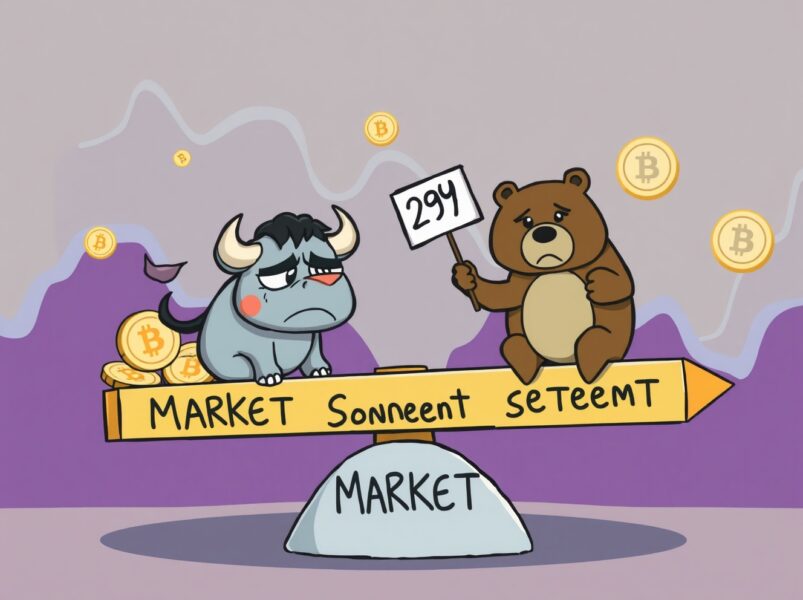
Crypto Fear & Greed Index: Market Sentiment Stuck at 29 in Fear Zone

Crypto Fear & Greed Index: Market Sentiment Stuck at 29 in Fear Zone

BitcoinWorld Crypto Fear & Greed Index: Market Sentiment Stuck at 29 in Fear Zone Is the crypto market finally turning a corner, or are investors still gripped by uncertainty? The latest data provides a crucial snapshot. The Crypto Fear & Greed Index has inched up to 29, a three-point gain from the previous day. However, this reading firmly keeps the market in the ‘Fear’ category. For traders and long-term […] This post Crypto Fear & Greed Index: Market Sentiment Stuck at 29 in Fear Zone first appeared on BitcoinWorld.

Author: bitcoinworld
Bitcoin Holds Near $92K as Altcoins Surge Ahead of FOMC and BOJ Meetings

Bitcoin Holds Near $92K as Altcoins Surge Ahead of FOMC and BOJ Meetings

The post Bitcoin Holds Near $92K as Altcoins Surge Ahead of FOMC and BOJ Meetings appeared on BitcoinEthereumNews.com. Bitcoin holds steady near $92,000 as crypto markets stabilize in 2025, with ETF inflows recovering to $56.5 million and altcoins like FELIS surging over 3,500%. Traders remain cautious ahead of key FOMC and BOJ meetings, while DeFi TVL climbs to $123.7 billion, signaling renewed sector growth. Bitcoin price stability near $92K amid ETF recovery and limited selling pressure. Altcoins exhibit extreme volatility, with FELIS up 3,552% and MAGA gaining 546% in a single day. DeFi total value locked reaches $123.7 billion, up 2.57%, alongside institutional moves like Strive’s $500 million Bitcoin fundraise and regulatory approvals for bank crypto trading. Crypto markets stabilize with Bitcoin at $92K amid FOMC anticipation—explore altcoin surges, DeFi growth, and regulatory shifts in this 2025 update. Stay informed on volatility and investment opportunities. What Is the Current Bitcoin Price and Market Sentiment in 2025? The Bitcoin price is currently holding near $92,000, reflecting a stabilization in crypto markets after a period of heightened selling pressure. This steadiness comes as exchange-traded fund (ETF) inflows have begun to recover, with approximately $56.5 million returning to Bitcoin ETFs following an outflow of over $1.1 billion in November 2025. Traders are adopting a cautious approach due to upcoming economic events, including the Federal Open Market Committee (FOMC) meeting and the Bank of Japan’s policy decision on December 19, which could influence global risk appetite. How Are Altcoins and DeFi Performing Amid This Stability? Altcoins are showing remarkable volatility and gains, underscoring the dynamic nature of the broader crypto ecosystem. For instance, Felis (FELIS) has skyrocketed by more than 3,552% in a single day, reaching $0.0000009127, while TRUMP MAGA (MAGA) has climbed 546% to $0.00128. Cute Cat Candle (CCC) followed suit with a 530% increase to $0.000000002545. These movements highlight the high-risk, high-reward environment for smaller tokens. In decentralized finance (DeFi),…

Author: BitcoinEthereumNews
CFTC Innovation Council: A Bold Leap as Crypto Titans Join Forces with Regulators

CFTC Innovation Council: A Bold Leap as Crypto Titans Join Forces with Regulators

BitcoinWorld CFTC Innovation Council: A Bold Leap as Crypto Titans Join Forces with Regulators In a move that could reshape the future of digital assets, the acting chair of the U.S. Commodity Futures Trading Commission (CFTC) has launched a powerful new advisory body. The newly formed CFTC innovation council brings together top executives from leading cryptocurrency exchanges and traditional financial giants. This unprecedented collaboration marks a significant step toward […] This post CFTC Innovation Council: A Bold Leap as Crypto Titans Join Forces with Regulators first appeared on BitcoinWorld.

Author: bitcoinworld
ETHZilla’s Zippy Acquisition Eyes Onchain Manufactured-Home Loans as Ether Treasury Stocks Decline

ETHZilla’s Zippy Acquisition Eyes Onchain Manufactured-Home Loans as Ether Treasury Stocks Decline

The post ETHZilla’s Zippy Acquisition Eyes Onchain Manufactured-Home Loans as Ether Treasury Stocks Decline appeared on BitcoinEthereumNews.com. ETHZilla has acquired a 15% stake in Zippy for $21.1 million, marking its second deal in a week to tokenize manufactured-home chattel loans onchain amid declining Ether treasury stocks. This move expands real-world asset integration in blockchain finance. ETHZilla’s investment: $5 million cash and $16.1 million in stock for Zippy stake. Integration links Zippy’s AI loan systems with ETHZilla’s tokenization for onchain distribution. Ether treasury stocks down: ETHZilla shares fell 10%, part of a 91% decline since August peak, per market data. ETHZilla Zippy acquisition brings manufactured-home loans onchain as Ether treasury stocks slide. Discover the impact on real-world assets and blockchain lending. Stay updated on crypto trends today. What is the ETHZilla Zippy Acquisition? ETHZilla Zippy acquisition involves the former biotech firm purchasing a 15% stake in the digital housing lender Zippy for a total of $21.1 million. This transaction, announced on a recent Wednesday, includes $5 million in cash and $16.1 million in stock. It represents ETHZilla’s second acquisition within a week, focusing on real-world asset tokenization. ETHZilla, now a key player in Ether-based strategies, aims to merge Zippy’s loan origination platform with its blockchain infrastructure. Founded in 2021, Zippy specializes in manufactured-home loans in the US, using AI to streamline processes. This partnership will enable the onchain distribution of chattel loans, potentially attracting institutional investors through forward-flow sales. As part of the deal, ETHZilla secures a board seat at Zippy and a 36-month exclusivity agreement, ensuring all Zippy’s blockchain and tokenization activities route through ETHZilla’s platforms. This builds on ETHZilla’s pivot to real-world assets, positioning it as the sixth-largest Ether treasury holder based on recent market analyses. Top Ethereum treasury companies. Source: CoinGecko data Just one week prior, ETHZilla completed its first acquisition by taking a 20% stake in auto-finance startup Karus for $10 million in cash…

Author: BitcoinEthereumNews