Lending

Lending protocols form the backbone of the decentralized money market, allowing users to lend or borrow digital assets without intermediaries. Using smart contracts, platforms like Aave and Morpho automate interest rates based on supply and demand while requiring over-collateralization for security. The 2026 lending landscape features advanced permissionless vaults and institutional-grade credit lines. This tag covers the evolution of capital efficiency, liquidations, and the integration of diverse collateral types, including LSTs and tokenized RWAs.

16256 Articles
Created: 2026/02/02 18:52
Updated: 2026/02/02 18:52

How POPOLOGY® Network is Rewriting the Rules of Digital Media

How POPOLOGY® Network is Rewriting the Rules of Digital Media

The post How POPOLOGY® Network is Rewriting the Rules of Digital Media appeared first on Coinpedia Fintech News The internet is dominated by a few media giants whose influence stretches from culture to commerce. They decide what is seen, what trends, and what voices are amplified or silenced. Creators spend years and considerable effort building on these platforms but unfortunately do not own any of the infrastructure. Viewers, on the other hand, produce …

Author: CoinPedia
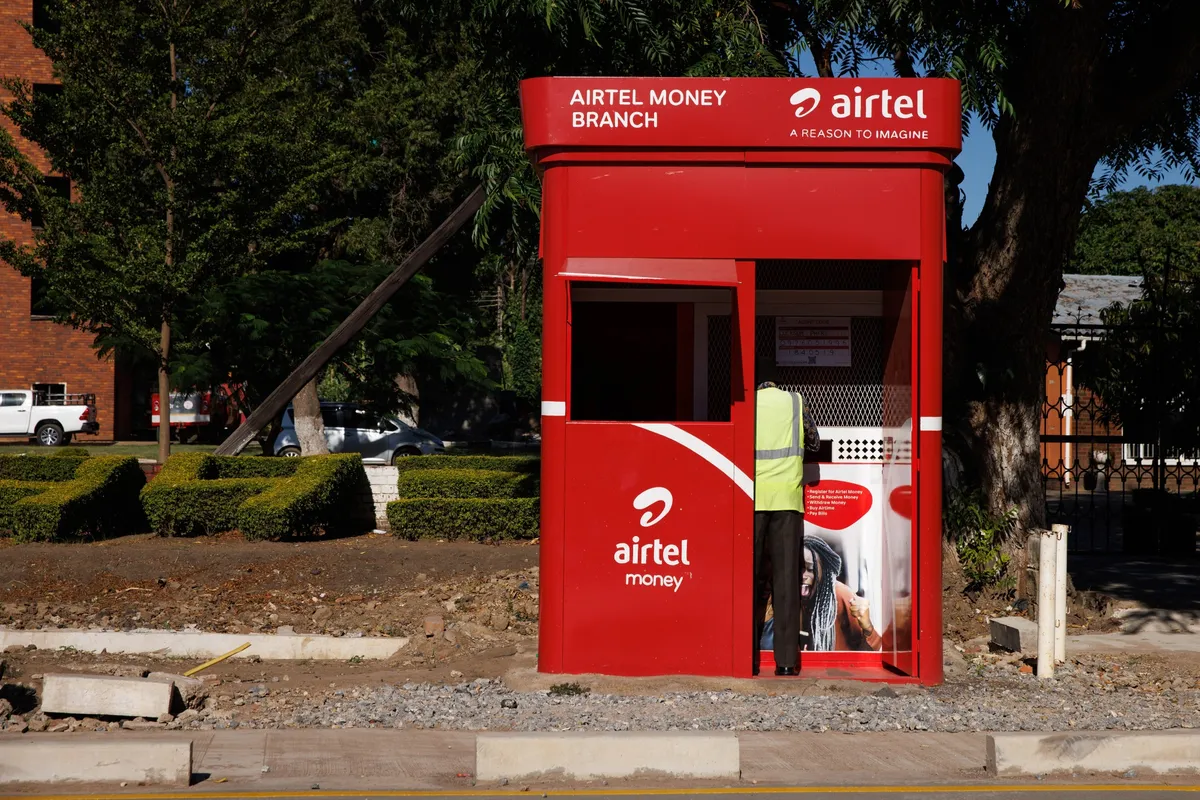
👨🏿‍🚀TechCabal Daily – Airtel Money is eating M-PESA’s lunch

👨🏿‍🚀TechCabal Daily – Airtel Money is eating M-PESA’s lunch

In today's edition: Airtel Money’s mobile money win in Kenya || Vodacom secures key approval for Safaricom deal || Kenya's interest rate lowest in three years || Ampersand opens up swap stations to other EV players

Author: Techcabal
Bitwise CIO: The crypto market will be strong in 2026, but the driving forces have changed.

Bitwise CIO: The crypto market will be strong in 2026, but the driving forces have changed.

Podcast source: Empire Air date: December 8, 2025 Guest: Matt Hougan, Chief Investment Officer (CIO) of Bitwise This article is adapted from the latest episode of the crypto podcast Empire, titled "Institutional Flows Will Overpower the 4-Year Cycle." The guest is Matt Hougan, Chief Investment Officer (CIO) of Bitwise . During the program, Matt engaged in in-depth discussions on key topics such as "Is the influence of Bitcoin's four-year cycle waning?", "Institutional funds are accelerating their entry into the market?", and "Does Strategy carry a real risk of being forced to sell Bitcoin?". He also offered his judgment on the debate between Haseeb and Santi regarding the valuation of the L1 public chain and shared his views on the growth drivers of the crypto market in the next stage. (The following is a transcript of the interview) Q1: The market has been fluctuating wildly recently, especially with sharp drops occurring over the weekend. What's your opinion on this? Matt Hougan: Short-term fluctuations in themselves don't mean much, but a "weekend panic mode" has indeed emerged over the past few months. Because the crypto market trades 24/7, and humans don't stay awake all year round, market liquidity is naturally weaker on weekends. In addition, some major macroeconomic policies are often released on Friday afternoons, which forces the crypto market to digest the news in advance, often amplifying it over the weekend. Therefore, I don't believe this is a fundamental change. In fact, we're discussing a market that's still flat overall this year , but sentiment has been amplified to the point of feeling like a crash. Many investors' current anxiety stems simply from the memory that "things often happen on weekends." This is not a signal of a long-term trend. Q2: From a broader perspective, how do you assess the market in 2025–2026? Is the four-year cycle still valid? Matt: I've said it many times: I believe the so-called "four-year cycle" is largely ineffective. It worked in the past because of a combination of certain factors, which no longer have sufficient influence. The supply shock from the halving is impacting the market at a decreasing rate; the interest rate environment is completely different from the two previous "cycle correction years" (2018, 2022), and we are now in a rate-cutting cycle; the risk of "systemic defaults" that caused huge corrections in previous cycles has also significantly decreased. In other words, the original forces that drove the cycle have now weakened. But on the other side, a force is growing stronger— the entry of institutional capital . In the past six months, traditional giants such as Bank of America, Morgan Stanley, UBS, and Wells Fargo have successively opened up cryptocurrency asset allocation, with a total scale exceeding $15 trillion. This is a force on a decade-long scale, enough to overwhelm the so-called four-year cycle. So I'm being very clear: I don't think 2026 will be a year of decline; on the contrary, I think it will be very strong. Q3: You mentioned that many "old retail investors' selling pressure" does not come from on-chain addresses, so where does this selling pressure come from? Matt: Many OG holders haven't sold their coins directly in recent years, so the on-chain data doesn't show any "old wallet movement," but they have exerted another equivalent selling pressure: covered call . Simply put, if they don't want to sell their Bitcoin holdings (due to high taxes) but still want to cash out their profits, they will pledge their Bitcoin to write options, in exchange for an annualized return of 10%–20%. This operation is essentially "selling" future gains to the market , and the pressure on the price is equivalent to partial selling, but it will not be marked on the blockchain as "assets transferred from old addresses". This type of business is growing very rapidly at Bitwise, and we are not the only provider. I suspect there may already be billions of dollars of implicit selling pressure in the market stemming from this structured sell-off . Q4: Is there really a risk that Strategy will be forced to sell its tokens? Why is the market repeatedly worried about this? Matt: There's absolutely no need to worry. I even think it's a misunderstanding. MicroStrategy incurs approximately $800 million in annual interest expenses, while holding $14.4 billion in cash, enough to cover the next 18 months. Its debt is around $8 billion, while its Bitcoin holdings are worth over $60 billion. More importantly, its earliest debt repayment is not due until 2027 . Unless the price of Bitcoin crashes by 90%, there is no such thing as being "forced to sell." And if it really does drop by 90%, the entire industry will be in a worse situation than MicroStrategy. Therefore, the correct concern is not "whether they will sell," but rather "they may not buy as much as before in the future." This is the real marginal impact. Q5: Which companies or institutions are you more concerned about selling pressure from? Matt: If we draw on the "missionary and mercenary" model, I believe: Missionary type (like Saylor) : Almost impossible to sell. Mercenary type (small companies that imitate MicroStrategy) : They will exit the market in the future, but they are too small to cause a systemic impact even if they are all sold off. Q6: In your meetings with large financial institutions, what are they most concerned about? Matt: I'm currently spending a significant amount of time communicating with these institutions. They ask very basic questions: Why does Bitcoin have value? How is it valued? How does it correlate with existing assets? What role does it play in an investment portfolio? A key fact is often overlooked: institutional decision-making is very slow. Bitwise's institutional clients typically need eight meetings before actually buying, and these meetings are sometimes held quarterly. So you can understand why Harvard University is only now increasing its Bitcoin holdings—they started researching from the day the ETF was listed until it was finally approved, exactly one year later. A giant like Bank of America manages $3.5 trillion in assets. Even if it only allocates 1%, that's $35 billion, which is more than the current net inflow of all Bitcoin ETFs. That's why I say institutional adoption is the most important force in the market over the next few years. Q7: Why are financial advisors (FAs) so slow to adopt crypto assets? Matt: Because their goal is not to pursue the highest return of the portfolio, but rather: "Avoid being fired by clients because of losses." If financial advisors (FAs) had allocated client funds to Bitcoin in 2021, and the FTX incident in 2022 caused the assets to drop by 75%, the clients would certainly have fired them immediately. AI stocks, such as Nvidia, could also fall by 50%, but the market narrative is that they represent a "future trend," while the media narrative surrounding cryptocurrencies remains questionable, thus posing a higher "risk of being laid off." With declining volatility and the strengthening narrative of stablecoins and tokenized assets (RWA), crypto assets are becoming more "acceptable to professional advisors". Q8: How do you explain the differences between Ethereum, Solana, and other L1 cryptocurrencies to institutions? Matt: The strategy is simple: First, emphasize the differences (technical approach, speed, cost, design philosophy). Then the suggestion was to "buy a little of everything". The reason is that advisors spend an average of only 5 hours per week researching portfolios, of which only 3 minutes may be allocated to crypto assets. Matt said: "If I only have three minutes a week to study crypto, I could never predict which chain will ultimately win, so the most reasonable approach is to diversify my holdings." In terms of comprehensibility: Uniswap and Aave are the easiest to understand because they are "decentralized Coinbases" and "crypto lending banks." Chainlink is also very popular with institutions because they can directly say: "Chainlink is the Bloomberg data terminal of the blockchain world." Q9: What are your thoughts on the debate between Haseeb and Santi regarding L1 valuation? (Note from Bitpush: Haseeb Qureshi is a partner at crypto venture capital firm Dragonfly Capital. He represents a long-term perspective and believes that the market has severely underestimated the future transaction volume and network effects of public chains (L1). Valuing them with current data would underestimate their long-term potential.) Santi Santos is a crypto investor and researcher who represents a more traditional, rational valuation approach. He emphasizes that public blockchains must ultimately be priced based on revenue, transaction fees, and real economic value , and believes that current valuations of some Level 1 blockchains have over-inflated future expectations . Matt: I think they are both right, but they have different focuses. From a long-term structural perspective, I am indeed closer to Haseeb's view. Our current assumptions about the scale of on-chain transactions, economic activity, and the frequency of asset settlement are too conservative. To give a simple example: why are salaries paid every two weeks? They could be settled hourly or even minutely, and this shift would mean an exponential increase in on-chain transaction volume. However, I also agree with Santi's point that ultimately all L1 servers must be valued based on real economic metrics . Revenue, fees, and protocol-captured value are all unavoidable. It's just that the financial data we see now is far from sufficient to reflect the future scale of the network. I would summarize it like this: Valuation will ultimately be based on financial performance (Santi is right), but the future economic scale will far exceed the current model (Haseeb is right). Q10: If you were the founder of a token project, what do you think you should do now to make your token more attractive to investors? Matt: I believe crypto projects are transitioning from a "pure community narrative era" to a "quasi-public company era." This means project teams need to learn from the mature practices of traditional capital markets, such as: Regularly publish transparent operational and financial data. Hold quarterly update conference calls Establish an investor relations (IR) team Clearly explain the agreement's revenue, economic model, and long-term vision. In recent years, many foundations have over-funded and underutilized their funds. I believe that in the future, project teams should follow Arbitrum's example and manage the national treasury as a genuine investment portfolio, rather than a short-term subsidy mechanism. These measures are not mere formalism, but rather a communication method that has proven effective in the capital market over the past century. Q11: What changes do you foresee in the future of IC 0 and token issuance models? Matt: I have always believed that the 2017 IC0 was a "premature but correct" attempt. Its concept itself was not wrong, but the economic model was immature and the regulation was unclear at the time, which led to a large number of projects failing to deliver on their promises. I believe that ICOs will make a comeback in the future, and on a much larger scale than in 2017. Compared to traditional IPOs, ICOs are faster, more democratic, and lower in cost. Moreover, the current regulatory environment allows tokens to be directly linked to protocol economic activities, giving them real economic value. In the long run, I even believe that companies will gradually move from IPOs to native token issuance, or a combination of the two. Q12: What are your thoughts on the institutional landscape of privacy coins like Zcash? Matt: Zcash's narrative is very clear, but regulators remain sensitive to it , especially regarding compliance discussions on "default privacy vs. optional privacy". Therefore, ETFs and institutional products have difficulty accessing Zcash. However, he emphasized: "The future of crypto will expand from one narrative to ten, and privacy will be one of them." However, now is not the time for institutions to deploy privacy assets. Q13: What is your final assessment of 2026? Matt Hougan: I believe 2026 will be very strong. Institutional inflows are building momentum, the regulatory environment is shifting from headwinds to tailwinds, and new narratives such as stablecoins, asset tokenization, and on-chain finance are spreading. The market may be disappointed by these narratives at some point, but that's just a matter of pace, not direction. To summarize in one sentence: We are now simply standing at the entrance to the next huge growth cycle.

Author: PANews
Twenty One Capital’s Bitcoin Debut Faces 20% Stock Drop Amid Uncertain Business Plans

Twenty One Capital’s Bitcoin Debut Faces 20% Stock Drop Amid Uncertain Business Plans

The post Twenty One Capital’s Bitcoin Debut Faces 20% Stock Drop Amid Uncertain Business Plans appeared on BitcoinEthereumNews.com. Twenty One Capital’s shares dropped 20% on its US market debut after merging with Cantor Equity Partners, opening at $10.74 despite holding over $4 billion in Bitcoin, marking a challenging start for the BTC-focused firm backed by Tether and led by Strike CEO Jack Mallers. Stock Performance: Shares closed at $11.42 on Wednesday, down nearly 20% in 24 hours, with a slight after-hours recovery to $11.67. Bitcoin Holdings: The company boasts over 43,500 BTC, ranking third among public firms per BitcoinTreasuries.NET data. Leadership and Backing: Founded by Jack Mallers, supported by Tether and Bitfinex’s SoftBank Group, emphasizing Bitcoin-centric operations without a defined public plan yet. Discover why Twenty One Capital’s stock tumbled 20% on debut despite $4B+ Bitcoin holdings. Backed by Tether, led by Jack Mallers—explore opportunities in crypto brokerage and lending. Stay informed on BTC treasury trends. What Happened During Twenty One Capital’s Market Debut? Twenty One Capital, the latest US-based crypto treasury firm, experienced a turbulent trading debut as shares fell 20% following its merger with special purpose acquisition company Cantor Equity Partners. The stock opened at $10.74 on Tuesday, significantly below Cantor’s Monday close of $14.27, and closed Wednesday at $11.42, reflecting a 19.97% drop over 24 hours. Despite a modest 2.2% after-hours uptick to $11.67, the company’s market cap hovered around $4 billion based on outstanding shares. This debut came amid high expectations for one of 2025’s most anticipated crypto public listings. Backed by stablecoin giant Tether and Bitfinex’s affiliation with SoftBank Group, Twenty One Capital positions itself as a Bitcoin powerhouse, holding more than 43,500 BTC valued over $4 billion. According to data from BitcoinTreasuries.NET, this places it third in Bitcoin reserves among publicly traded companies, trailing only major players like Bitcoin miner MARA Holdings. Jack Mallers, founder and CEO of the Bitcoin payment platform…

Author: BitcoinEthereumNews
Tether-Backed Twenty One Capital Slumps on Trading Debut Despite Bitcoin Rally

Tether-Backed Twenty One Capital Slumps on Trading Debut Despite Bitcoin Rally

Twenty One Capital fell nearly 20% on its debut, even as Bitcoin rose ~3%, opening at US$10.74 (AU$16.53) and closing at US$11.42 (AU$17.58). The post Tether-Backed Twenty One Capital Slumps on Trading Debut Despite Bitcoin Rally appeared first on Crypto News Australia.

Author: Cryptonews AU
Gold steadies above $4,200 as traders await FOMC rate decision

Gold steadies above $4,200 as traders await FOMC rate decision

The post Gold steadies above $4,200 as traders await FOMC rate decision appeared on BitcoinEthereumNews.com. Gold (XAU/USD) edges higher during the Asian session and touches a fresh weekly top on Wednesday, though it lacks follow-through buying. The growing acceptance that the US Federal Reserve (Fed) will lower borrowing costs at the end of a two-day policy meeting later today fails to assist the US Dollar (USD) in capitalizing on its recent recovery from the lowest level since late October. This, in turn, is seen as a key factor lending some support to the non-yielding yellow metal. Meanwhile, the markets remain on edge heading into the key central bank event risk. This, along with geopolitical uncertainties stemming from the protracted Russia-Ukraine war, supports the safe-haven Gold. The XAU/USD bulls, however, seem reluctant and opt to wait for more cues about the Fed’s rate-cut path before placing fresh bets. Hence, the focus will remain on the updated economic projections and Fed Chair Jerome Powell’s comments at the post-meeting presser. Daily Digest Market Movers: Gold bulls seem hesitant and opt to wait for more Fed rate cut cues The US Federal Reserve is scheduled to announce its decision at the end of a two-day policy meeting later this Wednesday and is widely expected to cut interest rates by 25 basis points despite sticky inflation. In fact, the US Commerce Department reported last Friday that inflation, as measured by the Personal Consumption Expenditure (PCE) Price Index, remained above the Fed’s 2% annual target in September. Fed officials, however, argue that slow hiring, modest economic growth, and subdued wage gains are likely to cool inflation in the coming months, backing the case for more policy easing by the central bank. The expectations seem unaffected by the upbeat US Job Openings and Labor Turnover Survey (JOLTS) released on Tuesday, which indicated continued demand for workers and labor market resilience. The Labor…

Author: BitcoinEthereumNews
Ethereum May Signal Bullish Reversal Amid Mixed Price Indicators

Ethereum May Signal Bullish Reversal Amid Mixed Price Indicators

The post Ethereum May Signal Bullish Reversal Amid Mixed Price Indicators appeared on BitcoinEthereumNews.com. Ethereum (ETH) at $3,000 shows signs of being undervalued amid mixed on-chain signals and recent price recovery. The Fusaka upgrade enhances Layer 2 scalability, potentially driving future growth. However, bearish indicators like declining OBV suggest caution for traders as accumulation hints at bullish potential. Ethereum’s price has rebounded 18% from the $2.5k-$2.7k demand zone, signaling possible short-term bullish momentum. Exchange supply is decreasing, indicating investor accumulation despite selling pressure from mid-sized holders. The Fusaka upgrade shifts activity to Layer 2 solutions, improving throughput and reducing fees by up to 90%, according to network data. Ethereum undervalued at $3k? Discover analysis on price recovery, Fusaka upgrade impacts, and trading signals for ETH investors seeking long-term opportunities in 2025. What is Ethereum’s Current Valuation and Why Might It Be Undervalued at $3,000? Ethereum (ETH), trading around $3,000, appears undervalued based on on-chain metrics and expert assessments from figures like Bitmine Immersion’s Tom Lee. This valuation overlooks the platform’s robust ecosystem and upcoming upgrades. Despite recent dips, falling exchange supplies and Layer 2 adoption suggest underlying strength, positioning ETH for potential appreciation as scalability improves. How Does the Fusaka Upgrade Influence Ethereum’s Network Efficiency? The Fusaka upgrade, a key evolution in Ethereum’s roadmap, facilitates a dual-layer architecture where routine transactions occur on Layer 2 networks, while the base layer handles final settlements. This shift, as reported by Ethereum Foundation developers, boosts overall throughput from 15 transactions per second to over 100,000 via rollups. Data from network analytics firm Dune shows a 40% reduction in Layer 1 fees since similar past upgrades, making Ethereum more competitive against rivals like Solana. Experts, including Vitalik Buterin in recent discussions, emphasize that this enhances data availability and security without compromising decentralization. Short sentences highlight the upgrade’s role: it batches transactions for efficiency; it supports dApps in DeFi…

Author: BitcoinEthereumNews
Speculative Leverage Stability: The Bullish Signal for Crypto Market Health

Speculative Leverage Stability: The Bullish Signal for Crypto Market Health

BitcoinWorld Speculative Leverage Stability: The Bullish Signal for Crypto Market Health Have you ever wondered what keeps cryptocurrency markets from experiencing dramatic crashes? According to new data from Coinbase Institutional, the answer lies in something called speculative leverage. Their latest analysis reveals this critical metric has stabilized at just 4-5%, creating what experts call a “healthier market structure” that could protect investors from sharp corrections. What […] This post Speculative Leverage Stability: The Bullish Signal for Crypto Market Health first appeared on BitcoinWorld.

Author: bitcoinworld
XRP News: New Rules Push Ripple Toward Official U.S. Banking Recognition

XRP News: New Rules Push Ripple Toward Official U.S. Banking Recognition

The post XRP News: New Rules Push Ripple Toward Official U.S. Banking Recognition appeared first on Coinpedia Fintech News The US Office of the Comptroller of the Currency has issued new guidance that could reshape how traditional finance interacts with digital assets. The regulator said banks can now act as intermediaries for crypto transactions through “riskless principal” activities. This means a bank can temporarily buy a crypto asset and then sell it to a …

Author: CoinPedia
US Proposal Eyes Bitcoin ETF for Overnight Trading Strategy

US Proposal Eyes Bitcoin ETF for Overnight Trading Strategy

The post US Proposal Eyes Bitcoin ETF for Overnight Trading Strategy appeared on BitcoinEthereumNews.com. The new Bitcoin overnight ETF proposal seeks SEC approval to buy Bitcoin at the U.S. market close and sell at open, holding positions only during non-trading hours to capture potential upside in global crypto activity. This innovative strategy targets historical patterns of stronger Bitcoin performance overnight. Unique Timing Strategy: The ETF would trade exclusively during overnight hours, avoiding U.S. market exposure. Historical Data Support: Bitcoin has shown disproportionate gains during Asian and European trading overlaps when U.S. markets are closed. Market Context: Amid $118 billion in Bitcoin ETF assets, this filing reflects evolving strategies in a maturing institutional landscape. Discover the Bitcoin overnight ETF proposal revolutionizing crypto investments by targeting non-U.S. hours for potential gains. Explore implications for ETF flows and Bitcoin prices—stay ahead in 2025 crypto trends. What is the Bitcoin Overnight ETF Proposal? The Bitcoin overnight ETF is a novel investment product filed with the U.S. Securities and Exchange Commission (SEC) that would acquire Bitcoin exclusively when American stock markets close and liquidate holdings upon their reopening. This approach aims to exploit observed patterns where Bitcoin exhibits stronger performance during global trading sessions outside U.S. hours. According to Bloomberg senior ETF analyst Eric Balchunas, the fund would maintain positions only in overnight trading periods, providing investors with targeted exposure to this specific market dynamic without full-day risk. A new ETF proposal has surfaced in the U.S., aiming to buy Bitcoin only when American markets close and sell it when they open.  If approved, the product would represent one of the most unusual timing-based strategies yet seen in the rapidly expanding Bitcoin ETF ecosystem. Source: X Bloomberg senior ETF analyst Eric Balchunas highlighted the filing, noting that the product would hold Bitcoin exclusively during overnight trading, then exit positions before U.S. market hours each day. How Does the Overnight…

Author: BitcoinEthereumNews