Lending

Lending protocols form the backbone of the decentralized money market, allowing users to lend or borrow digital assets without intermediaries. Using smart contracts, platforms like Aave and Morpho automate interest rates based on supply and demand while requiring over-collateralization for security. The 2026 lending landscape features advanced permissionless vaults and institutional-grade credit lines. This tag covers the evolution of capital efficiency, liquidations, and the integration of diverse collateral types, including LSTs and tokenized RWAs.

15838 Articles
Created: 2026/02/02 18:52
Updated: 2026/02/02 18:52
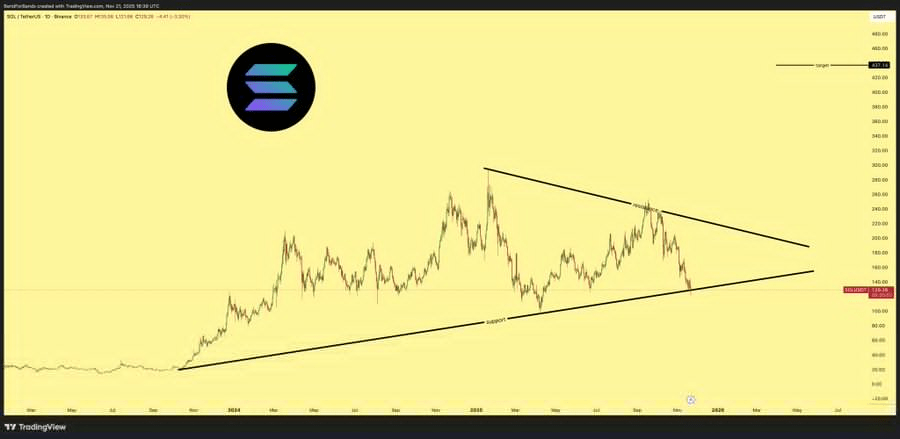
Crypto Experts Reveal What Crypto to Buy Now for Recovery Gains As Solana (SOL) Lags

Crypto Experts Reveal What Crypto to Buy Now for Recovery Gains As Solana (SOL) Lags

The post Crypto Experts Reveal What Crypto to Buy Now for Recovery Gains As Solana (SOL) Lags appeared on BitcoinEthereumNews.com. Despite the need for its own sustainable growth in the cryptocurrency market, analysts are seeing a clear disparity in its progress. It appears that Solana (SOL), with its impressive network, has lagged behind other assets and has struggled with congestion and its prices to the point where investors seek alternative assets with more pressing catalysts. This kind of quest for “high pot” or growth prospects has ignited interest in presale projects that are well-grounded in fundamentals and have well-defined growth strategies. It is within this context that projects like Mutuum Finance (MUTM) rank highest as far as recommendations for ‘what crypto to buy in the crypto market now’ are concerned. Solana’s Momentum Challenge Many investors are frustrated with Solana lately for failing to take full advantage of market rebounds. Despite its technology showing so much promise, certain factors seem to have impeded its success, including network stability and competition pressures. This has caused experts in the cryptosphere to suggest spreading investments into projects that involve lower overhead resistance and event-driven cycles for growth. The quest for the most ideal crypto to invest in has started to lean towards new cryptos like Mutuum Finance (MUTM) in their last stages of presales, where entry points are tailored for optimal gain post-listing. A Presale Nearing Complete Allocation Mutuum Finance offers a very compelling reason for capital redefinition, as its presale has reached notable milestones that stress its ability to rank as one of the top cryptos to buy immediately. The project has managed to secure $19,000,000 and create a holder base of 18,200 investors. Phase 6 is Now Over 95% Sold out, where tokens are priced at $0.035 – which is last-chance buying to secure MUTM before its price increases to $0.040 in the next phase. With the launch price pegged at only…

Author: BitcoinEthereumNews
We're still in the crypto supercycle, but not the one you're expecting.

We're still in the crypto supercycle, but not the one you're expecting.

Original title: The Supercycle Is Here. Just Not the One You Were Promised Original author: Lomashuk Compiled by Odaily Planet Daily; Translated by Asher Recently, a quick five-minute scroll through the internet has easily led to the conclusion that we're back in a bear market. BTC prices continue to fall, altcoins are plummeting even further, and retail investor sentiment has almost evaporated. The ultimate bullish narrative proposed by Su Zhu—the "Supercycle"—which embodied the industry's vision of "crypto assets breaking free from cyclical constraints and achieving escape velocity," now seems more like a collective illusion. However, the supercycle is not over. The real problem is that we have been misinterpreting it. The traditional narrative of a supercycle is a perpetual boom where "digital always goes up," a period where traditional finance fully embraces crypto and the market breaks free from the four-year boom-bust cycle. However, as more and more people directly reject this vision, a deeper, more sobering reality emerges—the supercycle has indeed begun, but it is drastically different from what people once imagined. In fact, as crypto rapidly integrates into global finance, 90% of assets in the market are being ruthlessly revalued to near zero. The Great Divergence in the Crypto Market The most undeniable reality is that the era of "a rising tide lifts all boats" is completely over in this cycle. In past bull markets, retail investors could simply pick any altcoin on CoinMarketCap and earn a decent return in the next rally. But the current market offers a completely different answer—the vast majority of altcoins are indiscriminately declining, with no signs of reversal. In fact, most crypto assets are slowly going to zero. The once-glorious Meme coin, countless governance tokens, "Ethereum killers," and the worthless projects of the last cycle—they no longer have the potential to return to their all-time highs. The slump in prices doesn't reflect a temporary downturn in sentiment; rather, it means they have lost their value within the current narrative and fundamentals, becoming true "zombie assets." At the same time, the market structure is maturing, and investors are more rational than ever before. Capital is no longer buying into a white paper, a vision, or a Discord community; instead, it is returning to the most basic fundamentals: cash flow, fee revenue, and use cases. In this fragmented crypto market landscape, only two types of assets can weather economic cycles: Public blockchains that have become systemic infrastructure—such as Ethereum and Solana; An agreement that can consistently generate real transaction fees and revenue. Other Web 3 projects, no matter how dazzling their narratives, are being ruthlessly eliminated by the market. The continuous evolution of encryption Despite the slump in speculative sentiment at the price level, the underlying architecture of the global financial system is undergoing a silent but profound rewriting. For a long time, "regulation" has been seen as the biggest obstacle to the entire industry. However, in 2024 and 2025, this looming shadow unexpectedly transformed into certainty. The increasingly clear policy framework not only did not stifle the technology, but instead gave the green light to giants who were once considered traditional "enemies." At the same time, the supply of stablecoins is breaking historical records at an unstoppable pace, becoming a new engine for global liquidity. New internet banks are evolving into crypto-native financial gateways, while Visa and Mastercard are embedding stablecoin settlements directly into their core payment networks. Visa is already processing billions of dollars worth of stablecoin transactions, providing the underlying power for the next generation of internet banking; Mastercard acquires ZeroHash; Stripe is fully shifting its focus to stablecoins as the infrastructure for global payments; CashApp integrates USDC on its front end; Revolut introduces a zero-fee stablecoin exchange path. They may all realize that to survive, they must embrace the technology, not resist it. This deep integration is forming a sticky and irreversible demand base—not reflected in short-term speculative trading, but continuously amplified in real global trading volumes. Funds may return to the blockchain. The macroeconomic environment is quietly changing the rules of the game. With the Federal Reserve cutting interest rates and ending quantitative tightening (QT), the once easily attainable 4% risk-free yield on US Treasury bonds is gradually disappearing. Faced with declining yields, capital will not remain idle. What's about to emerge is a large-scale trend of funds flowing back onto the blockchain. However, unlike in the past, this time the funds won't rush into Ponzi schemes, but rather towards DeFi protocols that can generate real returns through transaction fees and lending spreads. As traditional yields decline, the actual returns of DeFi protocols are becoming a new high ground for capital, as evidenced by the data—Aave's TVL has hit an all-time high, further reflecting the market's strong pursuit of real on-chain returns. Next-generation decentralized finance and artificial intelligence economy Crypto infrastructure is being leveraged by new financial primitives that are finally finding a product-market fit. Derivatives and perpetual contracts initially gained acceptance among "geek" groups but are now expanding into liquid on-chain hedging environments available to institutions. Prediction markets have also evolved from niche experiments into reliable global information sources: Google has integrated Polymarket, and Kalshi has partnered with the NBA. However, the ultimate catalyst that truly makes this supercycle unstoppable is artificial intelligence. We are building a world of AI agents that, instead of walking into JPMorgan Chase to open a checking account, will directly generate wallets, use cryptocurrencies for transactions, exchanges, and payments, and will instantly generate new auction markets based on user intent. In this system, blockchain will become the native underlying layer of the "cyber economy," and AI agents will coordinate and conduct transactions on top of it. summary We are in the midst of a true supercycle, but it is entirely different from the frenzied, short-term surge of 2021. This current supercycle is quieter, more stable, and more structural: it no longer relies on speculative sentiment, nor does it cause all assets to rise together. In this process, the prices of tokens and projects without real value will continue to fall, which is a natural market selection mechanism. At the same time, cryptocurrencies are quietly integrating into the global financial system, from stablecoin settlements to institutional on-chain hedging, from payment infrastructure to the underlying AI economy; blockchain is becoming a new infrastructure for the global economy.

Author: PANews
Is Ripple (XRP) Still the Best Cryptocurrency to Invest In Despite Recent Dip?

Is Ripple (XRP) Still the Best Cryptocurrency to Invest In Despite Recent Dip?

Ripple (XRP) is showing warning signs to investors as it trades around $1.90, extending its 19% decline in the last 30 days. Although data shows a possible bottom formation, Capitulation for short-term holders is at its lowest level this year, a full healing appears to be delayed. Analysis for spent coins indicates that healing could […]

Author: Cryptopolitan
From Award-winning Journalist to Animation Scriptwriter: Introducing Dawn-Maria France BY Suzi King

From Award-winning Journalist to Animation Scriptwriter: Introducing Dawn-Maria France BY Suzi King

Dawn-Maria France is a vibrant and inspiring voice in writing and animation scriptwriting, driven by her deep passion for storytelling and commitment to inclusion. Her career highlights the power of narratives to uplift and unitecommunities, particularly across all communities. Through her work, France authentically captures cultural intricacies and personal experiences, crafting stories that entertain while […] The post From Award-winning Journalist to Animation Scriptwriter: Introducing Dawn-Maria France BY Suzi King appeared first on TechBullion.

Author: Techbullion
Yi Lihua Backs Buybacks, ETH Faces Short Squeeze

Yi Lihua Backs Buybacks, ETH Faces Short Squeeze

The post Yi Lihua Backs Buybacks, ETH Faces Short Squeeze appeared on BitcoinEthereumNews.com. Key Points: WLFI rises 50% as Ethereum braces for potential short squeeze. Yi Lihua backs WLFI and highlights ETH’s undervaluation. Market reactions signal confidence in buyback strategies. Yi Lihua, founder of Liquid Capital, announced on Platform X that WLFI rose 50% due to aggressive buybacks, while ETH might face a short squeeze amid heavy institutional shorting. This surge and potential ETH short squeeze highlight key market dynamics and investor strategies amid undervaluation perceptions, drawing attention to underlying fundamentals and policy conditions. WLFI Spikes 50% Driven by Strategic Buybacks Yi Lihua, founder of Liquid Capital, asserted that WLFI’s major buybacks fueled a 50% increase against the market. WLFI’s alignment with larger DeFi lending agreements, such as with Aave, enhances its ecosystem integration. Lihua also indicated Ethereum’s favorable set up despite being undervalued due to current macro conditions. The surge in WLFI’s value demonstrates Lihua’s commitment to fundamentally strong projects. The situation contrasts with Ethereum facing potential pressures from institutional shorting, creating a possibility for a future short squeeze. Market observers are closely watching the strategies at play. Responses from key figures, such as Stani Kulechov of Aave, who confirmed a partnership with WLFI, reflect growing institutional confidence in DeFi developments. Yi Lihua’s strategic allocations and macroeconomic insights are influencing investor expectations. Ethereum Faces Potential Short Squeeze Amid Institutional Strategies Did you know? WLFI’s 50% surge against market trends has been described as an exceptional event in today’s stablecoin market, showcasing the potential for stablecoins to drive market shifts comparable to historical landmarks from past cycles. Ethereum (ETH) is currently priced at $2,926.21 with a market cap of $353.18 billion and maintains a market dominance of 11.79%. Despite a 90-day loss of 35.69%, daily trading volumes were recorded at $22.62 billion. CoinMarketCap monitors ETH’s ongoing performance. Ethereum(ETH), daily chart, screenshot on CoinMarketCap…

Author: BitcoinEthereumNews
Crypto Has Entered Late-Cycle Territory, Says Global Liquidity Veteran

Crypto Has Entered Late-Cycle Territory, Says Global Liquidity Veteran

Global liquidity specialist Michael Howell used an appearance on the Bankless podcast to deliver a clear, if uncomfortable, message for risk assets: the post-GFC “everything bubble” is ending as the global refinancing machine rolls over, and crypto is late in that cycle rather than at the start of a fresh one. Howell’s starting point is his own definition of liquidity, which diverges sharply from textbook aggregates like M2. “This is the flow of money through global financial markets,” he said. It is not bank deposits in the real economy, but “money that is in the financial markets… it looks at the repo markets, it considers shadow banking,” and “pretty much begins where conventional M2 definitions end.” On his Global Liquidity Index, weekly global liquidity was under $100 trillion in 2010 and now sits “just under $200 trillion” – a doubling in a decade and a half. Howell Flags Liquidity Peak What matters most to him, however, is not the level but the momentum of that liquidity. Howell has identified a remarkably stable 65-month global liquidity cycle that he interprets as a debt-refinancing rhythm. Capital markets, he argues, are no longer primarily about funding new investment: “Something like 70 to 80% of transactions… are debt refinancing transactions. They’re not about raising new capital.” Related Reading: Crypto Crash Is A Forced Crypto Seller Unwind, Glassnode Co-Founders In that world, “debt needs liquidity for rollovers but actually liquidity needs debt,” because roughly three-quarters of global lending is now collateral-backed. The result, as he puts it bluntly, is that “ironically it’s old debt that finances new liquidity.” To capture the systemic tension, Howell tracks a debt-to-liquidity ratio for advanced economies: the total public and private debt stock divided by the pool of refinancing liquidity. The ratio averages about two times and tends to mean-revert. When it drops well below that level, liquidity is abundant and “you get asset bubbles.” When it rises significantly above, “you start to see a stretched debt-liquidity ratio and you get financing tensions or refinancing tensions and you can see those basically morph into financial crisis.” Right now, he says, “we’re transitioning, unfortunately, out of a period that I’ve labeled the everything bubble,” a phase where liquidity was abundant relative to debt after repeated rounds of QE and emergency support. The COVID era deepened that imbalance by encouraging borrowers to “term out” debt at near-zero rates. “A lot of the debt that then existed was refinanced back into the late 2020s at low interest rates,” he noted. That created a visible “debt maturity wall” later this decade: heavy refinancing needs now coming due into a much tighter funding environment. Shorter-term, Howell is focused on the interaction between Federal Reserve liquidity operations, the rebuilding of the US Treasury General Account and growing stress in repo markets. SOFR, which “you’d actually expect to trade below Fed funds” because it is collateralized, has repeatedly traded above its normal range. “We’ve started to see these repo spreads blow out,” he warned, adding that “it’s not really the extent of these spikes… it’s really the frequency that’s the most important factor.” If trade fails and leveraged positions begin to unwind, “it’s going to turn quite ugly and that could be the start of the end of the cycle.” Related Reading: Crypto Markets Underestimate A Trump-Style Flood Of Rate Cuts: Expert Inside his four liquidity regimes – rebound, calm, speculation and turbulence – Howell places the US firmly in “speculation,” with Europe and parts of Asia in “late calm.” Historically, early and mid-upswings favor equities and credit, peaks favor commodities and real assets, downswings favor cash and then long-duration government bonds. LIVE NOW – The Real Crypto Cycle: What Happens When Global Liquidity Peaks Global liquidity veteran Michael Howell (@crossbordercap) joins to map out the “master variable” driving asset price: A 65-month global liquidity and debt refinancing cycle that underpins booms, busts,… pic.twitter.com/Ryl3fqHoYR — Bankless (@Bankless) November 24, 2025 The Impact On The Crypto Market Crypto, in his work, straddles categories. “Crypto generally behaves a little bit like a tech stock and a little bit like a commodity,” he said. For Bitcoin specifically, “about 40–45% of the drivers… are global liquidity factors,” with most of the rest split between gold-like behavior and pure risk appetite. On the popular notion of a hardwired four-year Bitcoin halving cycle, Howell is unconvinced. “I don’t really see any evidence of that four-year cycle,” he said, arguing that the 65-month global liquidity/debt-refinancing cycle is the more robust driver. With that cycle projected to peak around now, crypto looks “late stage in the crypto cycle. So it could be over but it might not be.” The structural backdrop, in his view, is unambiguous: “The trend towards monetary inflation… is slated to continue for another two or three decades at least.” Against that, he argues, investors “have to have” monetary-inflation hedges: “It’s not Bitcoin or gold. [It’s] Bitcoin and gold.” Tactically, though, he is cautious. “We’ve not turned bearish risk-off yet, but we are not bullish short-term,” he said – and suggested that upcoming weakness in risk assets might be “a good time to pick up some more” of those long-term hedges. At press time, the total crypto market cap was at $2.96 trillion. Featured image created with DALL.E, chart from TradingView.com

Author: NewsBTC
The stablecoin market is undergoing a transformation following the crash: a massive migration of billions of dollars as funds move away from leverage and embrace real returns.

The stablecoin market is undergoing a transformation following the crash: a massive migration of billions of dollars as funds move away from leverage and embrace real returns.

Author: Frank, PANews The market crash on October 11 not only broke through the price defenses of crypto assets, but also triggered a massive migration of billions of dollars in the stablecoin sector. Data shows that since October, the total market capitalization of stablecoins has shrunk from $308.7 billion to $302.8 billion, with nearly $6 billion leaving the market. In this ebb tide, the leading compliant stablecoin, USDC, was hit hardest, with its supply on the Solana chain experiencing a precipitous drop. Meanwhile, USDe, previously a rising star in stablecoins, also saw a significant decrease in issuance due to the liquidation of revolving loan leverage. However, this is not simply a capital flight, but a brutal competition. When we peel back the layers of the data, we find that this is a shift from "speculation" to "rationality." Capital is flowing from the high-leverage on-chain gaming arena to safe havens with stronger compliance, smoother fiat currency channels, and real RWA returns. The "double whammy" of the Solana ecosystem and USDC In this wave of market capitalization decline, USDC has become the biggest "bleeding point." Data shows that USDC accounted for half of the nearly $6 billion outflow, with its total market capitalization falling from $76.3 billion to $73.5 billion, a decrease of $2.8 billion. The decline in USDC is mainly due to a 18.24% decrease in USDC issuance on the Solana chain over the past month. On October 11, the total amount of USDC issued on the Solana chain was approximately $12.8 billion, but by November 23, it had dropped to $8.7 billion, a reduction of 4.1 billion USDC. During the same period, the total value of funds (TVL) on the Solana chain also decreased from $12.9 billion to $8.79 billion, a drop similar to that of USDC's supply. Top-ranked DeFi protocols on Solana also experienced significant declines in TVL during this phase. From this perspective, after the market crash on October 11th, a large amount of capital on the Solana chain chose to directly redeem stablecoins to mitigate market risk. Taking Pump.fun as an example, according to on-chain analyst Yu Jin, in the past week, the Pump.fun project team transferred 405 million USDC to Kraken. Then, during the same period, 466 million USDC were transferred from Kraken to Circle, which likely represents a withdrawal. This money came from Pump.fun's private sale of PUMPs to institutional investors in June. However, Pump.fun co-founder Sapijiju responded, stating, "This is completely false information; Pump.fun has never cashed out," and that this was simply a fund management operation. Solana wasn't the only one experiencing a liquidity crisis. Hyperliquid, known for its highly leveraged derivatives trading, also saw its stablecoin issuance drop from $6 billion to $4.4 billion, a 25% decrease. This comprehensive contraction directly impacted Circle's performance on the US stock market. Hit by both poor revenue expectations and a sharp decline in USDC supply, Circle's stock price plummeted from a high of $240 to below its IPO price, falling to $71.3. The once-promising "compliant stablecoin unicorn" myth seems to be facing its first crisis since its IPO. USDe Crisis and Sui's Stablecoin Data Gaffe If the decline of USDC is a cyclical deleveraging, then the crisis of USDe exposes the structural vulnerability of algorithmic stablecoins in a bear market. Since October 10th, the supply of USDe has halved from $14.6 billion to $7.38 billion, and its price on Binance briefly de-pegged to $0.65 due to a short-term lack of liquidity. The main reason for this de-pegging was the mass withdrawal of liquidity providers from centralized exchanges during the panic, resulting in extremely thin order books. Meanwhile, although USDe's official redemption mechanism functioned normally, its off-exchange settlement process had a delay of several hours. This delay prevented arbitrageurs from quickly profiting during the brief flash crash, thus failing to pull the discount on the CEX back to the $1 peg, amplifying the de-pegging magnitude. The sharp drop in issuance was actually due to the market crash causing a dramatic fall in funding rates for perpetual contracts, even turning negative. This rendered the "revolving loan" leverage strategy, widely deployed on lending platforms like Aave and Morpho, economically unsustainable. With yields below borrowing costs, traders were forced to deleverage and liquidate positions on a massive scale, leading to a contraction in USDe supply. Afterwards, OKX CEO Star stated on the X platform: "USDe should not be viewed as a stablecoin pegged 1:1 to the US dollar; it is a tokenized hedge fund." Even though Ethena set a record high of $151 million in fees captured in Q3 of this year, it couldn't withstand the loss of market confidence caused by the sharp decline in yields. While USDe yields have now rebounded to above 5%, overall supply and trading volume are both declining. Amidst extreme market anxiety and a thirst for the next growth driver, a data blunder involving the Sui blockchain became an unexpected incident. On November 24th, Artemis data showed that the stablecoin supply on the Sui chain had increased by $2.4 billion. Social media users speculated that this might indicate certain institutions or "smart money" were actively deploying assets on the Sui chain. Even the official Sui team engaged in the discussion, replying with "stablesmaxxing" (stablecoin maxed out). However, PANews' investigation revealed that this may have been a misunderstanding. After careful comparison of multiple data dashboards, USDC is indeed the most issued stablecoin on Sui, with a current market capitalization of approximately $480 million. Other stablecoins on Sui have issuances in the tens of millions of dollars. According to Defillama data, the current total supply of stablecoins in the Sui ecosystem is approximately $653 million. If $2.5 billion were to flow in or be issued in a single day, it would mean that the stablecoin supply on Sui would increase by about four times. On-chain information also shows that the issuance of USDC on Sui is $482 million, with the largest holding address being the Binance exchange, holding approximately 148 million coins. Subsequently, Artemis updated this data, showing that the stablecoin supply on Sui has increased by $117 million in the past seven days. A new direction for risk aversion: embracing returns. After funds are withdrawn from high-risk areas, they do not disappear completely, but flow to safer and more functional assets. During the market downturn, USDT once again proved its dominance as the top stablecoin, with its total market capitalization not only remaining unaffected but also repeatedly breaking new records, reaching $184.7 billion. In contrast to the decline of USDC, other compliant stablecoins have seen significant growth. Since the market crash on October 11, the issuance of PYUSD has bucked the trend, increasing from $2.5 billion to $3.6 billion, a growth of nearly 50%. Among public blockchains, PYUSD's growth is mainly attributed to the growth of the Ethereum mainnet, which has increased by 57% in the past month. Data released by Token Terminal on November 9th shows that PYUSD has become one of the fastest-growing tokenized assets with a market capitalization exceeding $1 billion. Compared to other stablecoins, PYUSD's core advantages likely lie in its convenient fiat currency exchange channels and relatively stable yield. PYUSD previously maintained an APY of over 10% on the Solana blockchain through subsidized yields. Furthermore, PYUSD's compliance is also a key factor considered by many institutional investors. Furthermore, the issuance of USYC, another yield-generating stablecoin issued by Circle, has also increased by 45% in the past month, with a total issuance increase of approximately $500 million. This indicates that during periods of market turmoil, institutional investors are no longer satisfied with holding zero-interest cash or willing to take on the high risks of DeFi, but instead prefer the stable returns of RWA tokens pegged to US Treasury bonds. Data from RWA.xyz also shows that the recent issuance of RWA assets has not been affected by the market downturn and continues to grow steadily. It increased by 10%, from $33 billion on October 11th to $36 billion. A period of market turmoil has served as a litmus test for the stablecoin market. It has not only allowed the market to distinguish which stablecoins are primarily used for high-leverage trading and which are used as investment targets for large institutions, but it also reflects that the crypto market has officially bid farewell to the "wild west" era of solely relying on on-chain leverage to drive growth. Conversely, the counter-trend breakout of PYUSD and the steady growth of RWA assets prove that funds are starting to vote with their feet. In turbulent times, more convenient fiat currency channels, more transparent compliance backing, and real returns based on US Treasury bonds are the core competitive advantages for retaining funds. The outflow of $6 billion may offer us a glimpse into the next phase of the stablecoin war. It's no longer a race to print money, but a contest of scenarios, trust, and the quality of underlying assets. For issuers, the only ticket to the next bull market will be evolving from "fuel" for on-chain speculation to a "bridge" in financial and trade processes.

Author: PANews
Bitcoin Could End ‘Like A Monopoly Game,’ Claims Wall Street Cassandra Michael Green

Bitcoin Could End ‘Like A Monopoly Game,’ Claims Wall Street Cassandra Michael Green

Macro investor Michael Green, who is known as the Cassandra of Passive Investing, has sharpened his critique of Bitcoin, arguing that its design makes it economically brittle and socially corrosive, setting up a winner-takes-all outcome “like a Monopoly game.” In an interview with journalist Phil Rosen, Green said “the most important thing to understand is […]

Author: Bitcoinist
PBOC sets USD/CNY reference rate at 7.0796 vs. 7.0826 previous

PBOC sets USD/CNY reference rate at 7.0796 vs. 7.0826 previous

The post PBOC sets USD/CNY reference rate at 7.0796 vs. 7.0826 previous appeared on BitcoinEthereumNews.com. On Wednesday, the People’s Bank of China (PBOC) sets the USD/CNY central rate for the trading session ahead at 7.0796 compared to the previous day’s fix of 7.0826 and 7.0825 Reuters estimate. PBOC FAQs The primary monetary policy objectives of the People’s Bank of China (PBoC) are to safeguard price stability, including exchange rate stability, and promote economic growth. China’s central bank also aims to implement financial reforms, such as opening and developing the financial market. The PBoC is owned by the state of the People’s Republic of China (PRC), so it is not considered an autonomous institution. The Chinese Communist Party (CCP) Committee Secretary, nominated by the Chairman of the State Council, has a key influence on the PBoC’s management and direction, not the governor. However, Mr. Pan Gongsheng currently holds both of these posts. Unlike the Western economies, the PBoC uses a broader set of monetary policy instruments to achieve its objectives. The primary tools include a seven-day Reverse Repo Rate (RRR), Medium-term Lending Facility (MLF), foreign exchange interventions and Reserve Requirement Ratio (RRR). However, The Loan Prime Rate (LPR) is China’s benchmark interest rate. Changes to the LPR directly influence the rates that need to be paid in the market for loans and mortgages and the interest paid on savings. By changing the LPR, China’s central bank can also influence the exchange rates of the Chinese Renminbi. Yes, China has 19 private banks – a small fraction of the financial system. The largest private banks are digital lenders WeBank and MYbank, which are backed by tech giants Tencent and Ant Group, per The Straits Times. In 2014, China allowed domestic lenders fully capitalized by private funds to operate in the state-dominated financial sector. Source: https://www.fxstreet.com/news/pboc-sets-usd-cny-reference-rate-at-70796-vs-70826-previous-202511260115

Author: BitcoinEthereumNews
Klarna Admits Stablecoins Is Cheaper Than Banking: Will Crypto Recover?

Klarna Admits Stablecoins Is Cheaper Than Banking: Will Crypto Recover?

Klarna just made a move toward crypto that nobody really saw coming. The Swedish buy-now, pay-later giant announced on Tuesday that it is launching its own stablecoin, called KlarnaUSD, marking a significant shift from its traditional lending business and positioning it squarely in the crypto payments arena. The token runs on a blockchain developed by Stripe, and Klarna is pitching it as a way to change how money moves across borders completely. The company says this setup can seriously cut costs for both shoppers and merchants who deal with international payments all the time. Introducing KlarnaUSD, our first @Stablecoin. We’re the first bank to launch on @tempo, the payments blockchain by @stripe and @paradigm. With stablecoin transactions already at $27T a year, we’re bringing faster, cheaper cross-border payments to our 114M customers. Crypto is… — Klarna (@Klarna) November 25, 2025 DISCOVER: Best New Cryptocurrencies to Invest in 2025  How Will KlarnaUSD Stablecoin Work? KlarnaUSD basically works like a private digital version of cash, backed by short-term securities or cash-like assets, and pegged to the US dollar. That stability sets it apart from volatile coins like Bitcoin, making it way more useful for everyday payments instead of speculation. By using the token, Klarna can skip the traditional international payment rails, including systems like SWIFT that handle most global money transfers today. At first, the stablecoin will mainly help Klarna move money inside its own system, especially when handling large global transfers. Why KlarnaUSD Is a Real Game Changer Just now the world’s biggest BNPL payment company @Klarna announced that it plans to issue its own stablecoin KlarnaUSD on @tempo, the L1 blockchain that @stripe is building. Since the GENIUS Act, tons of financial companies and institutions… pic.twitter.com/u2riCoS9FS — 100y.eth (@100y_eth) November 25, 2025 But the plan is to eventually use it for merchant payments and even consumer transactions. People familiar with the rollout say Klarna wants to test and fine-tune things internally before opening it up to everyone. DISCOVER: Top 20 Crypto to Buy in 2025  Klarna CEO Gone From Opposing Crypto To Issuing Stablecoin This whole move is a big shift for Klarna CEO Sebastian Siemiatkowski, who was openly against crypto not long ago. Earlier this year he even admitted Klarna would probably be the last major fintech to get into the space, but with digital currencies gaining legitimacy and clearer rules, he changed direction. Launching a stablecoin fits perfectly with Klarna’s push to move beyond buy now, pay later and turn itself into a full digital bank. It shows they want to compete across more financial services instead of staying locked into one business model. I said it then (feb 2025) and I will say it again: We were wrong on crypto and on bitcoin, must rethink! Being "last" I thought no one would care… but the reception was massive, so many reached out! Nice to see first thing out there, MORE to come…https://t.co/aLPo27vyDD — Sebastian Siemiatkowski (@klarnaseb) November 25, 2025 The timing also says a lot. Klarna’s shares have dropped more than 30 percent since the company listed on the New York Stock Exchange in September, and investors have been questioning how the loss-making fintech plans to become profitable. Rolling out a stablecoin could help diversify revenue and convince shareholders that Klarna is still innovating. Competition in this space is heating up fast. Crypto companies are taking advantage of easier regulations in the United States to apply for banking licenses, while neobanks are rushing to launch their own stablecoins so they do not fall behind. Whether KlarnaUSD succeeds will depend on adoption, regulation, and whether it actually cuts costs as the company claims. As more financial players enter the stablecoin market, the race to become the dominant platform will likely intensify, which could benefit users through cheaper and faster payments. DISCOVER: Best Meme Coin ICOs to Invest in 2025 Join The 99Bitcoins News Discord Here For The Latest Market Updates Key Takeaways Klarna launching a stablecoin is a huge pivot and could help push it toward becoming a full digital bank.. Success depends on real adoption and cost savings, not just hype, especially with competition heating up fast.. The post Klarna Admits Stablecoins Is Cheaper Than Banking: Will Crypto Recover? appeared first on 99Bitcoins.

Author: Coinstats